
I am licensed by Natural England to photograph at a Peregrine Falcon nest site, which is a Schedule 1. bird. Without a Schedule 1. photography license it is against the law to photograph in the nest territory.
This is my 3rd year of photographing at this nest site and in that time I have enjoyed some memorable sessions. This year has been up and down. The first clutch of eggs was predated just prior to hatching which was very disappointing to say the least. It is unusual for Peregrines to go on and produce a replacement clutch if they lose their first clutch so late on. They chose to use the same ledge that had been so successful for them last year. After another 32 days of incubation, 60 days in total with a break of 2 of the eggs hatched yesterday (14 June). I watched a wet but lively little chick in the nest scrape yesterday afternoon and when I returned in the late evening…..I couldn't resist another look…..the chick had dried out and was able to raise it's head. When I returned again today I was pleased to see that there were two very strong snowy white and active little chicks.
One of the big problems I face as a photographer is the distance from the nest which makes it quite difficult. I have been looking for a way to get good close up views, almost asking the impossible really but I have an excellent live view on my Pentax K3 camera. This means that I can focus on the nest and then use the digital zoom to get an incredibly close-up view of the birds on the eyrie. I then realised that with the my iPad, I could take good video of the cameras's live view, and there you have it and you can see the results above.
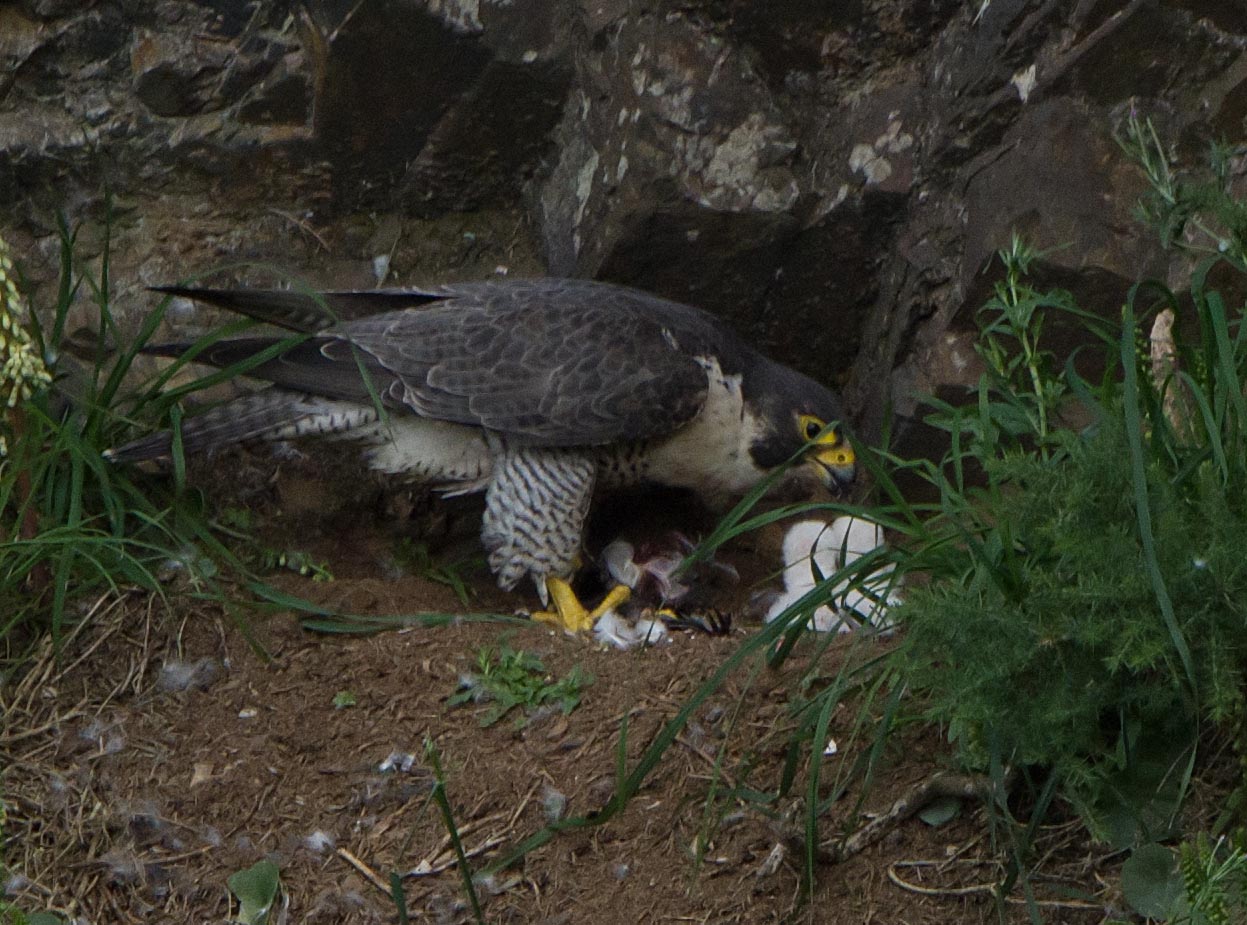
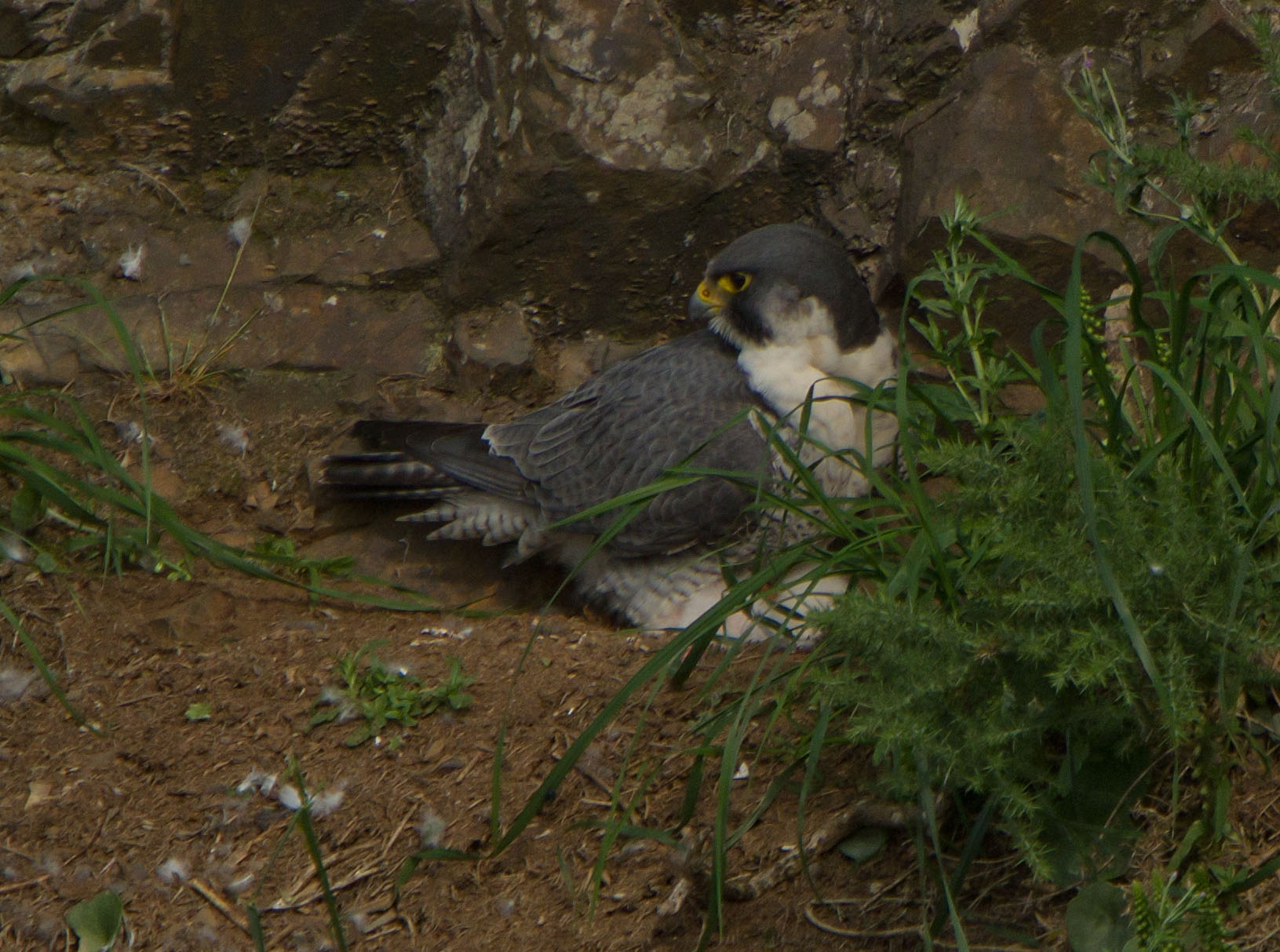
But, back to the birds. As I sat watching and waiting I could see the Falcon brooding her clutch, suddenly she left the scrape and I could see the two chicks in the nest. She quickly returned with a prey item, it looked like a Blackbird and then proceeded to feed the young birds, pulling small pieces of meat off the carcass I was immediately taken with the tender, carful and very dainty way the parent fed the chicks. After a few minutes she lifted the carcass and flew off the nest with it in her beak. A few seconds later, in came the Tiercel to brood the youngsters. What was interesting about this was that the Falcon left the nest to take the prey item from the Tiercel and then took it to the chicks. Afterwards, while the Tiercel brooded the chicks the Falcon was perched in a nearby tree before eventually flying back to the nest to take over her brooding duties.

 Wildlife in a Suburban Garden
Leave a reply to Kathy Cancel reply