

We are all very familiar with the Common Wasp vespula vulgaris, these can be quite a nuisance and I am actually allergic to their nasty sting having once suffered a full anaphylactic shock. This was an "interesting" experience and it would have ended in tragedy had I not been treated in casualty with a timely injection of adrenalin. My sight was affected, my ears were ringing, I itched all over and was covered with red blotches. My throat swelled and prevented me from swallowing with a painful lump in my throat. I salivated and I began to feel very lethargic and drowsy. Then for weeks afterwards I was weak and lacking in energy. I quite understandably now have a phobia where I dream of giant wasps and I try to avoid them at all times.
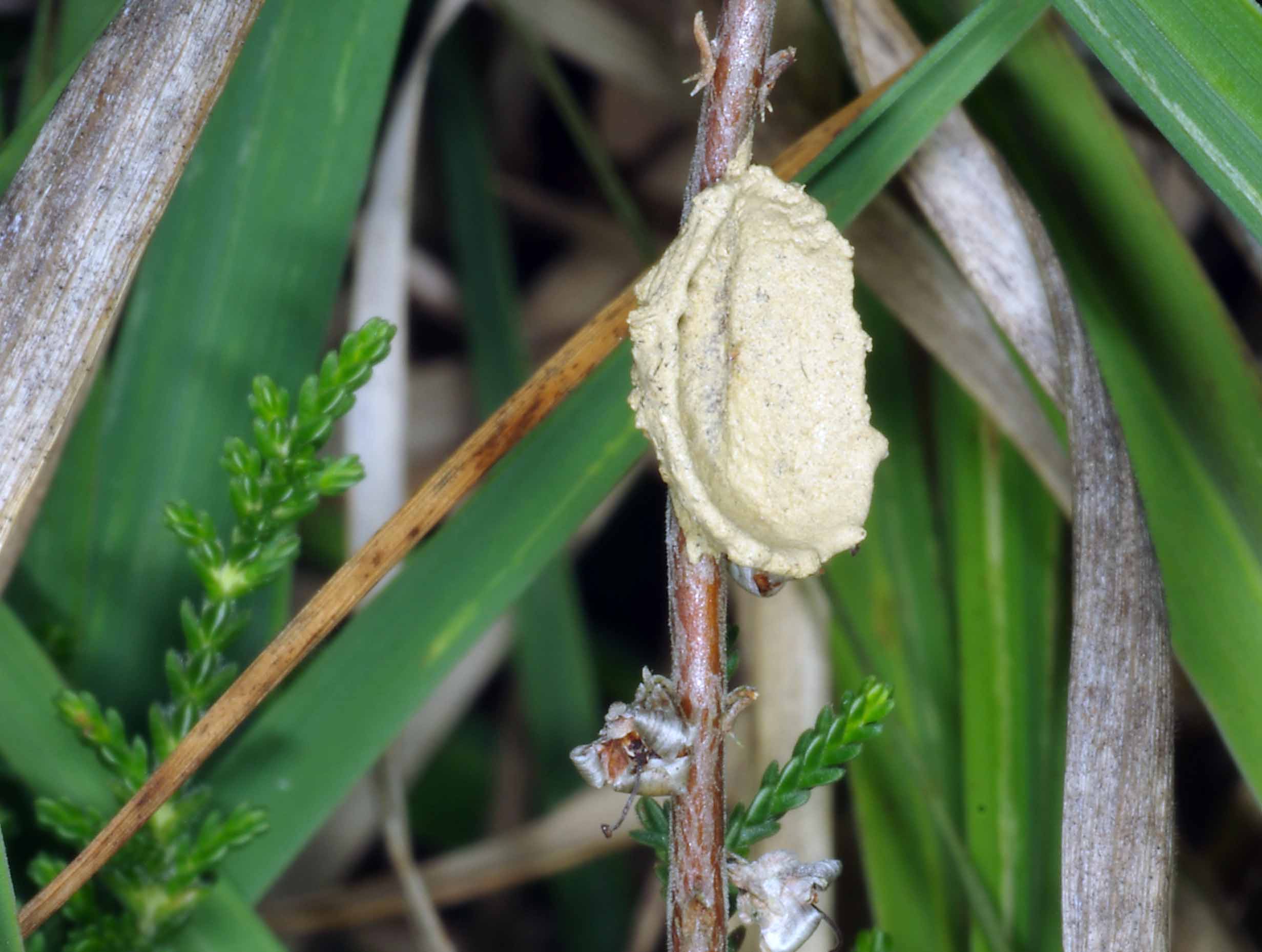
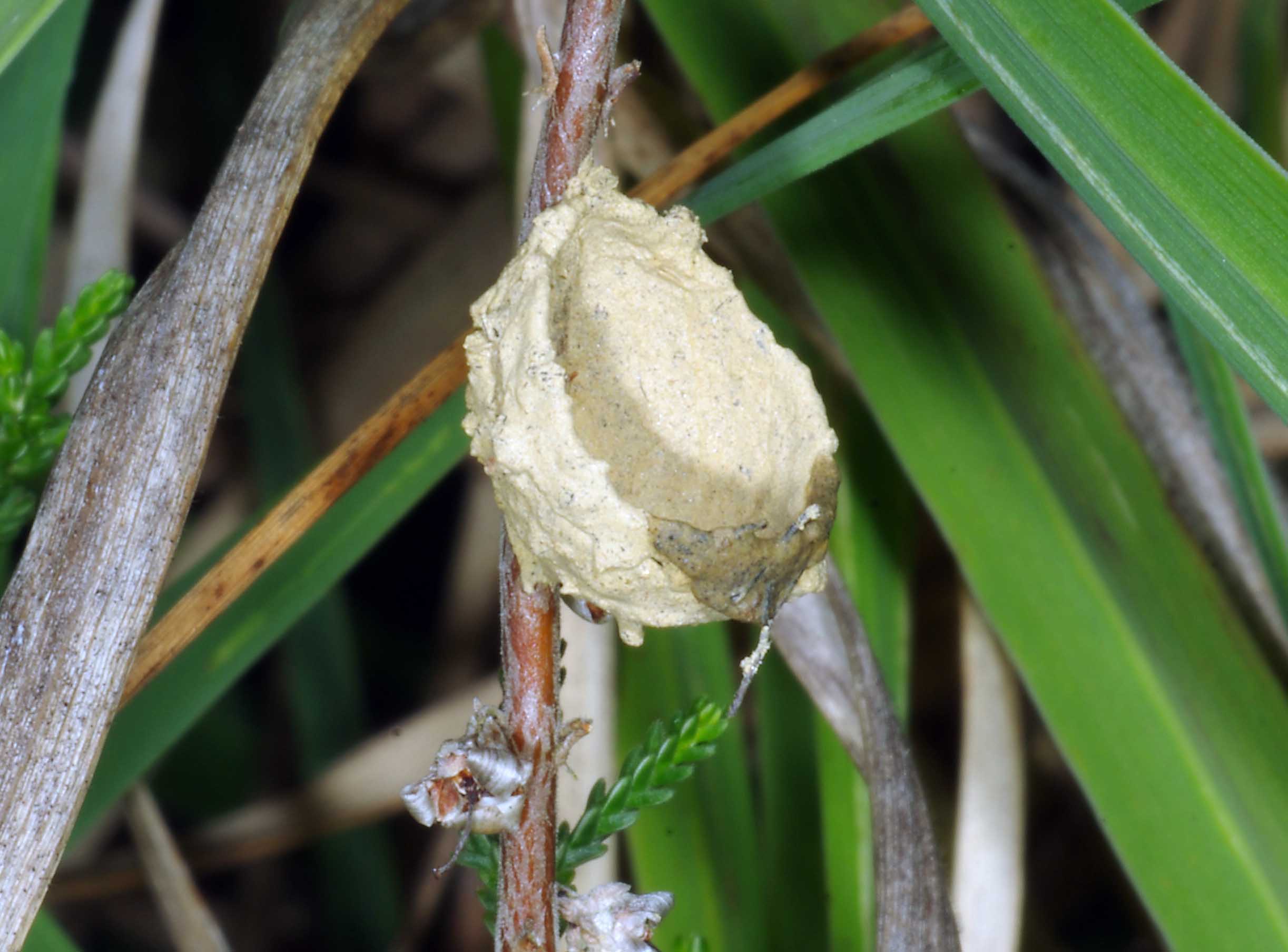
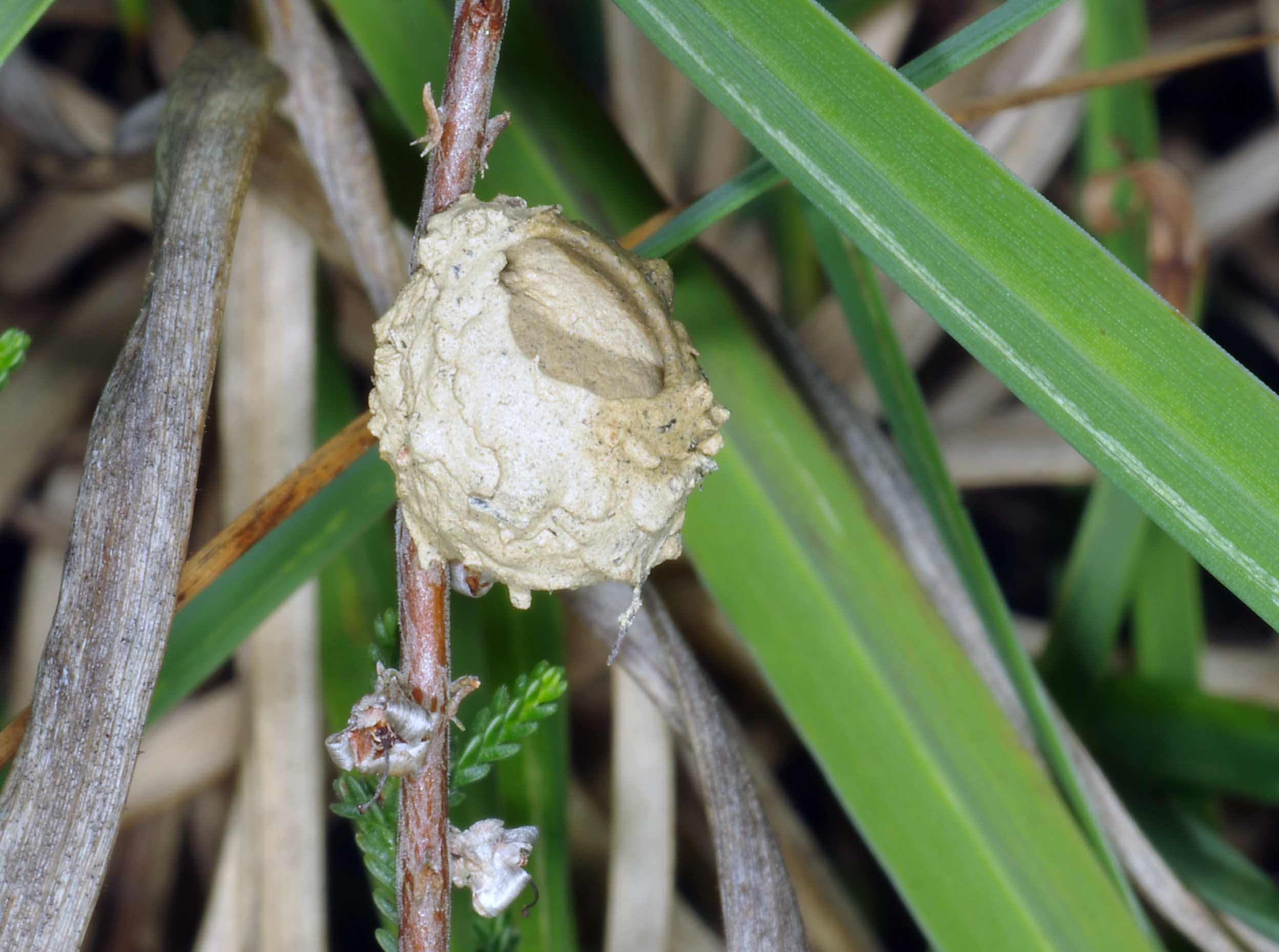
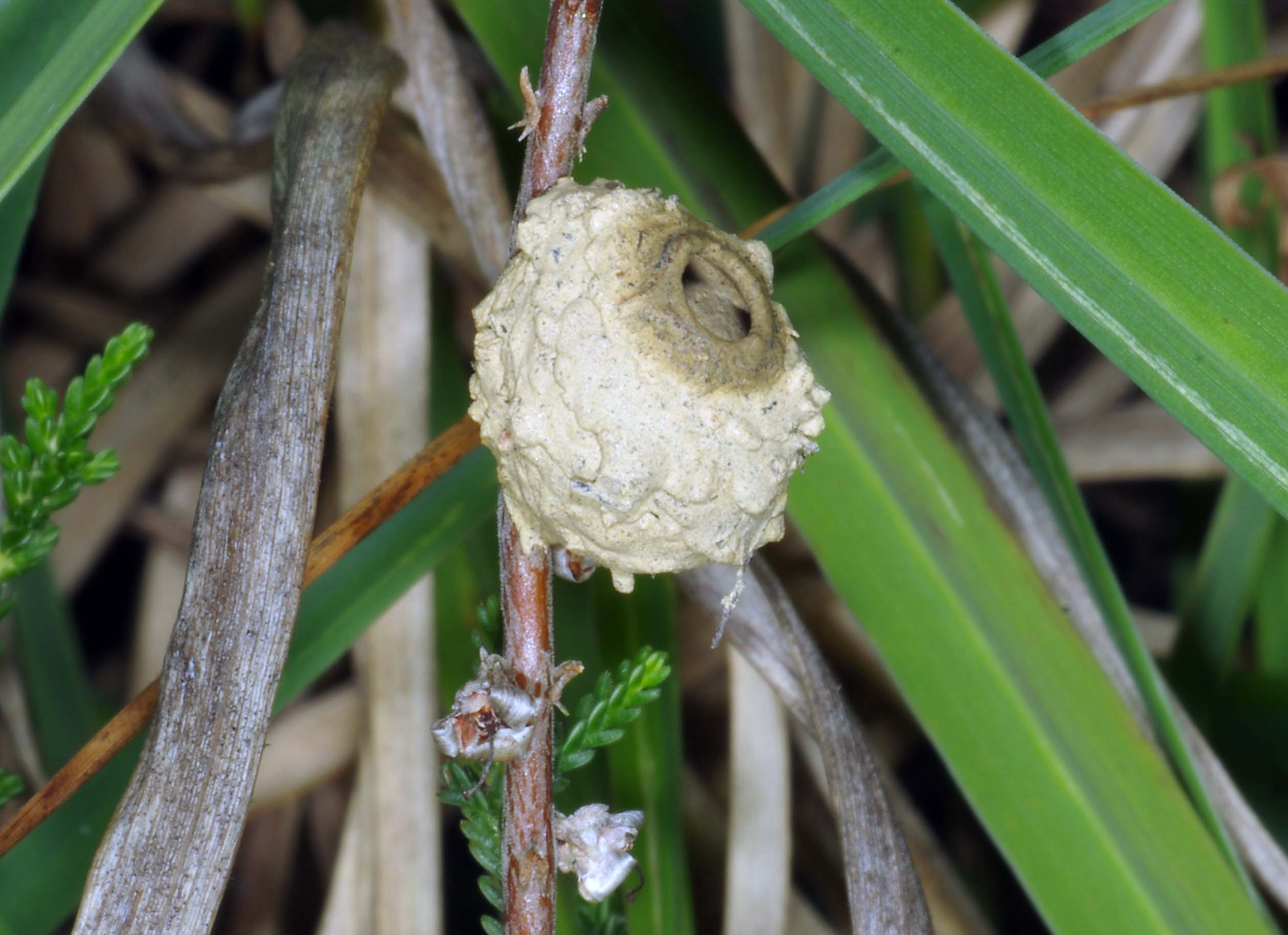
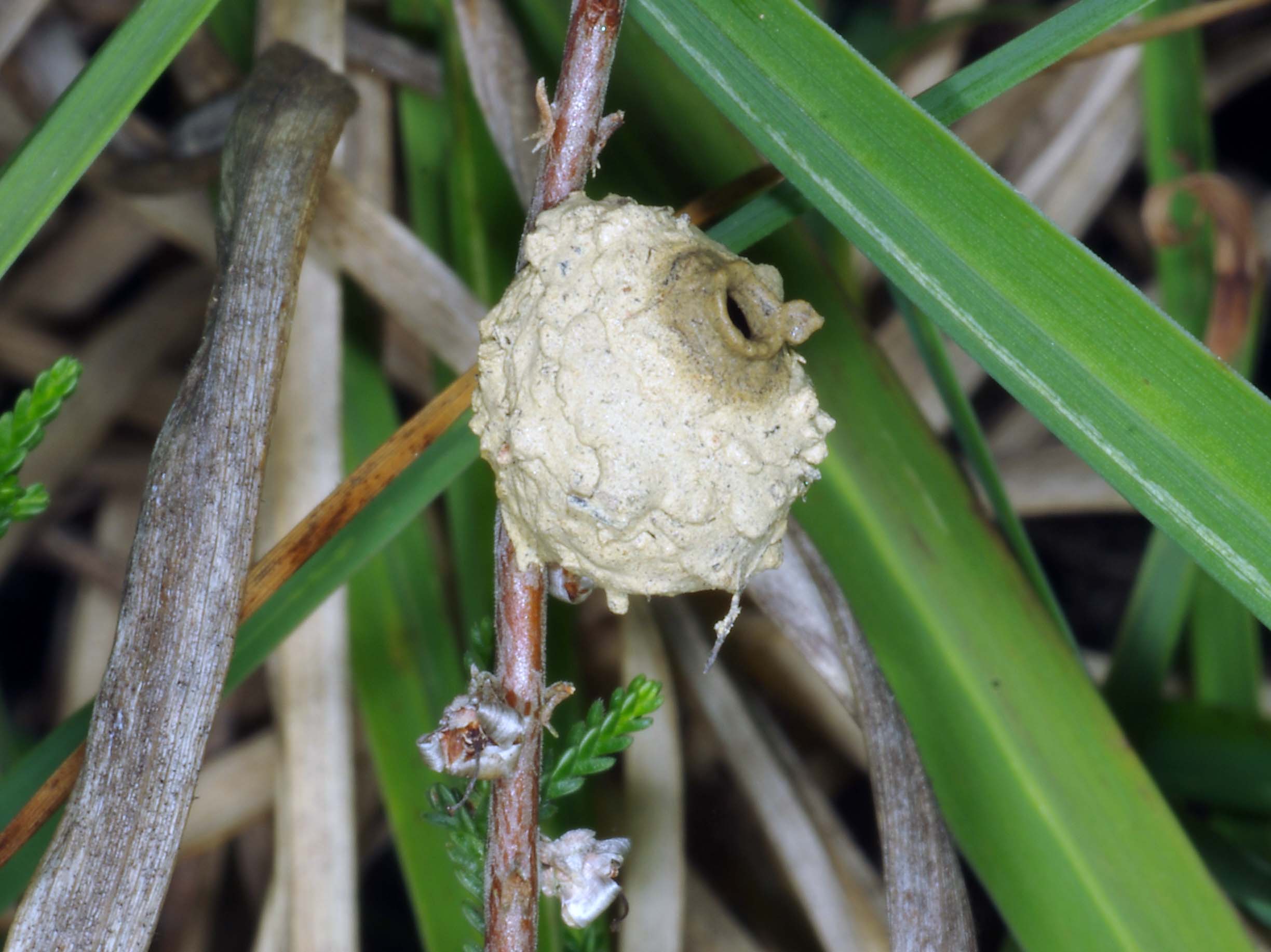
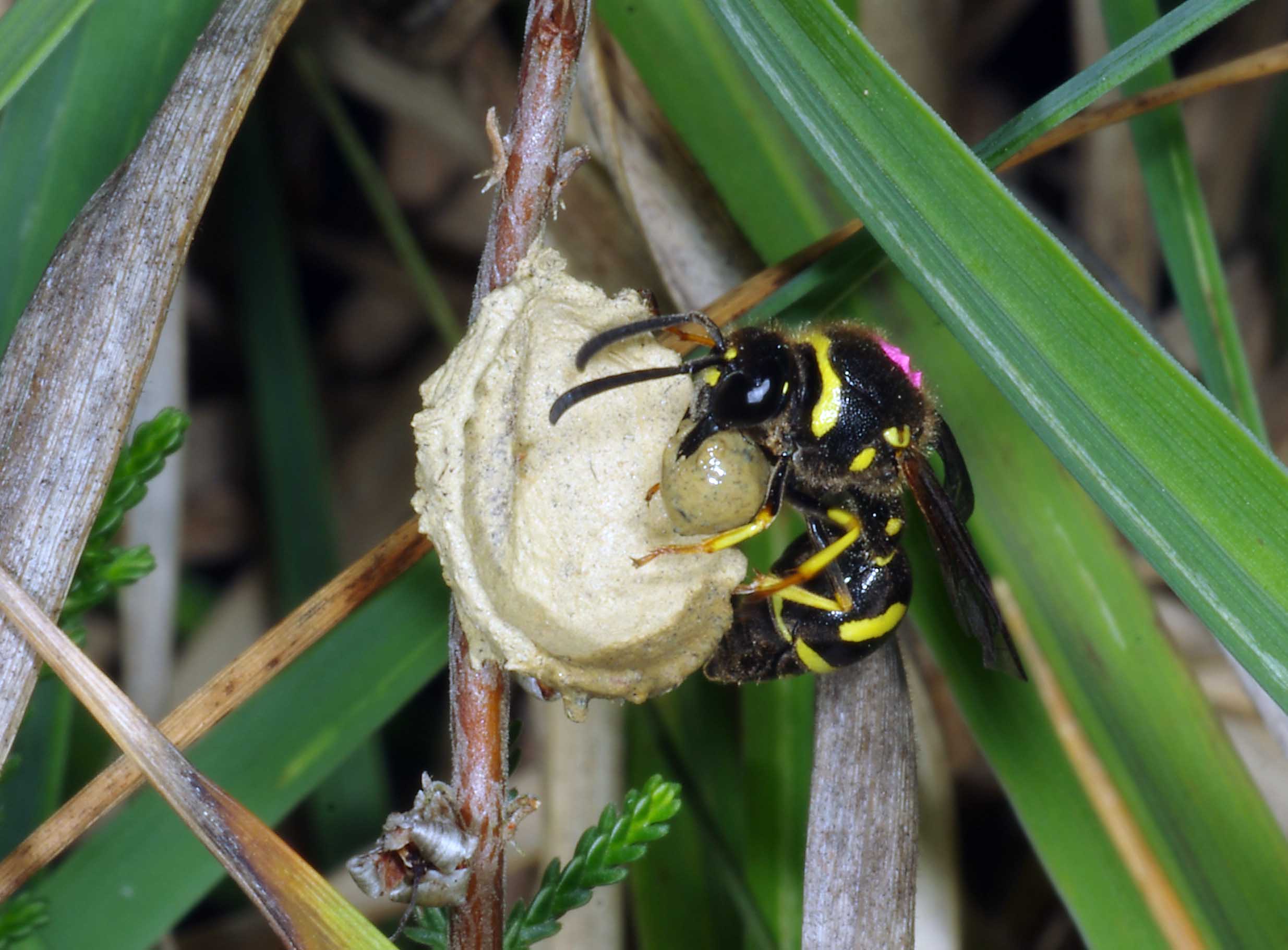
So yesterday, this was in the back of my mind when I went to look at an amazing species of wasp on a heath in South Devon. The Heath Potter Wasp - Eumenes coarctatus is a scarce solitary species of wasp that has a fascinating lifestyle. Each female constructs small pots, as many as 10 sperate constructions on the stems of vegetation. They gather small balls of clay from areas of nearby bare earth, they then carry this ball held between the front legs to the building site. Each pot is instinctively constructed in the shape of a small urn which is in fact a clay capsule. Construction is rapid and takes between two or three hours but is actually constructed from around 16 collections of clay. If the "quarry", as the bare earth area is called, is dry, the wasp will first collect a mouthful of water which it then deposits on the clay in order to achieve the wet consistency required. The small pot is left with a tiny hole and for a good reason. Our wasp will at this point, lay an egg in to the pot which is suspended on a tiny strand of silk. At this point she will collect small caterpillars which are stung to anaesthetise before being placed in the pot until it is full, this can take as many as 38 tiny caterpillars or as few as 9 or 10 larger ones depending on availability. Then finally, after the the pot is full, the wasp collects more clay and then seals the hole leaving the egg to develop and eventually hatch amongst the larder of food.
I was immensely privileged to have shared this experience with John Walters a local artist and naturalist who has been studying this species for the last four years. John has developed a technique for tracking the wasps during the construction of the pots which has enabled him to watch the process. He became the first person to witness and photograph the construction of a Heath Potter Wasp Pot. Yesterday I was fortunate enough to be there right at the beginning of one such construction and watch and photograph from beginning to completion. I will return to photograph the wasps filling the pots with caterpillars which I didn't manage to see yesterday. The photographs do not give a good perception of size, this is a very small insect, for comparison, fractional smaller than the familiar common wasp. They do sting but apparently, not too painful nor venomous.
Here is a "kind of time-lapse" series showing the pot taking shape from a small blob of clay to a fully formed pot chamber which the wasp uses to deposit her single egg. Each pot is sealed with a source of food, small caterpillars, for the hatching wasp grub which will eventually break out of the pot as a fully formed adult wasp.




 Wildlife in a Suburban Garden
Leave a reply to Kathy Cancel reply