
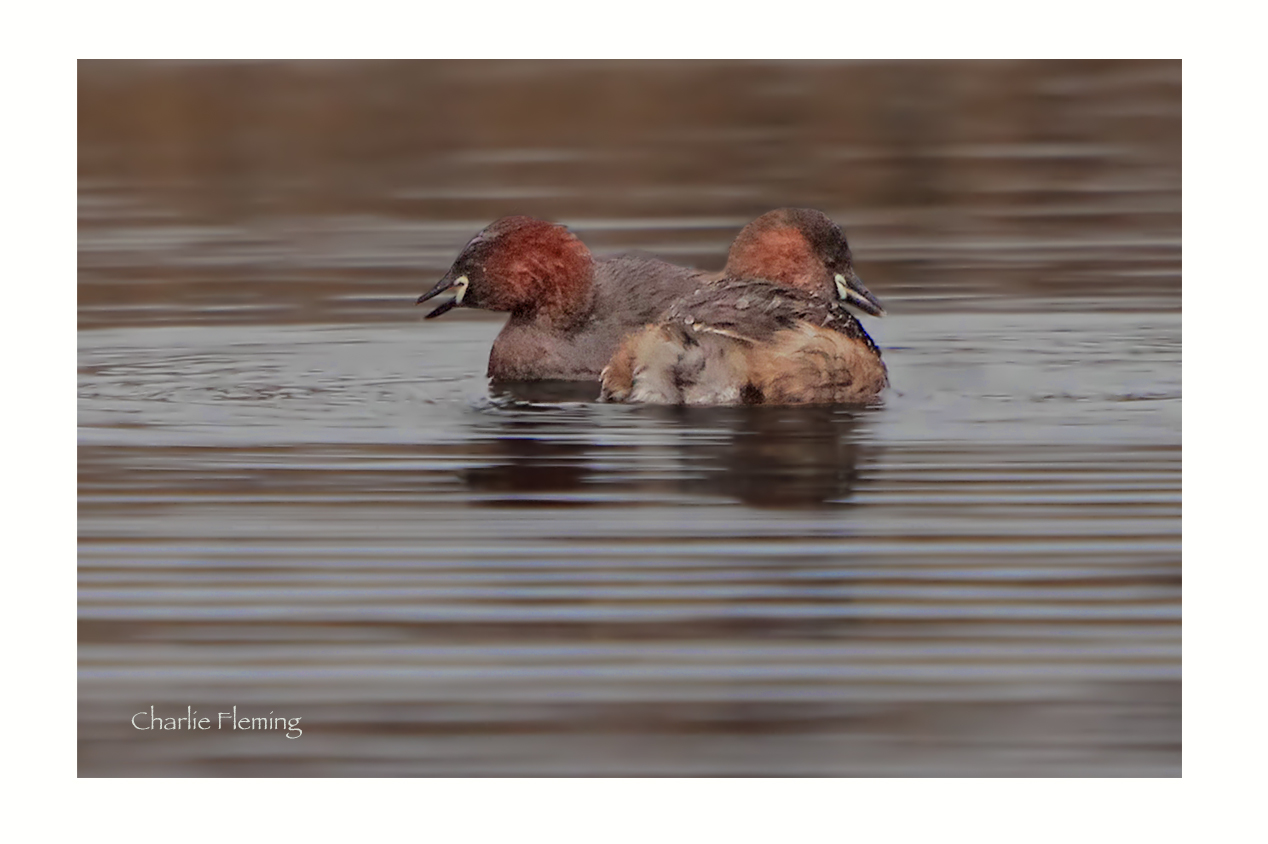
A couple of times during last week I went to Dawlish Warren to photograph the Little Grebe on the main pond on the reserve there. (Or should I say try to photograph.) I have always had an interest in this little species, known colloquially as a Dabchick, in fact as a boy I wasn't aware that they had any other name. I would see them regularly when I accompanied my dad on exciting fishing trips most weekend days and evenings in the summer. Then during the close season in the middle of summer we would walk and observe the wildlife in stead. My dad was a quiet expert and knew more about birds than anyone I know and I admired him as any boy would admire his dad. We would sit for hours, usually in very quiet and secluded areas and we would see lots of wildlife which as a boy, I took for granted. I thought everyone did the same as we did, of course, they didn't. So I have grown up with Dabchicks. I realise though that I haven't really taken enough interest in them before and there is still lots I could discover. I intend to watch these birds a bit more because their behaviour this last few days has been fascinating. Firstly, on this smallish pool there is at least two pairs and I think also one unattached female. They are sexually dimorphic with males sporting an intense brick-red head and the female being a washed out version of the male. In the winter, both birds go in to an eclipse plumage phase and their plumage is even more sombre and subtle. Even though we are only a day or so in to February, this is an important and active month for lots of species. Birds that breed early in the year such as Dippers for example are already pairing up. I hadn't realised it but Dabchicks are obviously early season breeders and that is what I found so interesting this week. As I stood watching them they were constantly calling, both sexes that is and even when there was no birds to be seen, they could still be heard calling. This is a tuneful whistle and it was a surprise to be honest when I heard the female calling as well. From time to time the male would excitedly confront the female and they would "shout" to each other from just a few inches away. In the picture, that's the male on the left, his beak is open as he calls. On other occasions I watched them with prey, a shrimp for certain and what looked like a small fish on another. I also watched the male with a beak full of weed or reed and both birds swam strongly to an area amongst the reeds. Nest building has onbviously started.
Disappointingly, photography is hard because they will just not venture close enough to me. I am quiet and slightly hidden but they are obviously not that easy to decieve. They never seem to show any signs of stress but just dive and then come up again further from you but rarely nearer!
Related articles

 Wildlife in a Suburban Garden
Leave a comment