
I thought you might find it interesting to share in my expereriments from yesterday when I tried to photograph mainly the Nuthatches in flight using very fast flash. When I have tried this before it had been thwarded because the Nuthatches seemed to be more troubled by the firing flash guns than the other small birds. Now though, with Nuthatches being the dominant and most common birds at my feeding station on the edge of the wood, I thought I would try again. I set out the flash guns positioned quite close to a pile of seed on a log and armed the flash units with remote wireless receivers and fixed the wireless trigger to the hot-shoe on the camera. I was ready but would the birds accept the flashes without being too spooked? I would soon find out because it wasn't long before the first of the resident Nuthatches came down to the seed. The flashes fired and off the bird went! The next time a bird came down I let it feed and get used to things before pressing the trigger. This time the bird reacted to the flash with a twitch but then totally ignored the next one so it hadn't taken long for at least one "nutty" to get used to it. The big problem with this method is the incredibly fast speed of the birds flight and then being able to react quick enough to capture the birds flying in which offers the most photogenic pose as the birds "brake" in flight and extend the legs to alight. Usually the first indication of a bird coming in to feed is the sight of it on the food….. very frustrating. However it's a little easier to capture the birds flying off again. At first I had a couple of near misses but it was incredibly hard to get all of the bird in the frame. I will call these pictures just "record" shots and part of work in progress.
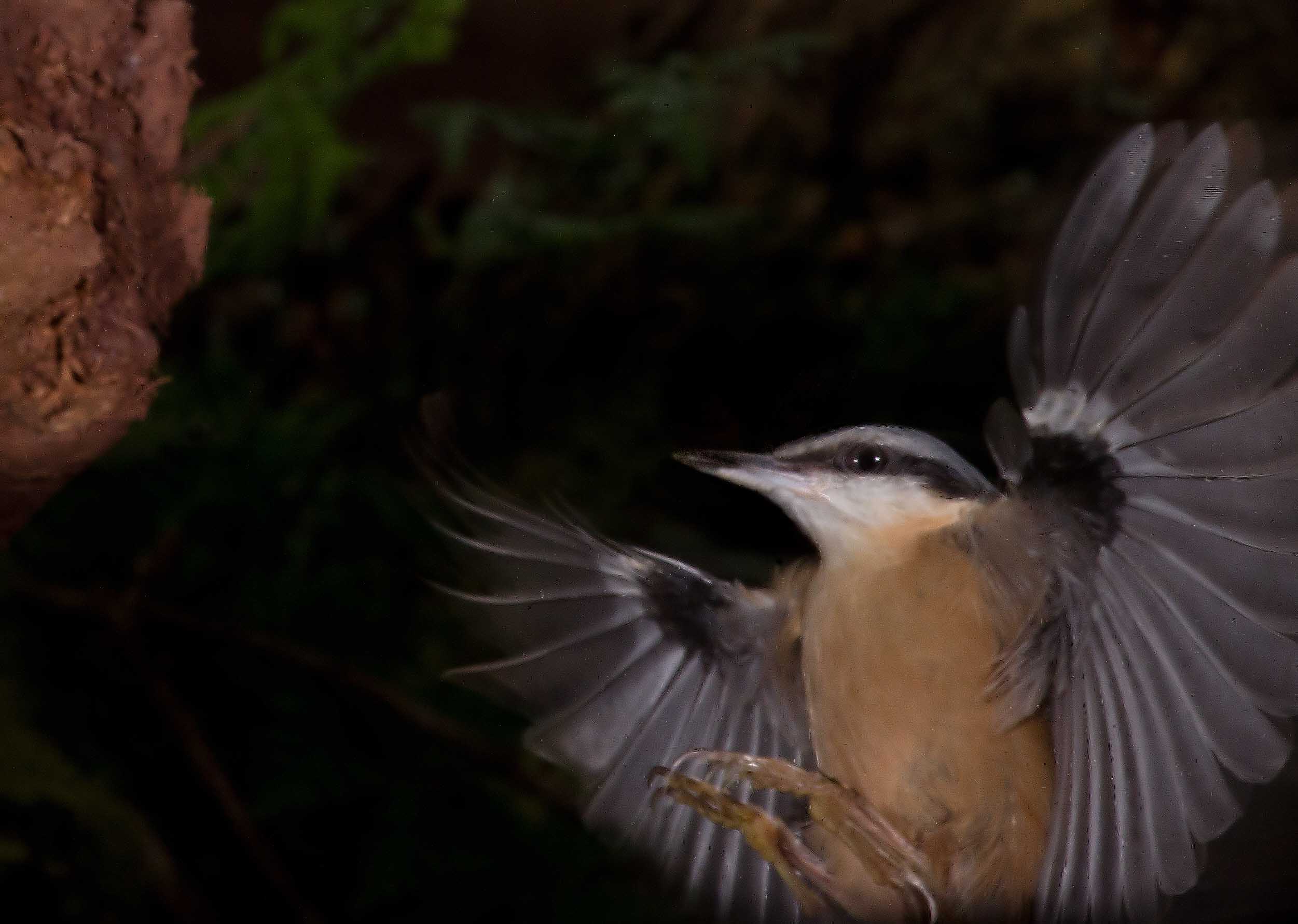
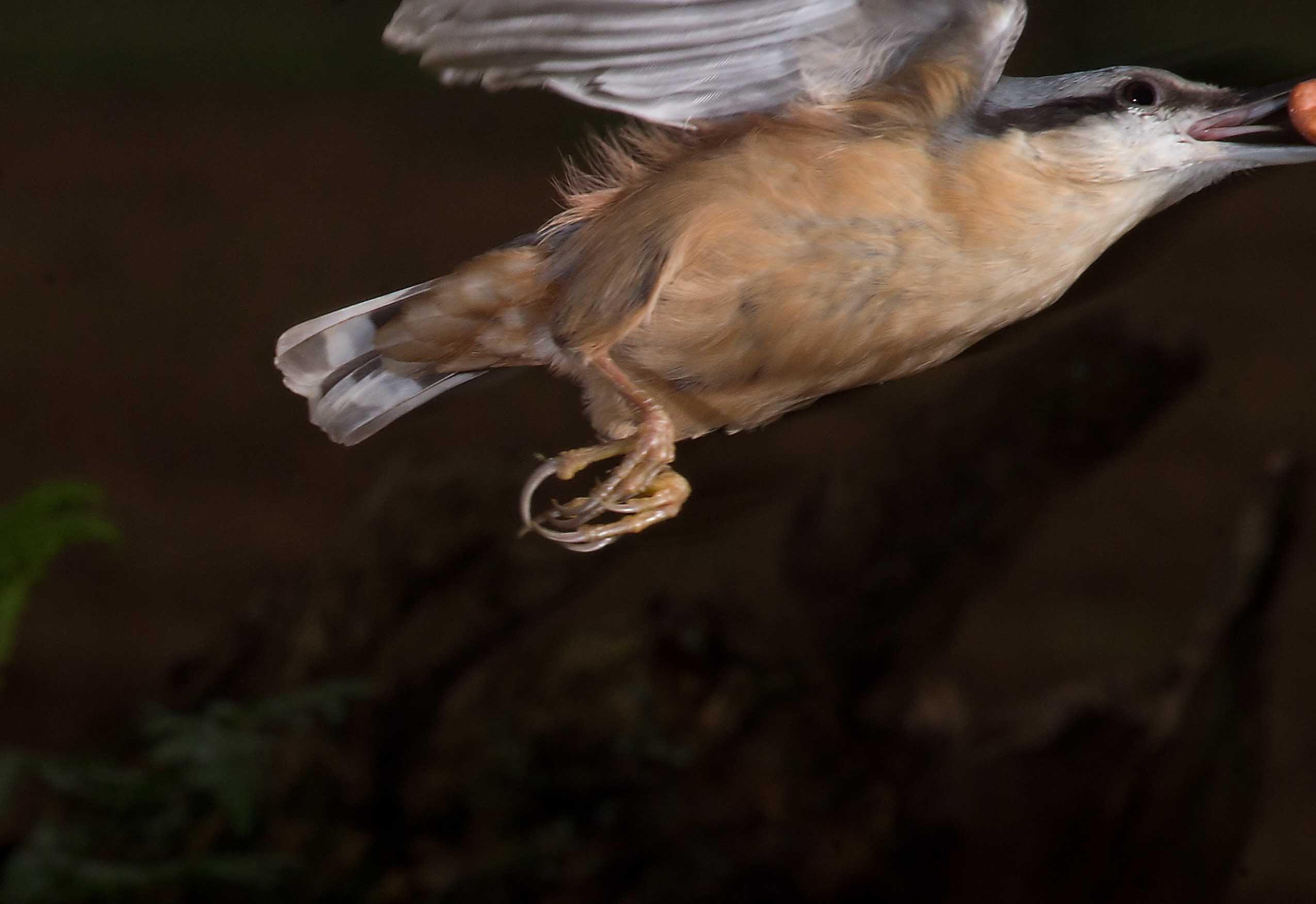
I fitted a 70mm lens on the camera and the had another go. This time when the birds flew off and when I pressed the shutter, I didn't need to be quite so accurate and I could freeze the action with the bird somewhere in the frame. Becaus of the very high "f" stop I was achieving a very large depth of field, this is necessary to be able to make the centre of focus as large as possible because you can't predict what the birds flight path is going to be. I had somekind of success but not as good as I would like.
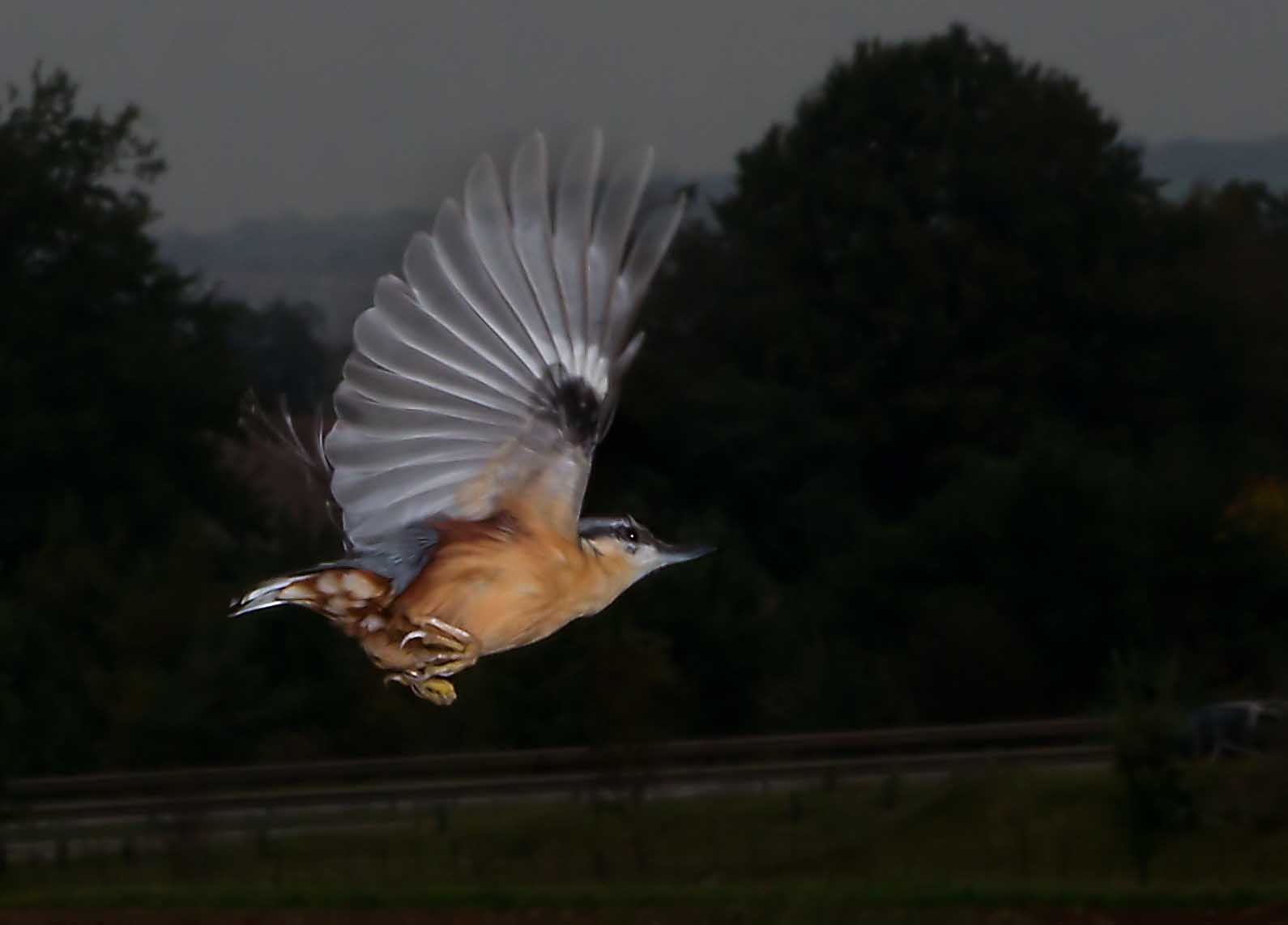
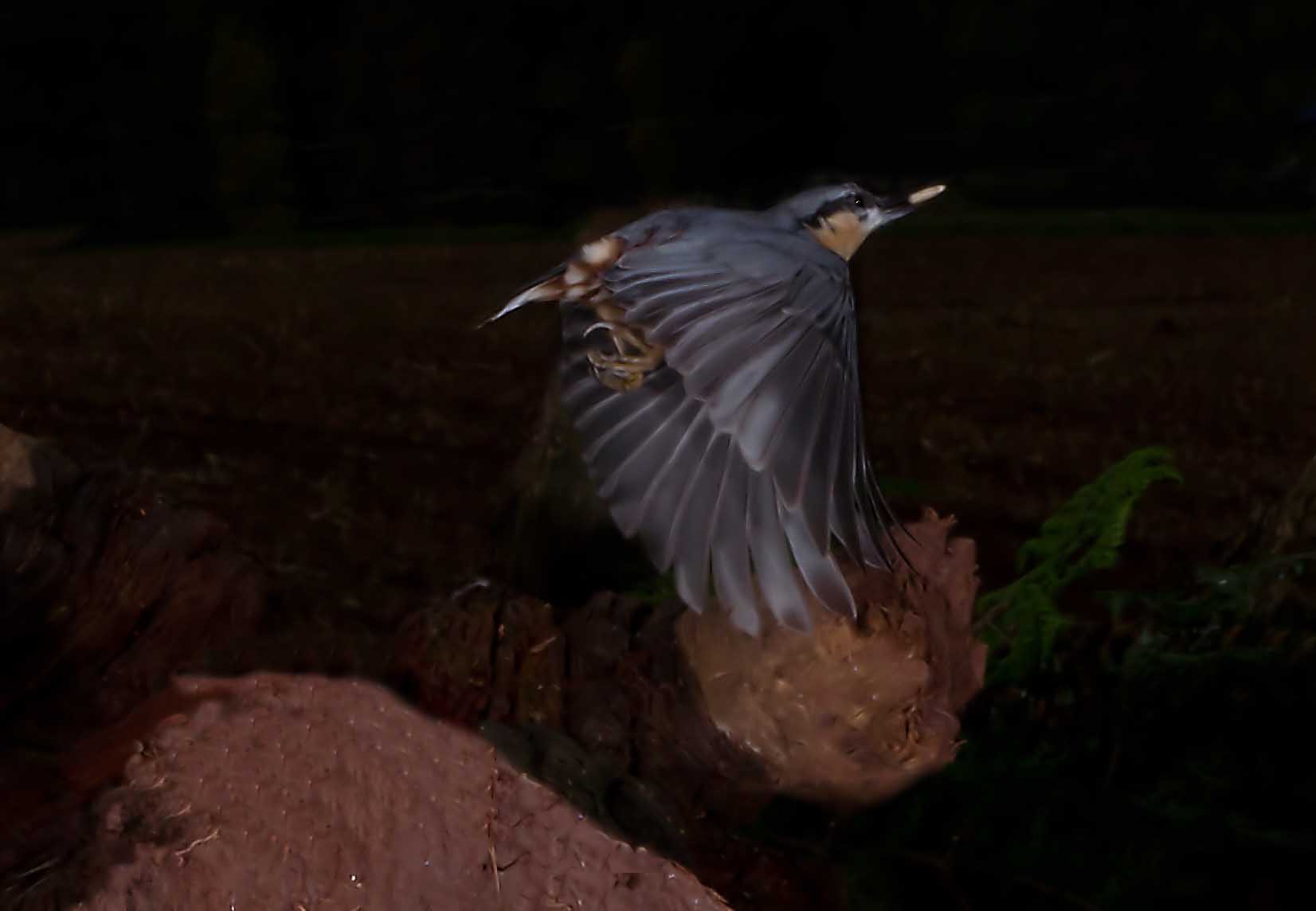
This one, at least gets all of the bird in the frame but still not as a good as I would like it to be, nor is the one beneath either.
I had a manic few minutes, at one point. Suddenly one of the Buzzards flew on to the carcass. I was stock still but even though it couldn't have possibly known I was there it almost immediately chose not to feed but flew on to the nearby fence, then it moved on into the bare field to be chased off by one of the other birds. Perhaps thats why it hadn't stopped to feed, it may have seen it's sibbling and didn't feel confident enough to feed. While all this was going on a Greenwoodpecker called very loudly from the trees around me, I just hoped it would come down to feed but I will have to wait a bit longer for that, but sure it will eventually.
 Wildlife in a Suburban Garden
Leave a comment