
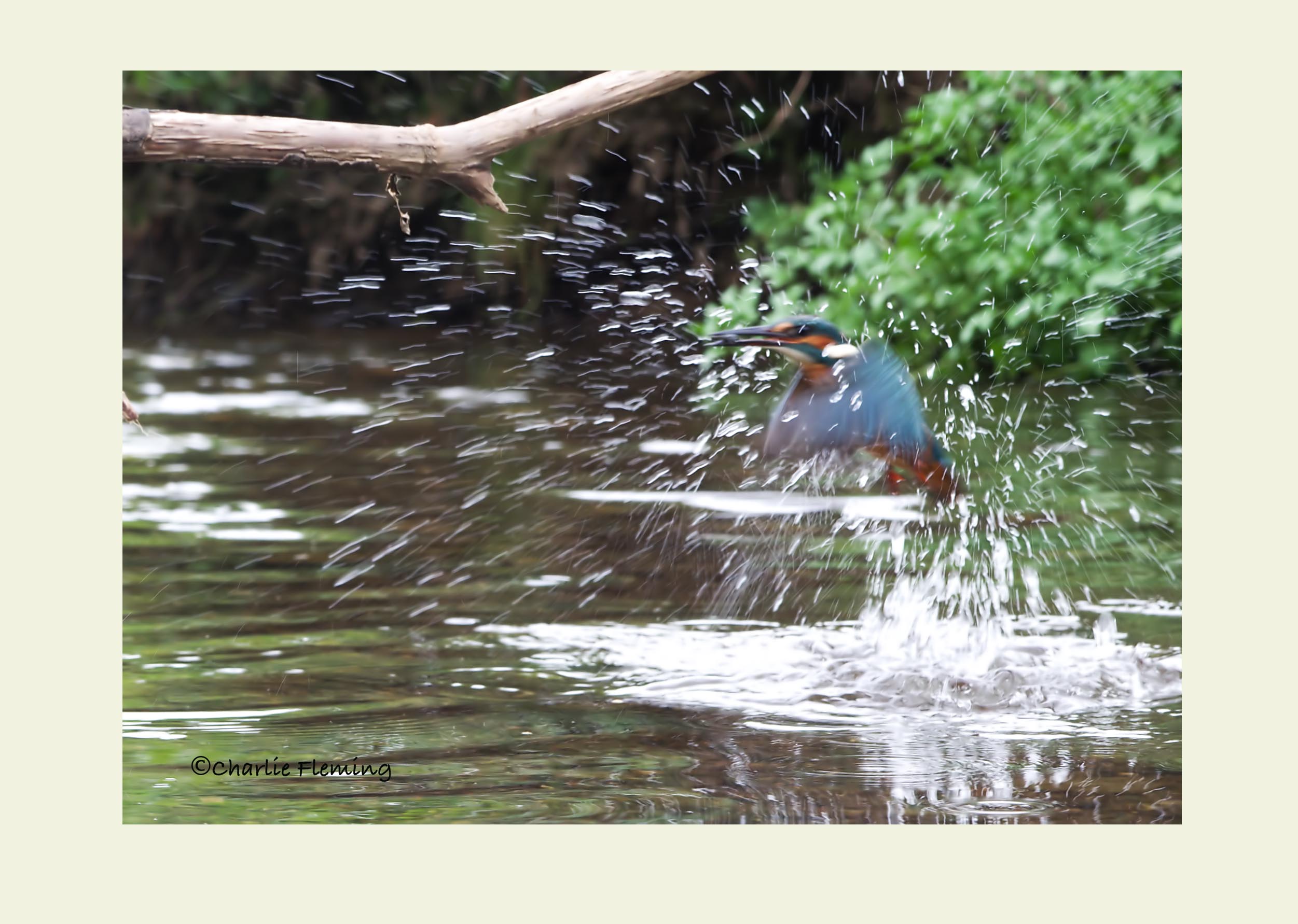
I am trying to ramp up my Kingfisher phoyography to the next level. I have been thinking of a method of getting photos of them diving in and out of the water from down there seemingly at water level. The photo above is an experimental one and not the finished article but in itself, I really like it, it shows real movement and gives a reall impression of the amount of splash when a bird like a KIngfisher dives under water and then emerges to fly back up to the perch.
I toyed with the idea of building some kind of hide in the water but decided that wasn't really practical because of the public nature of the brook. The answer of course is to position the camera in the water and then fire it remotely……. simple! Well not really. With you sat in the hide and the camera 10 feet away on a tripod in the water, you have no control of the cameras settings. This is the reason that the picture above is blurred and the splashing effect has been captured so well. With the camera in front of you, you have total control of the settings and can constantly change them to give you the highest shutter speed possible. But when it is remote from you have to "guesstimate" how to set the camera based on what you think the light is going to be like and thats it. What happened here was, coinciding with he Kingfishers arrival, the light had faded noticeably and when he arrived and performed as hoped, it was dull and I was only getting very slow shutter speeds. I am sure that it wont be very ghard to get the two necessary elements in place at the same time….. a bird, and good light.
This was taken last night at around 7.30. I had been back to the hide for an hour or so prior to an evening out. Usually when a Kingfisher pays a visit it will stay with you for a few minutes and perhaps dive for a fish, sometimes he will be successful but often he won't be so lucky. However the very act of splashing in to the water will disturb any potential prey. They seem to know this and even after they have been successful they will often leave to fish elsewhere. But last night he arrived on the perch with a massive fish, much larger than normal prey, it looks like a small roach. He beat it repeatedly to soften it and eventually after a real struggle, swalowed it head first. I have seen the effect of swallowing large prey before, the bird usually takes it easy for a length of time as the large prey makes it's way down the gullet. This is exactly what happened but I was trappedin the hide with the bird in front of me for 40 minutes. Great to see him but hard to explain why I was so late when I had promised to be home much earler. However, it is good that he is being so successful and already he is a great fisherman. It hasn't taken him very long to hone his skills.


 Wildlife in a Suburban Garden
Leave a comment