
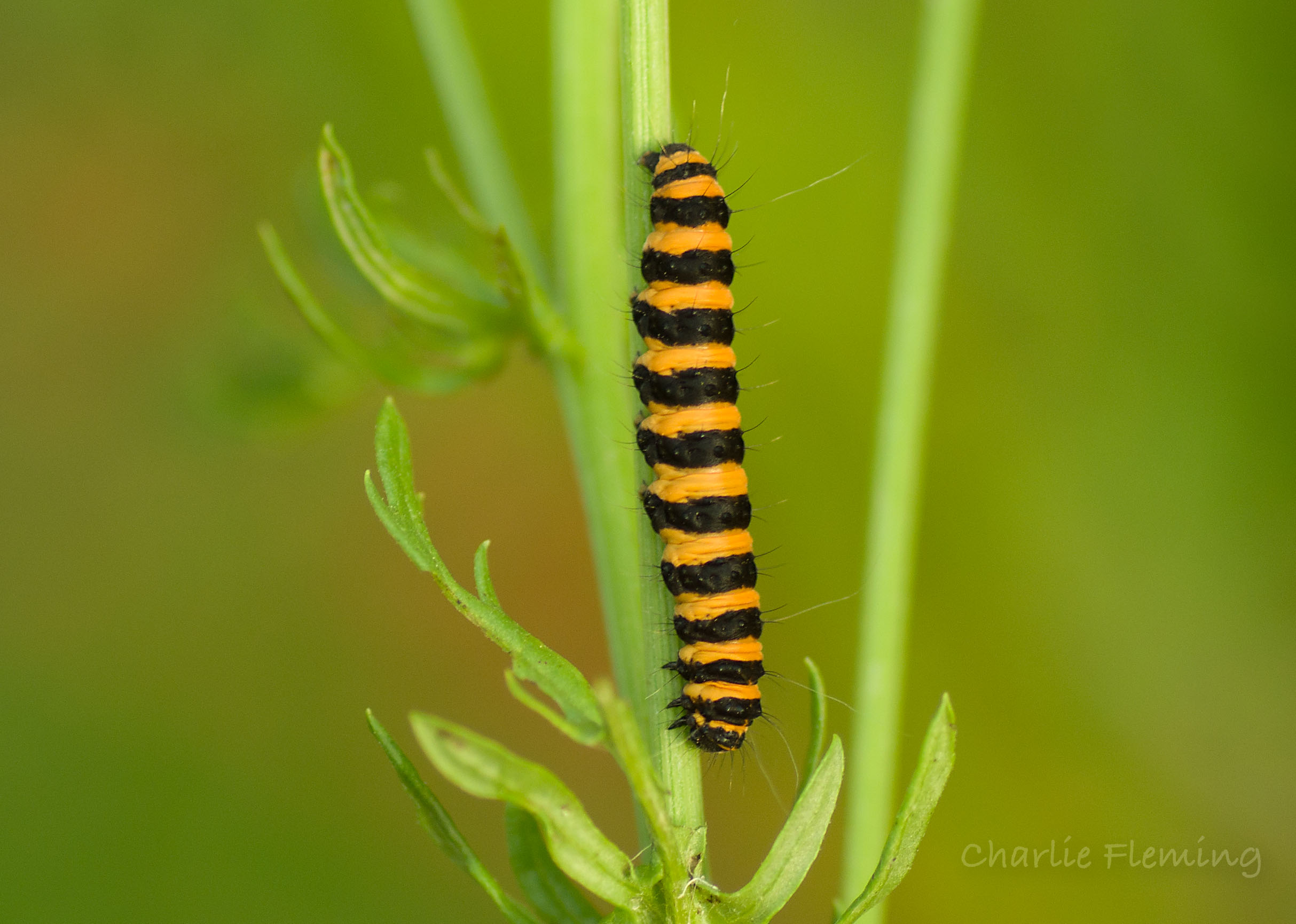
The Cinnabar Moth is a moth that I have always been interested in and as a boy I used to see the caterpillar of this species regularly. I was taught about the relationship that they have with Ragwort by a very good primary school teacher and I can trace my interest in wildlife back to the excellence of the teachers in my first few years at school. .Ragwort is a poisonous weed and every effort is made to try and eradicate it from farm land and even verges. I can fully understand why a farmer would want to clear it from his land because once dead and dried it can be very dangerous to horses if it gets mixed in with hay but knowing, as I do that the Cinnabar Moth relies almost exclusively on this plant for it's very survival then it is short sighted, well lets be more forceful here, no less than criminal that the needs of this moth are totally ignored by local and County Councils. I have even seen Ragwort being aggressively cleared by volunteer workers at Dawlish Warren Nature Reserve and I have confronted them about this on several occasions. I would have thought conservation was the number 1 priority here. Can it be that the people running the show there don't know how important this plant is to this one species. Cinnabar Moths are comparatively rare now and I think this is due 100% to the manic way that it is cleared from land even when there are no grazing species within miles and miles. Appropriately ragwort was used historically as a herbal remedy for hysteria.
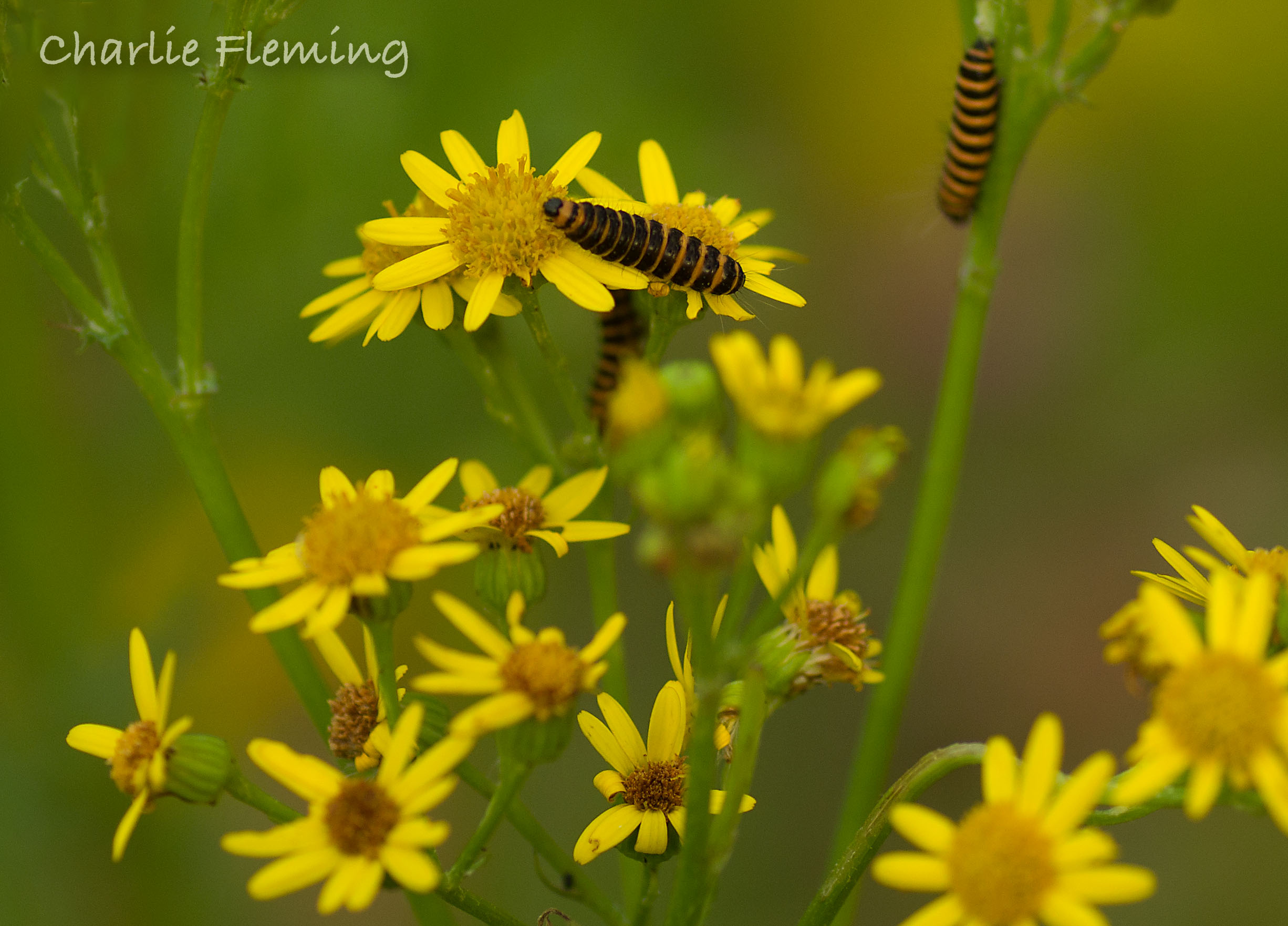
As you can see from the photographs, the caterpillar of the Cinnabar Moth is Yellow with Black Stripes and in the same way that wasps and hornets are striped, this is a warning to predators that they are dangerous and in the case of the caterpillars,distasteful and poisonous. By feeding on the Ragwort the caterpillars ingest the toxins from the plant that they feed upon. August is the time to look for them and you will find them in full view, not in great numbers though, on a growing Ragwort plant (again see the pictures to know what the plant looks like).
The adult moth bears no resemblance whatsoever to the caterpillar and is a really attractive black and red combination. I have always thought of them as a day flying moth but apparently they also fly at night. I saw them here in the meadow amongst the as yet, not flowering ragwort in June and July. Now that you can see how really attractive the Cinnabar Moth Caterpillar is, wouldn't it be an absolute travesty if we destroyed them by taking away their food source because of hysteria?


Leave a Reply