
I have a had a successful year in 2011 with some really good photographic opportunities from both abroad and from here at home. I visited Australia for 5 weeks with a 24 hour stopover in Singapore. The whole experience was as good as anything I have ever experienced. Summer here in the UK was tremendous as well. Then in August I enjoyed a few days in Spain which ended in a disaster with the theft of about £5000 of gear including lenses, binoculars, iBook, cash, Passport, driving license and all my luggage. I managed to put that behind me and due to a combination of other good fortune and a positive attitude, I was able to carry on and start to gradually replace things.
Here is the year represented by some of my most enjoyable memories, captured in photographs. I wonder what 2012 will bring?
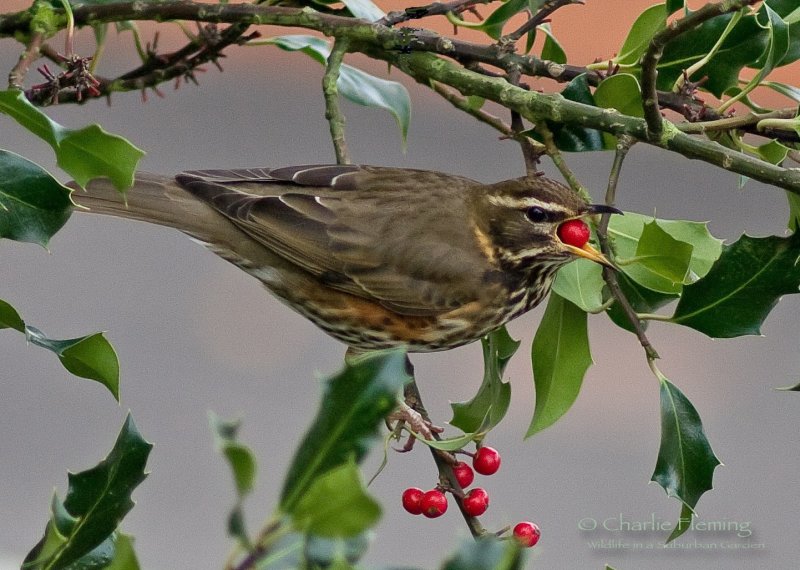
The start of the year was very cold and icy and we were lucky enough to have Redwing visitors in the garden who were taking advantage of the Holly and Cotoneaster berries in both the front and back of my house.
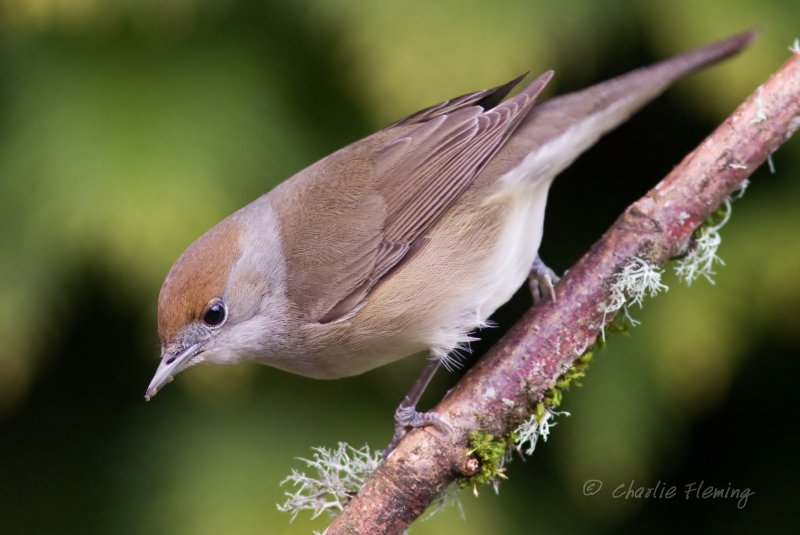
January isn't a bad month in my neck of the woods mainly because I live near to internationally recognised wetlands, Exminster Marsh, a winter home to thousands upon thousands of waders and ducks. The garden always provides good photograph opportunities in the winter in the shape of Blackcap Warblers and this female was a regular in the garden in the beginning of January.

December 2010 and January 2011 was a good period for Bohemian Waxwings. This is an irruptive species, that is to say that they are, in some years, very common but in others hardly even seen. Winter 2010/11 was a great season for them and they turned up in my own village of Alphington and also on the nearby trading estate where they took up residence in a tree adjoining the main Renault dealership! This photo benefits from a lovely background created by the stop lights of a passing van as he bird finished up the last few berries on this Rowan tree.
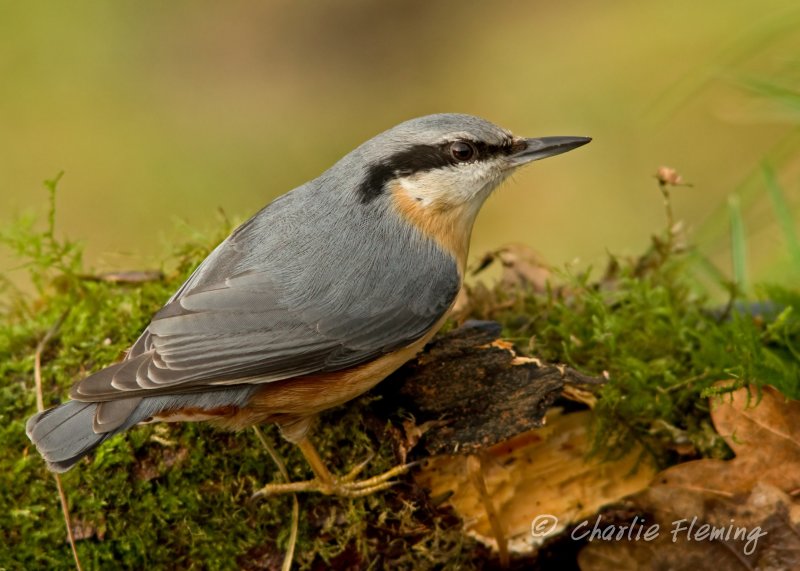
Nuthatches are a favourite species and always so lively, lovely and photogenic. I know of a feeding station on Dartmoor where they come down to the feed along with Tits and finches. I created a good "outdoor-set" with a large seed tray lined with moss and dead leaves. I scattered sunflower amongst the vegetation and from the car, waited for the birds to come and go.
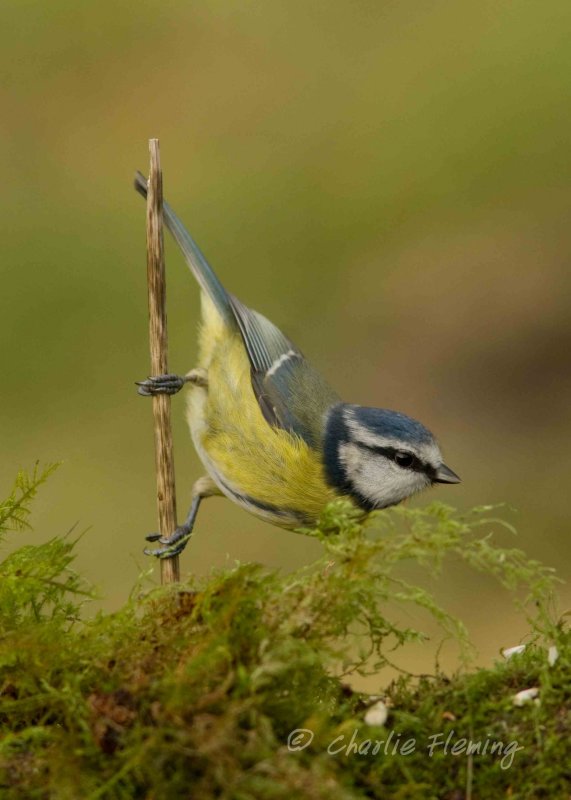
This particular session was a good one and I also photographed the Blue Tit above. Later on in the year I returned to use High Speed Flash and got a few shots of Blue Tits in flight that were very rewarding.
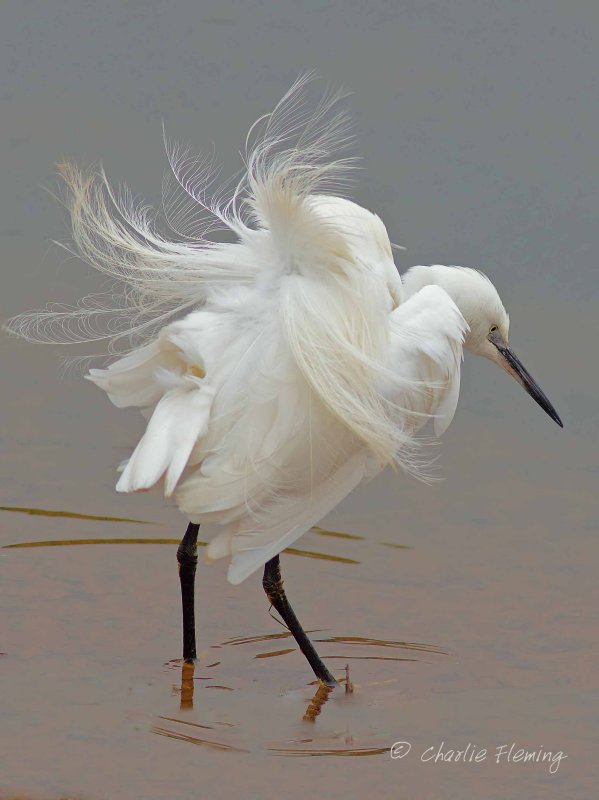
I took lots of photos of Little Egrets during 2011 and possibly the best, at least the one that was the most appreciated by others, was this male in breeding plumage. I took the photograph in the harbour of Lympstone village. I stood amongst the boats and equipment on the morning of a strange eerie day. The light was diffused by massive white clouds and this really helped to define the feather detail as the wind momentarily "tossed" the plumes around. This added to the exciting feeling of movement that I was thrilled to capture.
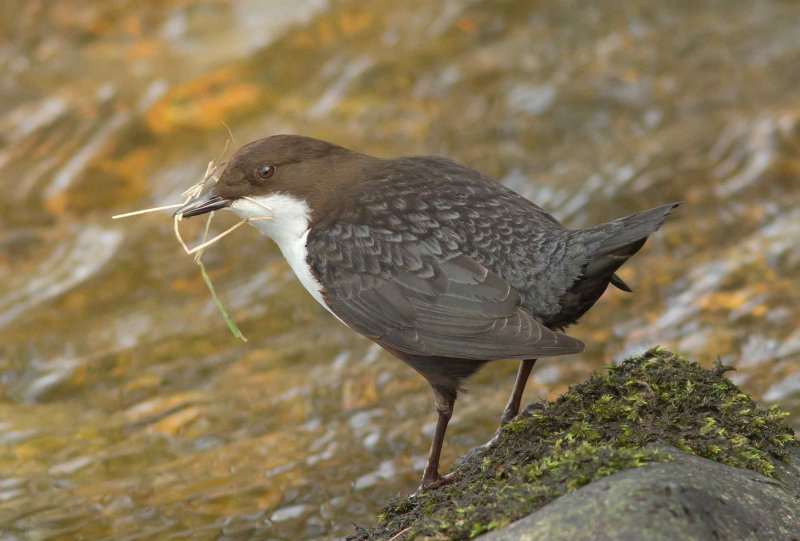
In the early part of the year I discovered a Dipper territory on the River Teign. Eventually I found the nest and with the use of good camouflage, I managed to watch the comings and goings of a pair as they visited the nest to lay a clutch of eggs. The birds would approach and then enter the nest, oblivious of me just 6 feet away. It really was a magical experience. Unfortunately, this coincided with the trip to Australia which meant that I couldn't follow the whole event through to the conclusion, but more about this later.
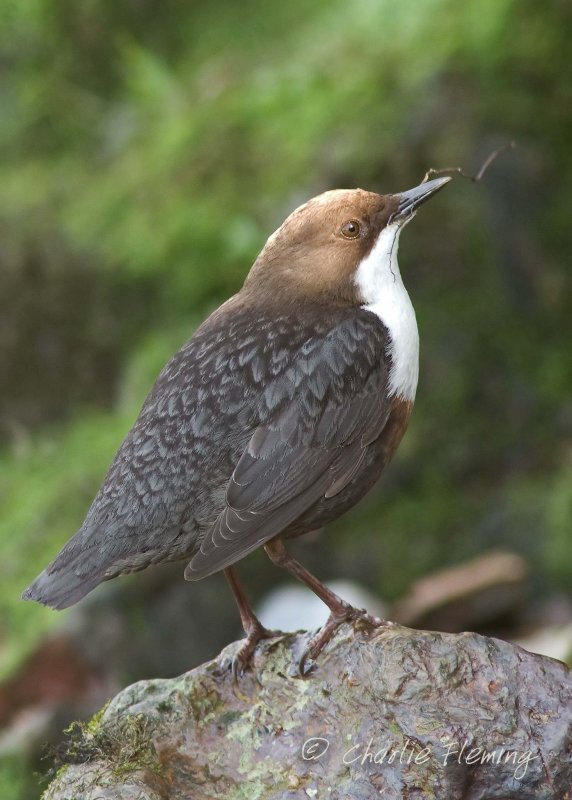
I just adore this photograph I love the way the head ctaches a shaft of light. Everything works for me, its sharp and in focus with a good depth of field. I always strive to capture good detail in the eye and this has worked as well as I could have hoped for.

I'm lucky enough to be able to stay with my son and family close to the Penine moors and specifically a habitat that is one of the last breeding strongholds for Twite in England, Britain's rarest finch? I have been trying over the last 3 years to photograph them and eventually, just before departing for Australia, I was successful. I took advantage of the feeding station set up to attract the birds which is part of the Penine Twite Study.

I had only been in Australia for a few days when my wife and I were invited to accompany the Townsville Bird Club to the village of Paluma high at the top of a mountain range. This is a well known destination for birders. Amongst the great birds seen was this amazing species, the Eastern Spinebill. What a beauty! We were sat eating a packed lunch when it flew down to feed on the exotic flowers in a planted border of one of the houses in the village. It was just one of more than a 100 "lifers" that I photographed….. that is birds seen for the first time in my life. What a trip.

Of all the birds seen on my Queensland/Australia trip, the incredible Rainbow Bee-eater was the most sumptuous and exciting, well worth the 27 hours flying time alone! Not only impressive but common as well. One of the big advantages of being somewhere for more than a few days is the opportunity to really get to know an area. I set about trying to get good photos of Bee-eaters almost as soon as we arrived. The local cemetery was an amazing place to see and photograph them especially in the mornings. The birds used the headstones to hunt from. The retained warmth of the stones meant that the insect prey was on the wing earlier and the Bee-eaters took full advantage. Every morning I watched the incredible spectacle of these iconic birds swooping back and forth. I was sad when I left for home.
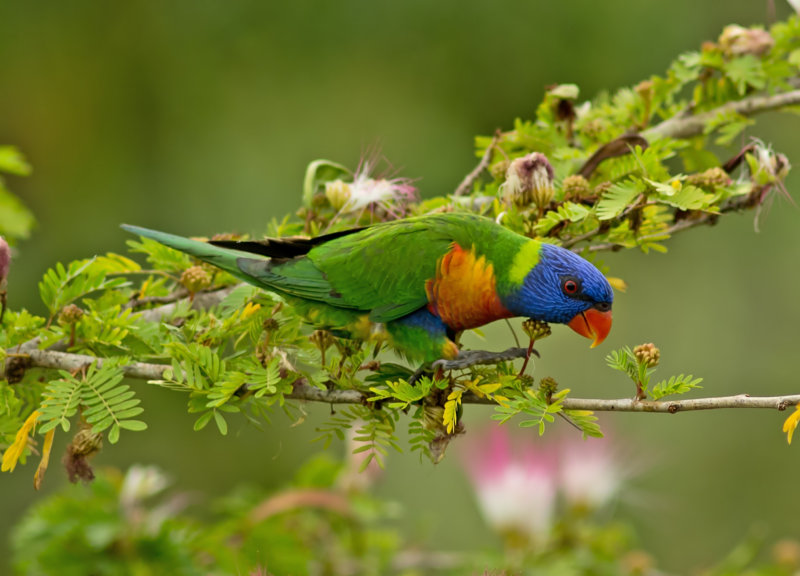
What a country Australia is, if Bee-eaters were not enough, every morning at dawn, peace would be shattered by exuberant, gaudy Rainbow Lorrikeets. They would arrive in small groups to feed on a flowering shrub close to our bedroom window, an alarm clock was definitely not required. But what photo opportunities every single morning and from your bed almost!
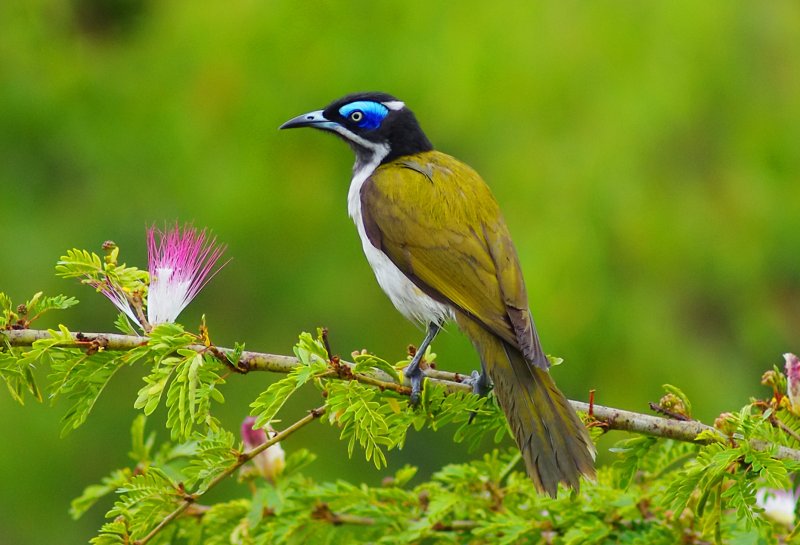
The same flowering tree attracted Honeyeaters and the Blue Faced Honeyeater was a bird that I really enjoyed. Here it is feeding at first light on the same tree as the Rainbow Lorrikeet.
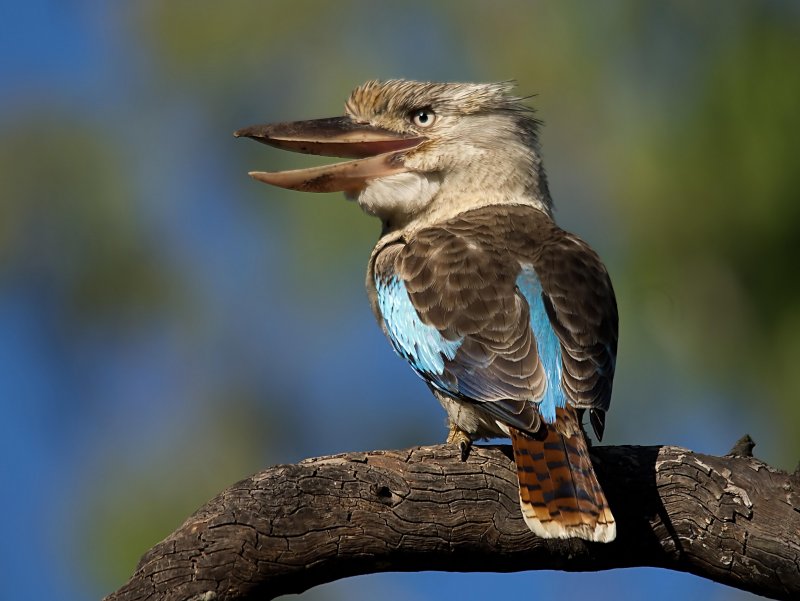
This is a Blue-winged Kookaburra. Near to Townsvile is an attractive beauty spot called Alligator Creek. I visited a few times and each time the resident Kookaburras entertained us. Not only do they have amazing personalities but they are very photogenic. They would wait patiently until they spotted the chance to grab a sausage or piece of meat from the picnickers, even stealing in flight from the barbecue grill.
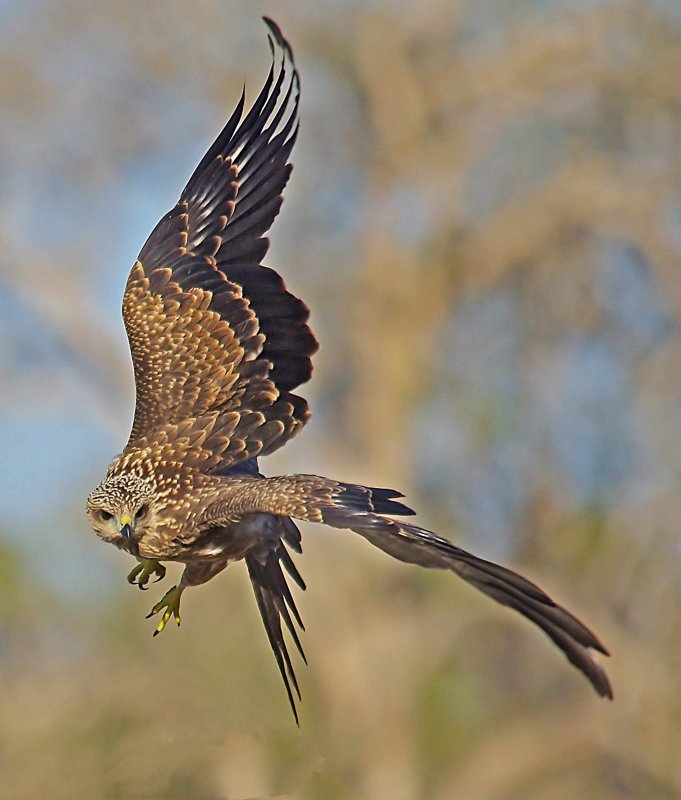
One morning when I arrived at the cemetery there was a Black Kite perched on one of the headstones. I snapped off hundreds of shots as I waited for it to take off and when it did I was ready to capture the moment. I suspect that it was waiting for lizards to appear on the stones.
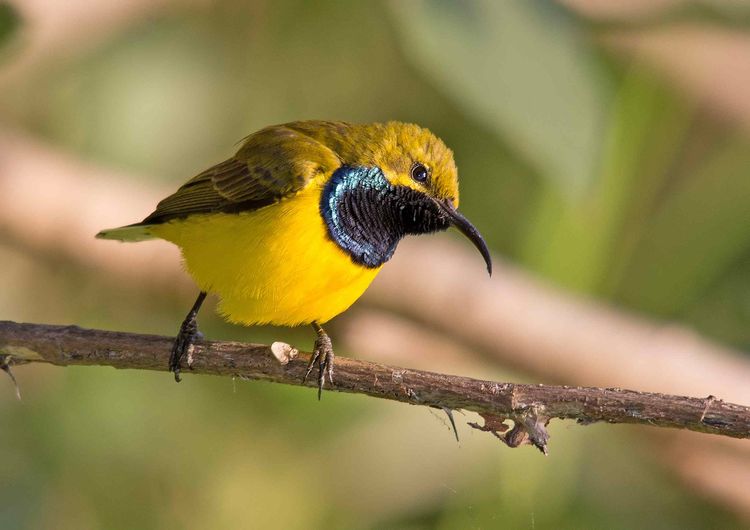
On another morning, just after dawn I went to the hide on the town common reserve near to our house in Townsville. I was thrilled when I was immediately rewarded by the presence of a family of Olive Backed Sunbirds very near to the hide. Capturing the iridescence of the bib was a real challenge.
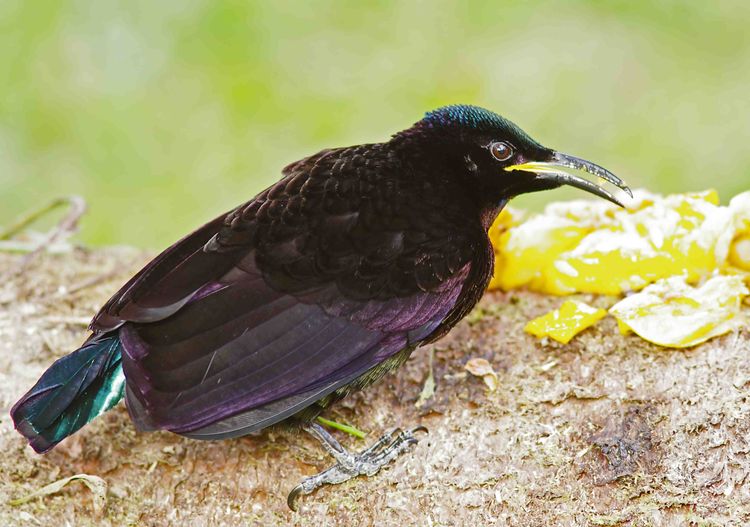
On the subject of iridescence, Victoria's Riflebird was an even greater challenge. This is a species of Bird Of Paradise, and a staggeringly attractive bird and for someone from the UK, a real wonderful bird to see let alone photograph and get close to. On one trip I put my hat on the front of my car and a Riflebird came to look in the hat thinking that I had hidden food in there!
I could have posted hundreds of images from Queensland and it was hard to choose just a few to post here but if you want to see more have a look here.

On my return to the UK I quickly set about my annual quest to photograph Cuckoos. This is a real challenge and I wasn't to know how successful I was going to be this year. Just a day or so before I tracked down the Cuckoo pictured below, I stumbled upon a lovely baby Wheatear (above). This was on Dartmoor in an area that I visit regularly and had recently left a nest that I was lucky enough to discover.

What can I say about Cuckoo's. I just love everything about them. Not only are they handsome but they are elusive and almost mystical. After lots and lots of study and planning with hours of sitting and watching, it was just luck when I eventually found this bird's territory and routine. It was only in the mornings that I saw him, always in the same place and always feeding in the same way. By the middle of the afternoon, he had always gone! Then the following morning he would be back again! After talking to other birders I now realise that in the afternoon he would have been away from his feeding territory and with his "ladies" who would be actively searching out the nests of their hosts in the late afternoon and evening. The photo above is the most appreciated photograph that I have ever taken. On the Birdguides web site, out of 209559 images this is the 10th most popular as voted by readers. Here is a link to Birdguides.
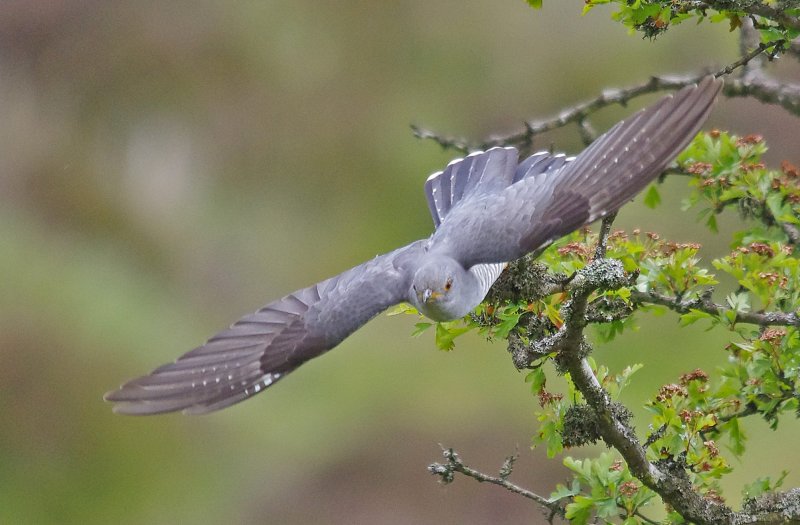
What made watching and photographing this Cuckoo easy in the end was the presence of a good food supply. The Cuckoo would position himself in one of several Hawthorn trees around an area of cropped grass. He would use his perch to sight large caterpillars, sometimes from 30 feet or even more and then gliding down to pick them off the grass before flying back up to his perch. 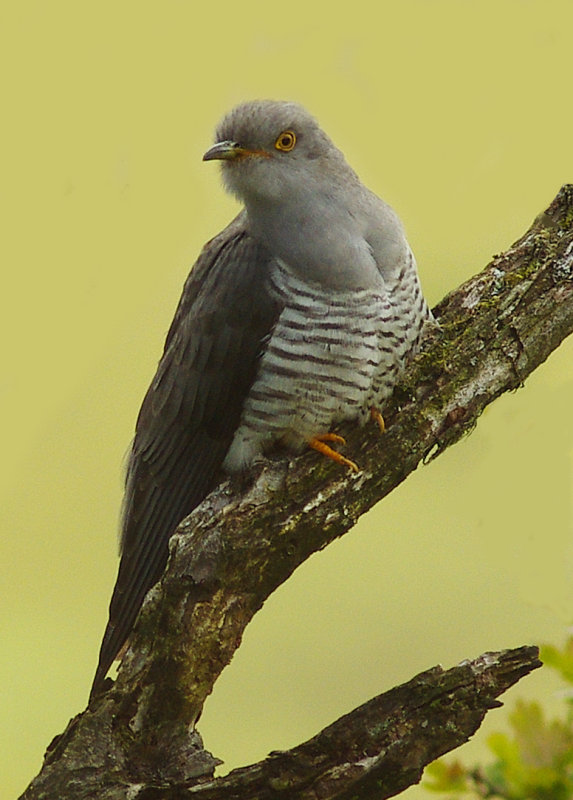
My way of getting close to this bird was to hide myself behind an ancient stone wall that adjoined the grassy area. I could hide myself quite comfortably, dressed in a "gillie suit" including a hood and in this way be almost invisible. This suit has been instrumental in getting me real close to some special birds. Very close to the wall there was a dead, and very photogenic log and while I was waiting for the Cuckoo other birds would come and go, all feeding on the same caterpillars.

This Whinchat was one such bird that popped in to view one morning.
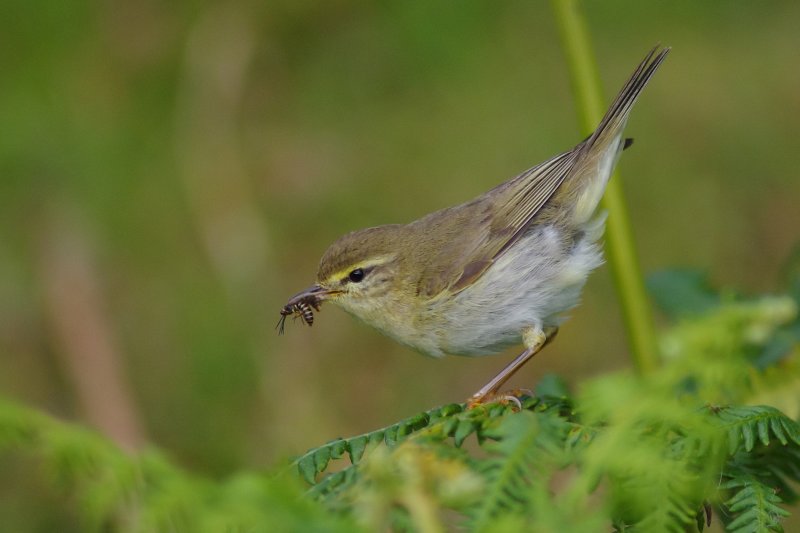
In spite of being one of the UK's most common breeding birds, this year I found my first Willow Warbler nest. I sat watching a pair over several days at a spot on Dartmoor……. my favourite place on earth!!! I knew that they were feeding youngsters somewhere very close but it still took me ages to find the nest even though I saw both birds bringing food constantly. Again, I took some great photographs and you can view more here.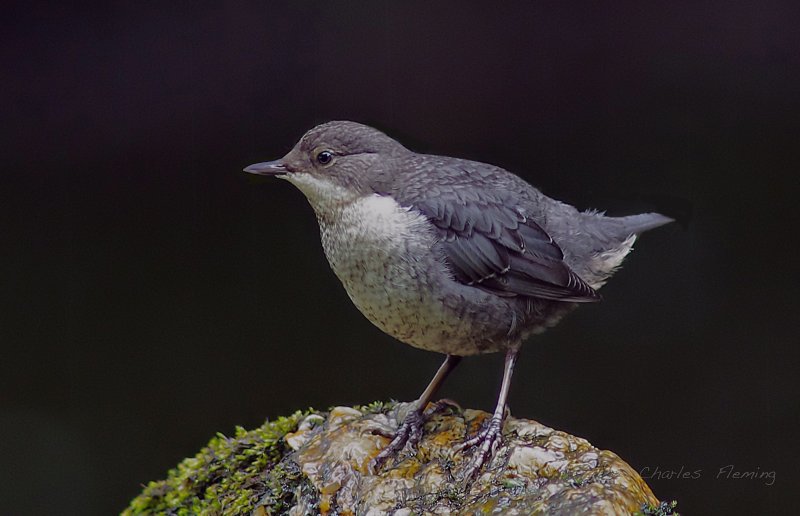
I mentioned earlier that I had been watching Dippers at their nest before I had left for Australia in late April. Although of course, I was pleased and excited about the trip I was disappointed to be leaving the breeding Dippers behind. So, after my return home I went back to their nest site to have a look to see if they had been successful after all. I was really excited to see this youngster in the territory and finished up with a photograph or two to prove their success.
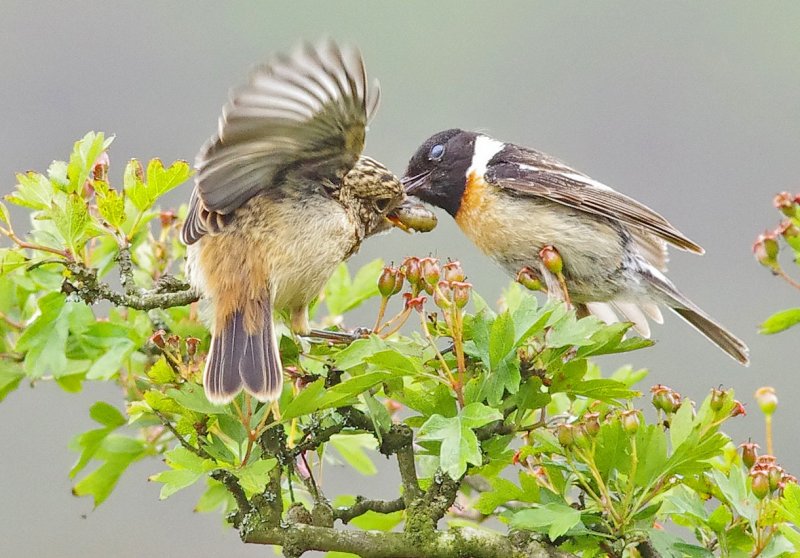
Back out deeper on the moor I continued to watch the spot where the cuckoo had been seen and photographed. A pair of Stonechat were feeding their youngsters, recently fledged and gave me some good photo opportunities.
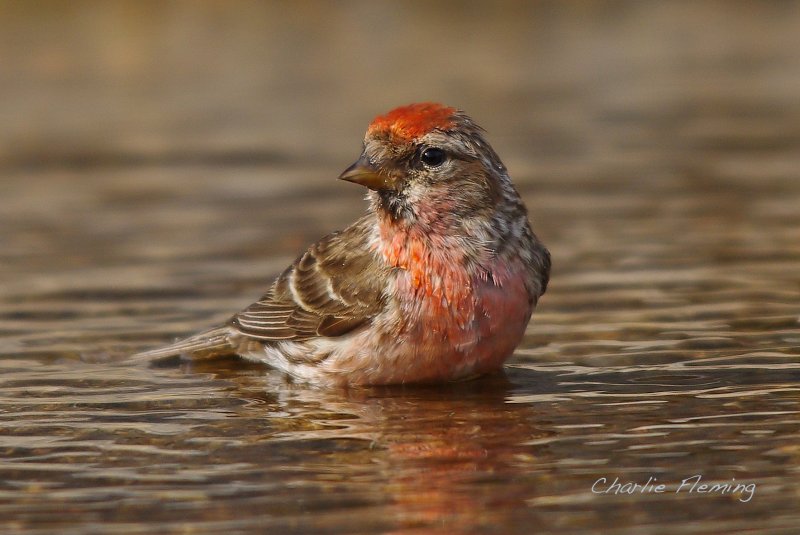
I have another favourite spot on Dartmoor where I have built a little hide/cover on the edge of a pool. It is very productive. My strategy is to sit in this little hide by the pool, totally concealed. Hot days during dry spells are best because the birds come in to drink and bathe in the pool, especially when conditions are dry. I photographed a whole list of birds at this pool, the most exciting being this Lesser Redpoll on July 4th. This was possibly the height of my year.
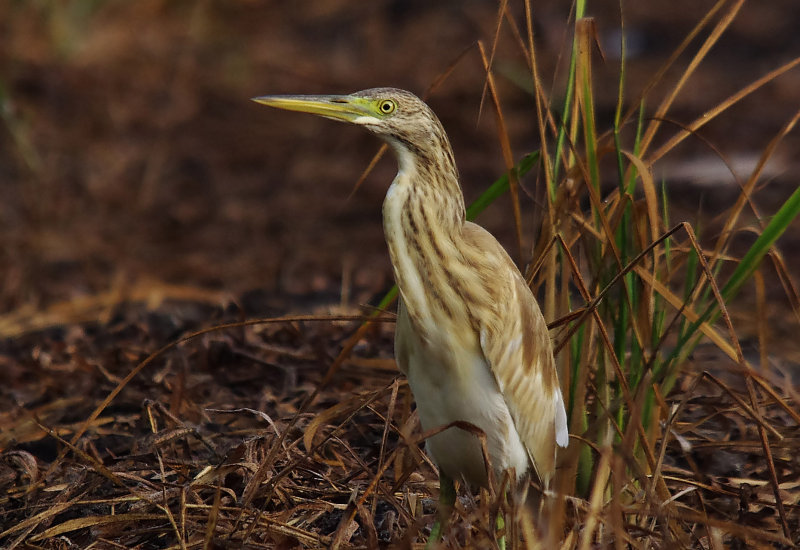
My short trip to Spain, birdwise, was a good one. Unfortunately some of the best pictures were lost when I had my gear stolen but I did manage to save a few pictures which were still on an SD card in my camera. I took very nice pictures of Hoopoe that I was gutted to lose. Squacco Heron were common, here is one of the best ones taken.
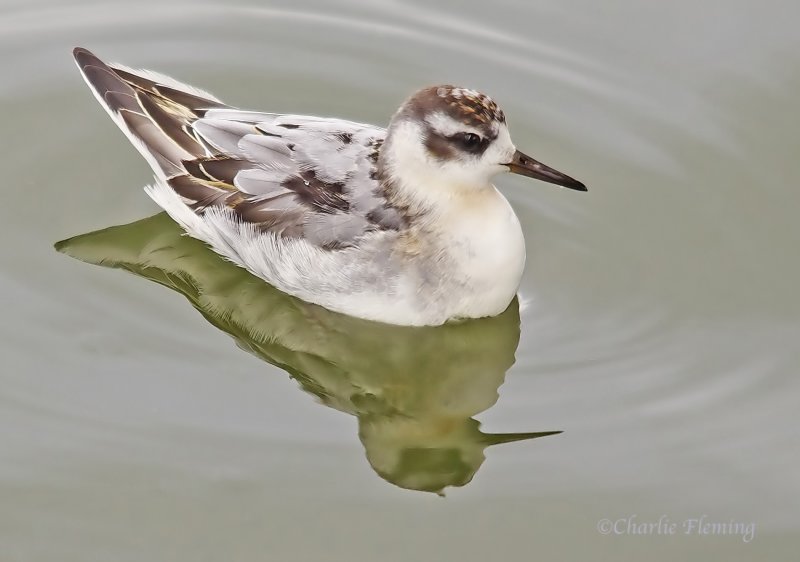
Grey Phalarope are annual passage migrants through Devon and I caught up with this one on Upper Tamar Lake in North Devon. Although they are a great bird to see, it wasn't my best wildlife moment to be frank. I like to find my own birds and wildlife moments, preferring to be alone even if the birds you find for yourself are not quite as notable. Its much better to have them to yourself and far more rewarding. But a great bird for all that.
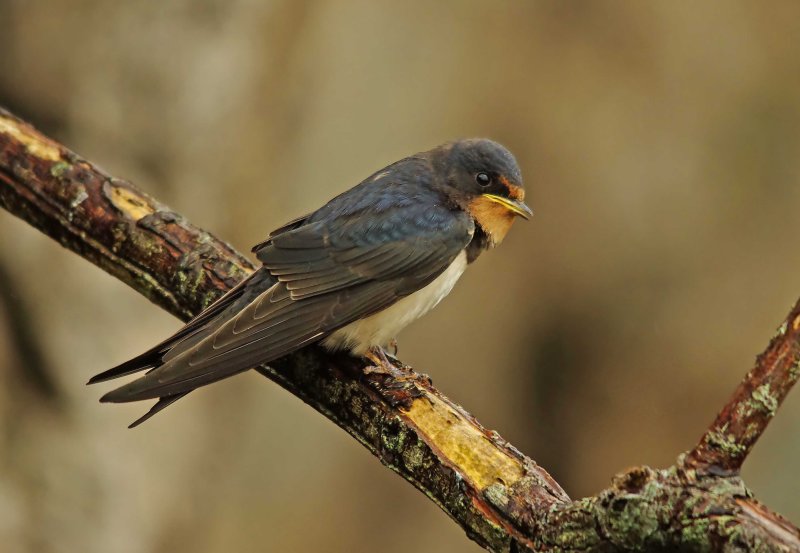
In September my wife, myself and two others traveled to Lundy Island off the coast of Devon. One of my pictures from 2010 had been placed first and the prize was a trip for 4 to the island. Unfortunately the weather was awful on the day. It rained constantly and was grey and desolate. I have no great desire to return to Lundy again in the future, the whole experience was pretty dire to be frank! The only birds seen were species that I could have seen at home and kept dry as well! But I did photograph this nice little Swallow as a memento of the day.
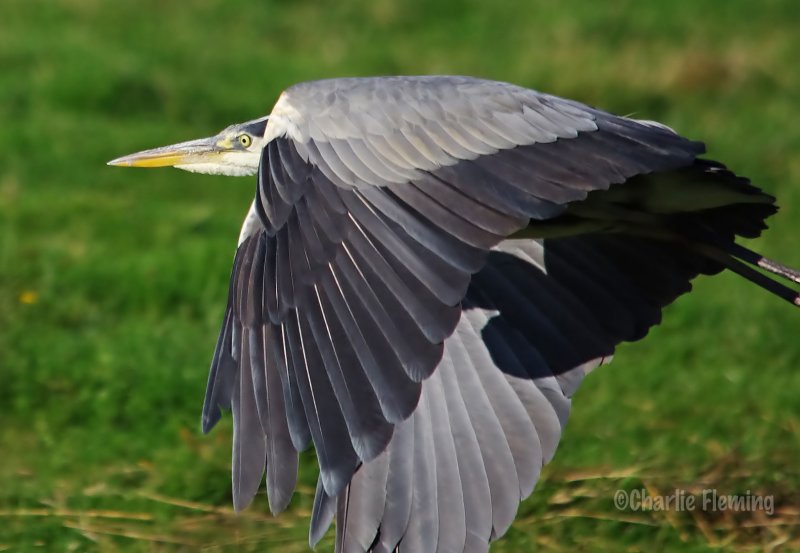
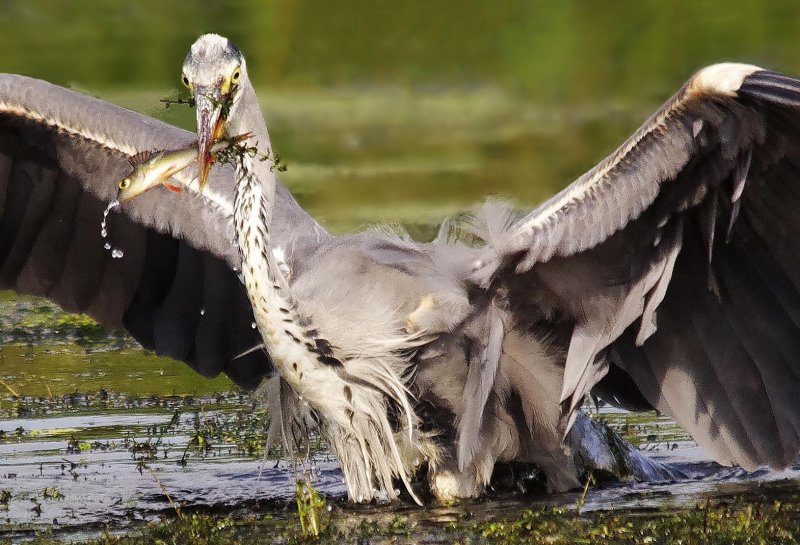
Grey Herons are common in Devon and being the UK's largest predatory bird, pretty impressive to say the least. I love getting close to them and this autumn one particular bird on the Exeter Canal was the most obliging Grey Heron that I had ever encountered. I got to know it's habits well. It had a lot of success fishing of the surface of the canal and once the water had warmed up and the fish moved to the surface it could catch small pike and perch constantly. This provided some really amazing photo opps.
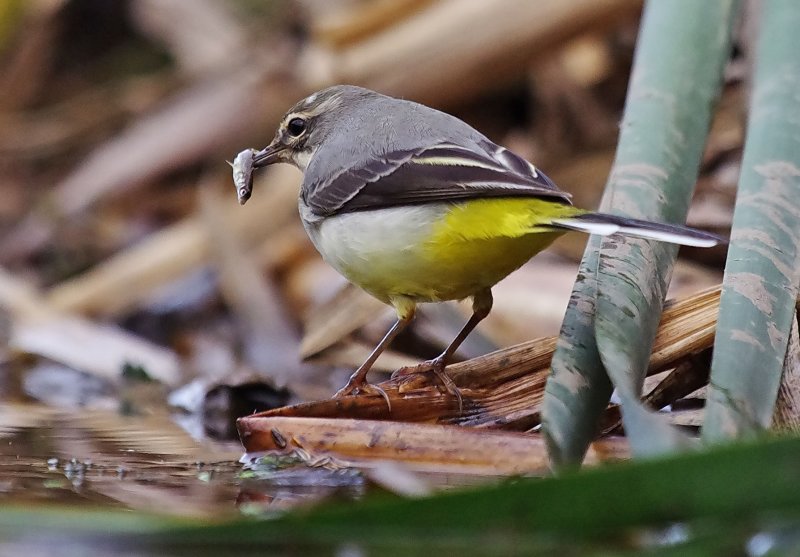
You wouldn't imagine that Grey Wagtails are capable of catching small fish but I was as surprised as you when I photographed this from my Kingfisher hide on the Alphin Brook close to home. It certainly isn't a fluke because over the course of a week or two I observed this regularly.
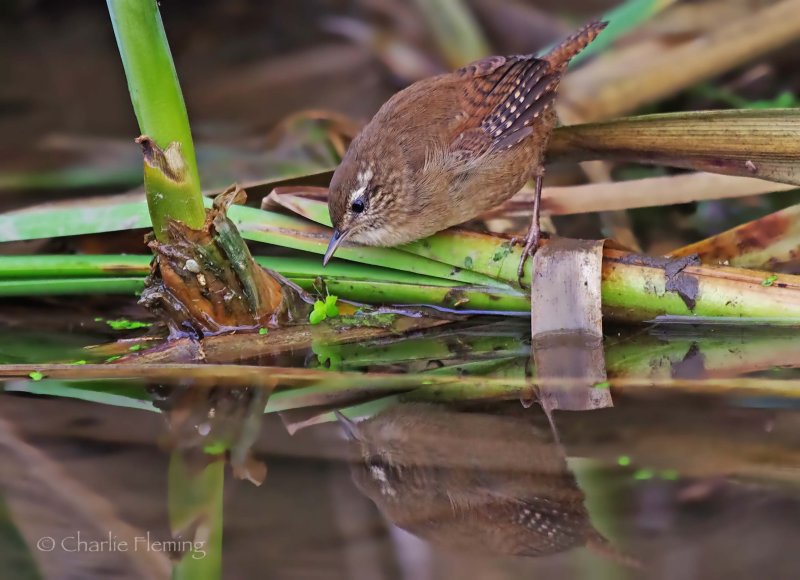
From the same hide I had a regular visit from this Wren who would come down to the waters edge to bathe every afternoon (that I was there at least), at around the same time. It pleased me to get a photo that was more than just a portrait. I try hard when I take photographs, to capture something just a bit different than a simple pose. The reflection achieves that in this photograph.
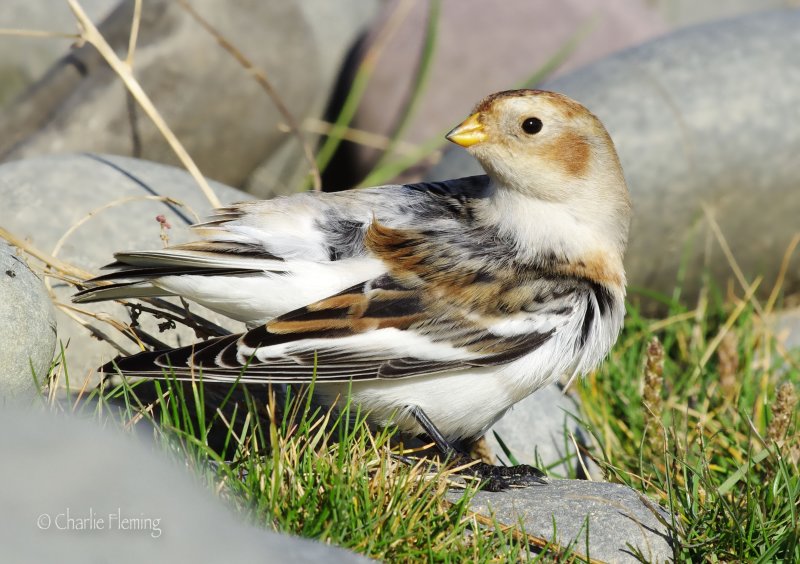
Snow Buntings have been quite easy to find in Devon this winter and we have had them both in North Devon near to Bideford at Sandymere where this picture was taken in October, and also a nice bird on the beach at Budleigh Salterton.
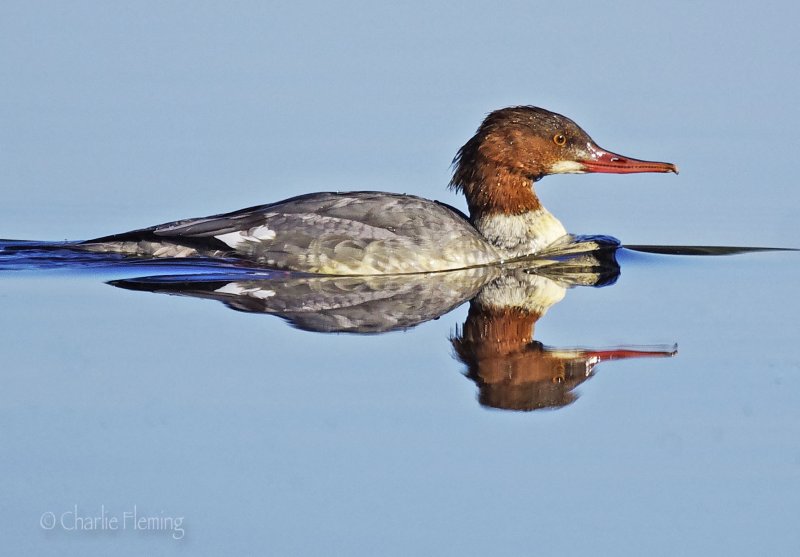
Also back in October I discovered that Goosanders use the Devon Reservoirs as roosts and feeding grounds before the winter sets in. During a visit I noticed that there were a few females on Venford Reservoir. They were not approachable and quite quickly, when disturbed flew accross the reservoir away from the disturbance. I reasoned that it wouldn't be too hard to "stake" out an area of water close to the edge and wait it out for one or two to come close. So camouflaged and concealed I sat for a couple of hours and waited for one or two to approach as I hoped. On this particular day the sun was shining very brightly and when eventually one did venture near, the light was just perfect. This is a "brown-head" female of course.
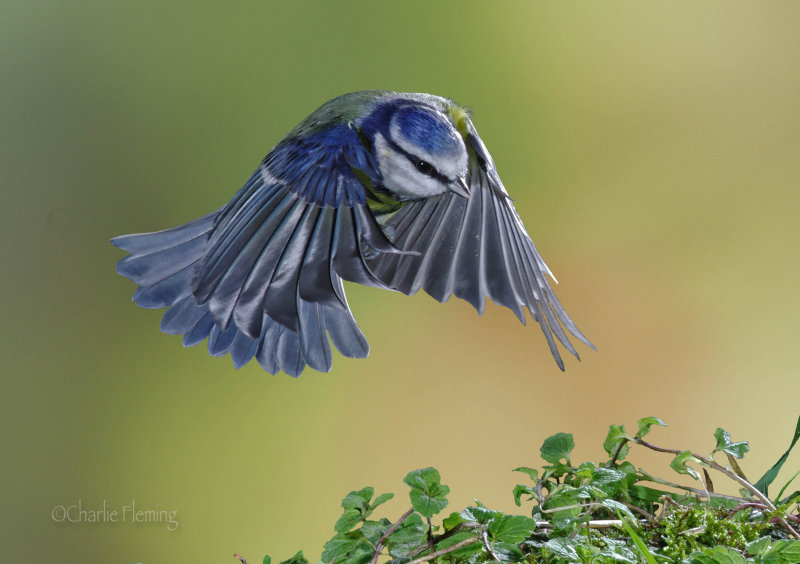
This Blue Tit was taken with high speed flash. using multiple flash guns set at 1/16th power the duration of light is very short and the action can be frozen as you can see. I am thrilled with the result of this "high-speed flash" and can only expect to capture some better and better photographs with luck and patience.
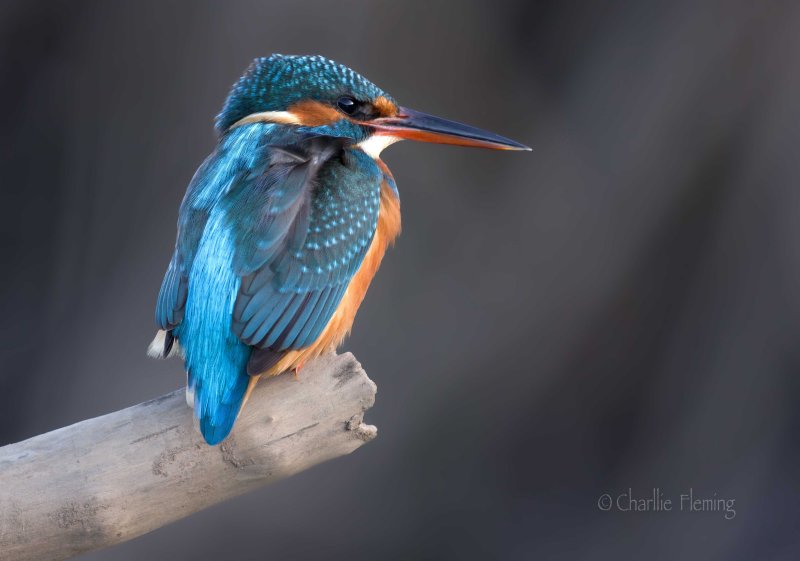
Almost finally, a Kingfisher. I have a hide on my local brook where I photograph Kingfishers. This year, up until late October was nowhere as productive as in the two previous years. But suddenly a female decided to use the territory and that is so exciting. Imagine being 3 feet from a Kingfisher, well I have been closer and very regularly. On one session in December I knew that a bird was around but just couldn't see her from the hide. When I eventually got up to leave I realised that she had been resting on the camera lens protruding from the hide! I have hundreds if not thousands of Kingfisher photgraphs, and at the end of the year I wa able to add to my collection with some great shots like the one above.
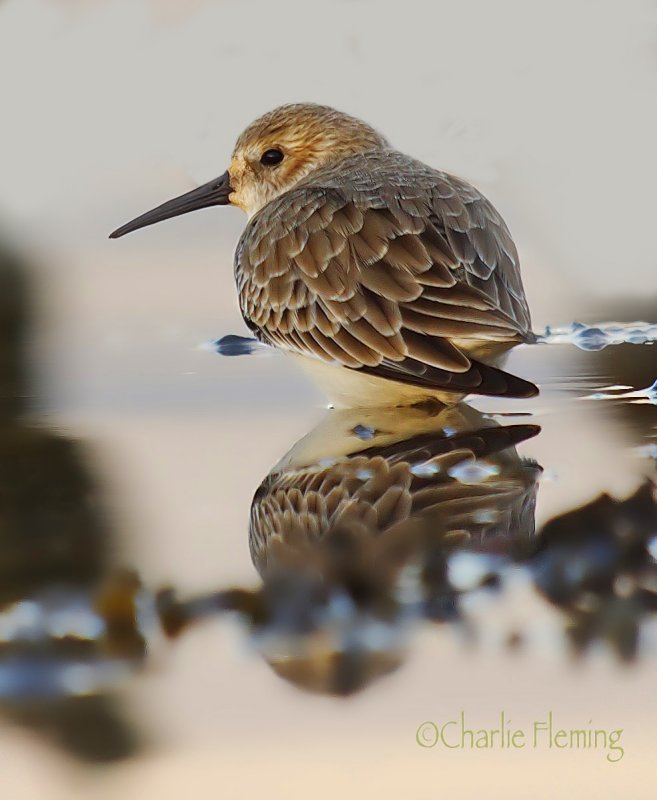
Right at the end of the year I photographed Waders at a high tide roost on the River Exe. It was the shortest day of the year and the sun began to set at aroud 3.30. A lone Dunlin came in and rested on a rock, it was very close! Gradually the water got higher and higher until it was surrounded.
It's now 2012 and whats in store for this year? It gets off to a great start and on the 5th I fly out to South Florida. Watch this space!


 Wildlife in a Suburban Garden
Leave a reply to neil Cancel reply