
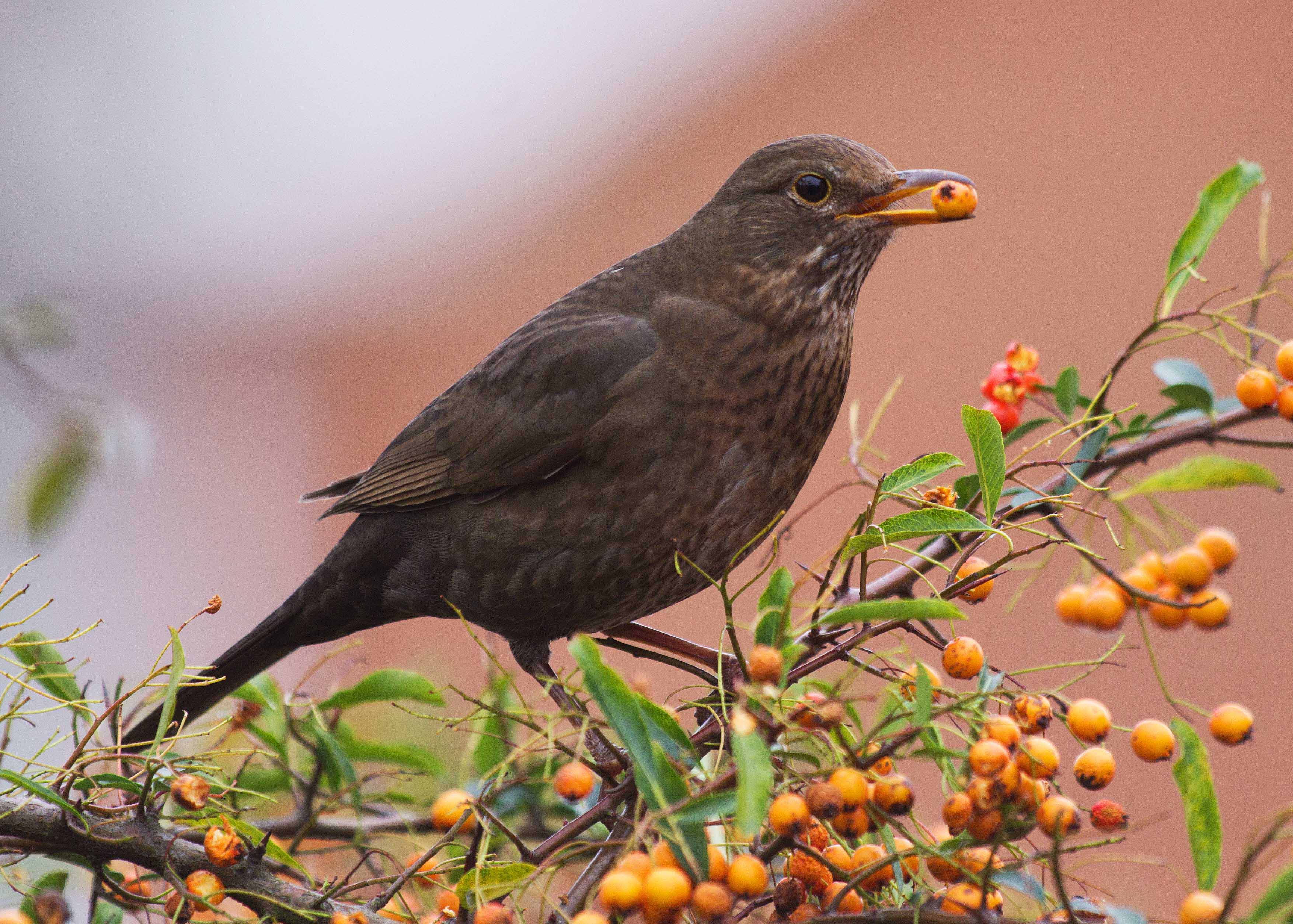
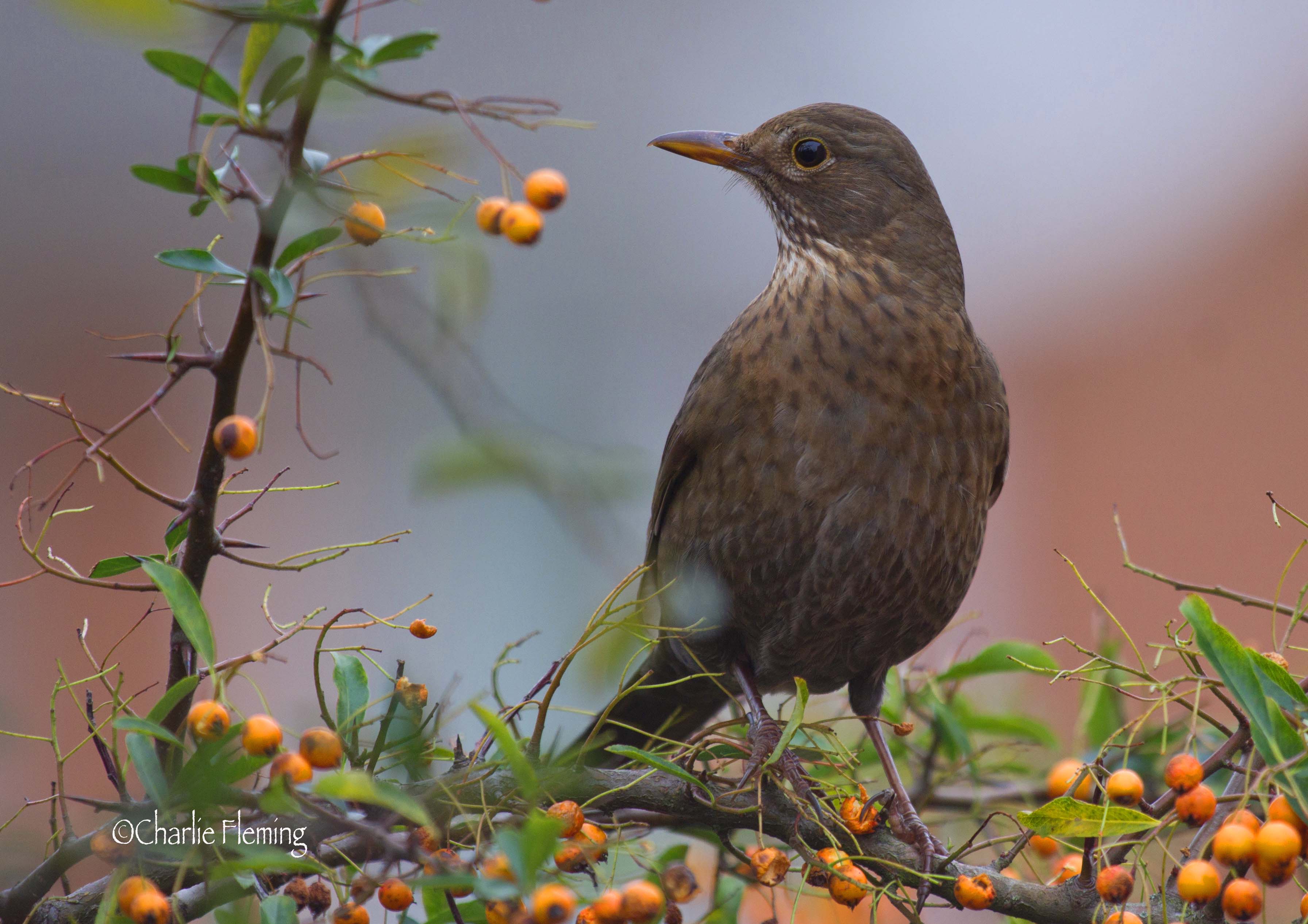
A few photos from the garden today including this photogenic female Blackbird feeding on pyrocantha berries. I plonked myself on the top of my flat roofed garage and sat in my chair hide. I was waiting for one of the Redwings that have been feeding in the garden since Christmas Eve. Redwings are a European thrush species that winters here in the UK. They are feeding on the berry bushes in my garden at the moment. This is an anual event when they join the resident Blackbirds, local Song Thrushes and migrant Fieldfares in a berry feast. It is worth mentioning a few facts about Blackbirds – (Turdus merula) because I have lots of visitors on the blog from the USA and Canada who are probably not familiar with our European Blackbirds. Unlike your New World Blackbirds, the European Blackbird is a "thrush" and as you can probably tell, closely related to the American Robin (Turdus migratorius). In fact the probably fit the same niche as your American Robin. They are about the same size and as the name suggests, the male is a jet black bird with a yellow beak. Females are brown with just a hint of a speckled breast like the Song and Mistle Thrush. Males sing a beutiful lyrical song which is an evocotive part of England, particularly at dawn and dusk in spring and summer.
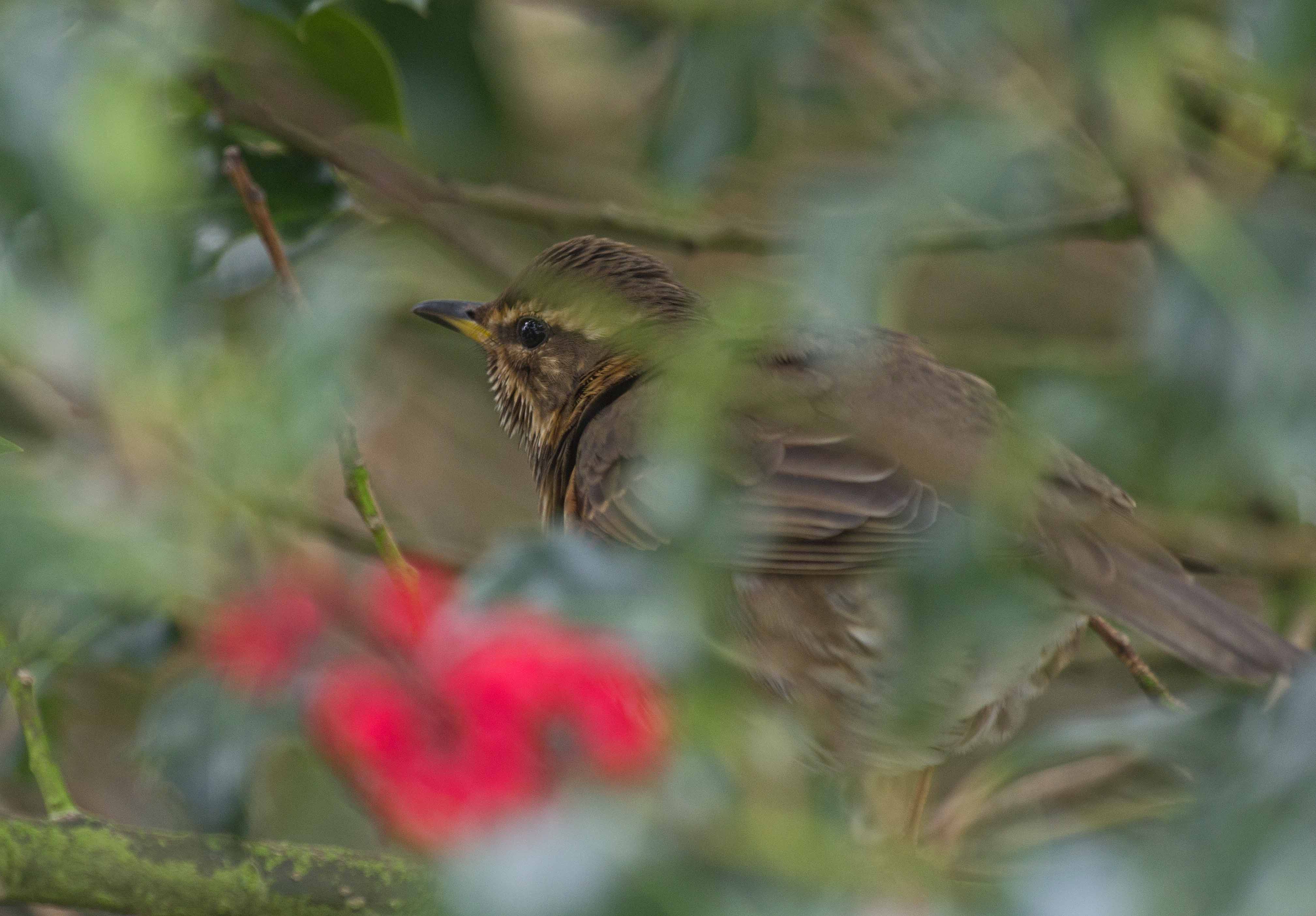
I never did get a really good shot of the Redwings, but there is always tomorrow! In addition to the birds already mentioned we had a nice Wren – Troglodytes troglodytes in he garden as well as another male Blackcap, to read about my garden Blackcaps this year and their story, click on the link here.
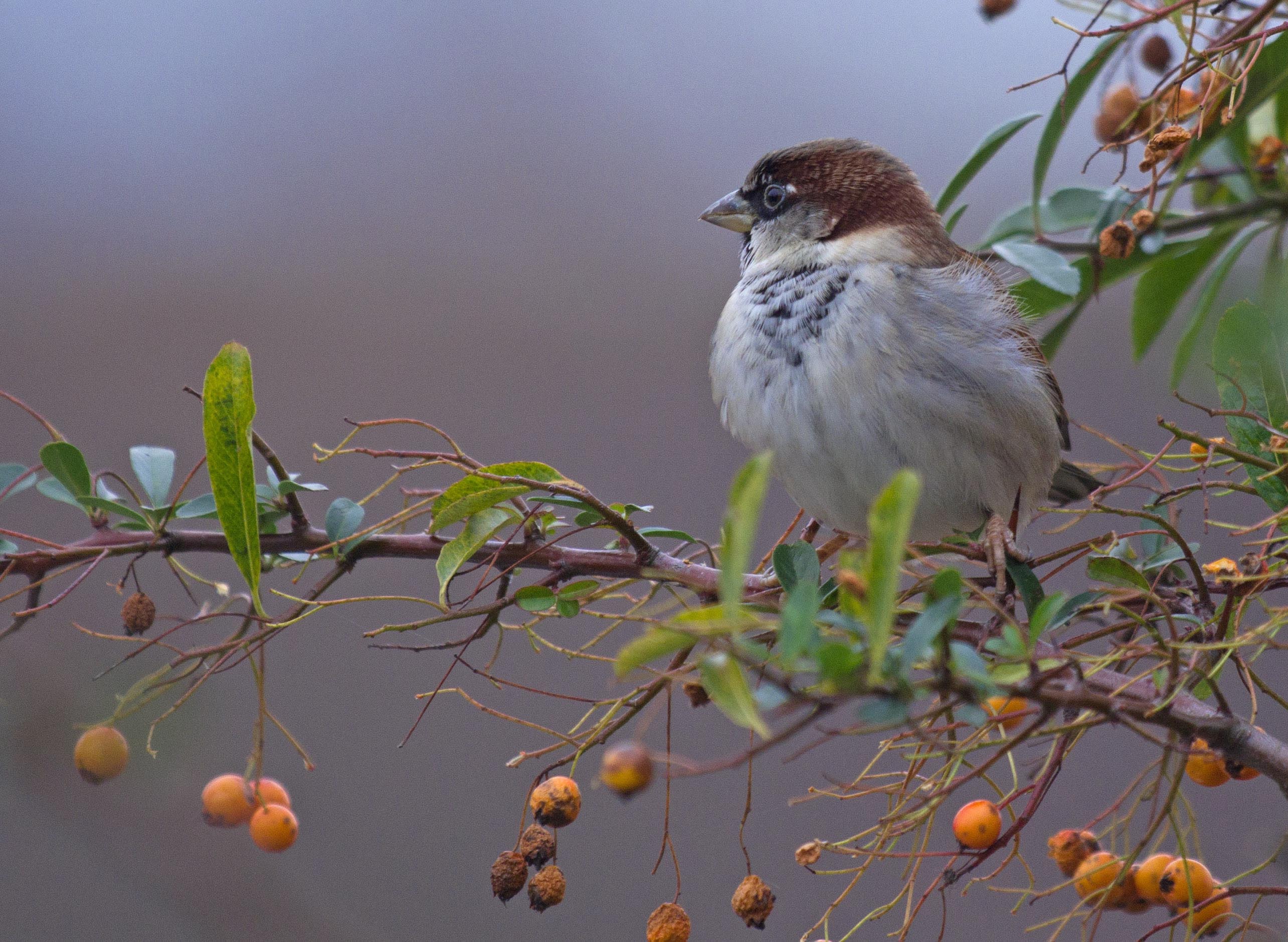
On the same theme; that is, birds who may or may not be familiar in both Europe and North America, the House Sparrow – Passer domesticus is a worrying bird for British and European ornithologists. This species is just as common in the US as it is in Europe and maybe even more so because they are in massive decline here in England. At one time they would have been present in English gardens and Cities in pest and plague proportions but are now absent from most English and Eouropean cities where they were once numerous. There are lots of theories as to why this is but as far as I can discover, no one seems to be doing anything about it. I am, however, quite lucky because they are still common in Exeter, Devon and we have them daily in my garden.

 Wildlife in a Suburban Garden
Leave a reply to Paul Cancel reply