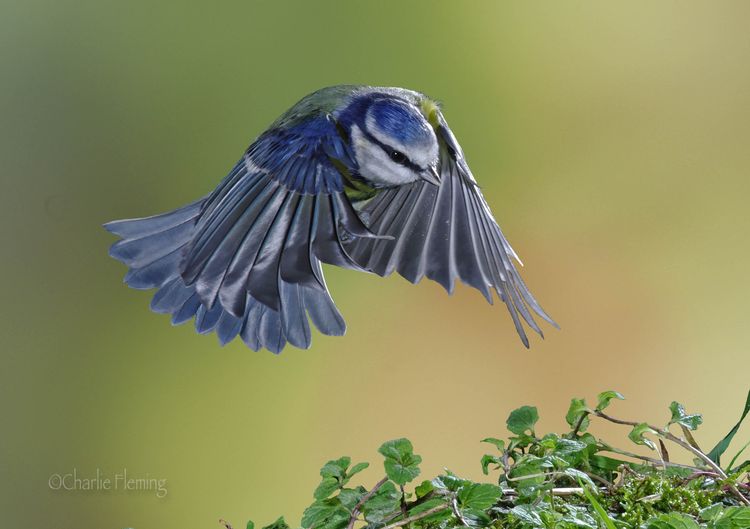
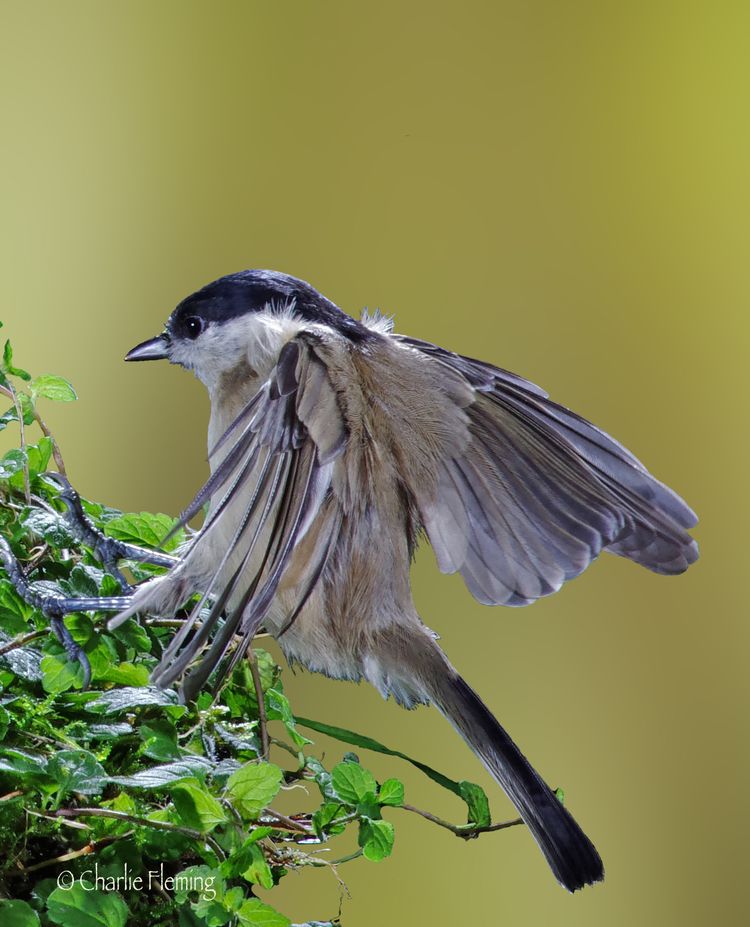
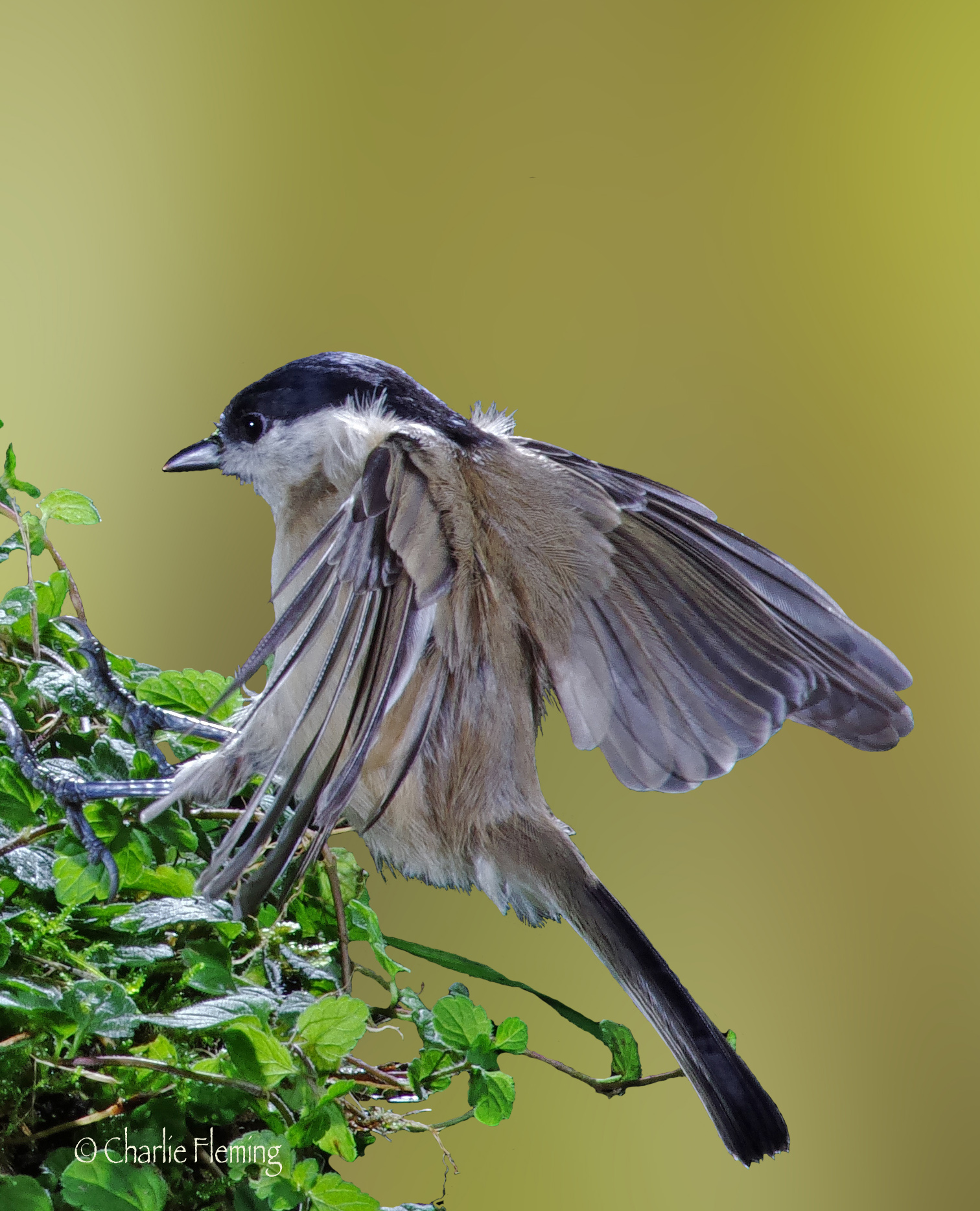
I continue with my High Speed Flash experiments and yesterday when it was obviously not going to rain, I went back out to Dartmoor and to the feeding satiation where I knew there would be good opportunities to practice the technique. I set the gear up and the birds eventually got used to it all and started to feed with some real enthusiasm. There were Blue Tits, Robins and Marsh Tits with the odd Coal Tit. Oddly the Great Tits don't seem to, as yet like the gear and even though I could hear Nuthatches in the trees very near by, they wee not brave enough to venture down…….. but they will I am sure. Can't wait for that to happen, its going to be magic when they do. This will give me the chance to capture them "in-flight".The lessons I have learned so far are numerous but the most obvious is not to over expose the image, in short, don't set the flash guns be too bright. it's early days but these two are getting near to what I am looking for. However, it's pretty hit and miss and you have to be prepared to have about 5% success rate.In other words out of 100 shots you ae lucky to get 5 that are any good. As I mentioned, Marsh Tits are quite common at this site, at the moment more common than the Blue Tits which is obviously brilliant to see. This is due, I think, more about their more confiding nature, they don't seem to be too concerned about the falsh gun, or for that matter me either. Being the rarer of the two species though, photos of them are more rewarding and perhaps "valuable" but I have to be honest, if you were a complete stranger to both species you would think the Blue Tit much more attractive.
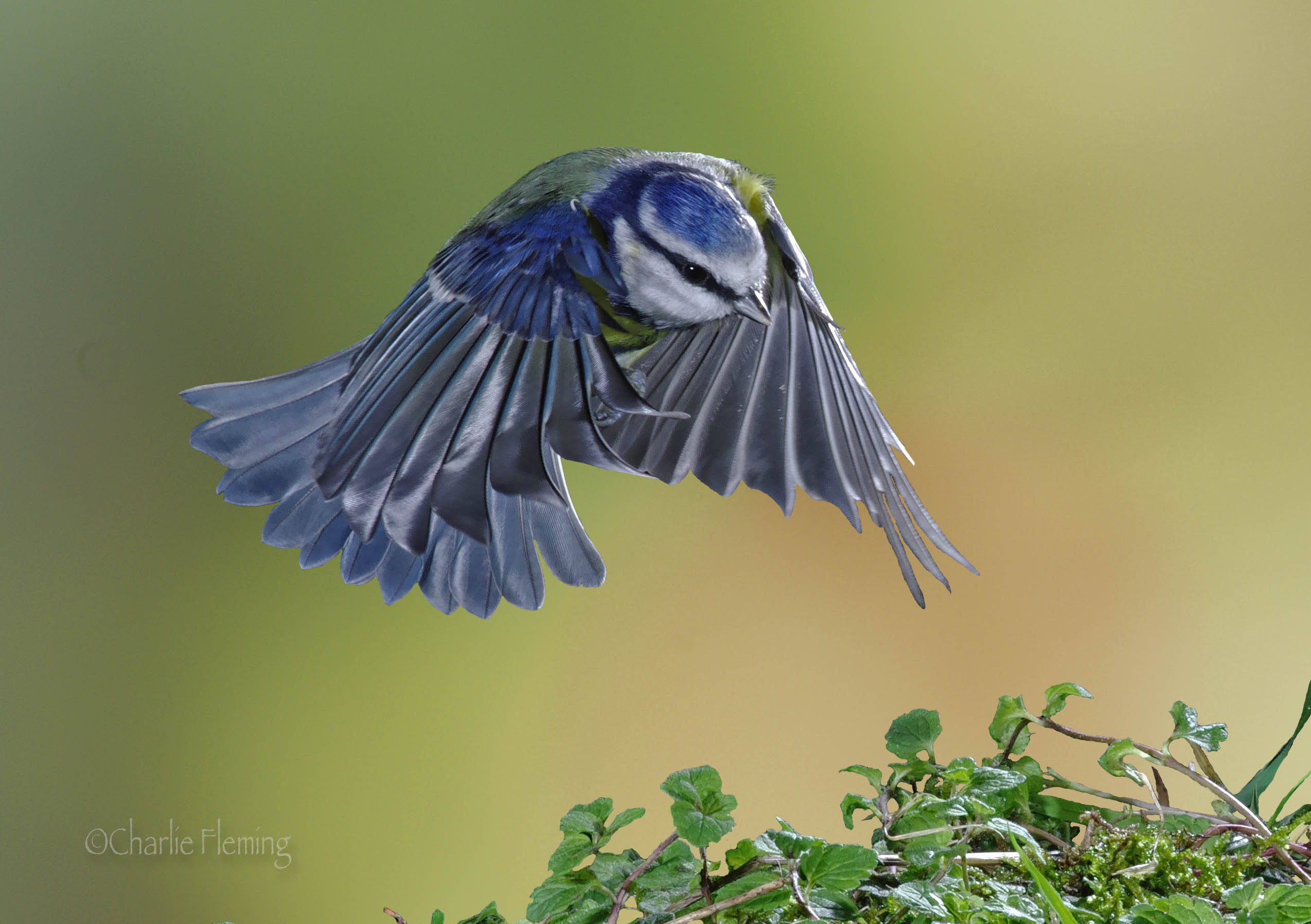
I had an email from someone asking how I managed to get the photo of the Blue Tit (above). I sent him a detailed reply and it is a good description of the effort I have gone in to to make it happen.
"Firstly, I know a site that has lots of birds near to a picnic area on Dartmoor where over the yeas they are fed regularly. Once they have settled after my arrival, they will come to the feed constantly, but at times that could just as easily be your own garden.
The entire picture is a complete set up, sure it's a wild bird and free to come and go of course, and it's visiting the feed that is out of picture.
I firstly erect a little table fabricated from aluminium plate and mounted on a fishing bank stick This means I can cary it easily and push in to the ground anywhere that looks good. I cover the table with natural vegetation from the ground….. moss etc. I then bury seed amongst the moss.
I position this near to my car which I use as a hide and just about 7 feet from the "table". I set up my camera on a small tripod and sit away from the window. I fit a remote shutter release to the camera. After focusing on the table, I then set the camera to manual, (not auto). I set the camera to flash sync speed, the ISO to 200 and the fstop to f22. (a good depth of field is crucia). I fit the camera with a wireless shutter transmitter.
Next, I place 4 flash units around the table, only l 1 foot away from each corner of the table. The units are set to 1/16 power meaning that the flash duration is going to be 1/5000 sec aprox based on the full power duration being around 1/750. The flash units are also on fishing bank sticks and also fitted with wireless receivers.( fired simultaneously by the transmitter on the camera).
For a background, on a previous visit I first take a picture of the area behind where the table will be, as normal but making sure that it is now in good natural light and then take it so the result is a blurred and an out of focus image. Then I have this background image printed to a high quality graphic poster . Then when I return, I place the poster on a stand behind the food table I fix a further flash unit also fitted with a receiver, on this background. Eventually the birds get used to it all and then start to come in to the feed… sometimes this will take an hour due to the un-natural clutter…… eventually they accept it. The fun starts and you start to try and capture the birds flying in as they begin to feed. The high speed of the flash units is what freezes the action…wing beat etc….. not the cameras shutter speed. Without the flashes firing everything would just be black even though you are working during the day.
Then you may take 1000 photos and one or two will be OK. Then back at home you remove any other clutter from the picture in Photoshop and adjust the lighting and saturation. Estemated cost of equipment. £6000.



 Wildlife in a Suburban Garden
Leave a reply to Paul Cancel reply