
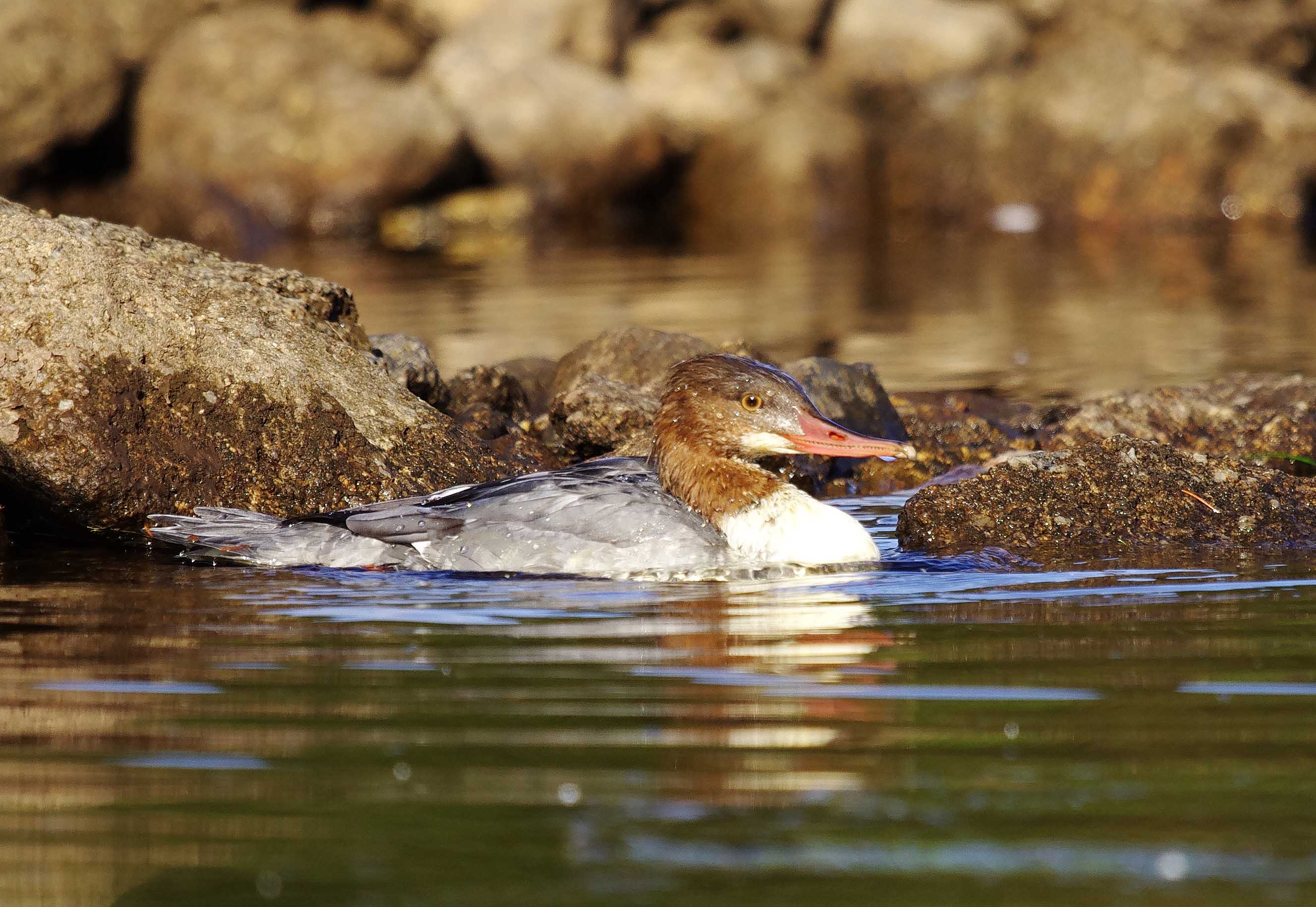
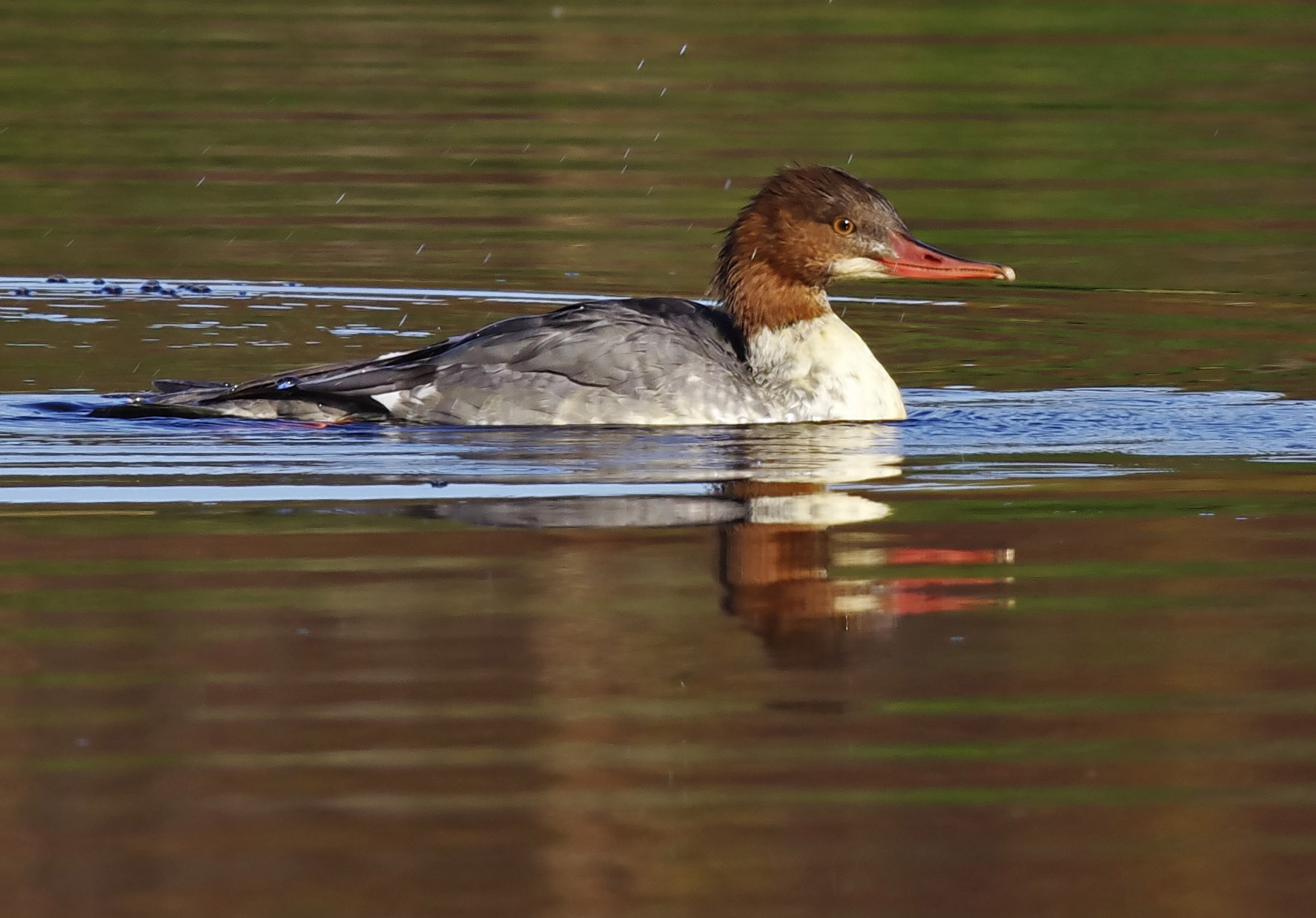
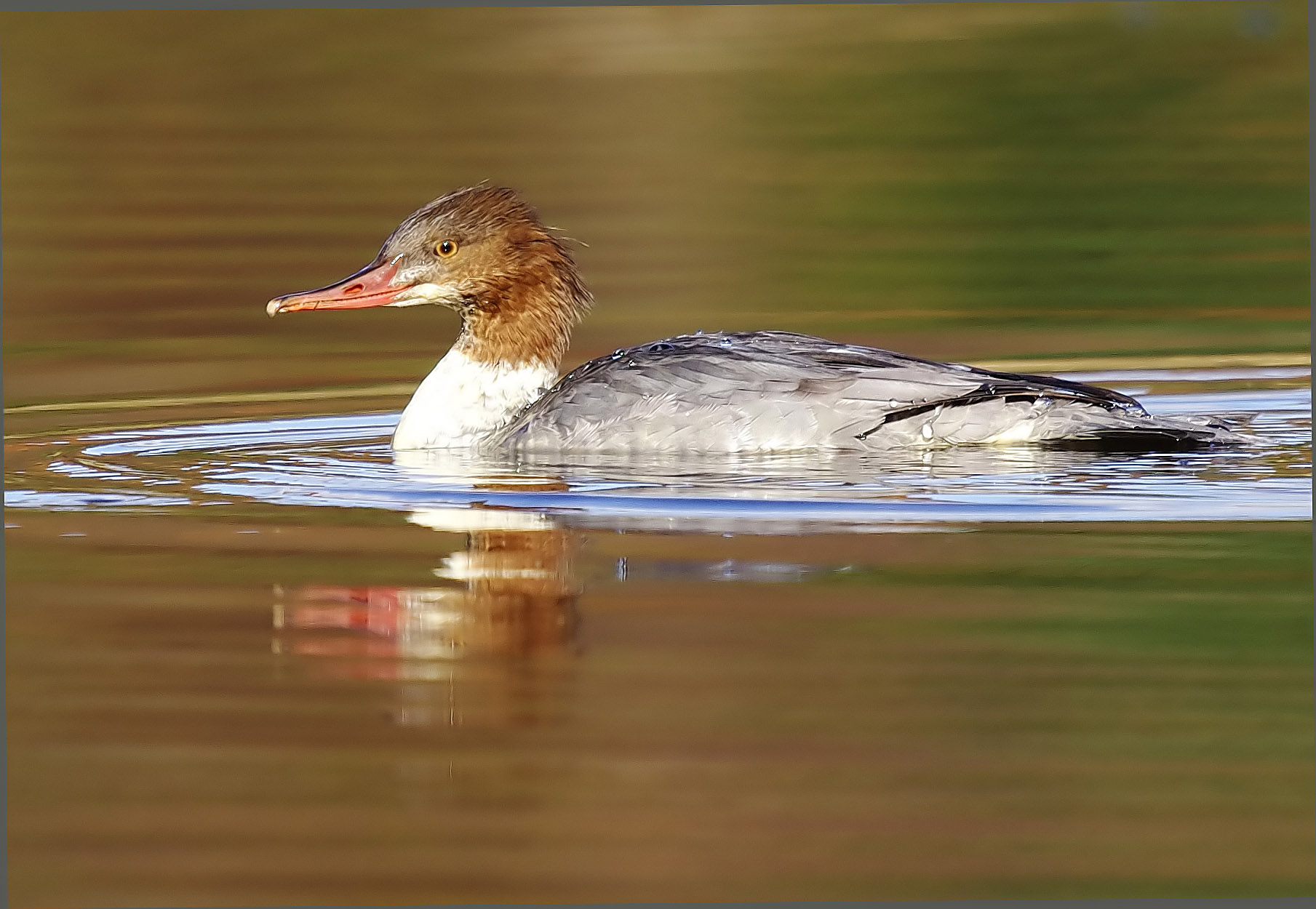
I was fascinated by the behaviour of the Goosanders that I watched and photographed yesterday and as usual, seeing them on this Devon reservoir led me to want to learn more about them. These are such a fascinating and very interesting bird for a number of reasons. Firstly, the birds that are here at the moment are either females (ducks) and/or young (drakes) males that were hatched this year. This group, females and young drakes are collectively referred to as "Brown, or Red Heads". There is a breeding population of Goosanders here in Devon, and there are birds here that will have been hatched locally. One thing that struck me was the speed and directness of their flight, they are very strong and cover the ground at quite a rate. This is a crucial part of their behaviour. Surprisingly, to the casual observer, there are no drakes here at the moment, where are they? The answer is just amazing because after breeding here in the UK, more specifically after eggs hatch in June, the males depart and join up with 10s of thousands of other males from all over Western Europe. They gather at a specific fjord "Tanafjord" in Norway where they undergo a full moult of their flight feathers over the course of 3 months or so. They return back in early November, what an incredible fact. Why would they do that? Venford Reservoir is a roost sight for Devon Goosanders, birds fly in after dark to the safety of this large lake, leaving again before dawn. Other birds stay on the lake during the day. There appeared to be four birds during daylight hours yesterday. 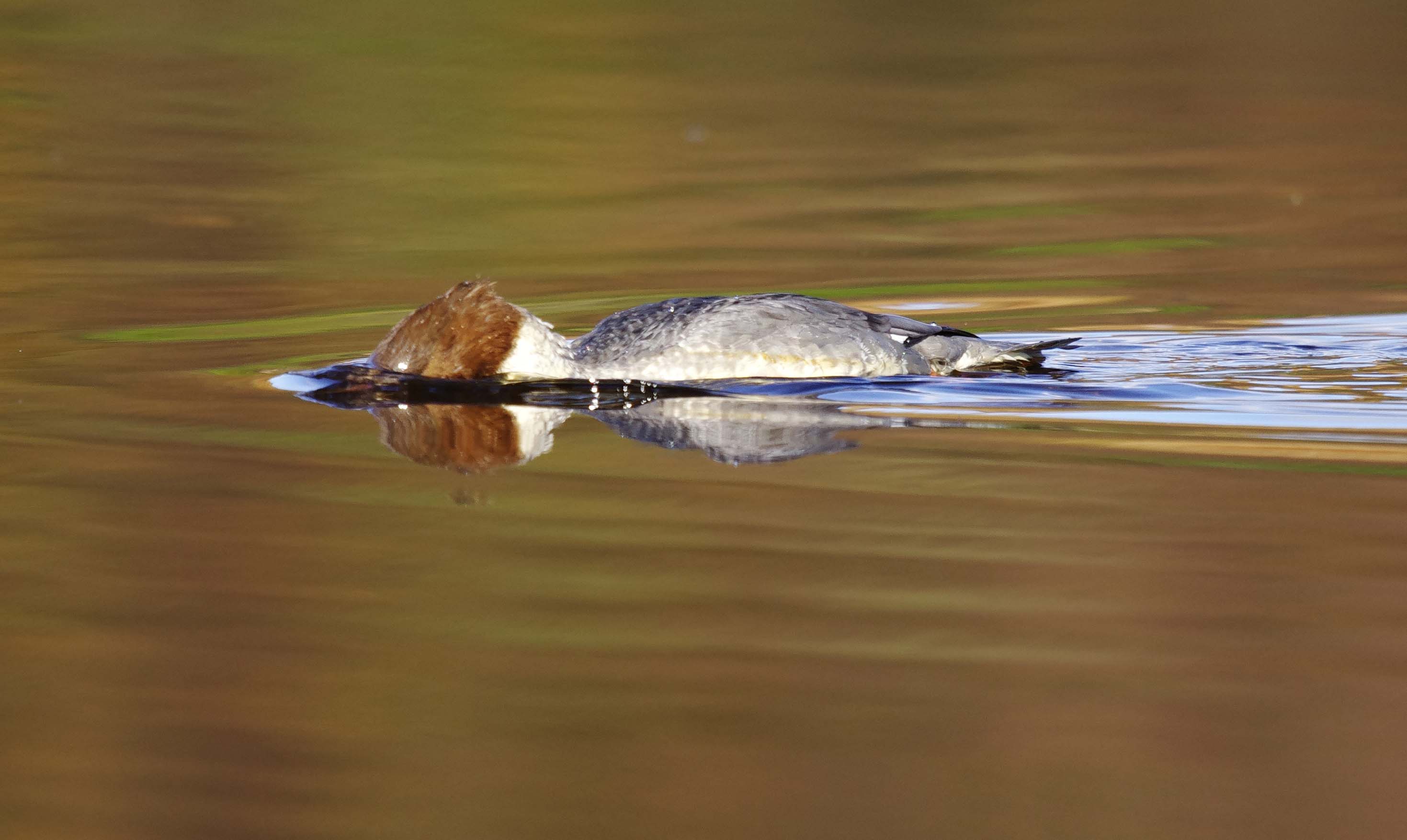
Feeding, or more specifically what they feed on is very controversial and is the subject of much discussion and spite from the angling fraternity. Anglers blame the loss of fish stocks on Goosanders and it is even possible to obtain a special license to shoot these birds, but I doubt if that license would be granted here in Devon. I certainly would be vehemently opposed to the shooting of these beautiful birds on any grounds and would gladly stand in front of any shotgun pointed in their direction. I have been an angler, off and on, all of my life and the attraction to me is the connection with the outdoors and the opportunities this connection brings. To catch a truly wild fish is a thrill, not because of the act of hauling it out of it's natural environment on to dry land, but the chance to see, at close range and in the hand, the truly beautiful thing that a wild fish is. Knowing how I feel and how it affects me, I can't compute why people who want to be in the outdoors can't simply enjoy seeing these beautiful birds and let nature take it's course. Then, if they catch a few less fish, so be it. After all, the fish would benefit from the lack of stress involved and the birds were, after all there first of course. I note that anglers are now starting to look towards Otters with the same kind of ideas. I hope you agree that the idea of culling Otters would cause a public outrage. Can you imagine the "war" that would break out if this ever happened. The killing, lets not call it cullig, because thats what it is, of birds………. and for that matter Badgers should cause an equal amount of anger and outrage. Closer to home, I know people who want to kill the Herring Gulls that nest on the houses around my own, simply on the grounds that they are annoying. I even know people that confess to "hosing" off the House Martin nests from the sides of their house because of the mess, I despair!
Anyway, back to the feeding behaviour of Goosanders. They are opportunistic feeders and will take the small fish that they encounter, if that happens to be "game fish" then that is what they will take. The problem is that the kind of habitats that they frequent are more likely to be the same waters that contain wild Salmon and Trout. As you can see from the photo above, they will swim with heads half underwater looking for prey before they dive to chase it down. In addition to fish they will take small mammals if encountered in, or around the water and apparently birds too. I have proof of this! Yesterday as I watched a Goosander diving, it emerged very near to a Pied Wagtail – Motacill alba yarellii. There was a commotion and the duck seemed to try and grab the small bird. I was lucky enough to get a record shot of this. It's a shame that it wasn't successful, can you imagine the photograph of a success. 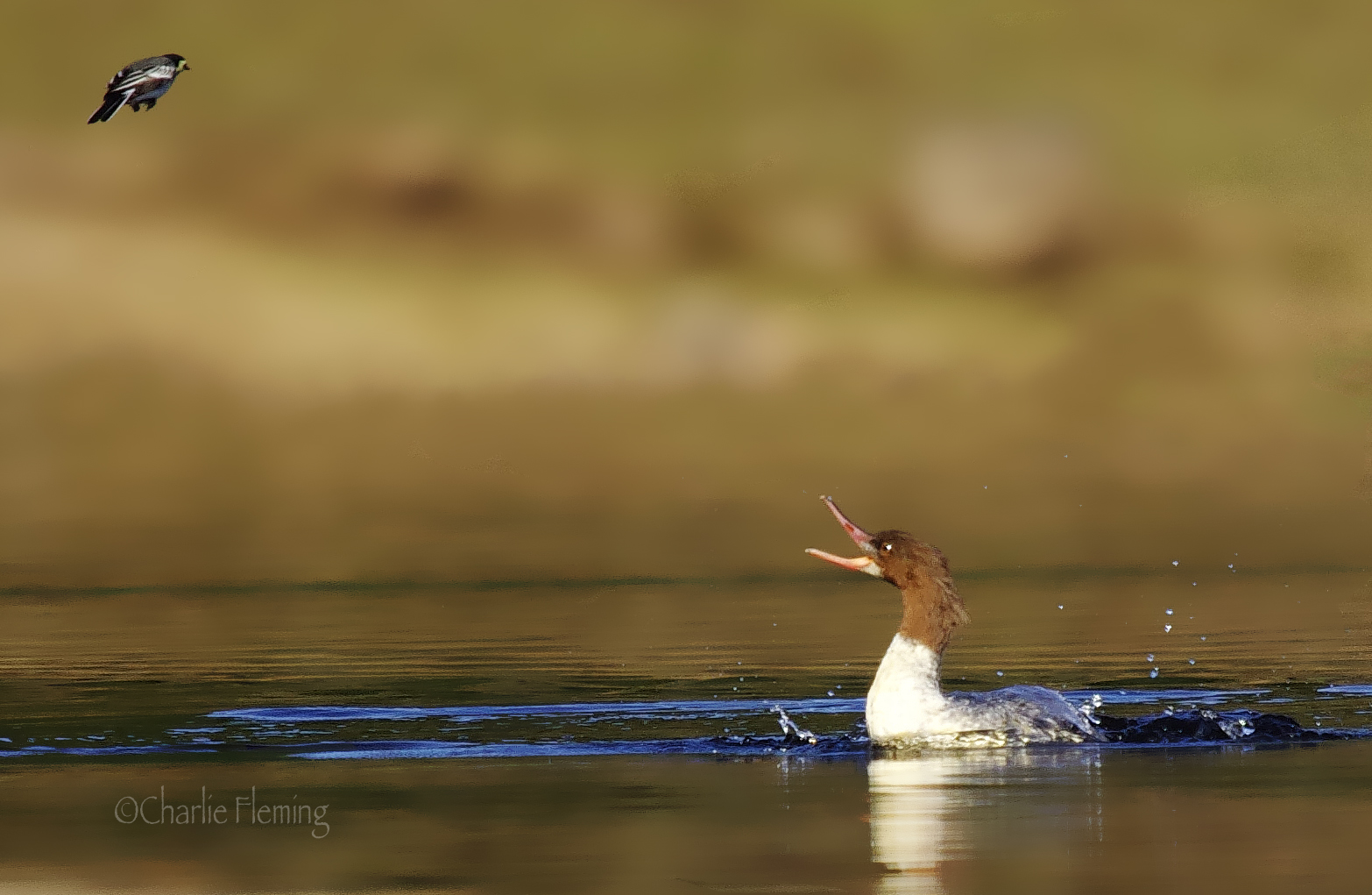


 Wildlife in a Suburban Garden
Leave a reply to Charles Fleming Cancel reply