
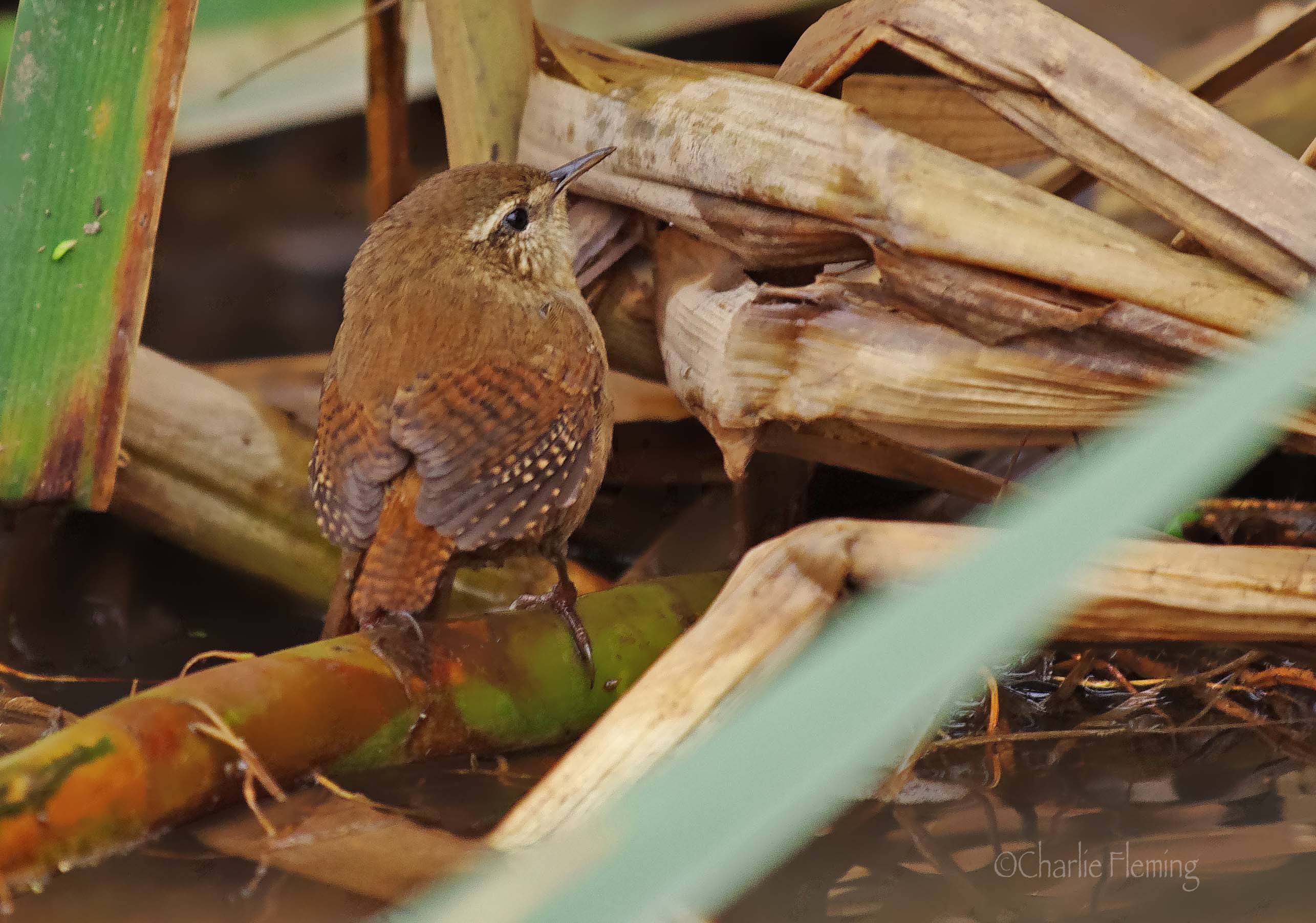
The "Winter" Wren – Troglodytes troglodytes is a very common and lovely bird in the United Kingdom. They are found in almost all habitats, from coastal areas to the Highlands of Scotland, gardens, parks and woodland. They are insectivorous and search almost constantly for small spiders and aphids.. The latin name translates to "caveman or cave dweller" and refers to the habit of entering and exploring small holes under vegetation. I have been seeing this male regularly over the last few days and it did strike me that it's behaviour was very much like a small mouse as it disappeared in and out of the very low vegetation hunting for insects. Birds can be creatures of habit and it's been interesting to see this bird, after skulking in the undergrowth, then bathing, almost from the same spot and at roughly the same time in the early afternoon. I know that this is a male because I have heard it singing, a very musical and loud song is a feature of this bird. This is a species that is found in both the USA and the rest of Europe and then across even as far as Japan. There are around 30 sub species, 3 in North America alone and they are all known collectively as Winter Wren, however in the UK we just refer to them as Wrens as there is only one, unlike the USA where there are several other species of Wrens. Purest birders in the UK now refer to the bird also as "Winter Wren", but as we only have the one species here in the UK I don't intend to do the same. I prefer to refer to the scientific name to distinguish the species, if indeed I would ever need to. As I have mentioned before, they are difficult to photograph because of the habits described above. It is usual with small birds and mammals for that matter, who all have a very fast metabolic rate and need to find food constantly. They use a lot of energy to maintain body heat and therefore need to feed very regularly, hence their constant movement.
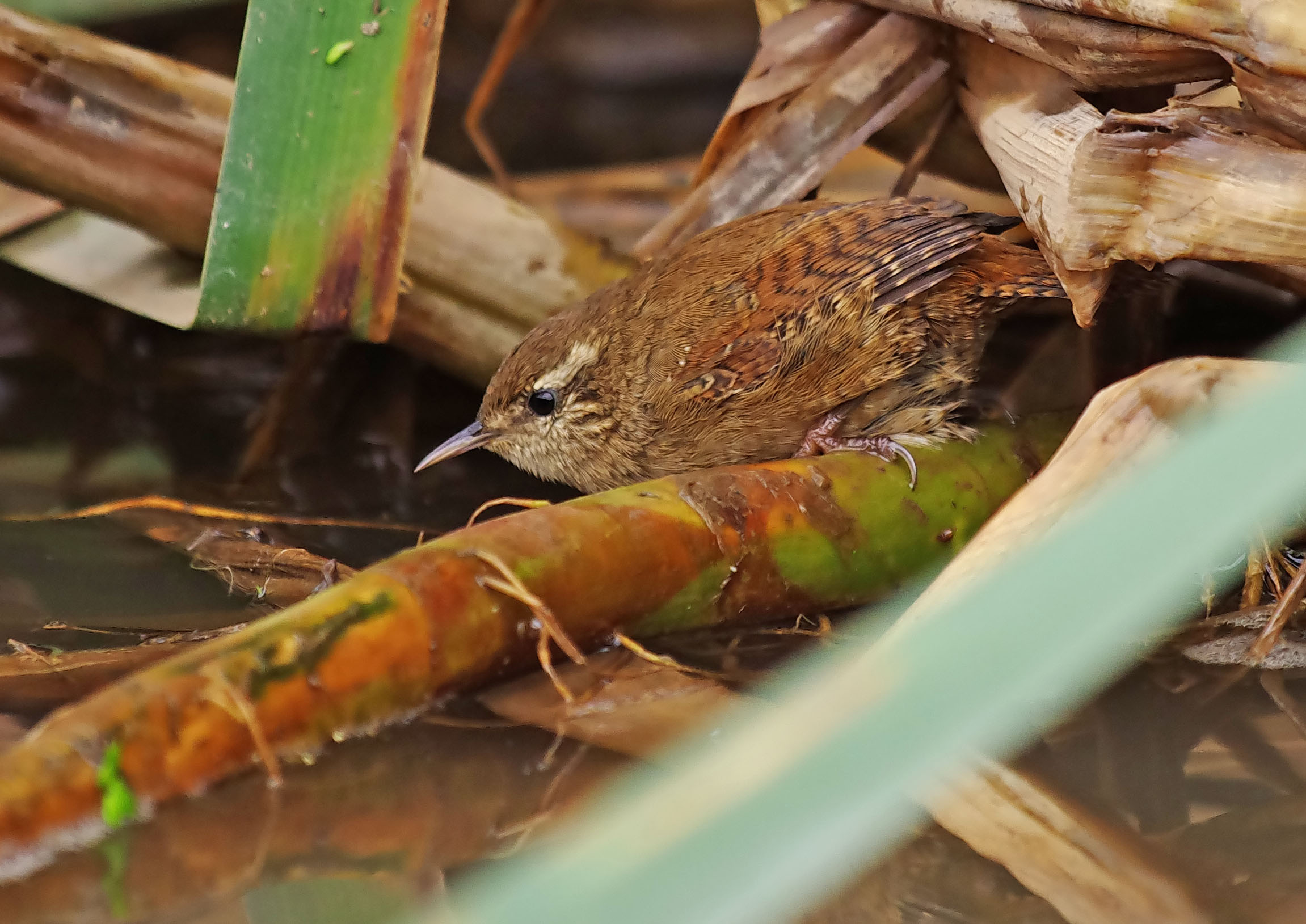

Here the bird has just taken a bath and then is about to continue the search for food after preening.
It is an interesting fact that this bird is polygamous in it's breeding habits, males apparently often having more than one mate and active nest simultaneously. Males build several nests to near completion and then allow potential females to select the nest which are then completed before eggs are laid.

 Wildlife in a Suburban Garden
Leave a reply to Jeff Farley. Cancel reply