
Still finding it hard to find internet connection here that works quick enough to use the blog posting page, so I apologise. But here is what we have been doing since Tuesday.
Since my last Blog, the adventure has continued but not without some dramas. My wife Jenny is unfortunately not well. She has a problem with the inner ear causing her to feel sea-sick and dizzy, (almost constantly) but it comes and goes a little.. Walking is when she is at her worse so that is cramping her style a little bit. I lost………. and found my wallet, all within the space of two hours but not before I had cancelled my credit cards!
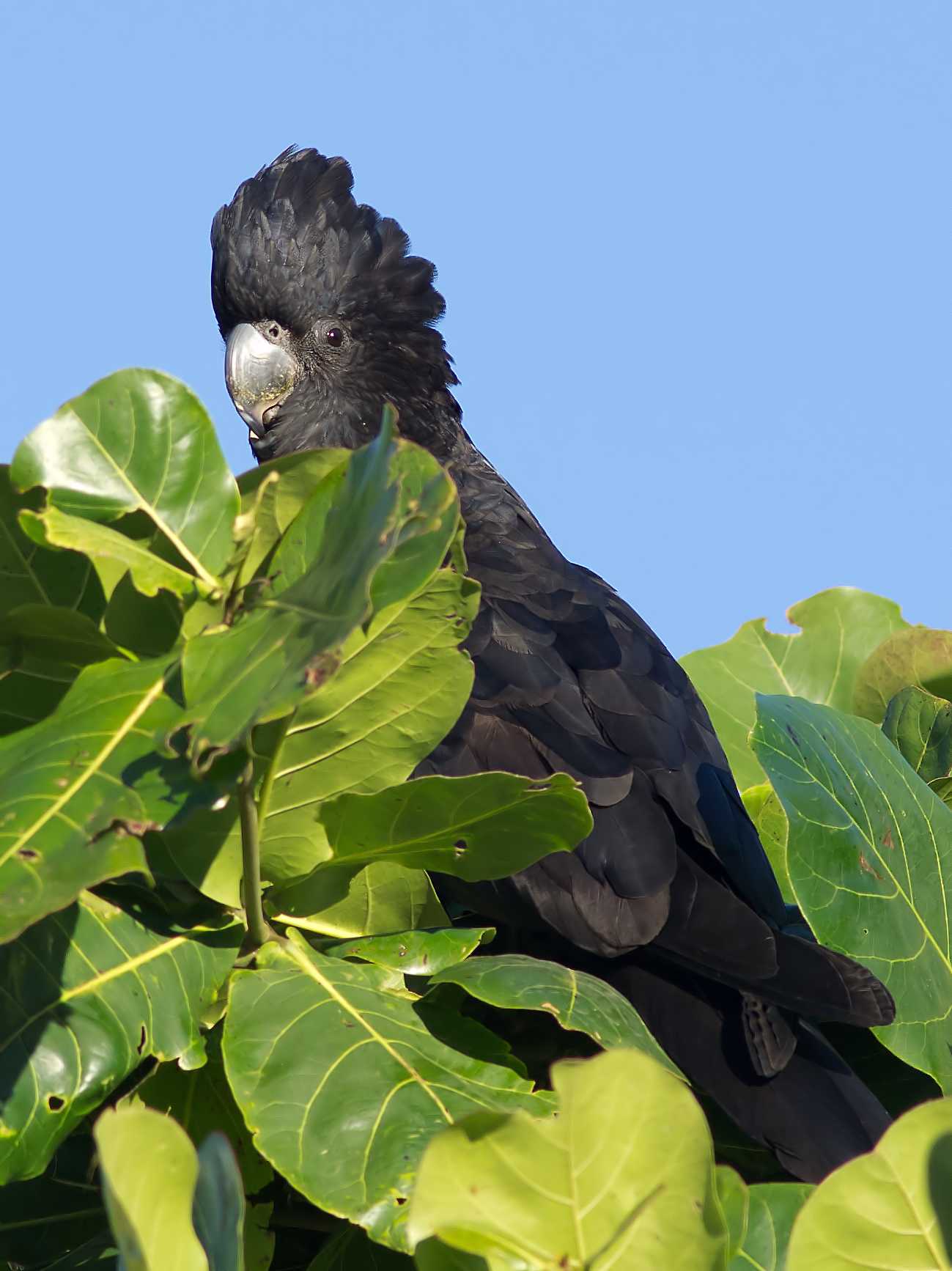
But back to fun things. Firstly, Red Tailed Black Cockatoos are amazing and they are at the moment coming right on to the beach strand to feed on the nuts in the ornamental trees. Very spectacular. They make an awful mess leaving broken seed cases all over the pavement and this is a give away to which trees they are currently finding attractive.
But equally as interesting are the various Honeyeater species, the most spectacular being the Blue Faced who were tussling and arguing with Rainbow Lorikeets over the ownership of some nuts in the ornamental palms in the same area.

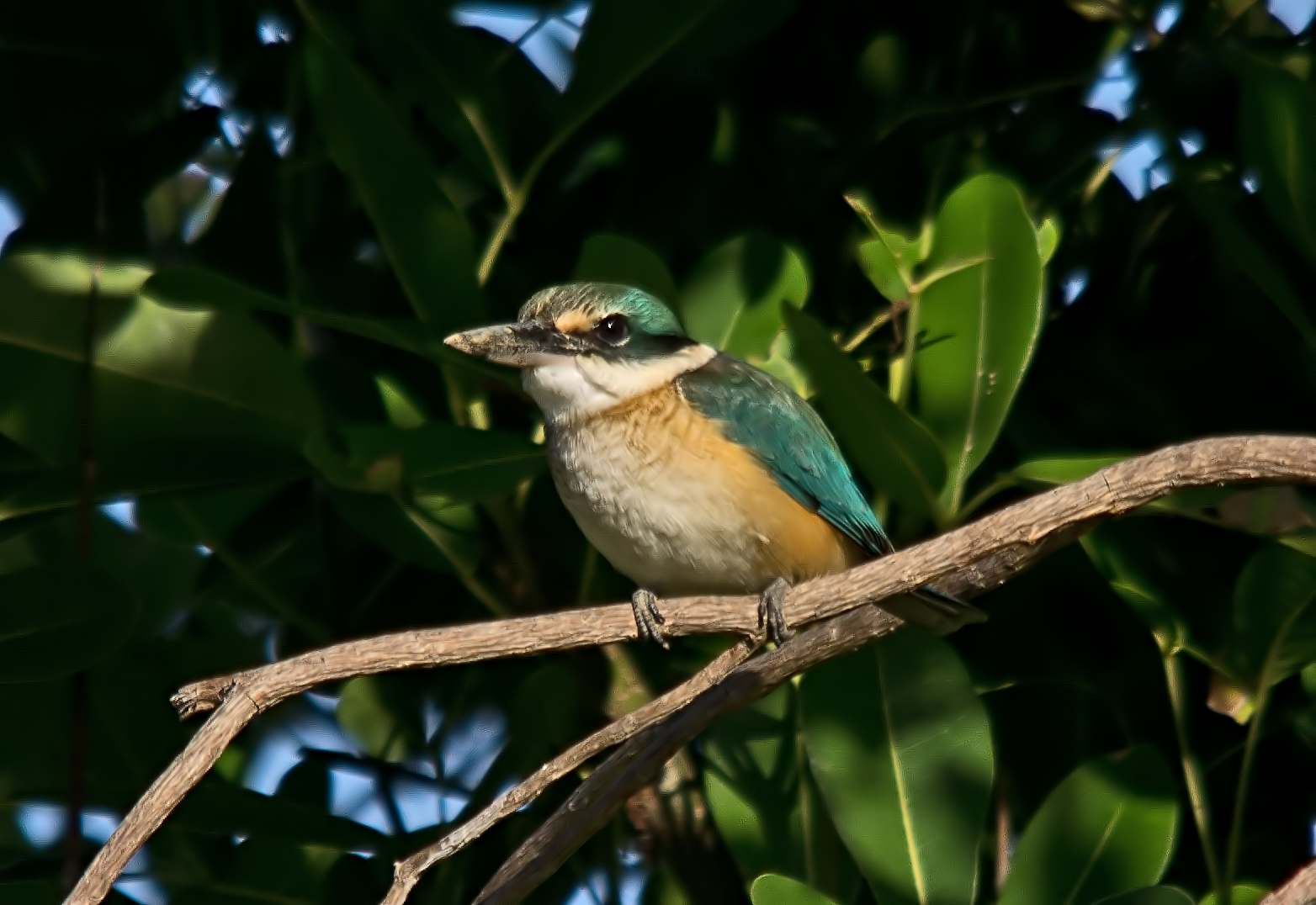
Kingfishers are very often seen here, at the moment either Forest or Sacred. One has a territory in the Beach-side park at Rowes Bay. I have been trying to get some good close-ups for days and yesterday morning, probably got my best. They are, at least from the back, quite like our Alcedo from the UK except they have a white breast. Their feeding behaviour is totally different, they feed on small lizards, butterflies, dragonflies and anything around that size that they can find. They use the low branches of trees to look out from, pounce quickly and then carry the prey back to the same tree branch.
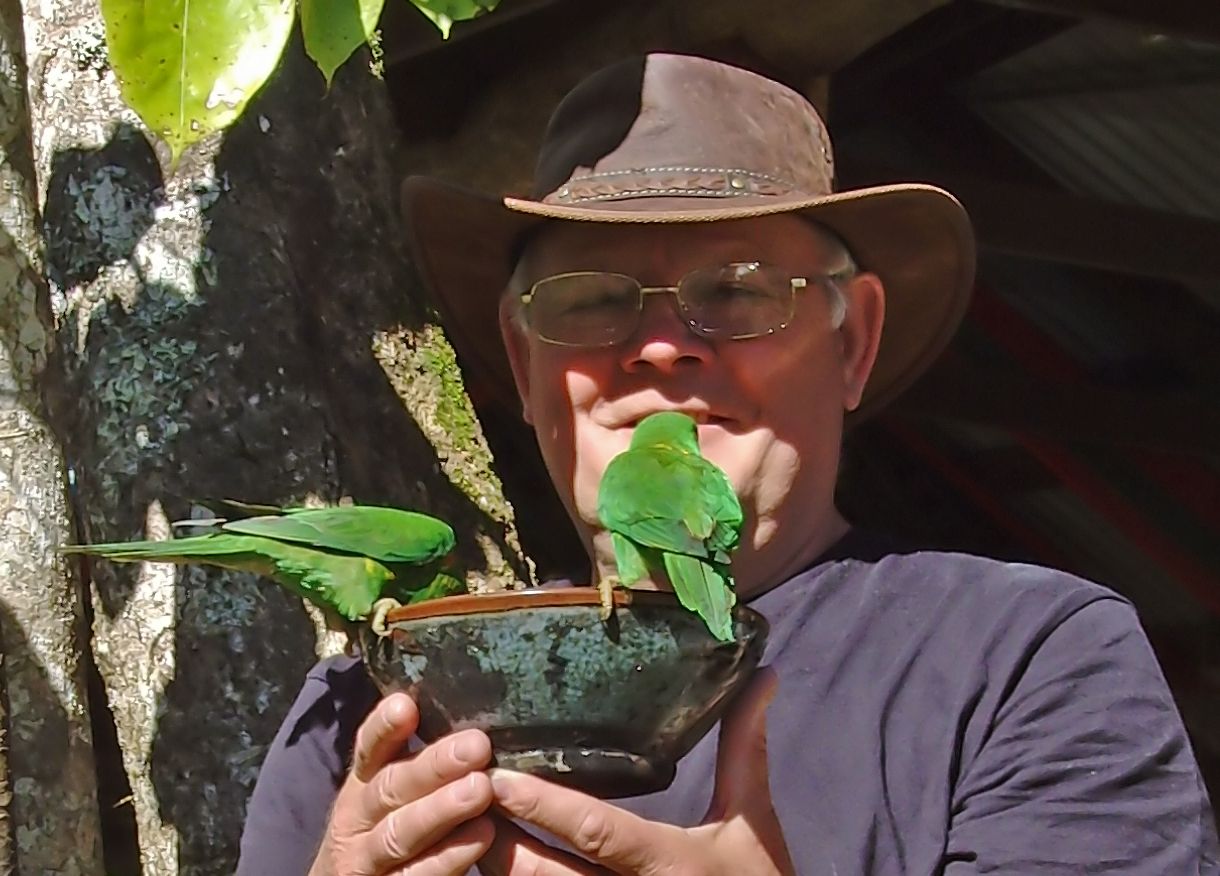
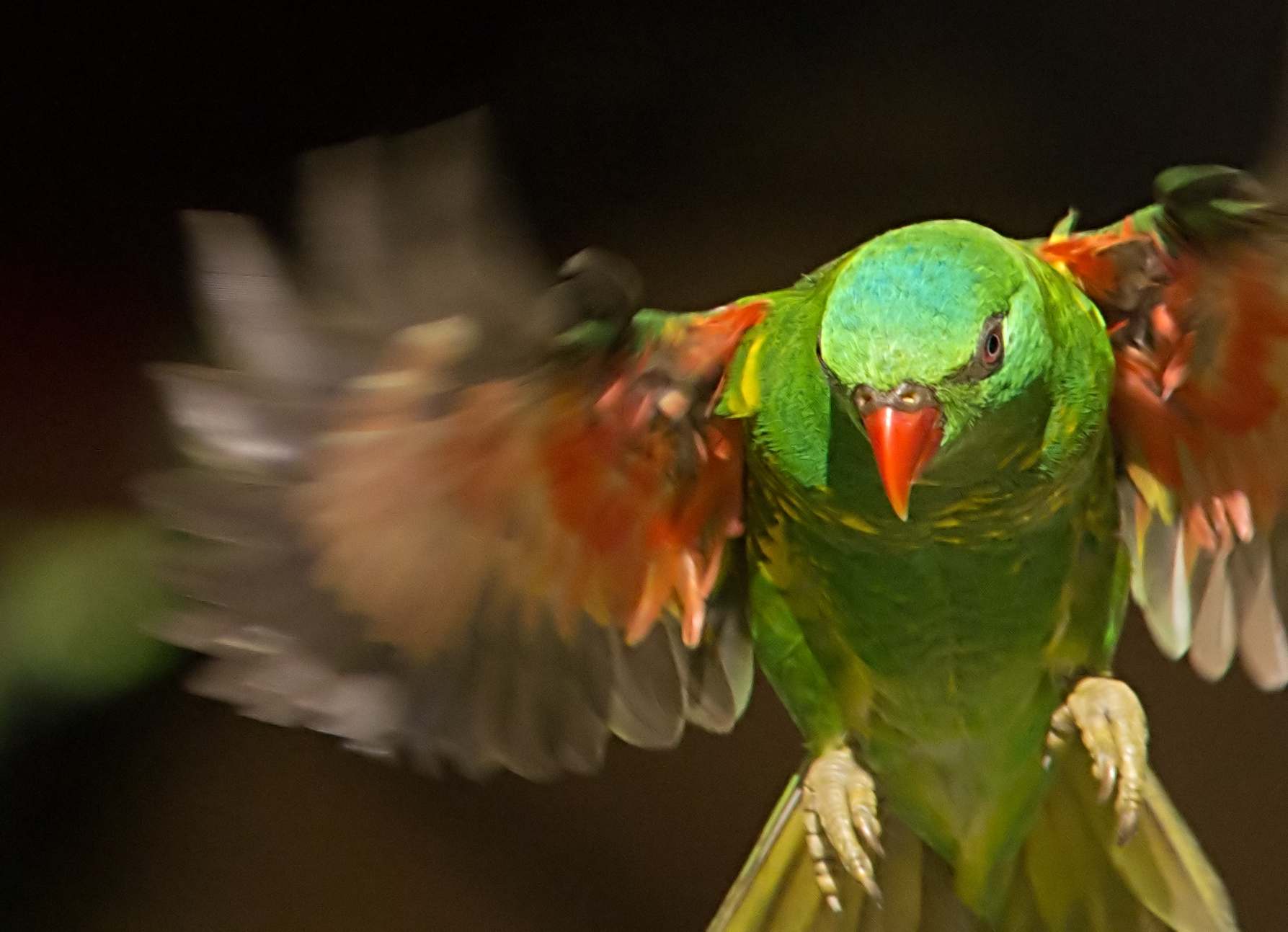
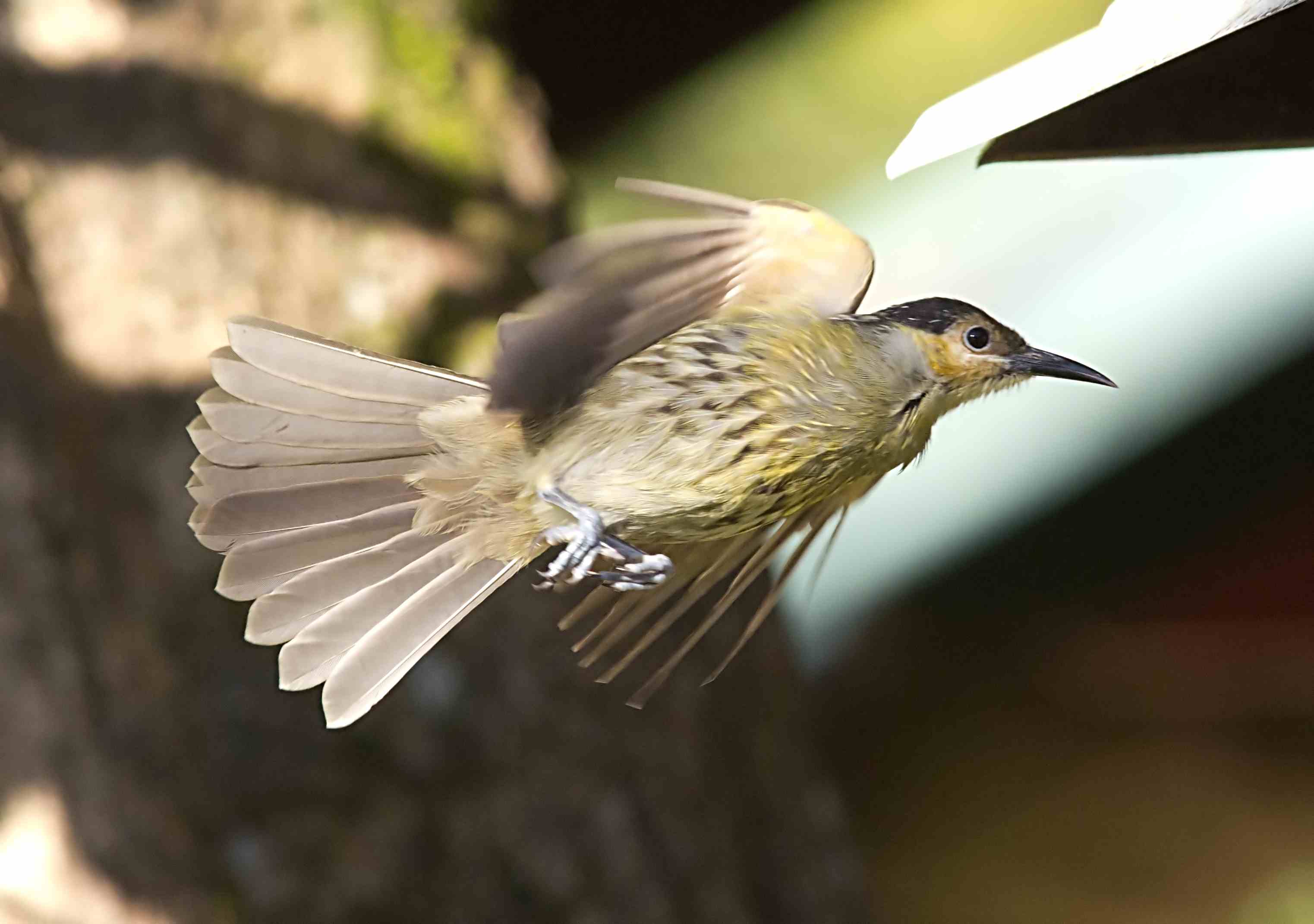
Yesterday we went back up to Paluma to see what we could find. This small village is in a Wet Forest habitat at more than 2000 feet up a winding road that is 17 k up the hill. When you get there the climate is cooler and the bird species different. I have to say that we were immediately side-tracked at the pottery……. we went to buy Jenny a nice souvenir……….! The potter Len, kindly feeds the birds with sugar water in one of his lovely pots, sitting on a bird table. When we arrived It was covered with Honeyeaters and Lorikeets. I saw and photographed my first Scaly Breasted Lorikeet, smaller than the Rainbow, not so gaudy and a real beauty. As you can see, in spite of being totally wild they even came in to feed as I held the pot!
The "In-Flight" shots that I took were really pleasing and I know that if we go back I will;l be able to get some more, and perhaps even better.
This is a Macleay's Honeyeater.
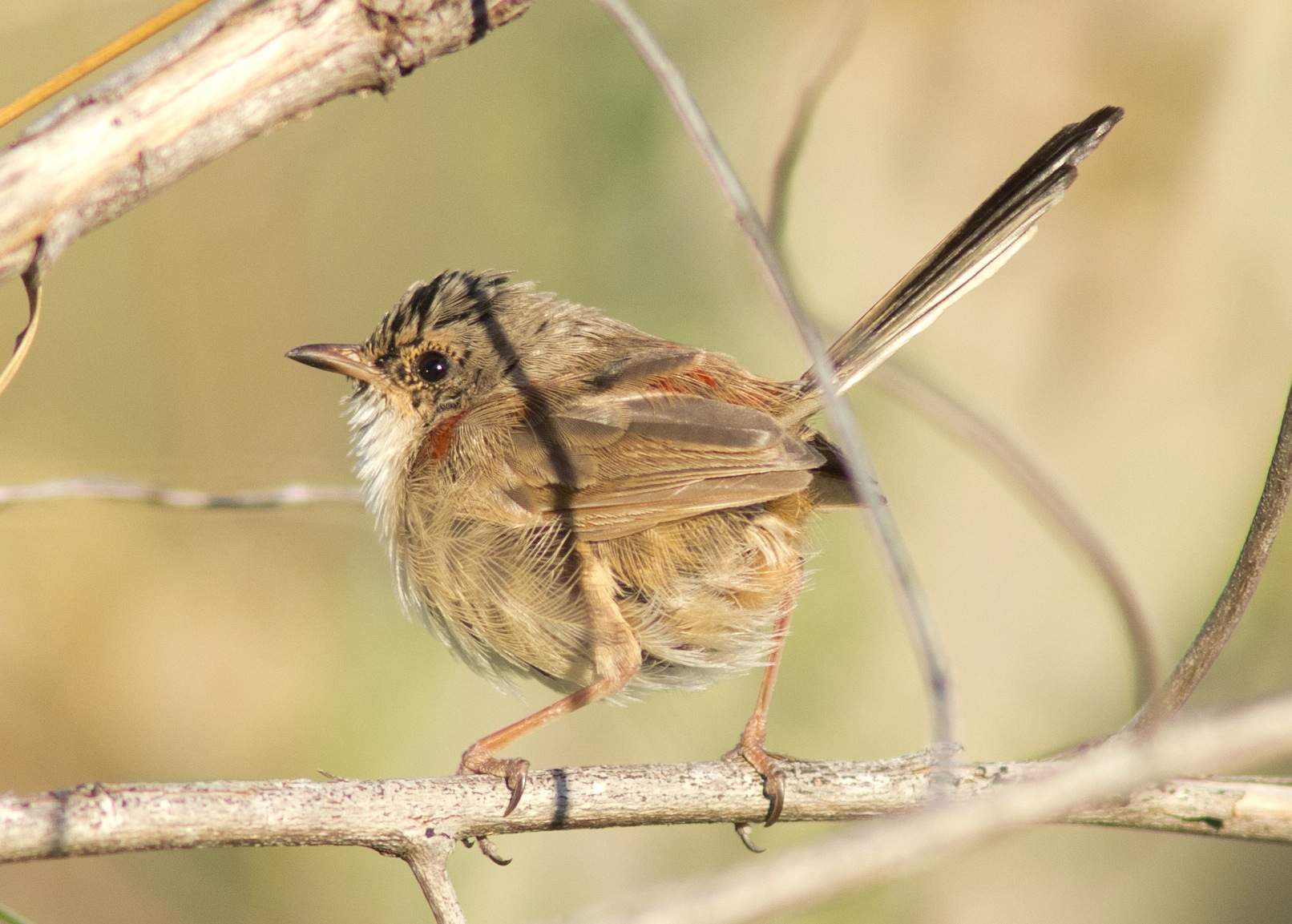
The Belgium Grarden Cemetery is very close to our house. This a massive area with thousands upon thousands of grave stones. There is something very unpleasant about a grave yard in the tropics, or at least thats what I feel, but adjoining this massive area of land are some wet areas bordered by trees and an inticing hill which looks every bit like a piece Australian outback. I am glad I explored this are because it has been very fruitful. I have photographed White-throated Honeyeater, Brown-backed Honeyeater and Yellow Honeater, (all new species for me), as well as my first proper photos of Red Backed Wrens. These were in their "eclipse" non breeding plumage, a shame because a breeding male in full colour is a spectacular bird. But the ones I saw, as you can see is a scruffy little bird with just a hint of red showing through here and there.
I am composing this Blog entry sat on the bench in the park, it's beautiful, sunny with a light cooling breeze. There is a peaceful Dove calling above us and several Australian Ibis are foraging just almost around our feet The Sacred Kingfisher was here a minute ago and a Great Bowerbird is interested in the bush behind us. Two Lorikeets have just noisily flown overhead.
Just to say that this afternoon we saw Blue Winged Kookabura up very close and I managed some really nice photos. They will be posted when I Blog next as well as our first sightings of Wallabies, two species and great shots from very close up even though they were truly wild animals.


 Wildlife in a Suburban Garden
Leave a reply to Pauline Makenzie Cancel reply