
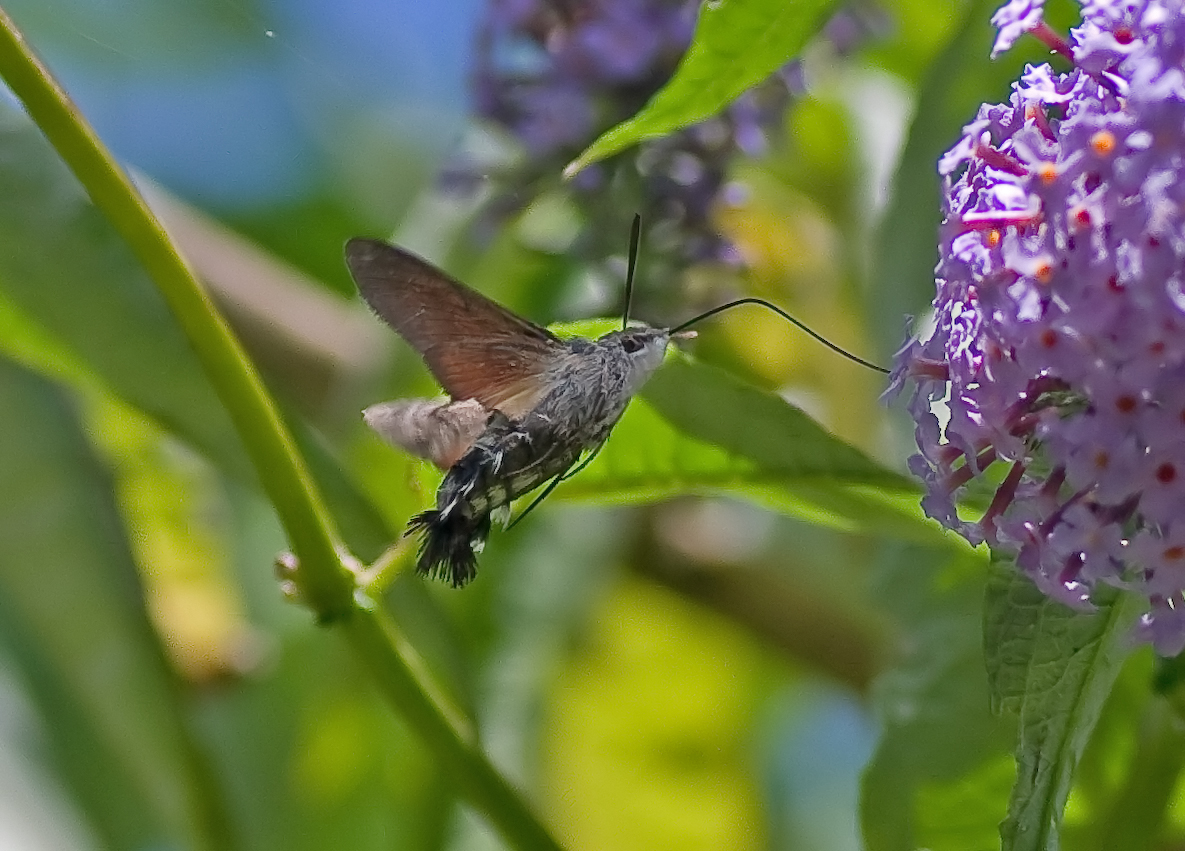
Yesterday was very full and extremely productive. We visited Colaton Fishacre in the Devon South Hams, a National Trust property that is one of their finest. The gardens are really special, on a slope that passes down through a wooded valley to cliffs that over-look the sea. The profusion of flowering plants attracts a host of insects, all interesting but some yesterday were really special such as this Hummingbird Hawk Moth. I haven't seen one before and was frankly awe struck by the similarity to a real Humminbird. How did that happen, convergent evolution apparently. But look closely, it even has eyes that look like a birds eye and a tail that is well on the way to being a birds tail………. absolutely amazing.
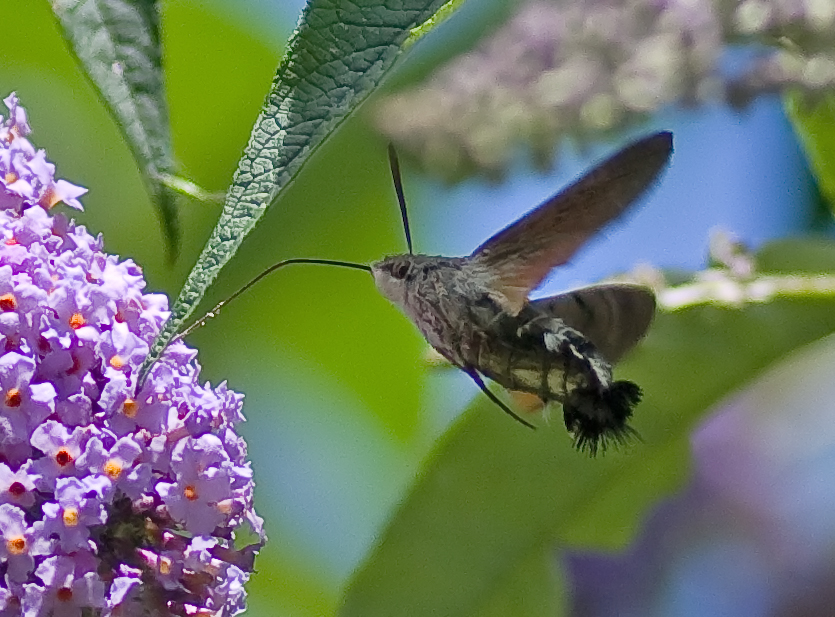
It is even more amazing because it does not breed in the UK but has arrived here on migration from Southern Europe or even North Africa. This is and incredible feat involving a potential 1500 mile flight and a crossing of open water of perhaps 70 miles depending on where the channel crossing occurred. So to see one here in Devon, let alone get photographs is exceptionally fortunate, and thrilling.
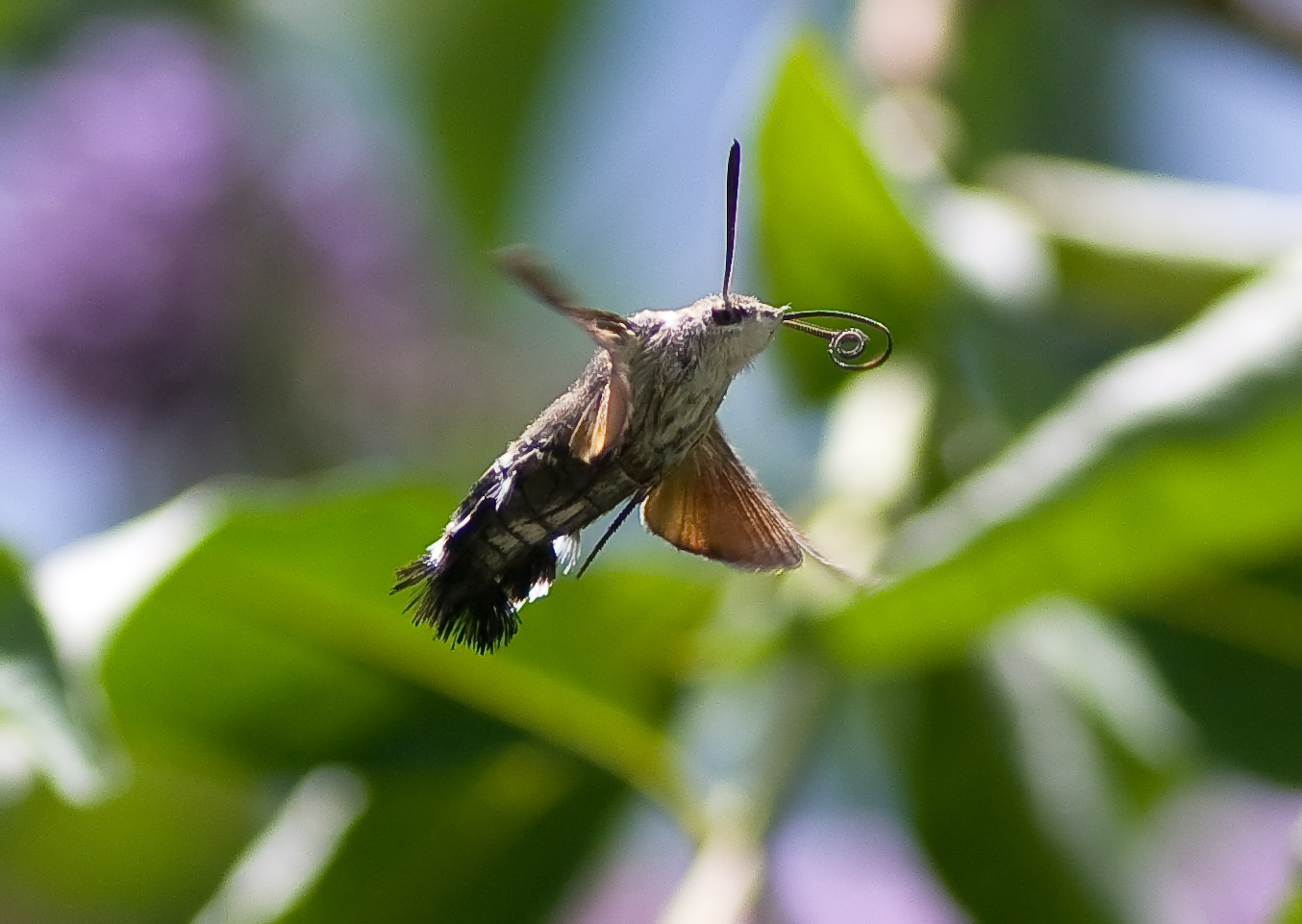
This picture is a good one because it shows the tongue, which it extends to around 4 cms to sip nectar. In the picture you can see that when not in use the tongue is coiled like a spring.
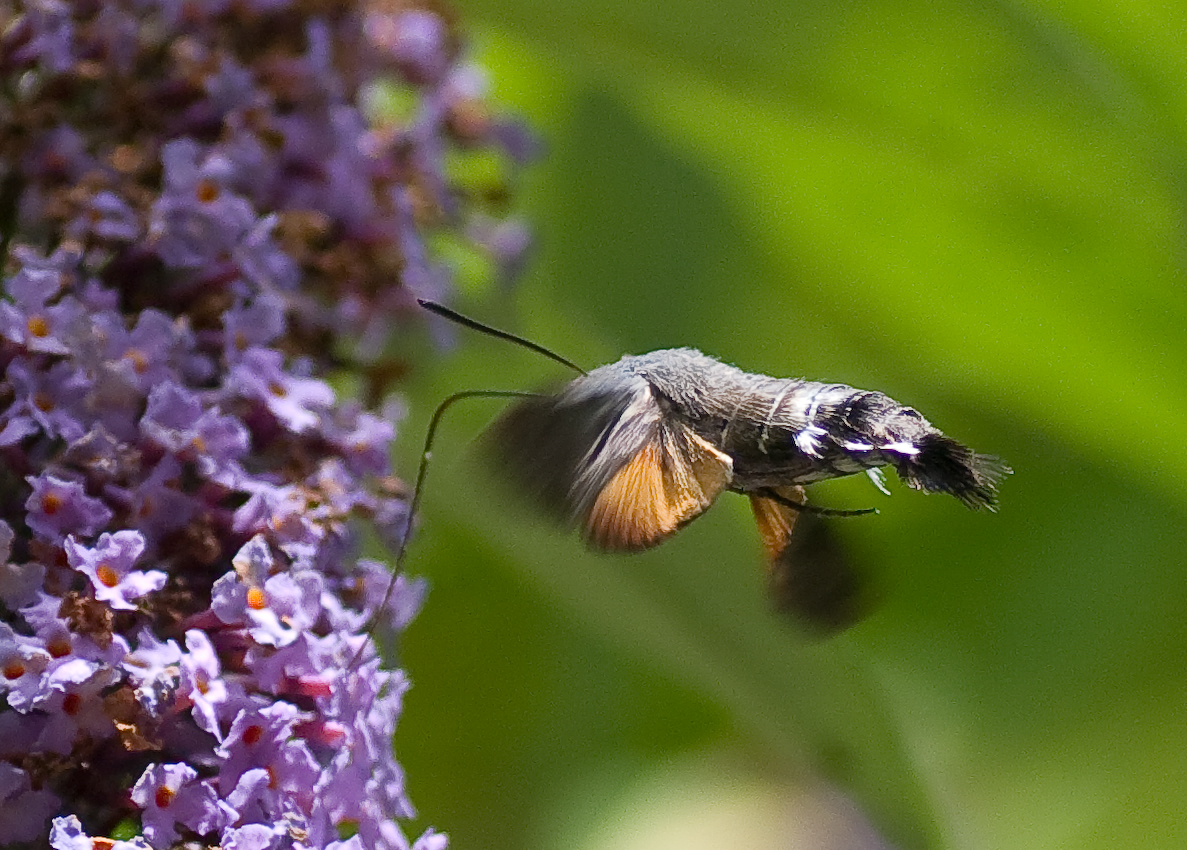
This shot shows, in true Hummingbird style, the speed of the wing beats as it hovers in front of the flowers. Apparently you can also hear a humming sound as it's wings beat a rapid speed, also remeniscent of a true hummingbird. In this shot you can see the now extended tongue probing towards the blossoms.
Now more Kingfishers.
In the morning before I left for the shortish journey to South Devon, I had been to check out my Kingfisher. She was with me almost immediately but only fleetingly. I still managed to get a nice photo or two.
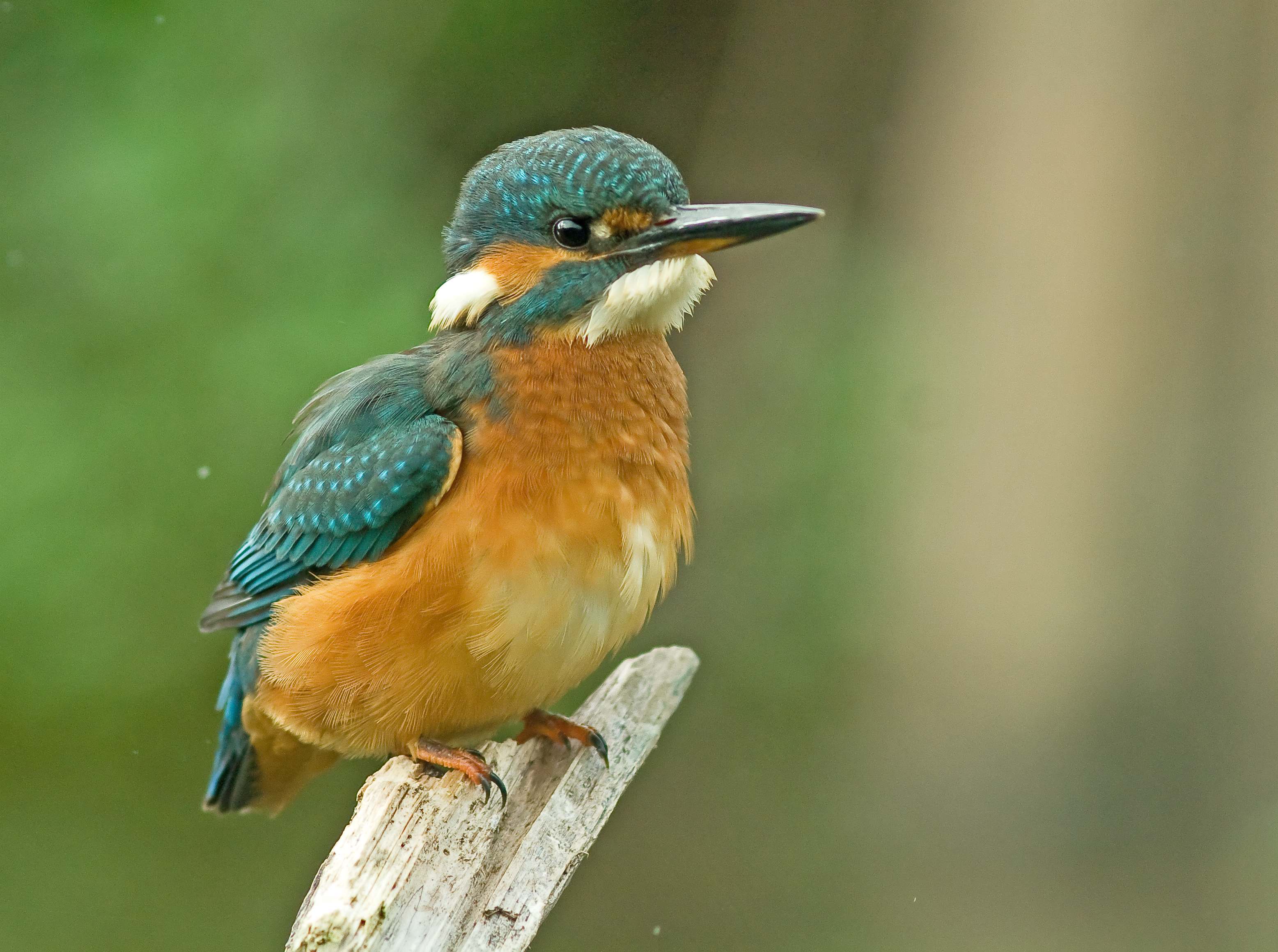
This photo, and the one below, gives me an opportunity to show the difficulties you can have with wildlife photography. Even with a bird as close to you as my Kingfisher, the light can make it extremely hard to capture a good image. The picture above is with the sun coming from the left of the bird. The sun was not shining but the light was quite strong. Then in the evening, the sun was low and very intense, coming from the right and making it very because of the white throat of the bird and the light perch.. This is always going to be burnt out and over exposed if you are going to see any detail at all in the darker parts of the bird. I must have take over 100 photos of her at this session. I was really struggling to cope with the strong shadows as described. At one point she was so close to me it was almost silly. She stayed with me on her perches, the ones she had fought very hard to "own", for at least an hour. Can you imagine, a Kingfisher only 4 feet, if that, for one whole hour!


 Wildlife in a Suburban Garden
Leave a reply to Dawn Fine Cancel reply