
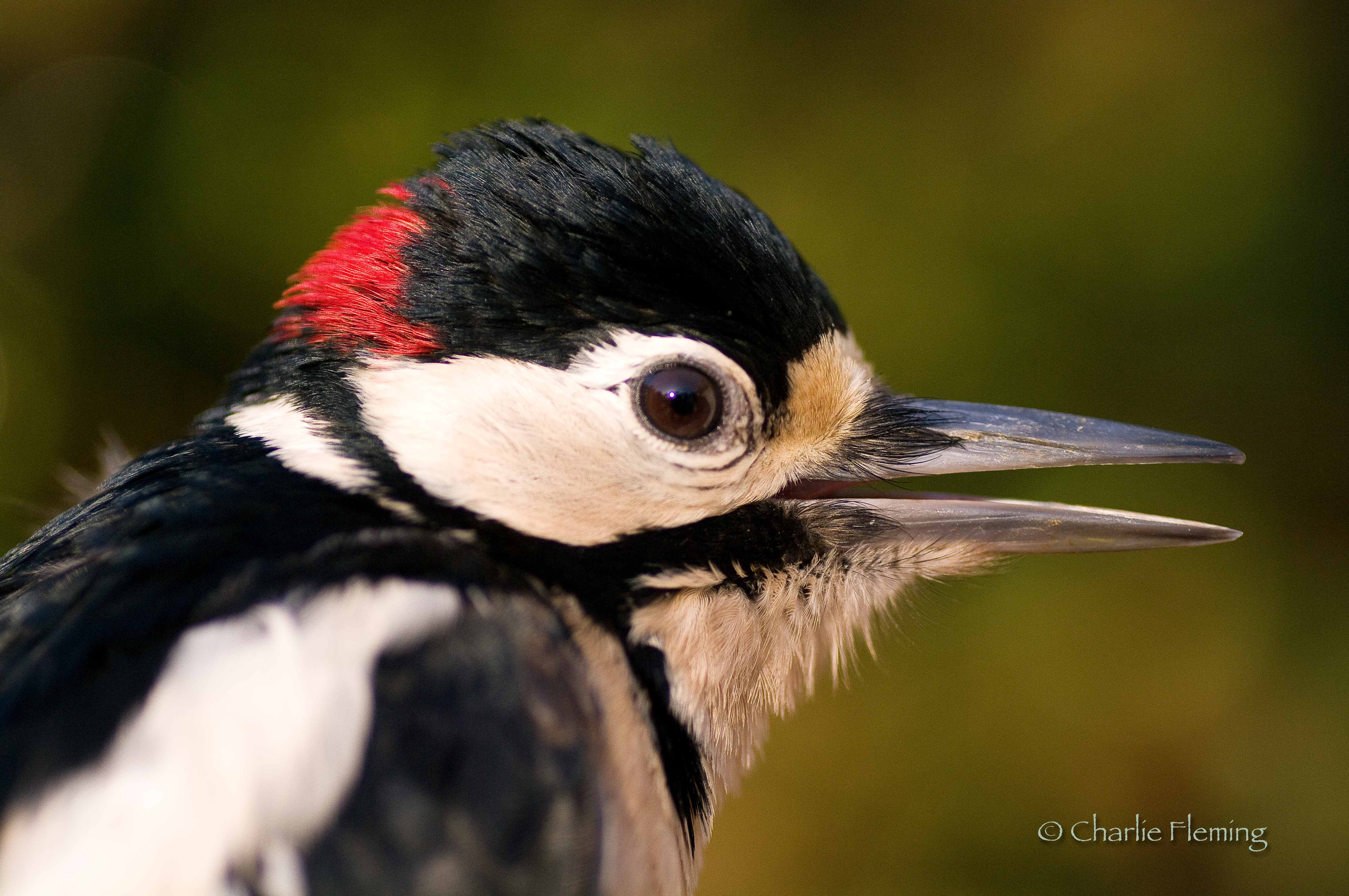
As promised here are the photos from a glorious ringing session earlier today when our birds not only included two Greater Spotted Woodpecker – Dendrocopus major, but also a Marsh Tit and yet another fantastic first winter Female Firecrest. These birds, as well as Greenfinch, Robin, Dunnock and both Blue and Great Tit all added up to a couple of great hours. My species tally now includes Firecrest. As Dr Ian told me that it was my bird to ring, I could hardly contain my excitement and that was after I had also ringed my first Greater Spotted Woodpecker. I also managed to take some better photos than normal because the sun was shining brightly and as I always say, you need the sun and good light for good photos. The Woodpeckers were both male and both first winter birds. This can be ascertained in two ways. There is usually evidence of white on the primary wing tips and brown feathers on the wing coverts which are entirely black in adults. They really can peck by the way and if you are not cautious can easily draw blood whilst they are being released from the nets and then subsequently measured, weighed and rung.
They have zygodactyl toes, that is two pointing forward and two pointing back. (Interestingly, Cuckkoo - Cuculus canorus, also have these feet). One of the things that I found interesting about these Woodpeckers was the nictating eye cover which is very reptilian. The picture below clearly shows this feature which is of great importance to a bird such as this that basically uses the head and beak like a sledge hammer. I found this interesting "snippet".
"Studies in the 70’s with high speed photography revealed that the woodpecker hammers a tree at the rate of 16 or more times a second, or nearly 1,000 blows per minute (twice that of a machine gun), closing its eyes with each impact. It does this with an impact velocity of over 1900 feet per second or 1,300 mph, twice the speed of a bullet. This is 1200 times the force of gravity."
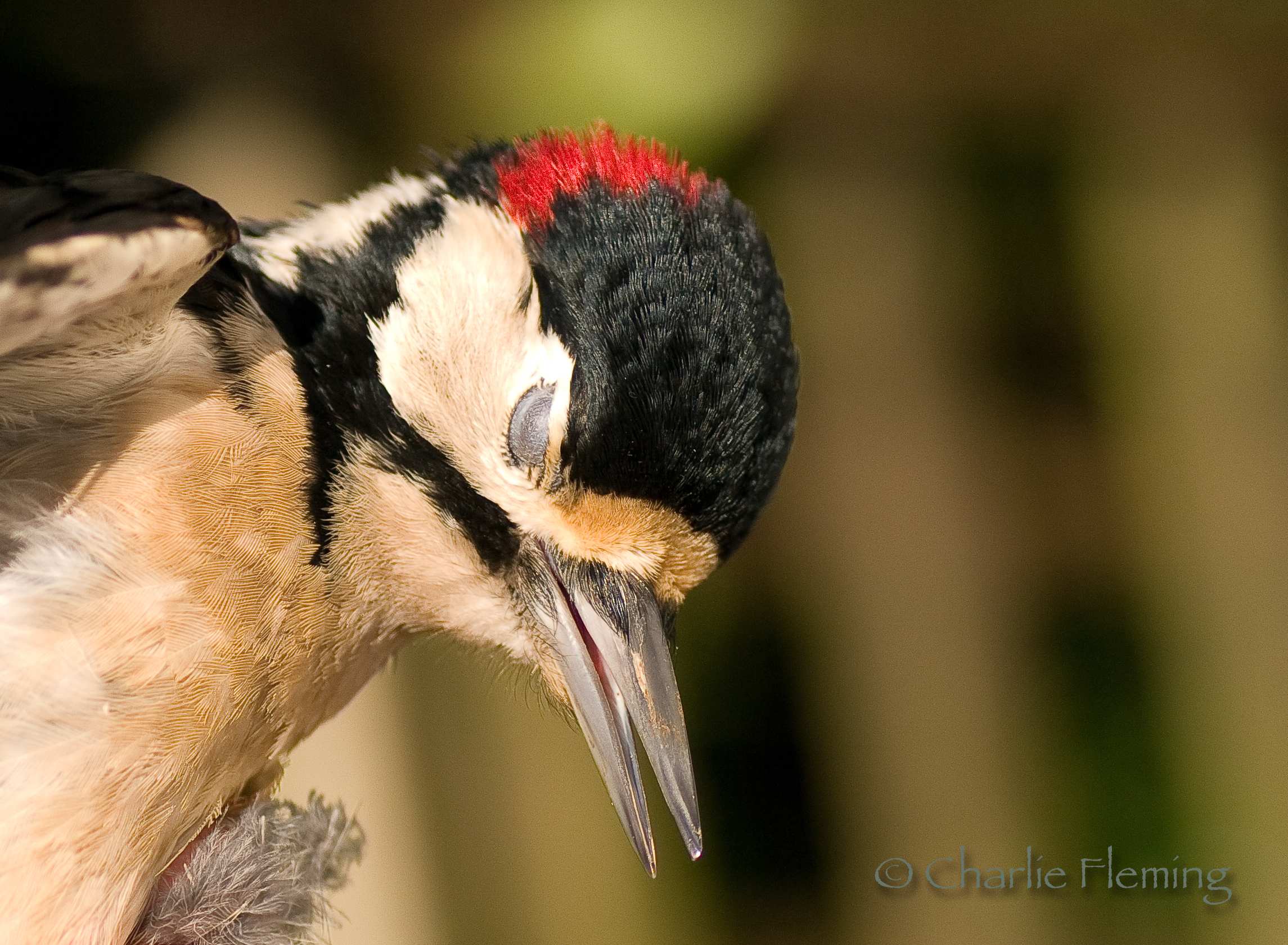
So, you can see that you don't really want this beak chipping away at the back of your hand! Also of note are the bristles protruding over the nostrils at the top of the beak. This prevents chippings, sawdust and other debris from entering the cavity in much the same way that we have nasal hair.
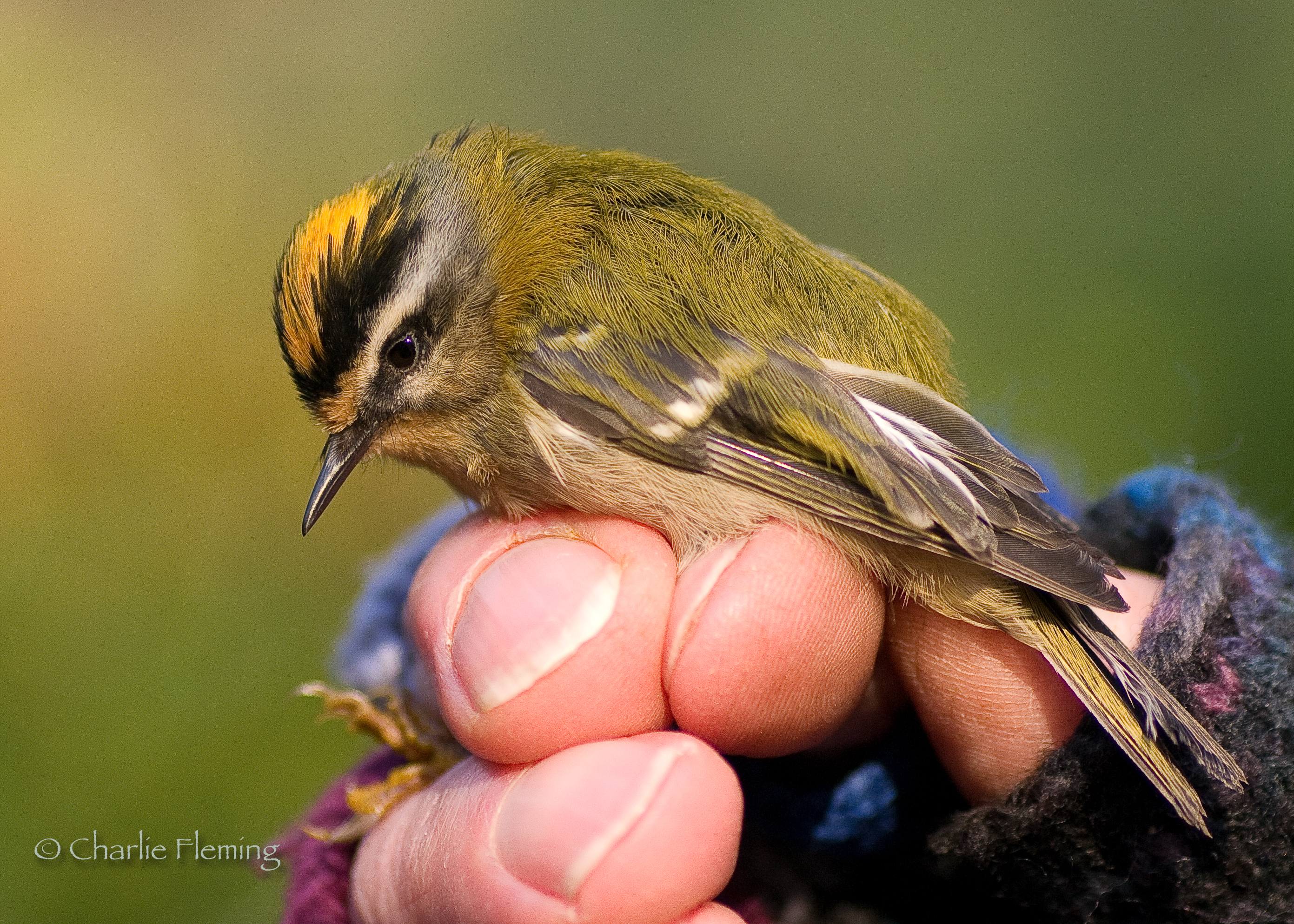
So, now on to yet another Firecrest – Regulus ignicapillus, the second in successive weeks. It would be hard to describe the beauty, delicacy and seeming fragility of this lovely little species. As I held it in my hand it seemed so tiny, well it is Britain's smallest bird after all. Our host for today's ringing tells me that he regularly sees them in his garden centred around a Holly Tree and he guesses that they are feeding on aphids and white fly. Today's bird was a female, as was last weeks, and a first winter bird hatched in the spring. It's weight was a miniscule 5.6 gramms.

I think it might be possible to eventually get a Firecrest in the garden. We have a Holly tree which they are known to have a preference for. I often think that we have more birds passing through that are noticed.


 Wildlife in a Suburban Garden
Leave a reply to Wei Cancel reply