
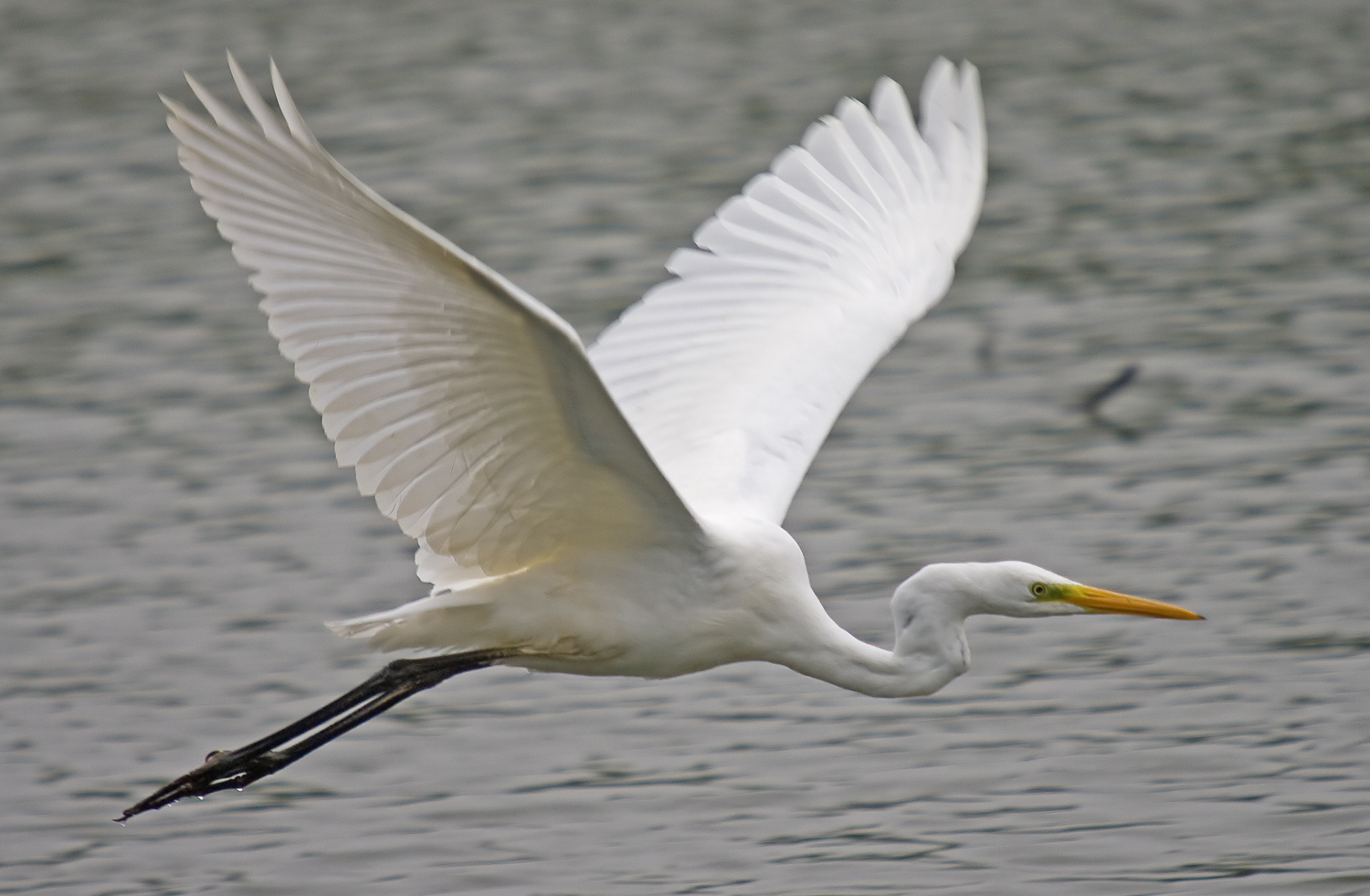
This is the story of a quaint little town and a Great White. An epic tale but not of a shark nor a town called Ammetty but a Great White Egret and a town called Chard. But first, why an epic? Well, 18 days ago I was knocked unconscious and broken by a careless bus driver rushing to get back to the depot after his shift. I can hardly afford to travel by bus and it is ironic that my life was almost ruined in a split seconds carelessness and lack of care by a man who travelled from Eastern Europe to improve his life and nearly ruined mine.
So having sat for endless hours waiting for the pain to subside and movement to return to my trigger finger (read shutter release), yesterday I had had enough.
My caring and loving wife Jenny got herself kitted out in my camo gear and prepared herself to lug my gear. She prepared a meal in the slow cooker for our return, made a flask of coffee put my socks on, did my shoe laces up and carefully arranged my sling before driving me the 30 miles or so to Chard to see if we could find the Great White reported tantalisingly on the day of my accident and every day since.
We got ourselves across the border in to Somerset and after a short while arrived at the nice little backwater town of Chard, famous for nothing in particular except just being a nice little place. It took us as long to find the bird hide and somewhere to park as it had to get from Exeter to Chard but eventually, more by luck than and skill at all, we found the right path. What a charming, picturesque place. Lots of woodland and meadow and a massive lake of 48 acres.
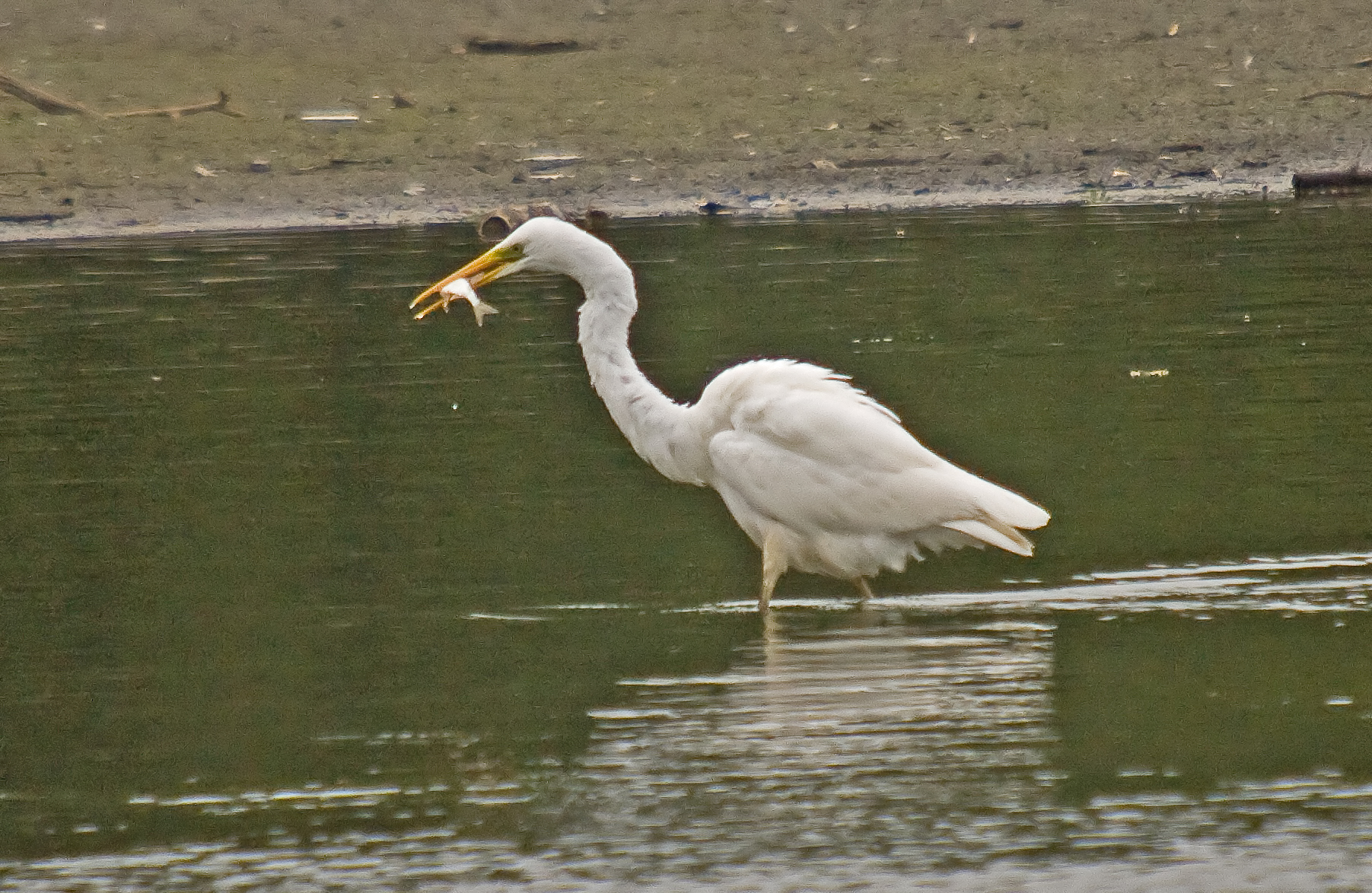
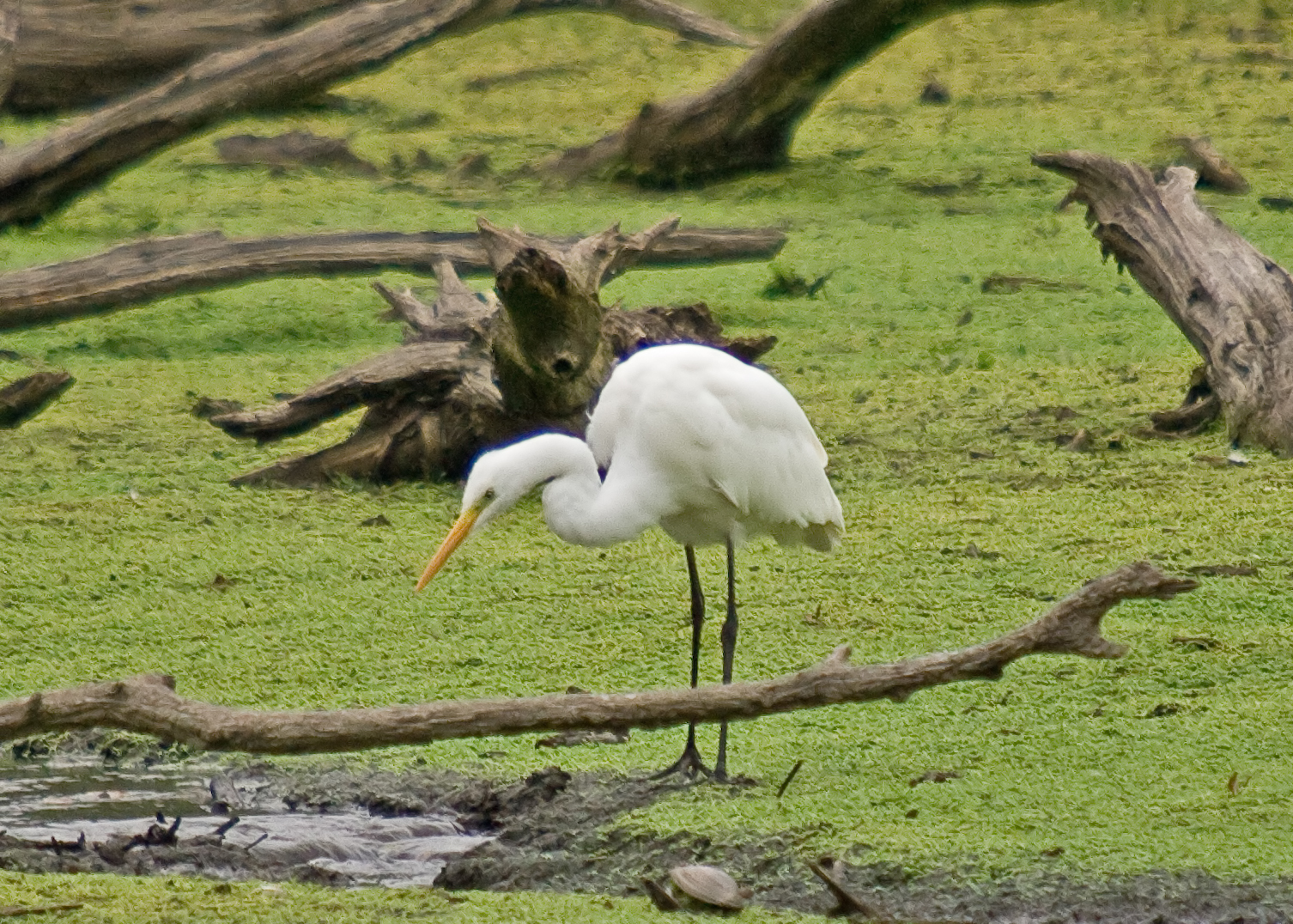
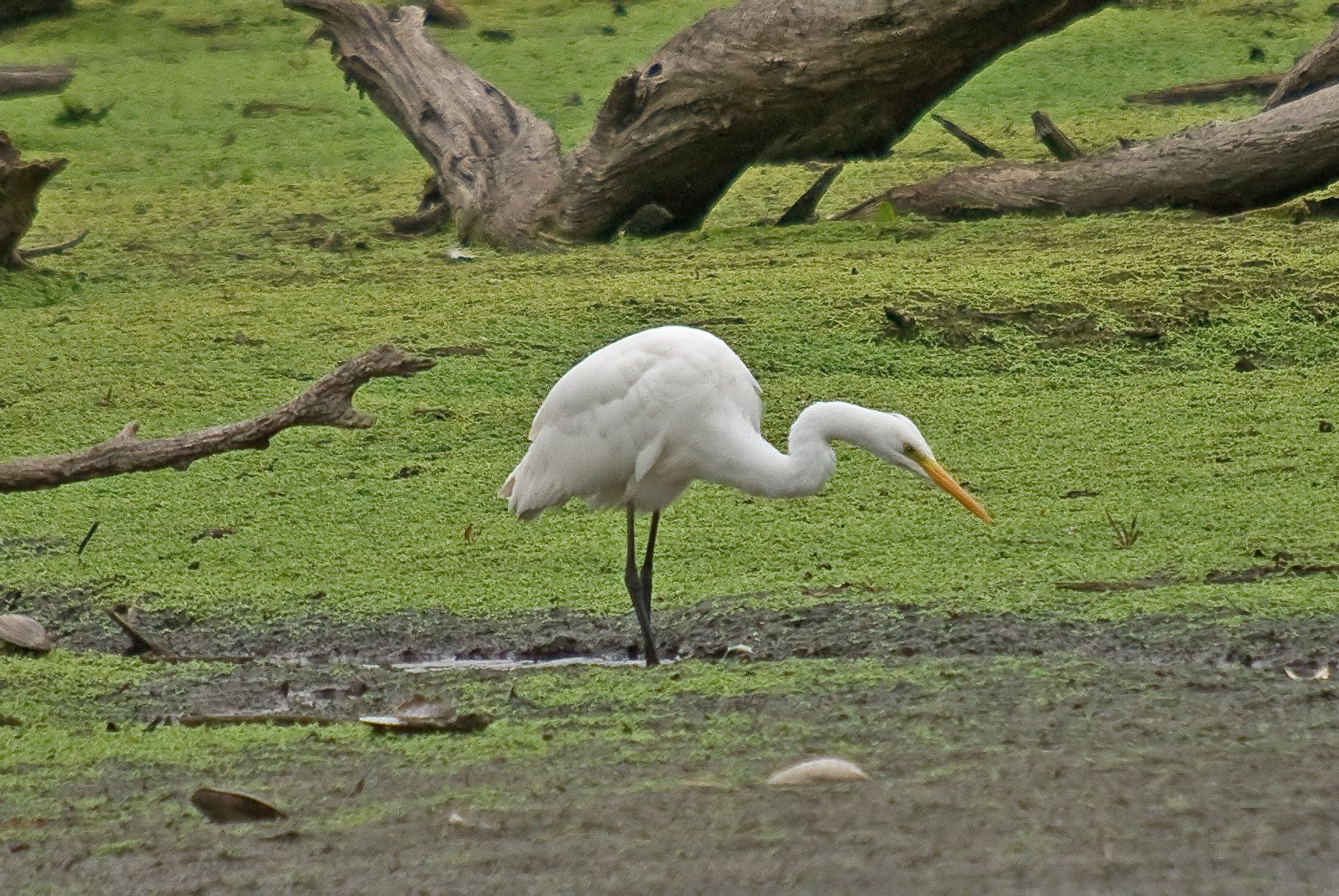
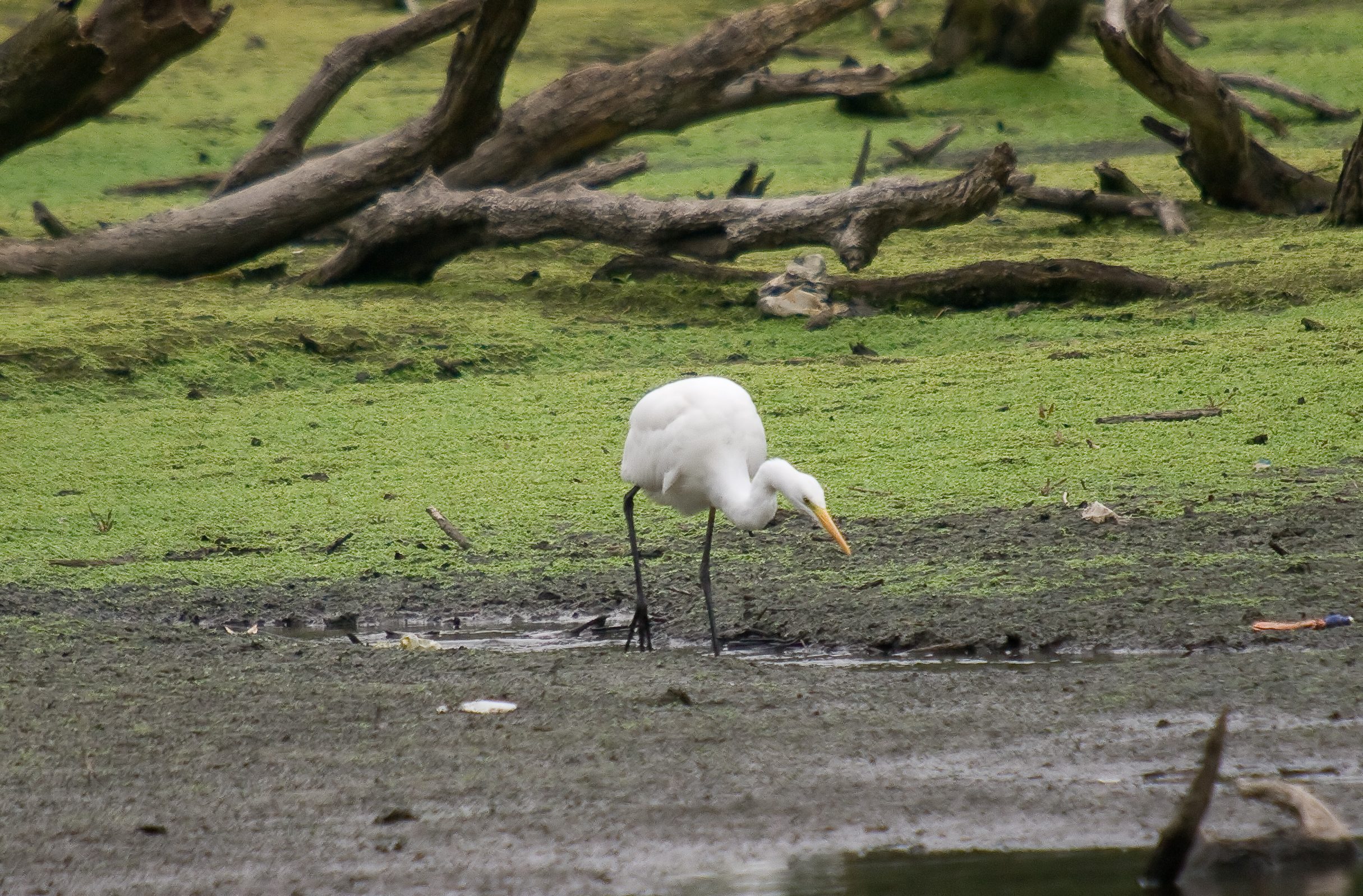
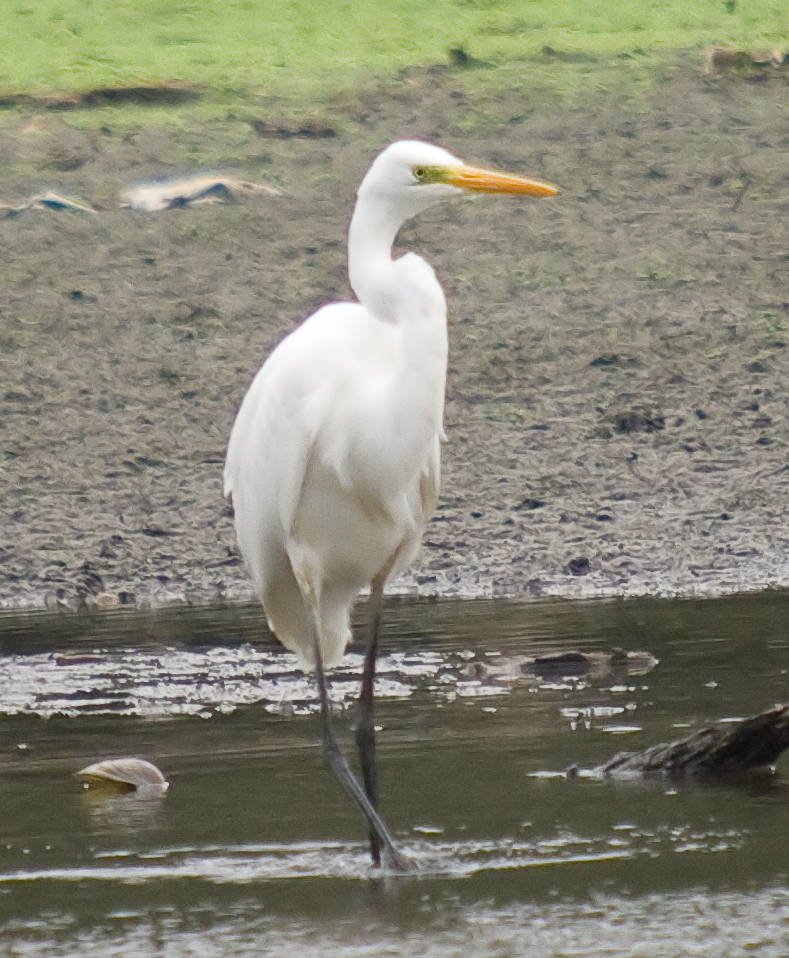
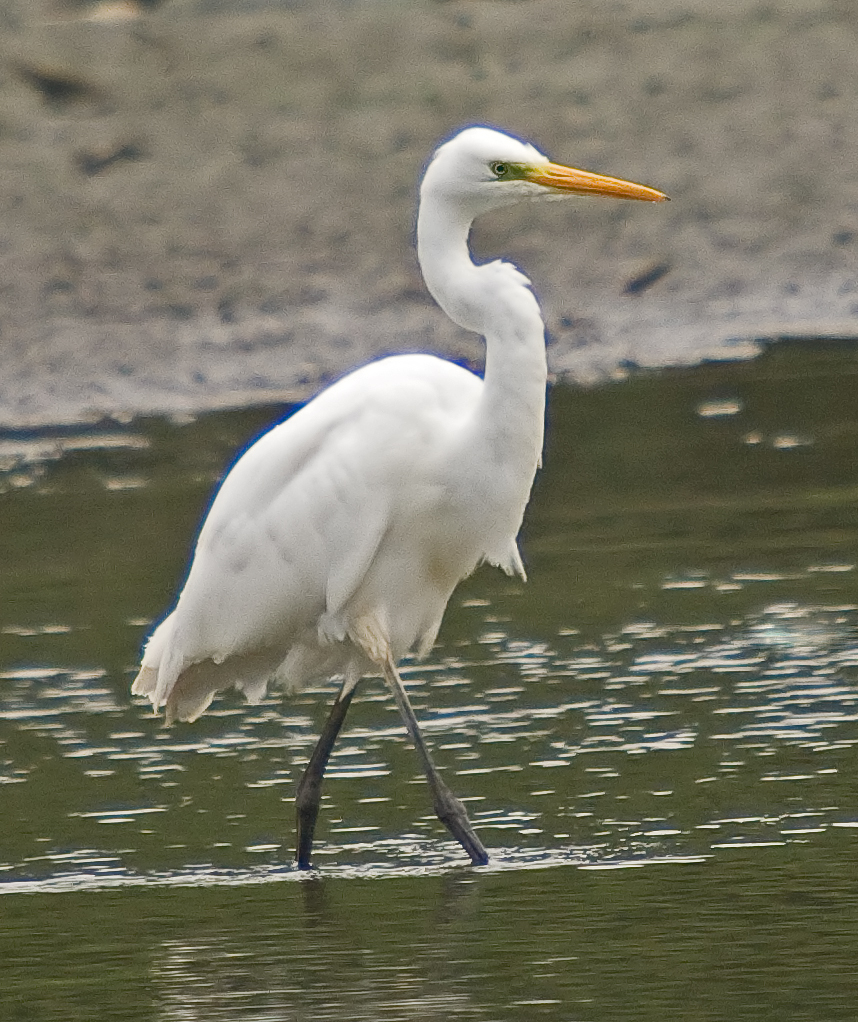
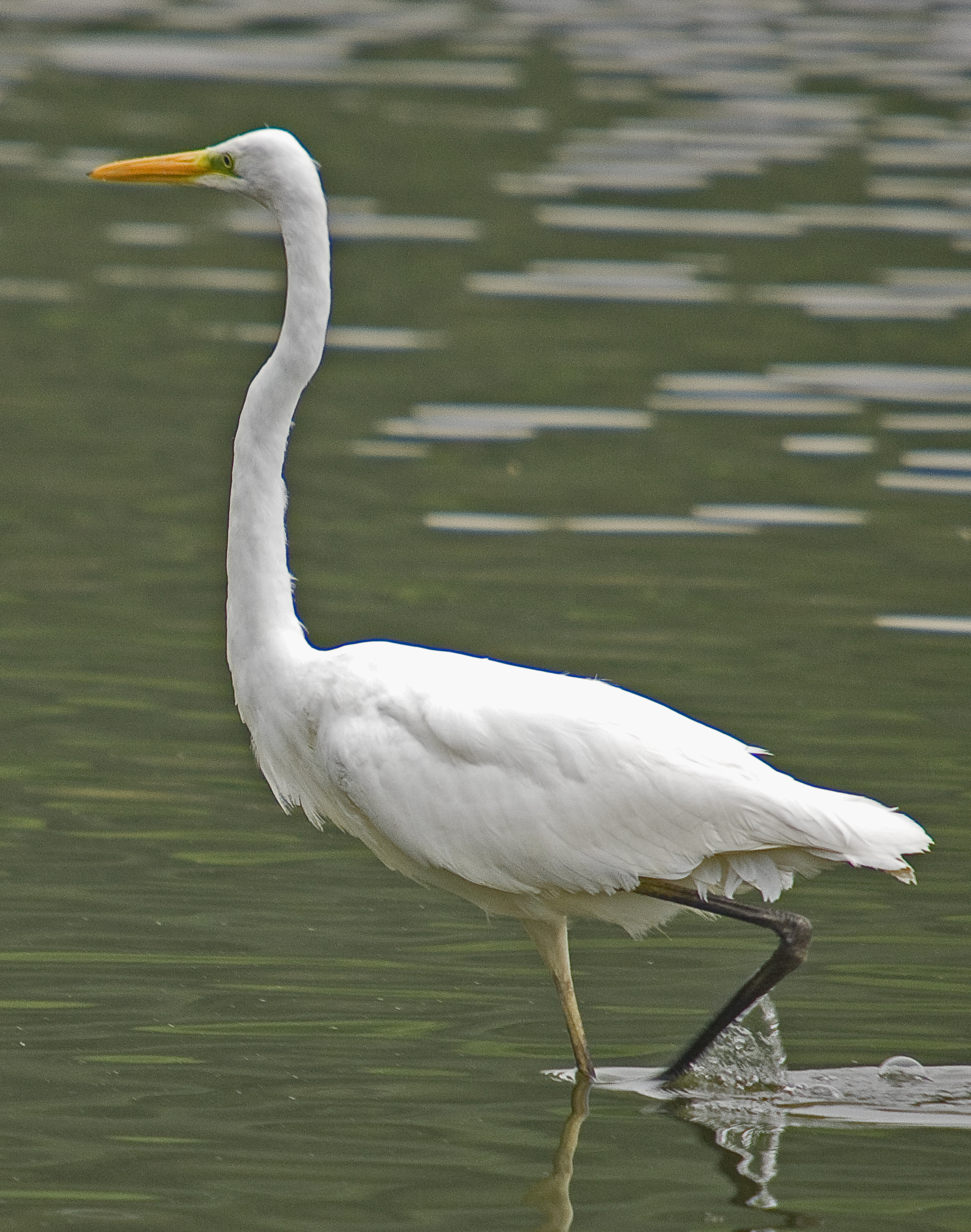
The hide was approached through a wooded path and then an enticing platform over the water for several yards and screened on either side by high fencing, emerging in to a metal shuttered building over the water, dark with tank-like slits to peer through. Peering through, you get a great view of the lake before you and a muddy, tree-lined shore line. Almost immediately I could see the Great White Egret, an impressive tall white heron, as big as a Grey Heron. Pictures speak a thousand words so I wont describe in detail, but note that this bird had a tiny black mark on the end of the beak. I would suggest that this specimen is a second year juvenile, but?
It is said that there are around 10 Great Whites annually in the UK so this bird moving and feeding so unconcerned just in front of us, was a rare bird indeed. I cracked off a few shots just incase it left but my day get even better when a Kingfisher decided to perch on the deliberatley placed "T" perch close to the hide. My luck got even better because it decided to come and perch in the willow tree just a few yard to my left. It was as if the bird knew that I had been cooped up for a few weeks and was welcoming me back, rubbish of course but that was my feeling. As he swayed in the willow to my left i just had to photograph him but it was a painful experience. I needed to point my camera almost over my left shoulder which stretched my broken collar bone. It literally brought tears to my manly eyes, Real agony and the joy of such a close encounter with Britain's most iconic bird mingled my emotions. But when he had left I had to brace myself and wait for the discomfort to subside.
Here is a sequence of the Great Wh
ite.

Post Script.
It turns out that there is a degree of confusion about this species. The Great White Egret – Ardea alba, is the same species that I have seen in the USA on numerous occasions. Formally it had a different latin/scientific name and I hadn't twigged that it was the same bird. In a way that is a slight annoyance, I thought that my list for the year was going to be increased by one new species but as I have seen this bird before in Florida this March then of course, no. It will be interesting to compare photos of birds from both continents.


 Wildlife in a Suburban Garden
Leave a reply to Neil Cancel reply