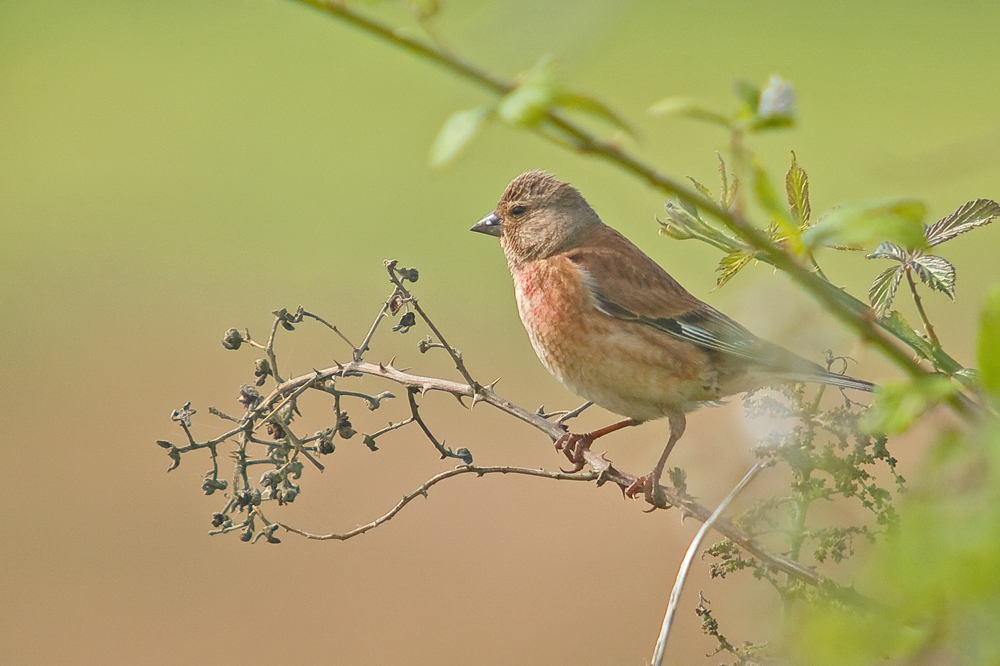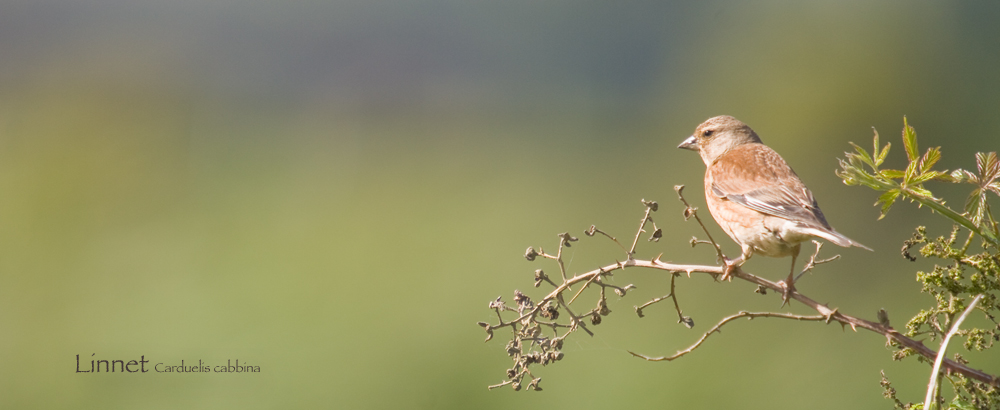
Panorama
Linnet – Carduelis cannabina are a bird that I have had a very limited amount of luck with over the last few years. I am pretty certain that they are not nearly as common as they were formally and when I see one they usually leave the scene immediately as well. I notice that the RSPB agrees that they are declining and for that reason are on the RED List. So yesterday when I happened upon a pair quite happily perched on a brambles in the middle of the marsh I was pleased to take the opportunity for some photographs. Females can be hard to identify, they are in fact, quite nondescript but as you can see from the picture above, males have this rosy hue with patches of almost red on the breast and forehead. I really "cocked-up" these photos and over exposed the images and in-spite of a great opportunity for good artistic shots I failed miserably. At best they are "aright" so I suppose that is a measure of what I am trying to acheive…. perfection and that is never easy. This is the female.
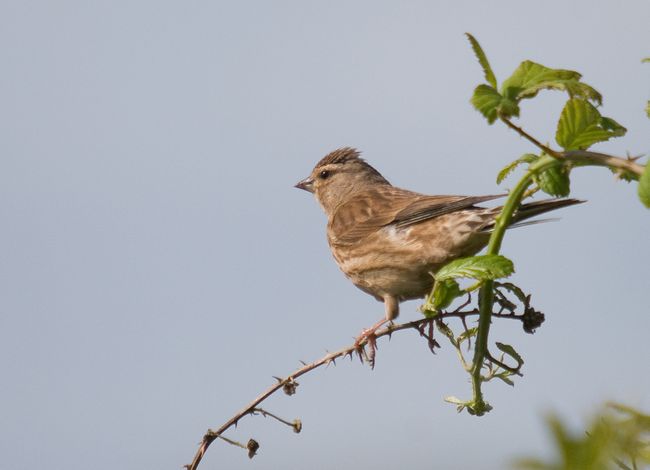
You might be interested to know that this exact bramble bush is a good spot. I have taken good photos of Stonechat and reed Bunting all in this very spot. It is a good look out and surrounded by marshy ground and an obvious place for a bird to perch.
Linnet male2.

I am so disappointed in these images which could have been really good! 

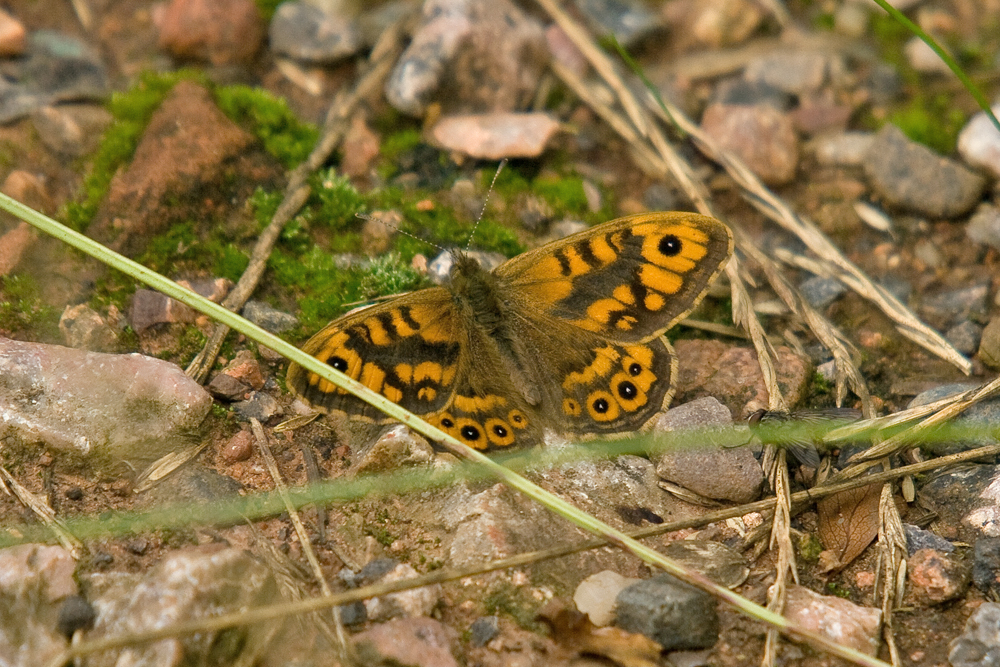
The next good observation yesterday was a   Wall brown –Lasiommata megera
A widespread butterfly species that are found in  large variety of habitats. There are a number of generations a year so you can see them throughtout spring and summer.They are  common in the south and particularly Devon.
.

Wall

.

This one was flying along a back track on Exminster Marsh, other Butterflies included Speckled Wood, Meadow Brown and Small White.
.
.
Today in the garden we have had a visit from a Dragonfly species, probably a Southern Hawker. It didn't settle or stay around for more than 10 seconds and it is the second time that I have seen this species in my small garden.

4 responses to “Linnets at Exminster”

  1. The pastel coloured bird photographs are absolutely fantastic Charlie. How close was you and what lens did you use?
    I am trying to get the same effect with Stonechats on top of the gorse bushes…so far I have had mixed results.

    Like

  2. Hello Trevor,I used my Sigma 50-500 and to be honest they were over-exposed because I have a problem with my camera. In Photoshop I tried to rescue them by darkening and this was the outcome. If you notice though, they are also almost back lit. The light was coming from about  10 to the hour if you can see what I mean. It has caused a great effect, glad you like it. It is no more impressive than your Stonechat though, I love that image.I took some good natural light shots of a Stony in the winter just as the sun was setting, here is a link to it have a look.  http://www.pbase.com/charlie_fleming/image/106474289Nice to keep in touch with you mate,Charlie

    Like

  3. That is a wonderful collection of Stonechat photographs Charlie….that is the sort of effect I am after. I am not sure what they are like elsewhere but at Par they are a very obliging bird letting you get quite close before taking flight.

    Like

  4. Hello Trevor,
    i dont fnd male Stonechat that easy to get close to but somehow females are more accommodating

    Like

Leave a reply to Charles Fleming Cancel reply

About the Podcast

Welcome to The Houseplant Podcast, your ultimate guide to houseplants! Join us as we explore the wonders and importance of plants in our lives.

Explore the episodes

Latest posts