
At this time of year the word "glorious" gets used quite a lot so it seems fitting to describe the encounter I had this morning with a truly gorgeous male Kingfisher as glorious. Sitting in my hide at around 110'clock I saw a Kingfisher fly down the brook towards me, I thought it was going to carry on downstream and fly past me but on this occasion it veered to the left to land on a dead "cow-parsley" stem that I had pushed in to the bank at a really inviting angle and just in front of the hide. The fact that it had chosen this stem as a perch was rewarding because when I placed it there I was hoping that it wouldn't be able to resist it and I was right!. It was very close to me and in perfect light with a wonderful uncluttered background. I could see that it was in hunting mode because it was scanning the water beneath the perch looking for prey. However it had fed very recently because it had fish scales stuck to it's beak. After a short while it left it's perch and then landed right on the hide I was sitting in, it was now just a few inches above my head! Can you imagine? It flew off quickly although I wasn't aware that it had because just a few minutes later it was back on the perch in front of me again but now with a clean beak so it must have dived somewhere else. This time, even though it was still searching for food, it flew off down stream again. This was a really brilliant encounter. I got to enjoy the beauty of this bird that is in perfect condition, bright as a button, an avian jewel. Kingfishers are the most spectacular of birds and are almost out of place in our cool temperate climate, birds as colourful as a Kingfisher are usually found in the tropics.
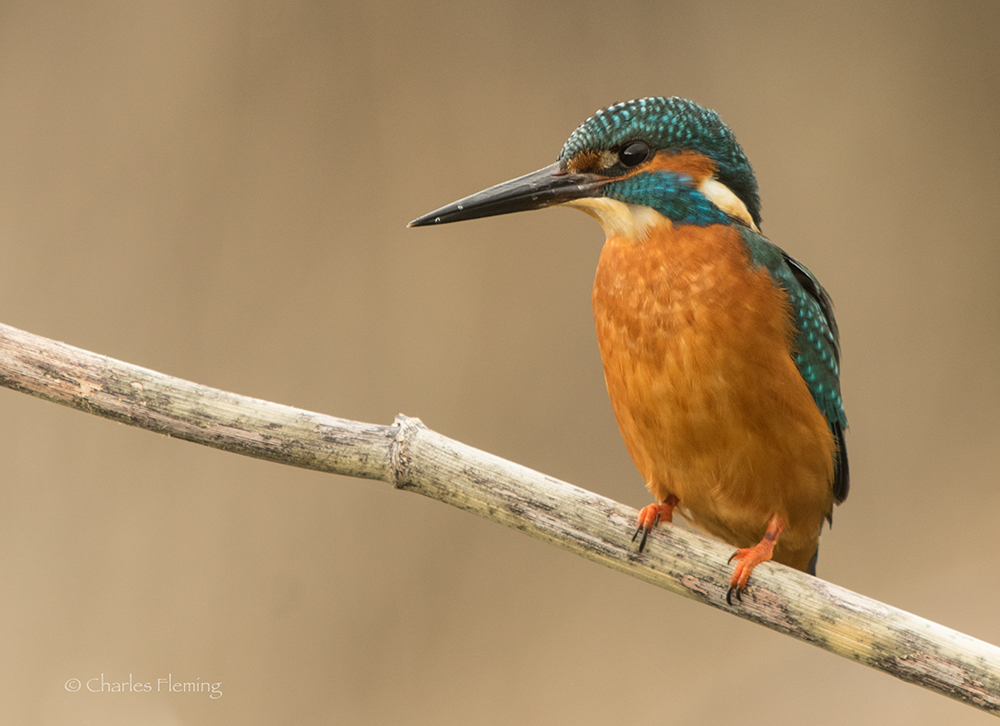
You can clearly see the fish scales stuck to his beak.
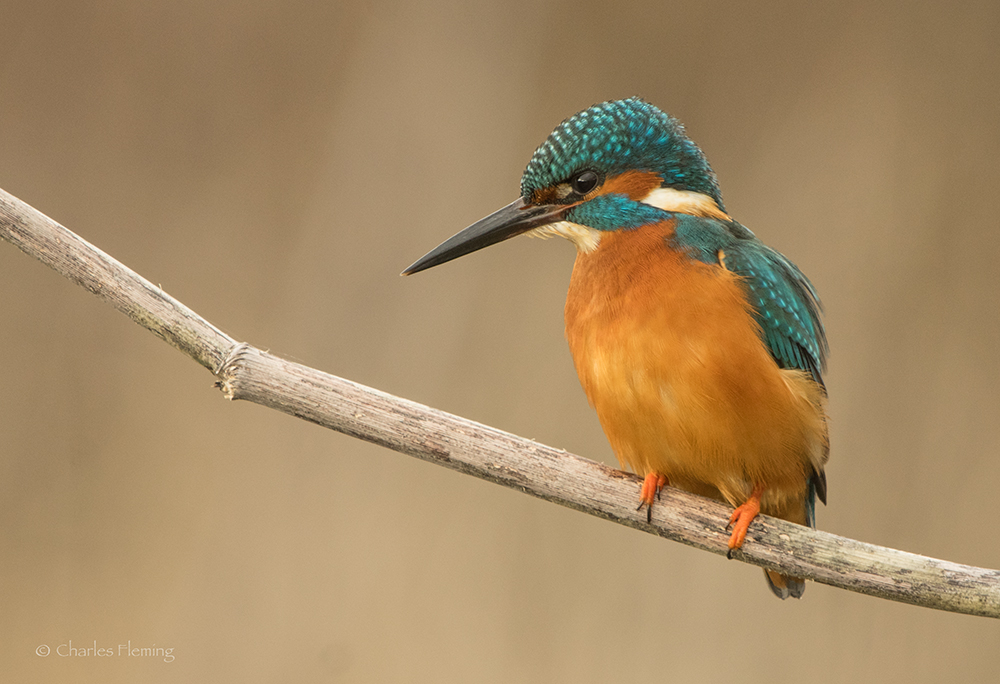
When he came back a few minutes later the scales had been washed off.
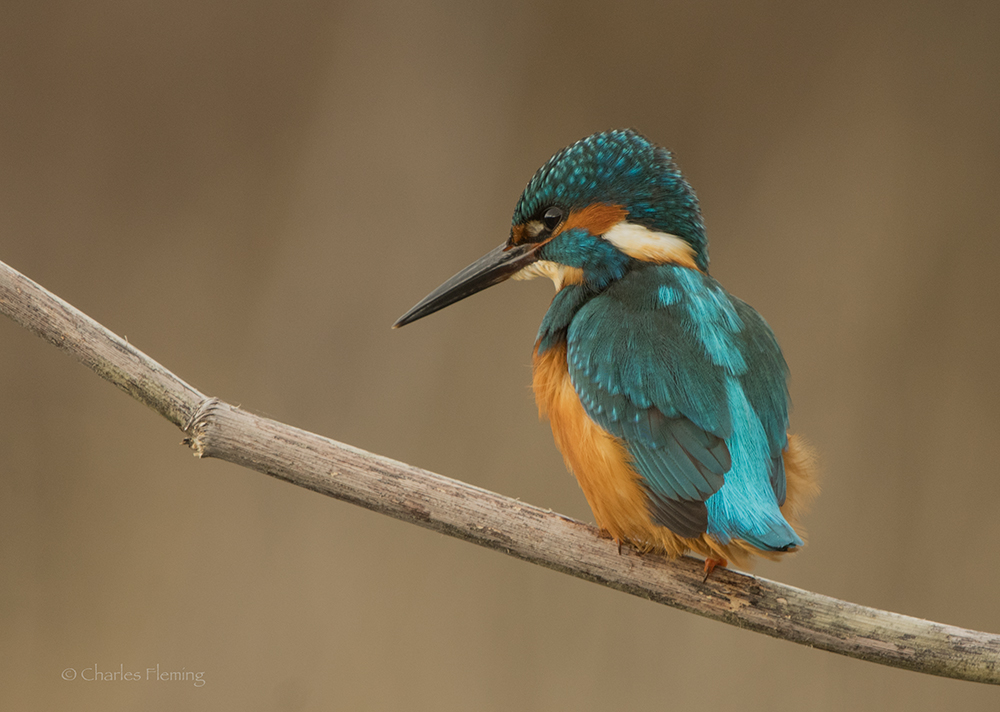
To tell the difference between the sexes, males have an all black beak.
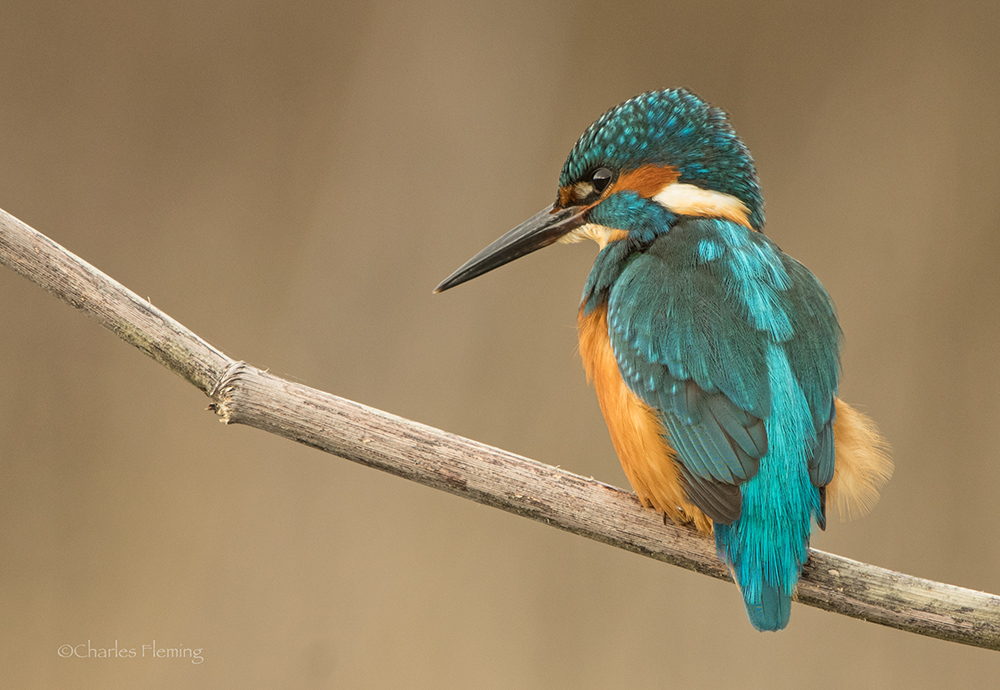
This is possibly one of the nicest portraits I have taken of this species. Note the light tip at the end of the beak.
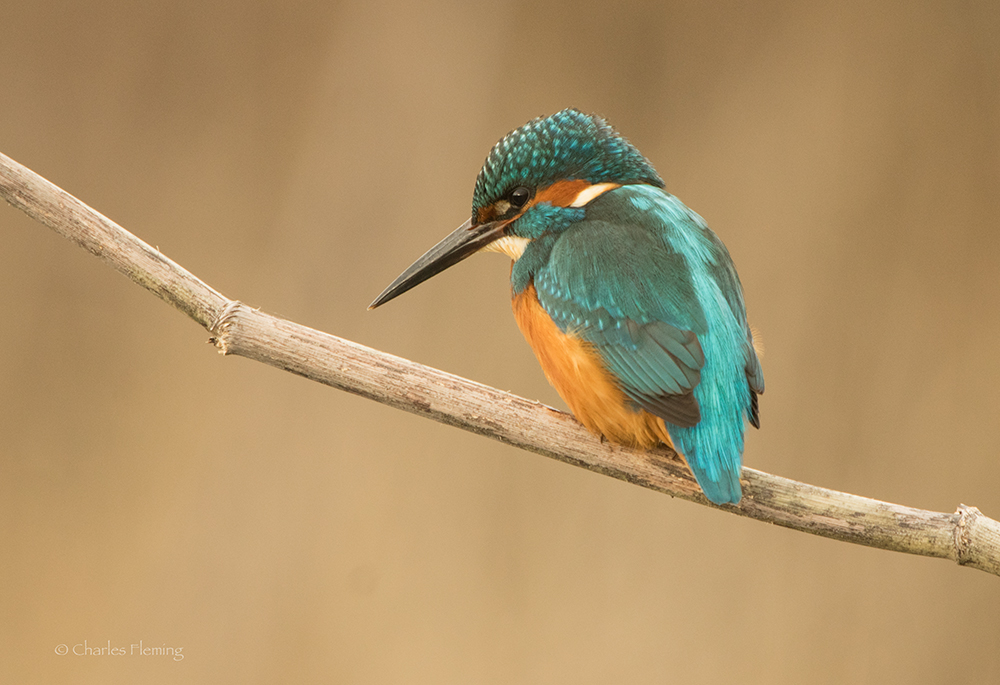
This white tip could indicate that he is a first year bird now coming through in to full adult plumage. On the first picture there is just the slightest hint of black on the red legs, newly fledged young Kingfishers have blackish legs and feet which gradually fades as the bird gets older. If you look at the picture on the link below you can see a young Kingfisher which was photographed in the summer and the blackish feet are very obvious.
Related articles

 Wildlife in a Suburban Garden
Leave a comment