
.
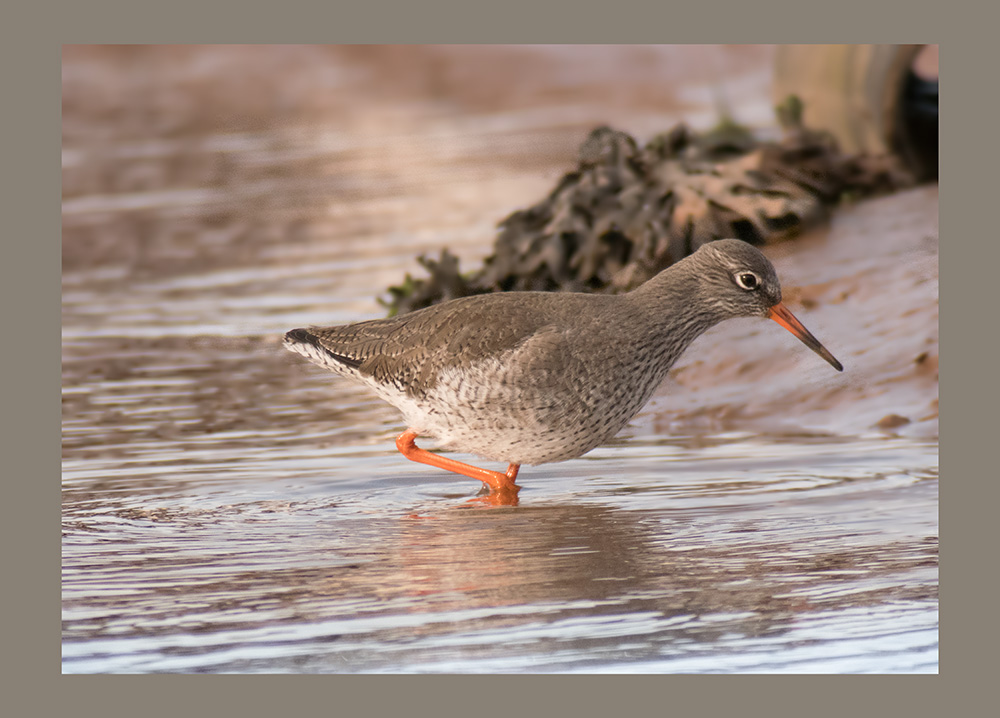
As promised in yesterday's post, I went out full of enthusiasm with the intention of using my digiscoping equipment to both practice and to enjoy the nice bright sunny weather. I drove out to Cockwood Harbour on the lower Exe Estuary because I know that there are always some birds around, mostly Redshank – (Tringa tetanus) and this would give me the opportunity to hone the skills necessary. These skills basically involve fine tuning of the focus ring on the scope which is very sensitive and with a moving subject like a bird, it's hard to be really accurate. The advantage of the digiscope over a digital SLR camera is that you can obtain photographs of birds at distances that would be impossible to achieve with a DSLR camera even with a 500 lens. Even if you attached a 1.4 convertor the subject would still be much too far away and look like a small dot in the frame. The picture above – taken through the scope and captured on a Lumix 4 thirds camera is not cropped and I must say that I am impressed with the result even though it is not as sharp and crisp as I would really like, it's a nice picture and not just a photograph. Here is a photograph taken of the same birds at the same distance taken with a DSLR and 500 lens, it's a pointless photograph of course and now you can immediately see the advantages of the scope in situations like this.
.
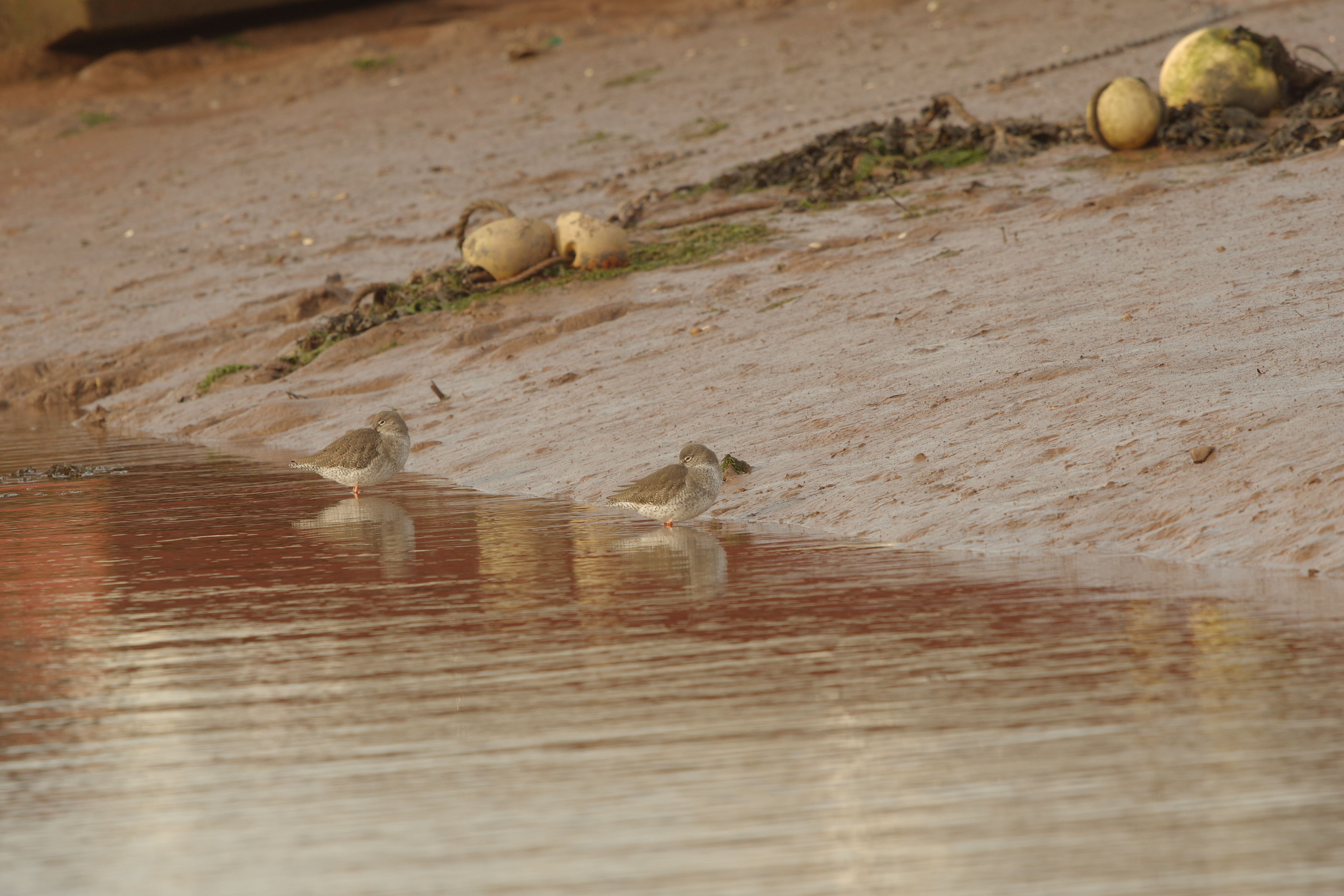
A totally pointless photograph taken with DSLR to 500 lens!
.
The Redshank that we get over-wintering here on the River Exe are interesting. Ringing projects have shown that they are here from various breeding sites in Western Europe including the Netherlands. Ringing projects have been able to prove that some Redshank continue much further south in to Portugal and Spain and in other cases even Africa.There is apparently no pattern to this migratory behaviour, some birds just choosing to continue much further south. They are very busy birds, seemingly feeding constantly on mostly ragworms it would seem. Muddy harbours and estuaries are perfect for this which explains why they are here of course.
.
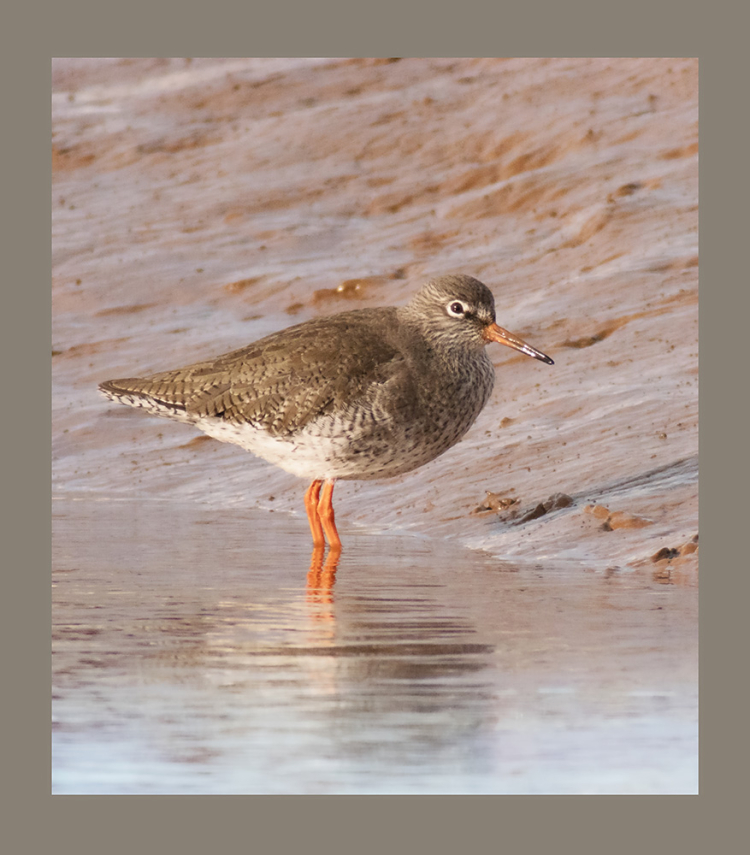
The same bird through a scope (and below)
.
From time to time I see birds that are sporting leg rings, I always look out for them and then report back to the BTO to find out where they have come from. One particular female bird – I haven't seen her for a year os so though – carries a ring number 73 and the ringer and man who runs the project in the Netherlands is always anxious to here reports of her. She is several years old and always spends the winters here on the Exe.
.
.
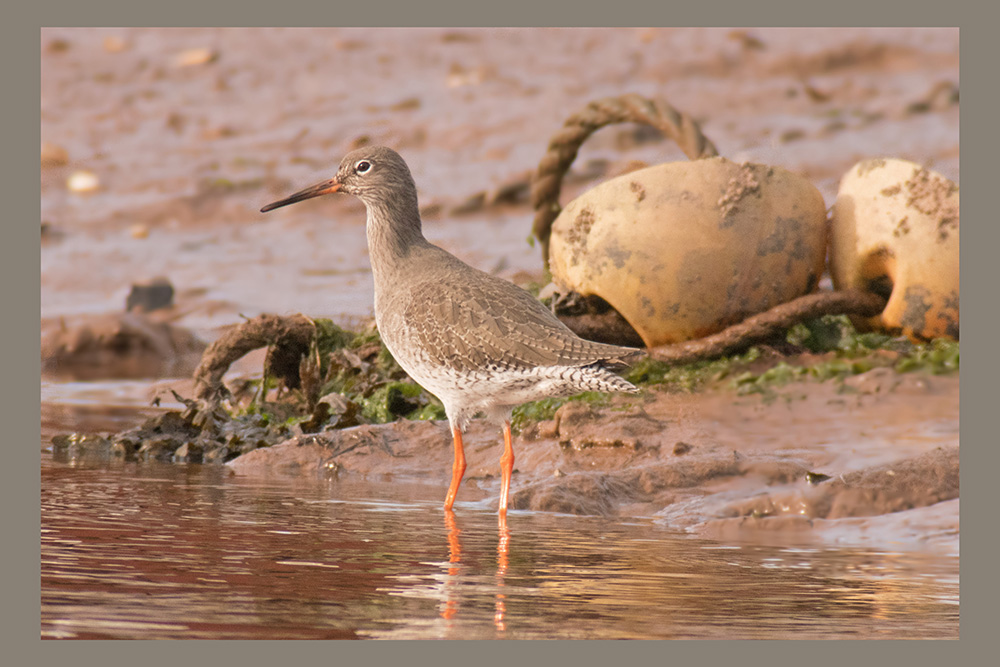
So to summarise, it's horses for courses, if your subject is close enough then you will always get far superior photographs with conventional digital SLR cameras and the right lenses but with a subject that is at a distance, there is a place for taking pictures through a scope – digiscoping. I am glad that I have been able to add a scope to my photographic armoury.
 Wildlife in a Suburban Garden
Leave a comment