
As you may know I have been photographing the Buzzards at my "caravan"hide these last few weeks. On my last session on Wednesday it was the first time that 2 Buzzards had visited – almost – together. One came in from the right and stayed for 3 seconds or so to be followed almost immediately by another fro the left. They had probably seen the bait simultaneously and then coincidentally arrived almost together. However, it did give me the chance to see the massive difference in size between them both. The first one is an adult – probably a male – and the other which I think is the juvenile, is huge in comparison. It appears that the one on the right is closer to the camera but I can assure you that this is not the case, they were both taken on the same clip of video footage and I have extracted these screen shots. Check the size of the log and the background.
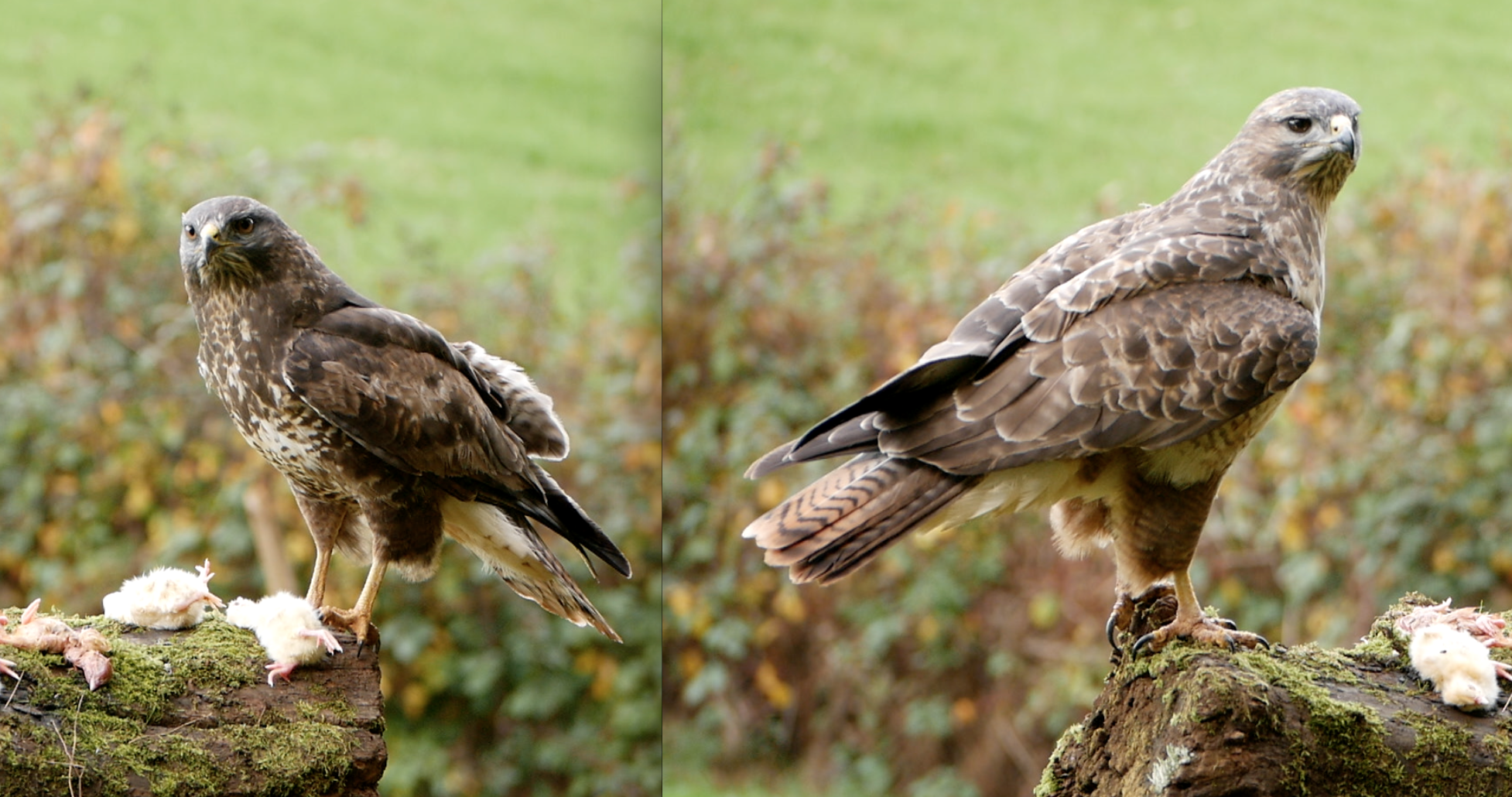
Adult Buzzard – probably male on the left. Juvenile – probably female on the right.
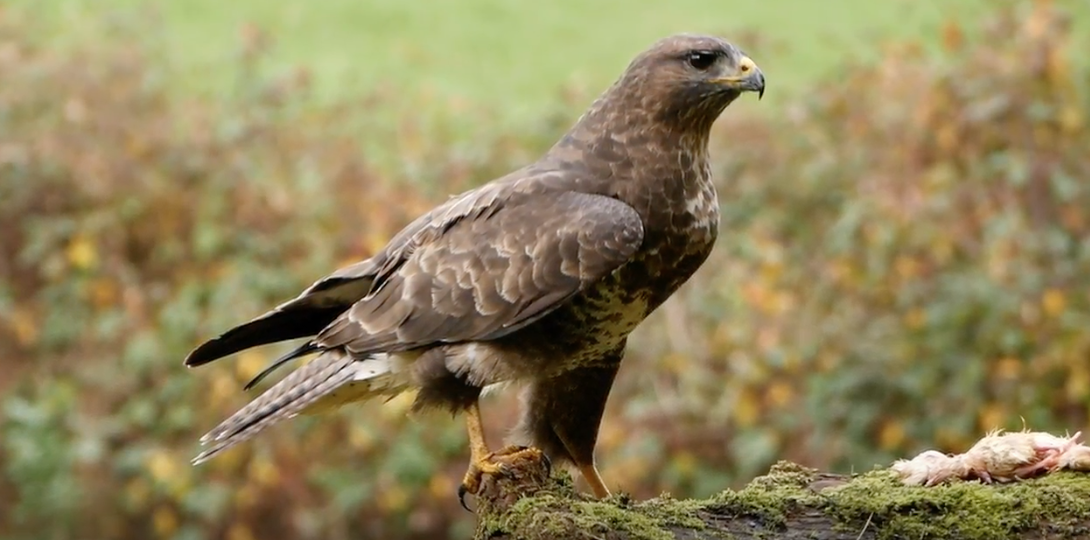
This is a photograph that I took the day before, it appears to be the adult female – she is fantastic!
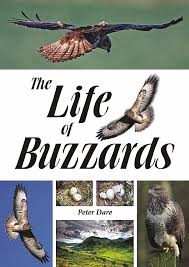
I recently purchased a book by Dr Peter Dare entitled "The Life of Buzzards". The author is a local West Country man and I have found it a brilliant, informative book packed with scientific facts and stats and a few photographs, I can thoroughly recommend it. Shop around because, if you buy online I have seen a massive difference in price depending where you buy. I bought the Kindle version because I can enlarge the text to size that I can read while I wait for my cataract operation! Anyway, one of the interesting facts that I discovered was that it is very common for just one juvenile to survive in a clutch. ( As in the situation in this territory). Due to chicks hatching on different days there can be a massive difference in development and the older chick will always get fed first leaving younger chicks to gradually deteriorate and weaken if there is a shortage of food. This is a good strategy because it ensures that at least one chick survives to fledge the nest – obviously if there is an abundance of prey then 2 or more can be successfully reared – a young bird can't be half fed! If they were all the same size and age in the nest then the available food would be shared and the outcome would be – presuming a shortage of prey – a nest full of half fed youngsters who would ultimately not thrive. Nature has worked out a successful strategy that gives a better chance of success for at least one youngster. This is called asynchronous egg laying – where eggs hatch on subsequent days sometimes 48 hours apart depending when the eggs where laid. Incidentally, other birds commence sitting after the clutch is complete which means that all eggs hatch on the same day and obviously the chicks are then the same age and size and fledge together. The reason for this is that for some species it important for young birds to spend as shorter time as possible in the nest where they are at their most vulnerable to predation.
Here is the front cover of the book. If you are interested in Buzzards then it is a must.
. 
I If you want to get the opportunity to photograph these birds then please let me know. There is a charge but ALL monies will go to a great cause. I am collecting in aid of cataract operations in the 3rd World. I have seen what it is like to be visually impaired and it's not a lot of fun.
I can be contacted on charlesfleming1@mac.com.
 Wildlife in a Suburban Garden
Leave a comment