
An update to this post.
Back at the caravan hide this morning and then later on in the afternoon, there had been some great action on the trail camera which proved that the Buzzards are regular visitors now. My persistence has begun to pay off and I am now in to a situation where I can almost guarantee a visit if I stay long enough. Here is an image that I created earlier on.
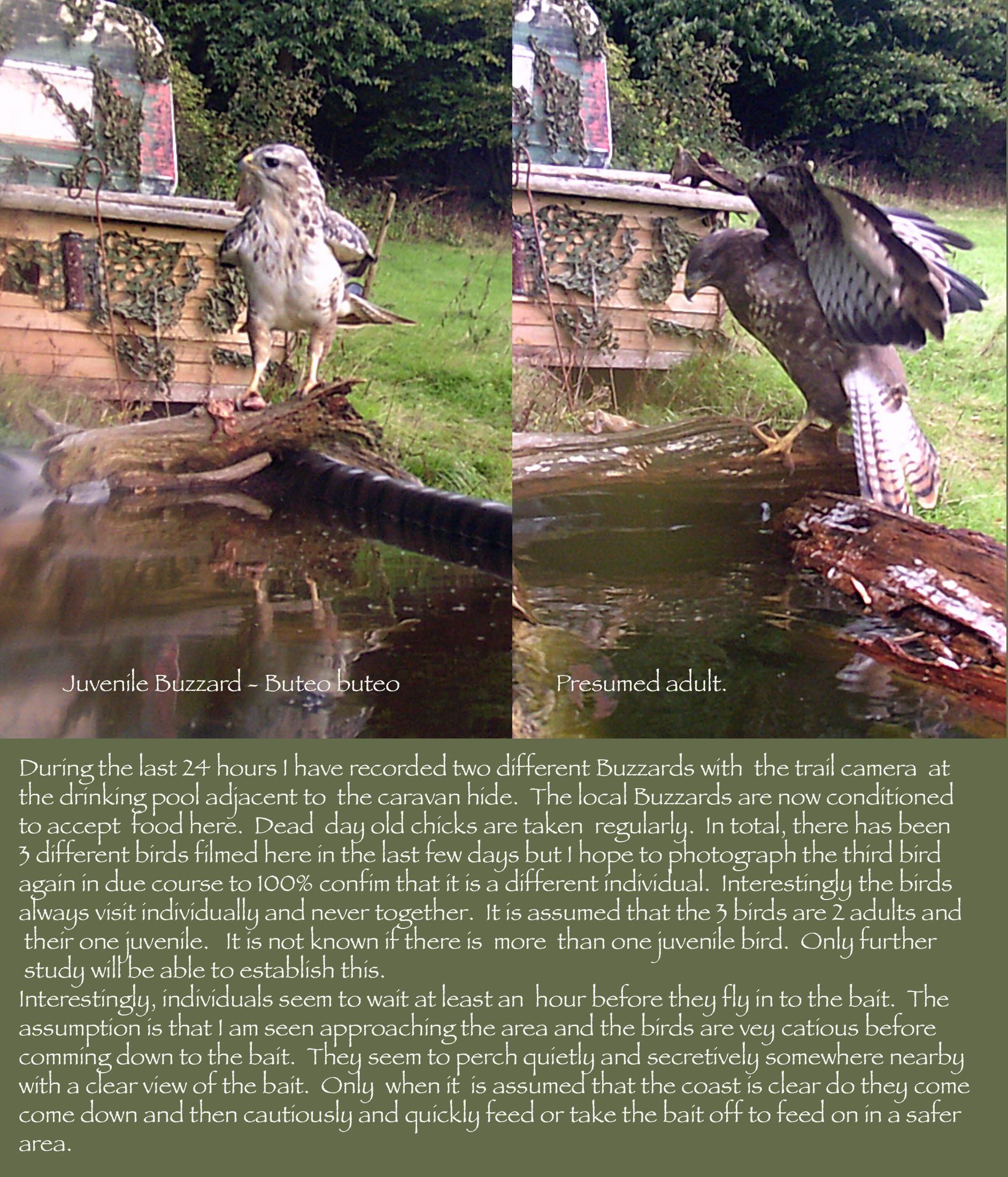
There was some success yesterday with Buzzards. I sat quietly in the caravan with the Lumix connected to the iPad and in pre-burst mode.In this way as soon as a Buzzard landed on the baited log I would press record and the previous second would be filmed frame by frame. I would be able to get a shot of the bird coming in to alight on the log with talons extended. After almost an hour, suddenly, there was a Buzzard. After sitting watching the iPad screen for that length of time my reactions were slow, I thought I had missed the chance but then thought "oh well, I'll press the shutter anyway" which is what I did. I was successful after all but the lighting was so unhelpful that the bird seemed as though it was in the dark. As well as that, I had still underestimated how large the wingspan of a flying buzzard actually is and they were not in the frame. So it was a combination of very good and very bad with the excitement of success soured by the disappointment of partial failure. However, the images appear to show a different dark bird, in fact they certainly do. This one is probably the adult female. Have I seen her before? I am not certain but I am certain that I have photographed 3 different individuals now. After the bird had departed I went out to retrieve the camera and sat there sorting through the disappointing image files. I have been able to make something of a few of them. I hadn't realised that the bird had returned and there it was again, feeding on the bait as before. Eventually it flew again. Time to come home and as I left the caravan this time, yet another Buzzard – the light juvenile was sat on the low fence line. It's possible that the second bird to feed was the original dark bird so all 3, but at least 2 came to the bait during this session. Here is footage of the bird flying in – I have slowed that down – and then it feeds voraciously and quickly on the remains of the bait all the time looking around cautiously to remain safe. The fact that the bait is small pieces of food separated means that that the bird cannot lift it and fly off with it. If it were larger I am sure it would.
If you look at this still below – not of the highest quality I am sorry to say – you can certainly see that there is a difference in the markings on the breast, To me the head shape is different as well.
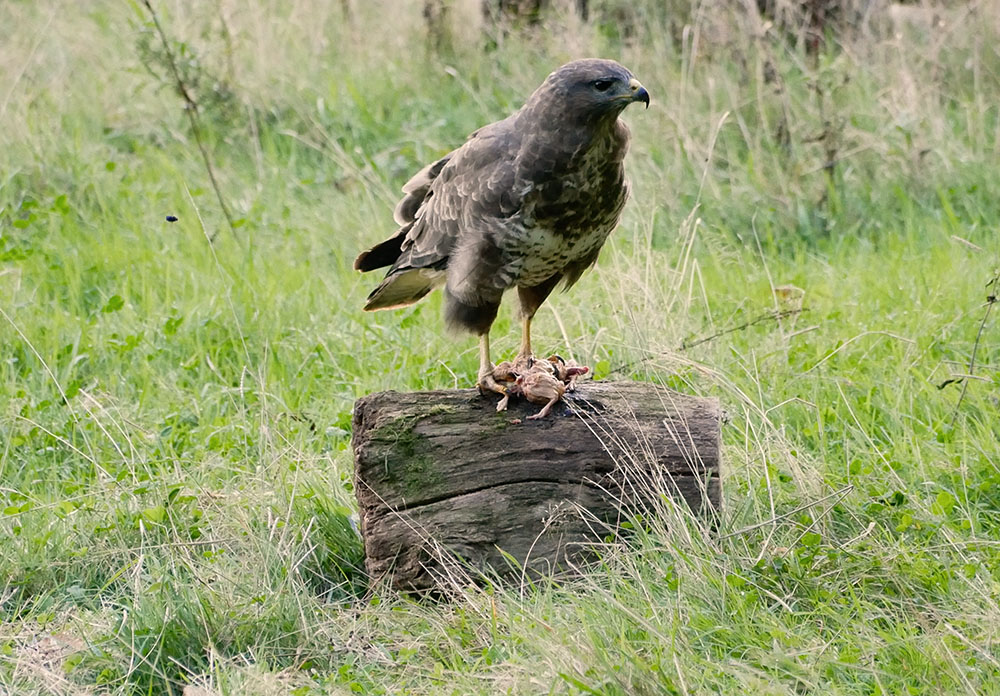
Then if you compare to the other dark bird, you can clearly see that there are differences in the shape of the white/buffish markings on the breast and the belly markings, which are much more extensively light are different confirming that these are different individuals.
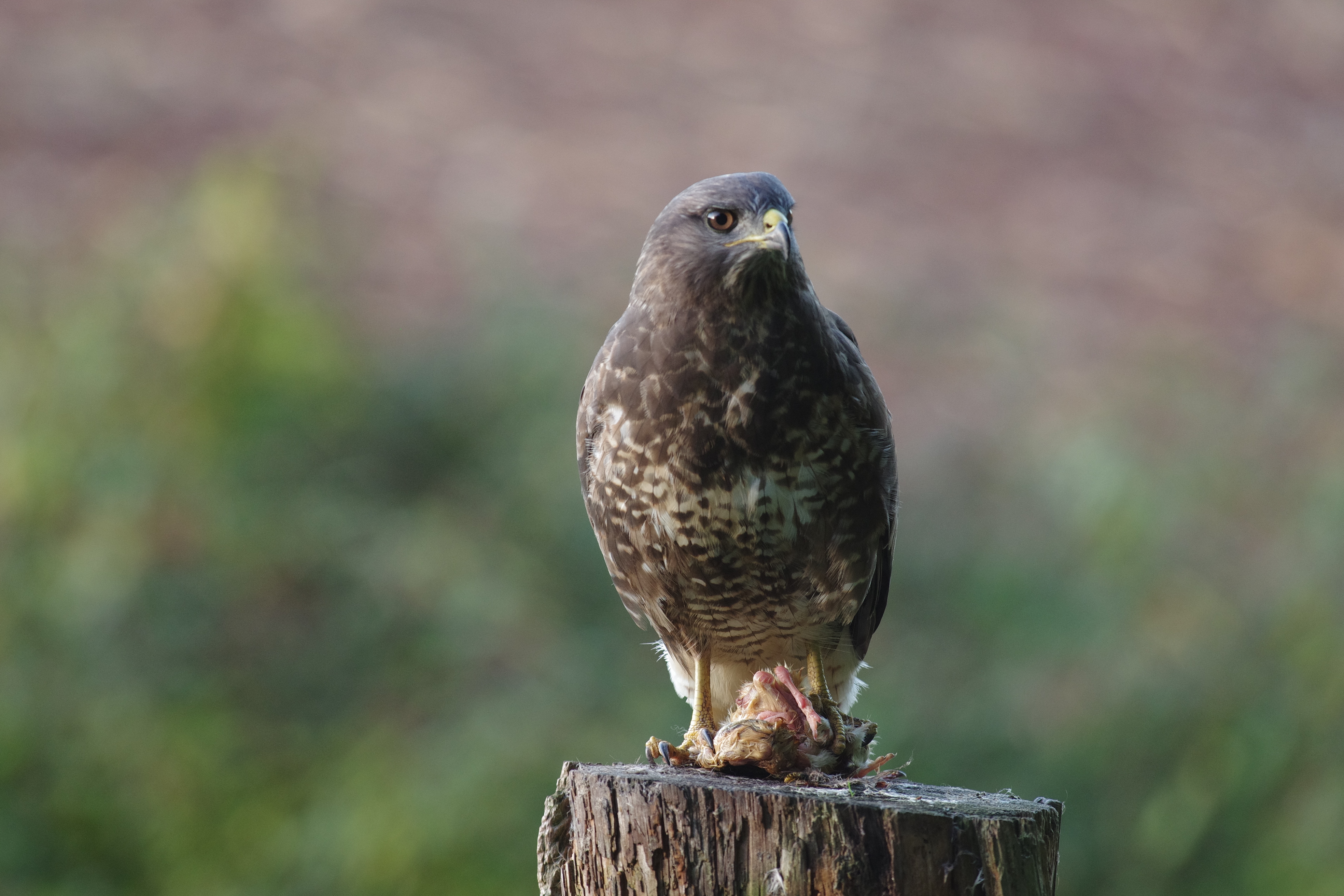
All in all, this is turning in to quite a success. It has taken me weeks to get to this stage and I am certainly getting good results now.
 Wildlife in a Suburban Garden
Leave a comment