
I've been in Minorca, one of the Balearics – for the last week, a very popular holiday destination with Northern Europeans keen to get some guaranteed sunshine. With cloudless blue skies pretty much a cert and the UK £ strong against the struggling Euro, it's a very popular destination. I always find it a little bit boring though, sitting in the sun sweating and panting in the heat is not my favourite pastime, but it's a massive pleasure to see my beautiful granddaughter enjoying life so much. You would imagine that there would be obvious and regular wildlife sightings to see and record but it's not really like that. I think, because of the heat. Most birds for example are skulking away in the thick scrubby undergrowth but the common birds that you catch a glimpse of are good ones. For example, the 2 common gull species here are both good birds, the almost uniquely "red billed" Audouins Gull is rarely if ever seen in the UK and the Yellow-legged gull replaces the UK's ubiquitous Herring Gull. Kites, both Red and Black are common and Booted Eagle is often seen. Frustratingly, I know that Nightingales are very common but you rarely catch sight of them even though they are heard almost constantly when in the right habitat, low thick scrub which they share with two other species that are very common here, Cettis and Sardinian Warbler. Woodchat Shrike are seen on every road trip and White Stork too. On the negative side, this little island has pretty much been destroyed to make way for the tourist with bare breasts and buttocks making any fully equipped photographer feel slightly uneasy. One of the more common birds is the Spotted Flycatcher and I have seen them regularly whenever I have visited, this year was no exception. Any self respecting butterfly enthusiast would have a field day with every species seen, an unusual one.
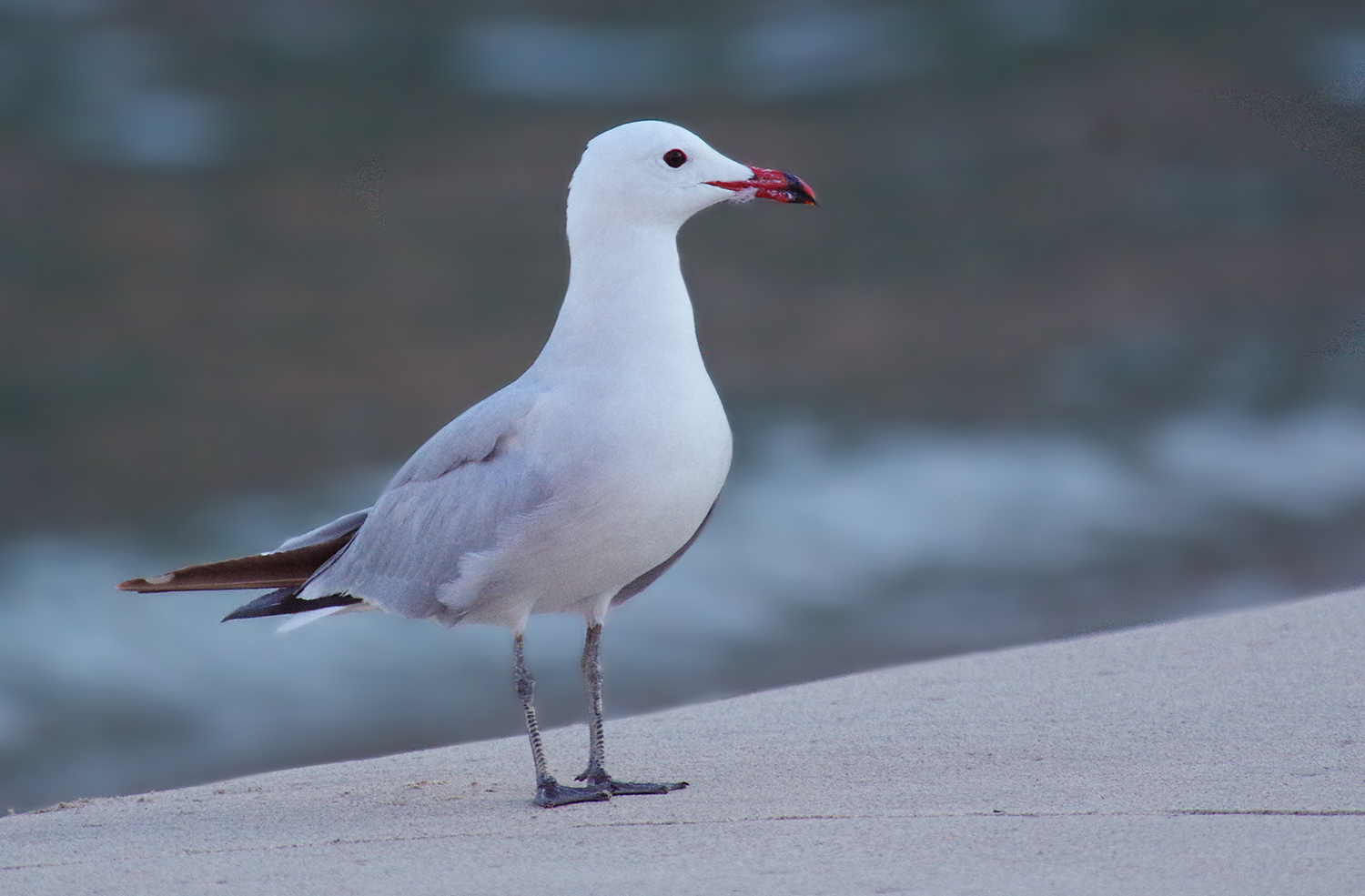
Audouin's gull (Ichthyaetus audouinii)
From Wikipedia: The Audouin's gull (Ichthyaetus audouinii) is a large gull restricted to the Mediterranean and the western coast of Saharan Africa. It breeds on small islands colonially or alone, laying 2-3 eggs on a ground nest. As is the case with many gulls, it has traditionally been placed in the genus Larus. In the late 1960s, this was one of the World's rarest gulls, with a population of only 1,000 pairs. It has established new colonies, but remains rare with a population of about 10,000 pairs. This species, unlike many large gulls, rarely scavenges, but is a specialist fish eater, and is therefore strictly coastal and pelagic. This bird will feed at night, often well out to sea, but also slowly patrols close into beaches, occasionally dangling its legs to increase drag. The adult basically resembles a small European herring gull, the most noticeable differences being the short stubby red bill and "string of pearls" white wing primary tips, rather than the large "mirrors" of some other species. The legs are grey-green. It takes four years to reach adult plumage. This species shows little tendency to wander from its breeding areas, but there were single records in the Netherlands and England in May 2003. This bird is named after the French naturalist Jean Victoire Audouin.
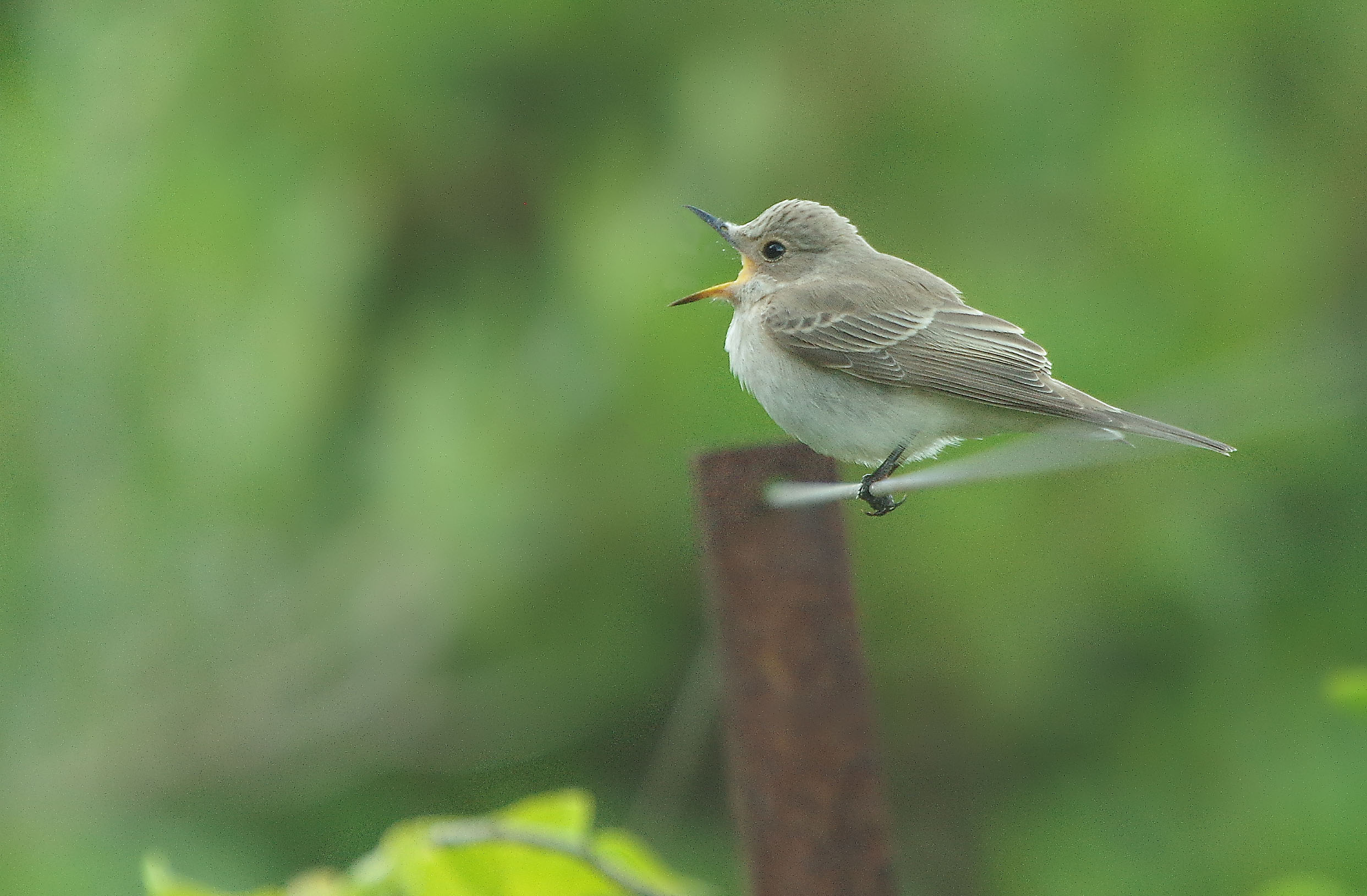
Spotted Flycatcher. A common bird on Minorca, this is a juvenile which was feeding on the edge of a fruit orchard.
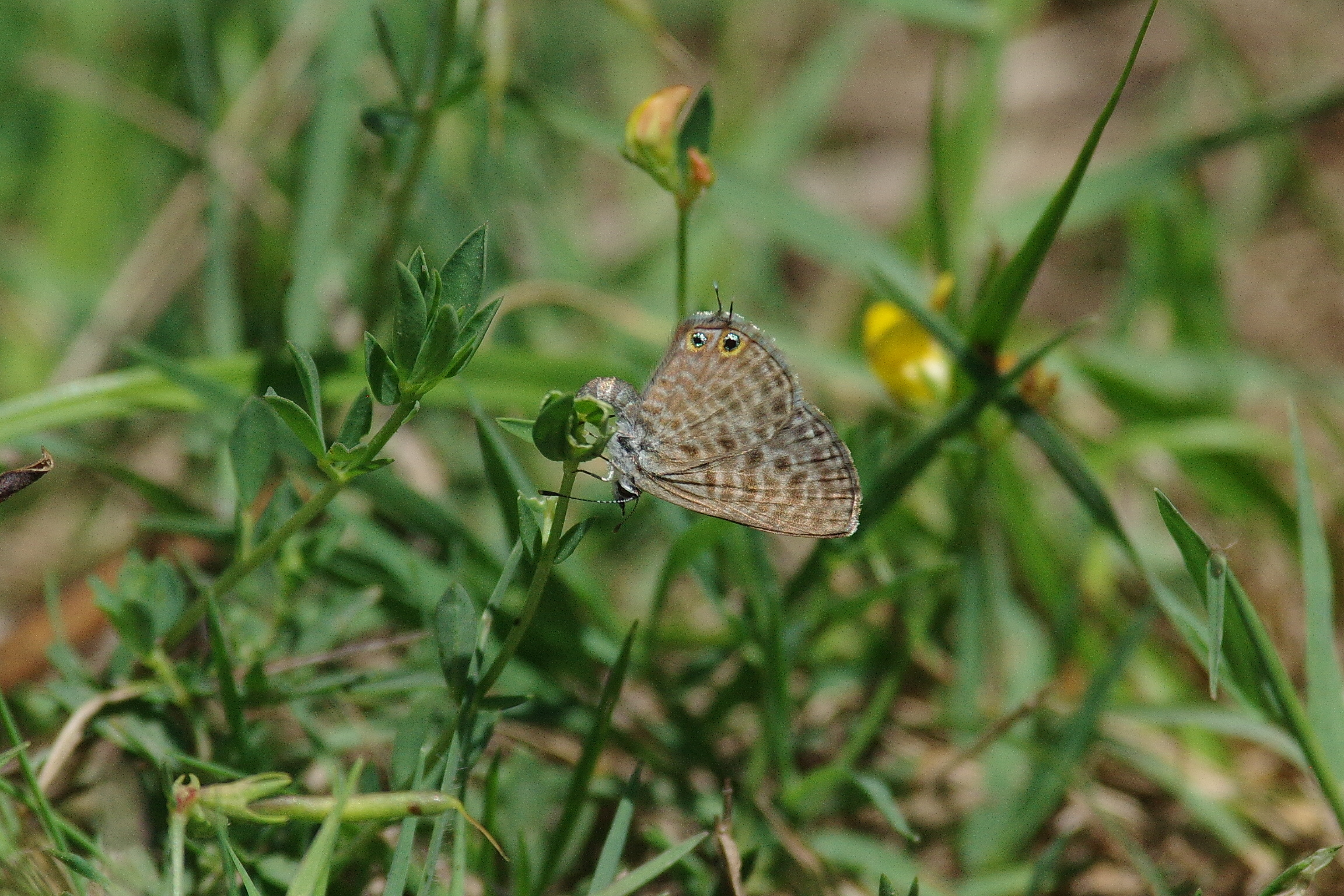
I photographed this lovely butterfly, a tiny insect in fact. I am pretty sure that it is a Langs Short tail, Leptotes pirithous a small butterfly with a wingspan of 21–29 mm in males and 24–30 mm in females. The uppersides of the wings are purple bluish in males, bluish-brown in female. The undersides are dark beige striped with white lines. The hindwings show marginal orange and black spots and two small tails.
 Wildlife in a Suburban Garden
Leave a comment