
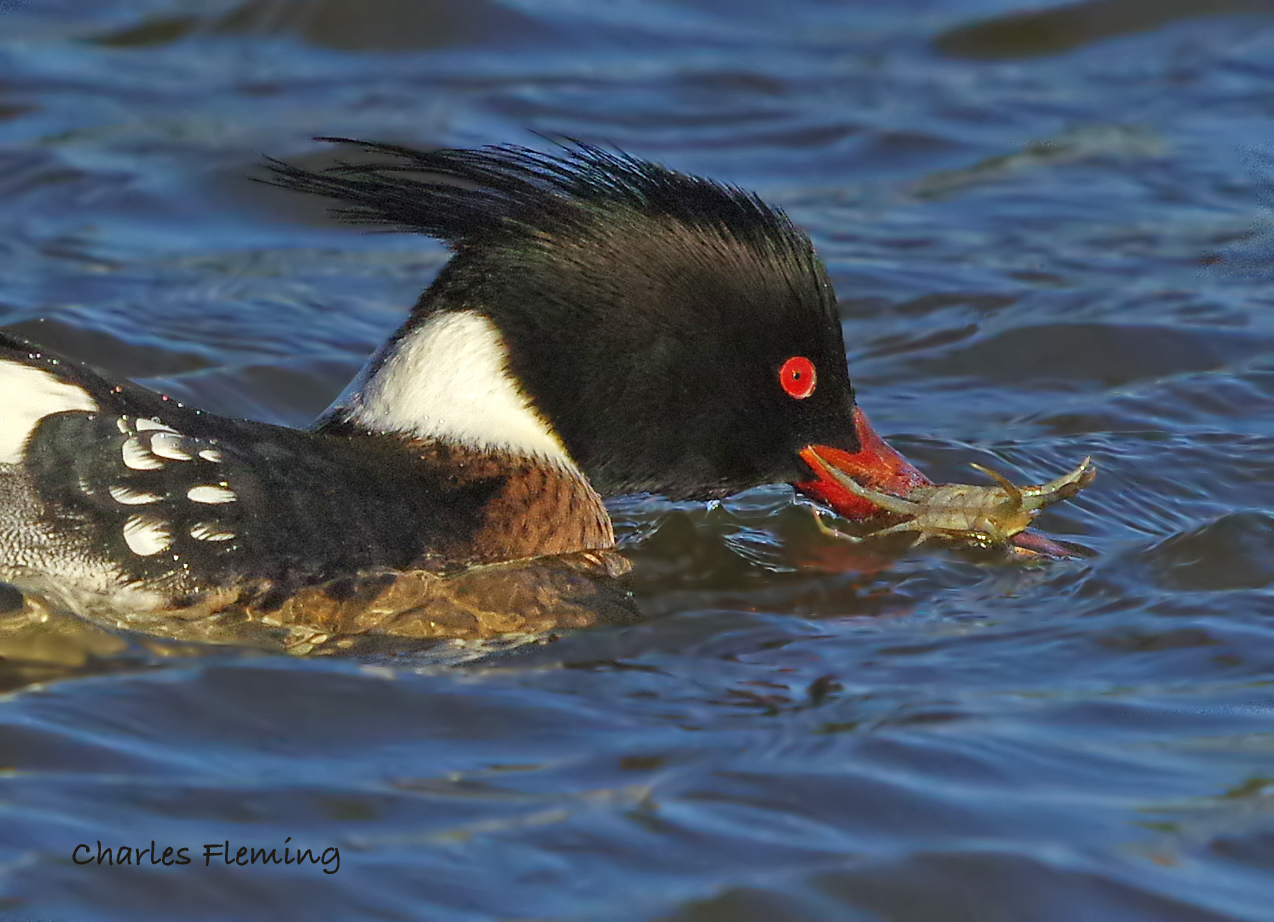
It was cold and a little showery with a strong wind yesterday, but when the sun did shine it was really bright and clear. I went back out to Turf at the end of the Exeter Ship Canal to try for more photographs of the Grey Plovers, but again I didn't have success. I coincided my trip with high tide but it was a neap tide and this meant that it didn't come in to the level that would have brought the birds to the shore edge posts. So I needed to do something else. In previous years I had watched and photographed Red Breasted Merganser feeding in the channel that leads to the lock gate. When I looked there was a merganser just as I hoped. I managed to get myself in to a position with the sun behind me and it wasn't long before this female Merganser started to dive for prawns right in front of me. I would not have been successful if I had not covered myself with cam netting. It was a really interesting hour or so as I watched it dive down repeatedly. Every now and then it would catch something and after, when I had looked at my photos, I could see that the prey was large prawns. After a while she went down the stream with the current and had a rest, sleeping with her had on her back as she floated on the water. However, I had been enjoying watching her so much that I decided to wait and see if she came back to fish again. I sat there under cover waiting and suddenly, within feet of me and in brilliant light, an equally brilliant Kingfisher landed but when I moved to try and photograph it, it was disturbed and flew off again. Then all of a sudden there was a Little Grebe, I saw it dive straight away and even though I watched and watched, I never did see it again. As if that wasn't enough, suddenly, a drake Red breasted Merganser was here with me now. This bird wasn't aware of me either and start to dive just in front . It surfaced from its dive and wrestled with a crab, removing the legs before swallowing and then repeating the process with another successful dive. Then, walkers arrived and the male flew away hurriedly leaving the more confiding female on her own who decided that she would avoid detection by diving down and staying under as long as she could. It worked and the walkers moved on none the wiser about the ducks or me for that matter. What a great session his turned out to be. This was real wildlife working to survive and I felt privileged to observe all of this behaviour. I not only got to photograph the birds but I got a really good insight in to the feeding habits and prey items of this duck species.
.
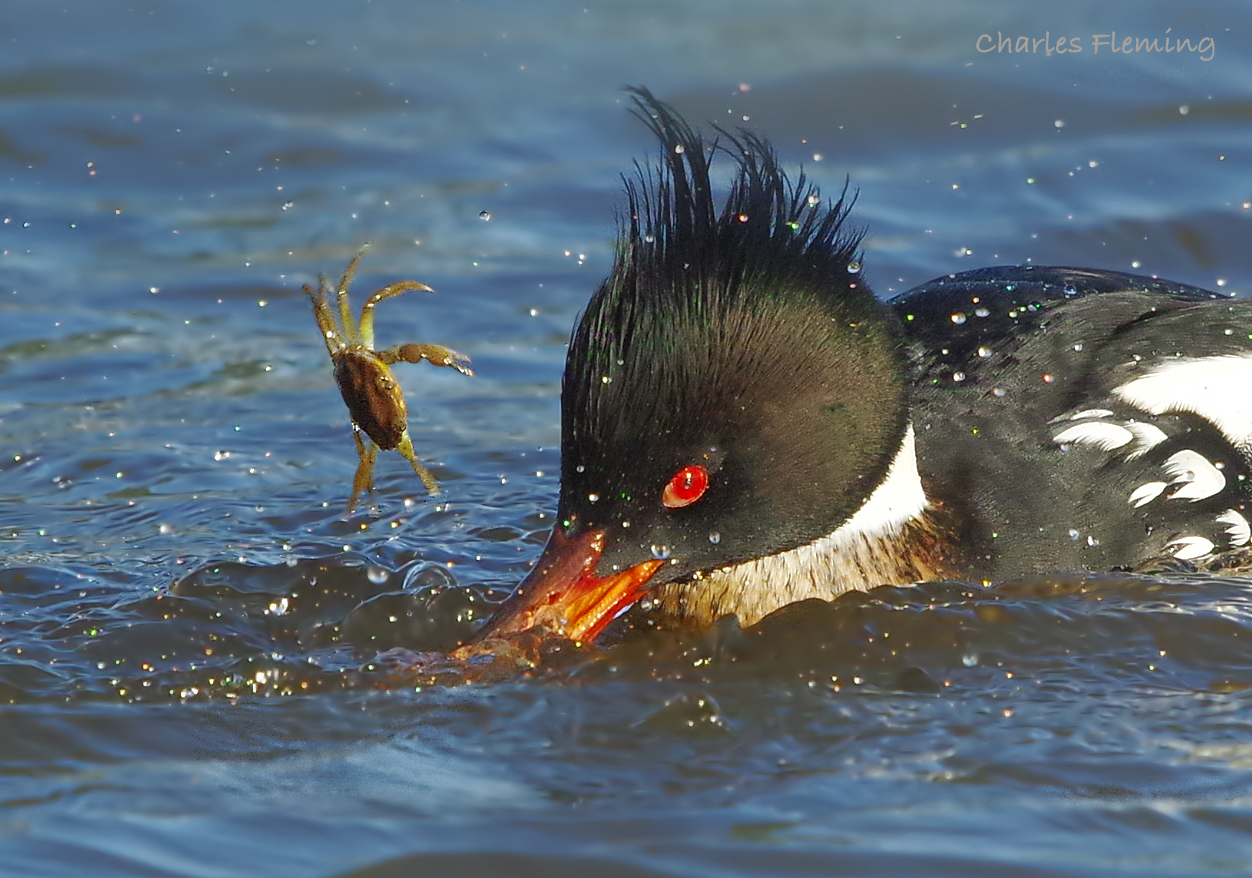
It seems quite a struggle for the birds to remove the legs of the crabs before swallowing but can you imagine how hard that is without losing the prey again.
.
.
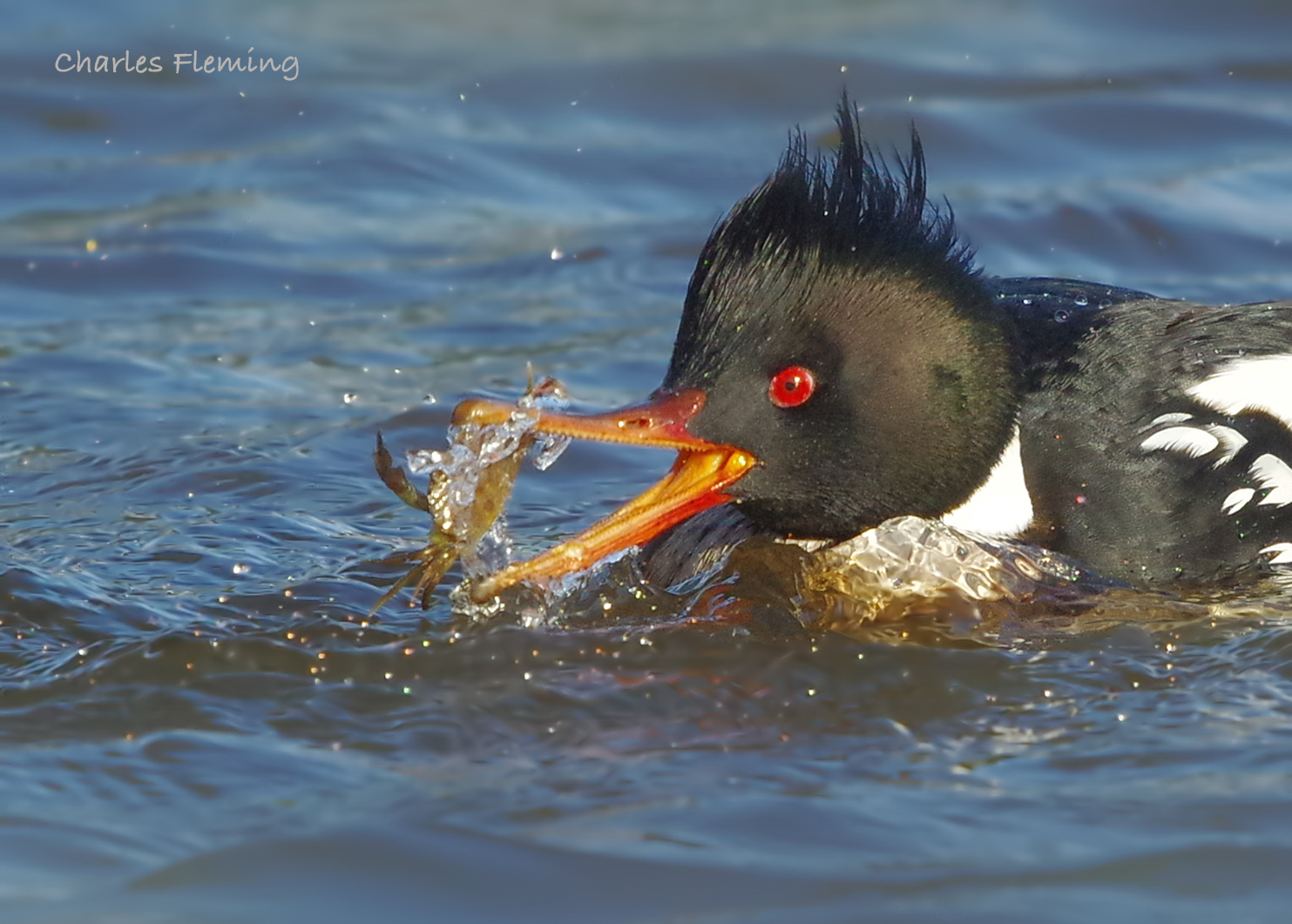
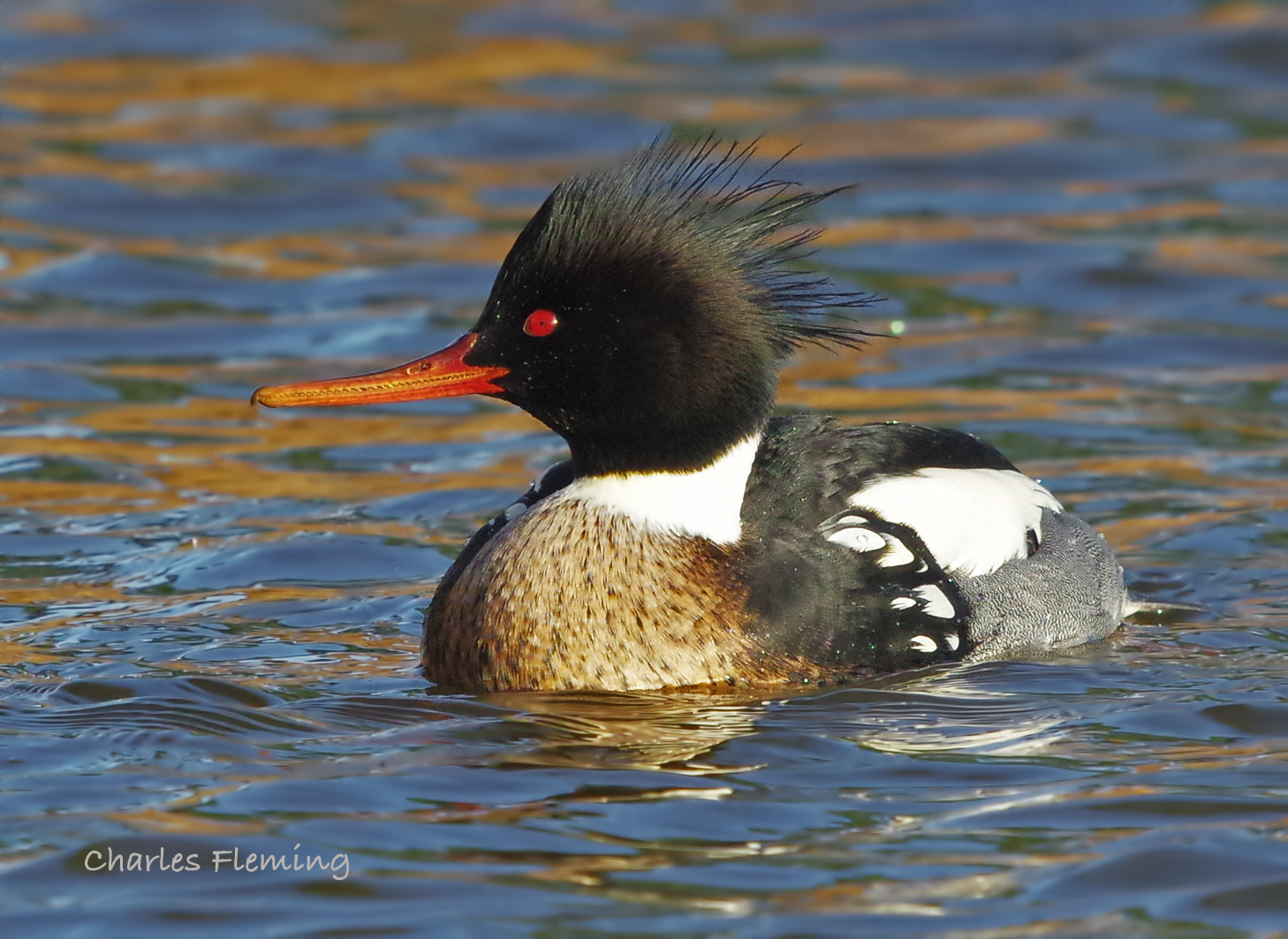
You can clearly see the serations on the beak of this duck. They are refered to as sawbills, along with Goosander who also feed on fish and obviously, crustaceans. The sawbill is used to hold on to slippery prey.
.
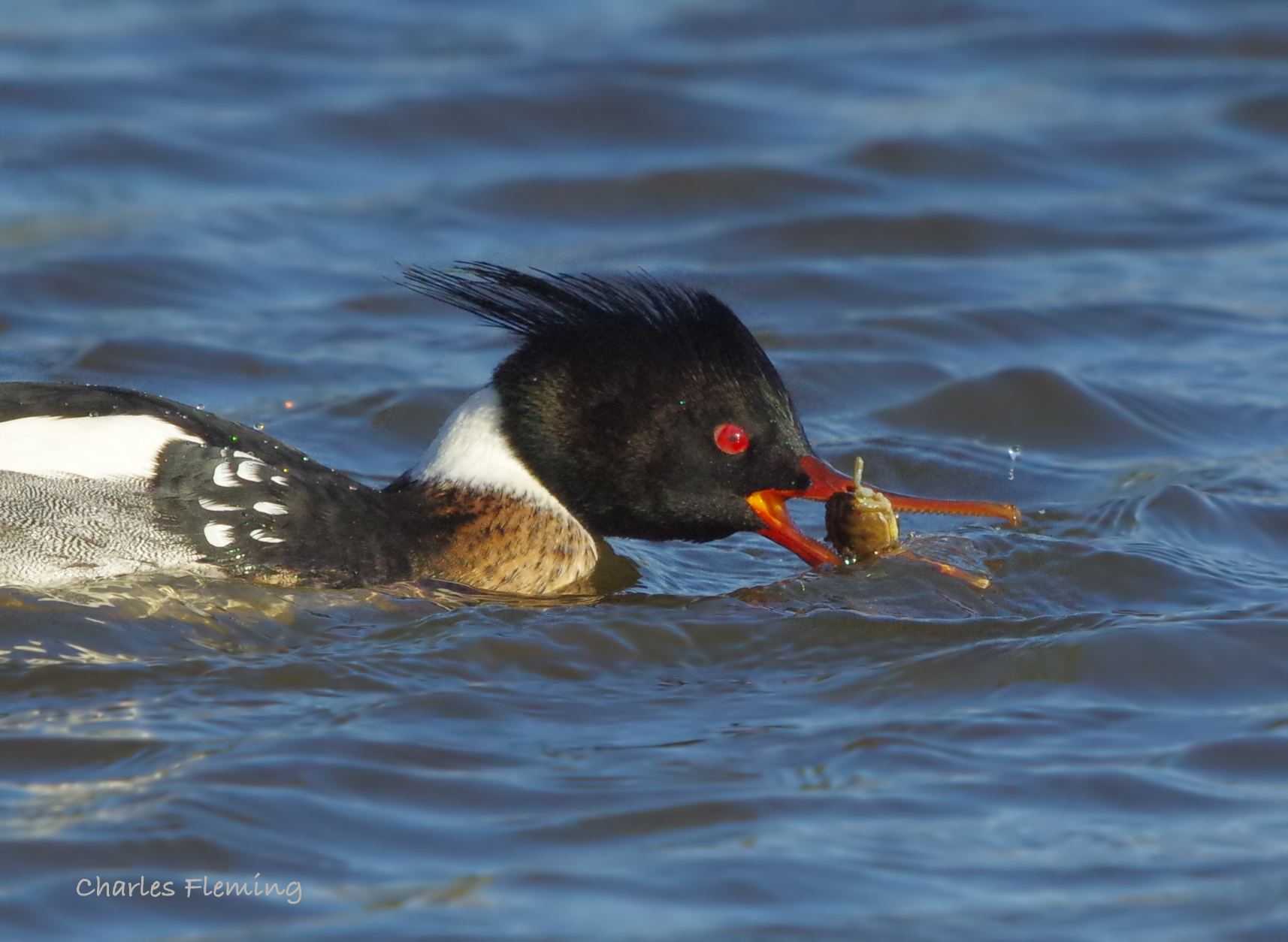
This shot (above) shows the successfully de-legged crab ready for swallowing and the picture below, the next in the series, shows the contented bird, having dealt with his prey and had a nice meal.
.
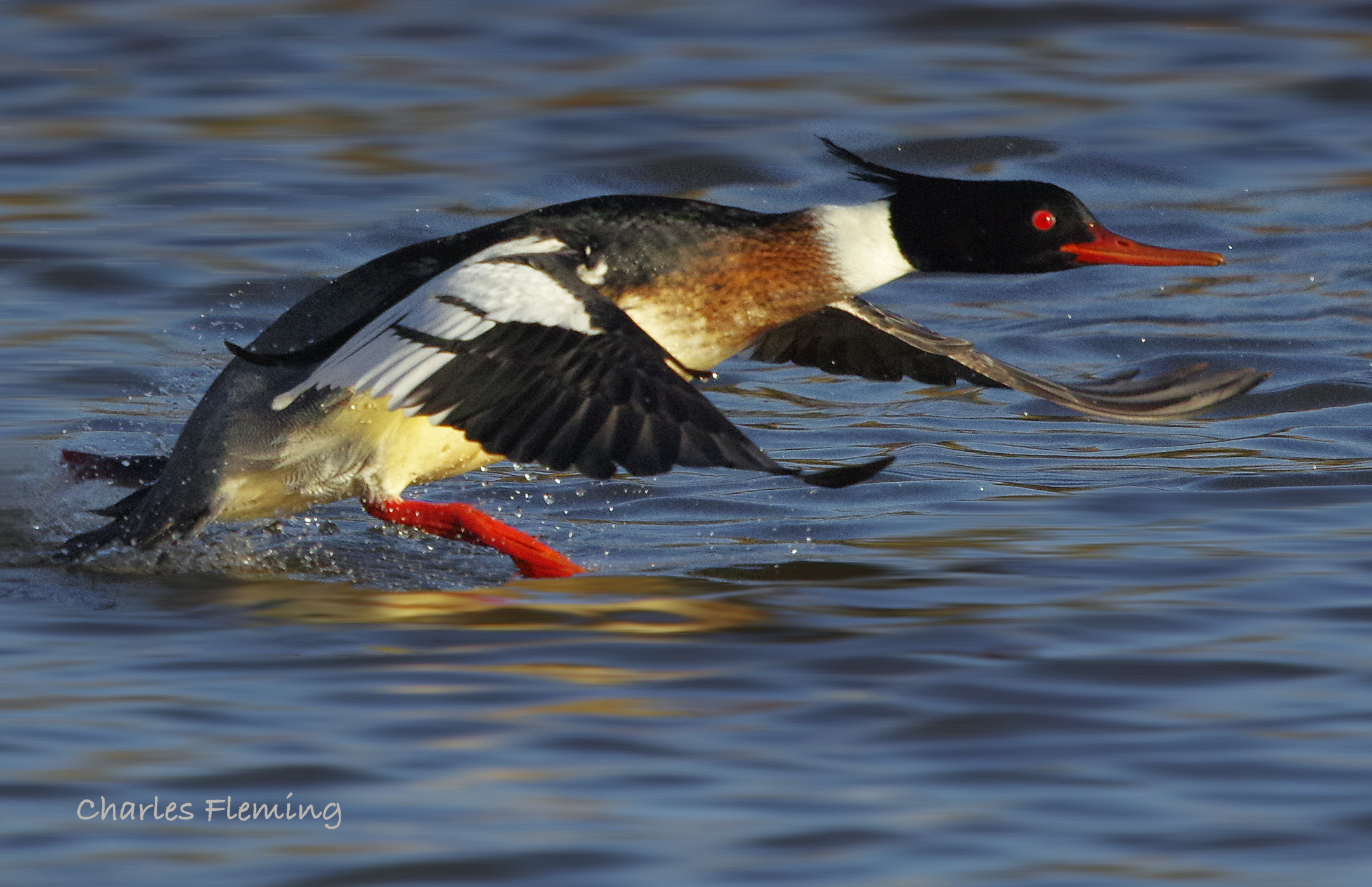
Then he gets disturbed by hikers who are not even aware of him before he flies off as quickly as he can. I knew he would and I quickly adjusted my camera so that I could get a good sharp image of him in flight.
.
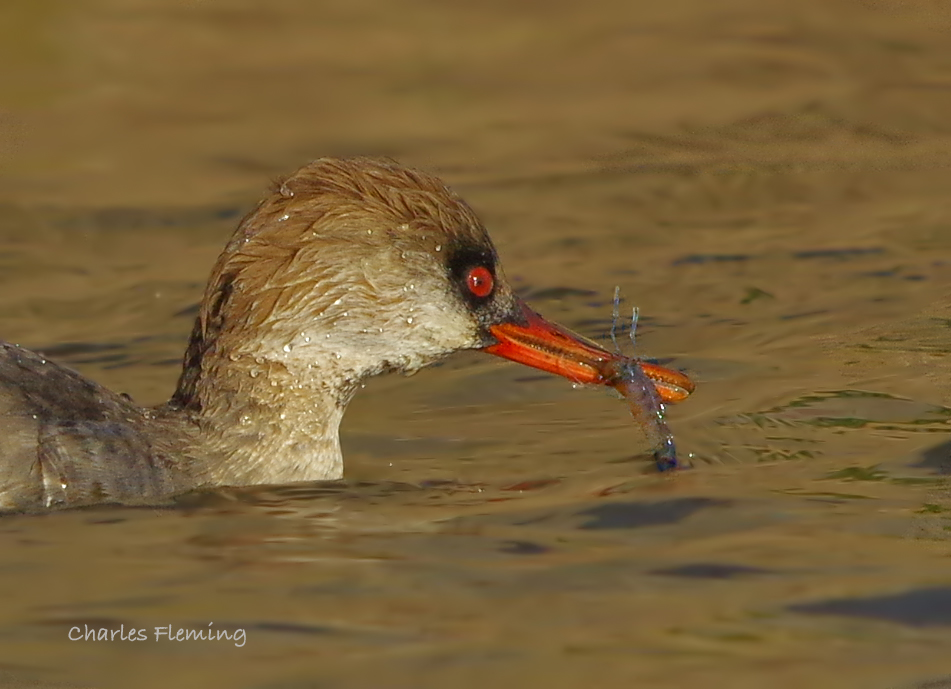
The female remained and she was feeding prawns as you can see.
.
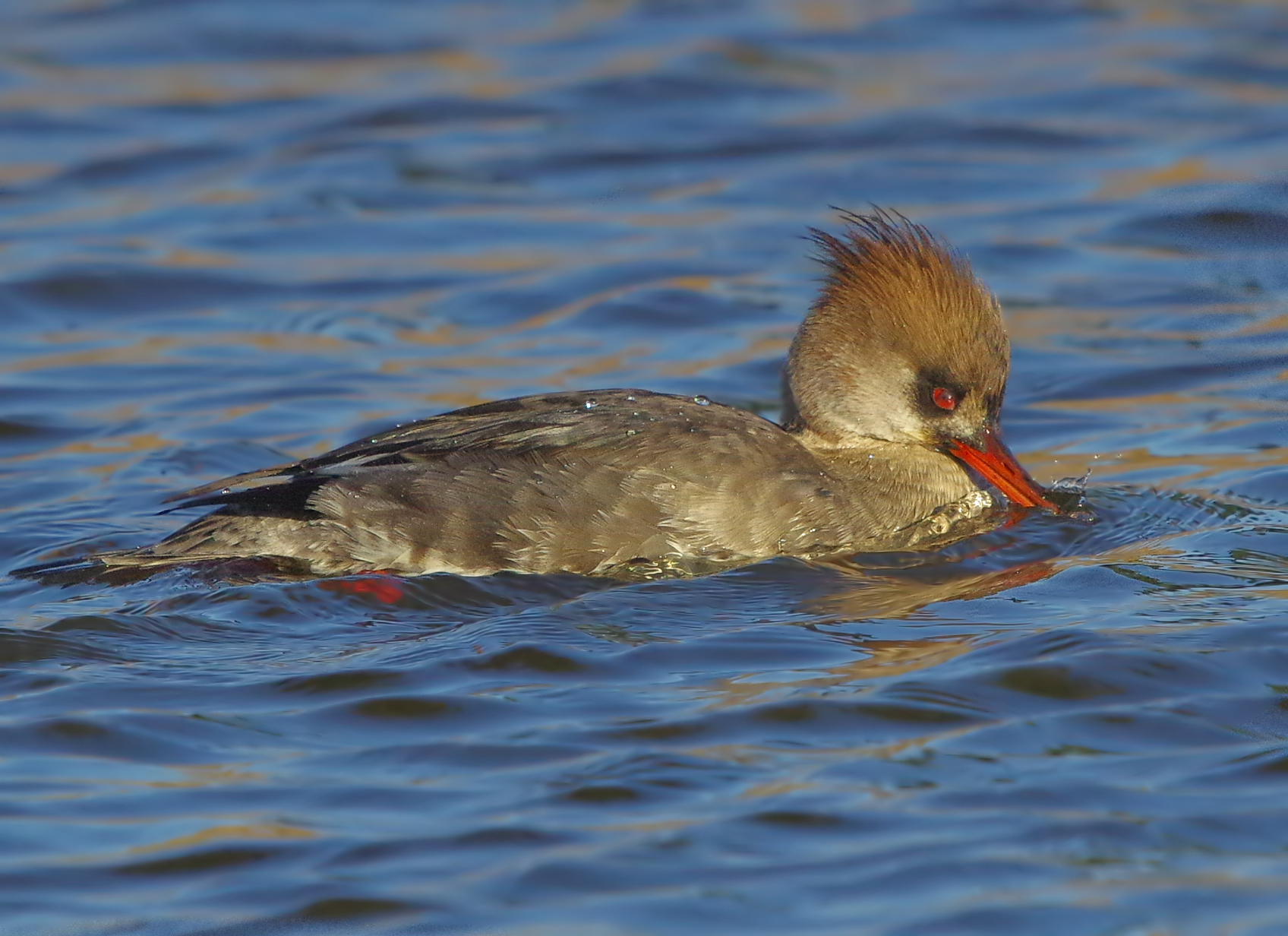
The female is not nearly as brightly coloured as the male and would be referred to as sexually dimorphic, like a Blackbird…….black in the male and brown in the female! Other examples of non dimorphic species would be the Eurasian Robin where the sexes are identical in plumage.
.
 Wildlife in a Suburban Garden
Leave a comment