
There has been a Grey Phalarope (Phalaropus fulicarius) on the Otter Estuary for the last 11 days or so. Yesterday I eventually got the chance to go and have a look for myself and photograph it. I have had such a busy time this last month what with the funeral and then family to stay from South Africa, Jersey and Canada. Then we had our own trip to Huddersfield. Afterwards my 5 year old grandaughter came to stay. It's been almost impossible to find the time to do anything out and about as I normally do. I also had a general anaesthetic and surgery last week which always takes the wind out of your sails….I'm better now though. October has been quite a month to say the least.
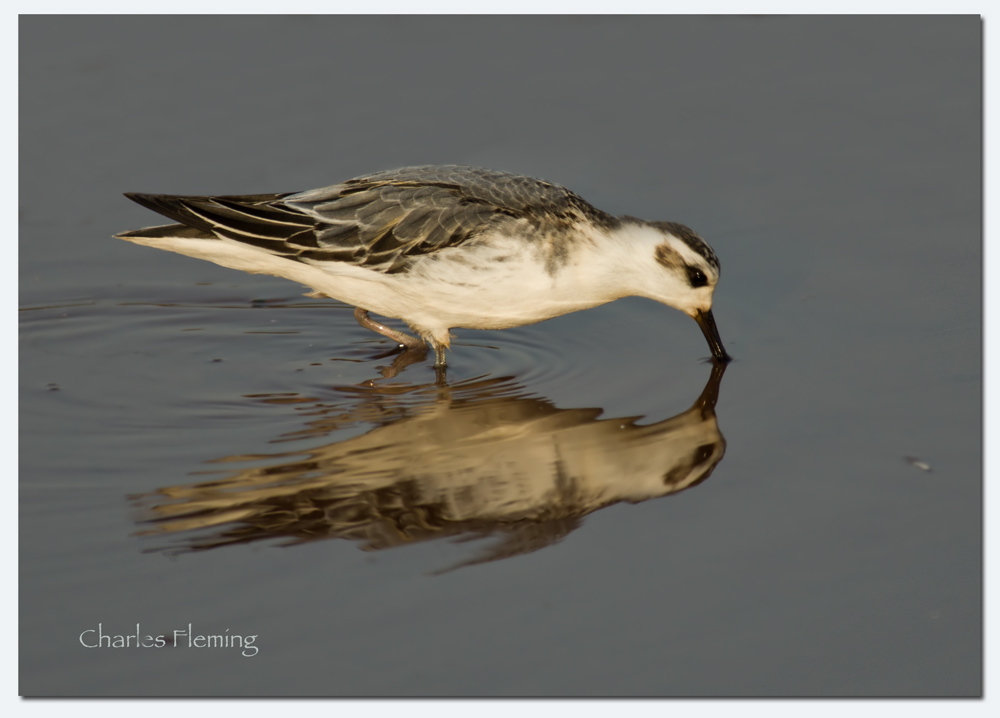
Anyway back to Grey Phalarope. This is a fascinating species. To start with they break all the accepted norms when it comes to breeding. The females, once they have laid eggs, depart the breeding grounds leaving the less colourful and smaller male to incubate the eggs. Females wil defend their territory and her mate from rival females. The young hatchlings are precocial, this means that the newly hatched chicks are able to feed themselves and walk as soon as they hatch, in common with lots of other closely related birds, plovers for example. They spend the winters in tropical seas in the Atlantic, usually far from land and the females will spend 11 months of the year in this environment. If you look at a world map you can see that their breeding territory is high up in the arctic in a circle that encompasses Arctic Canada to the west and Arctic Norway to the East and their territory includes Greenland, Iceland and Svalbad. Their range extends over the most northern tip of the Canadian land mass to include Alaska to the far west. In the USA and Canada this species is called the Red Phalarope, a ridiculous and confusing situation that defies logic and leads to confusion with the Red-necked Phalarope. Even though this species is an ocean living species, it is not an unusual occurrence to have them turn up on the shores of GB and sometimes inland on large watercourses. In fact, this has been an annual event in Devon for the last few years. When they are here they are usually very approachable and seemingly tame which adds to their charm and attraction. For me though, I am just so fascinated by the fact that they arrive here like they do, having bred in some exotic location much further north and were on the way to who knows where in the tropical atlantic before a storm, (in this case the tail end of hurricane Gonzalo) blew them off course.

 Wildlife in a Suburban Garden
Leave a comment