
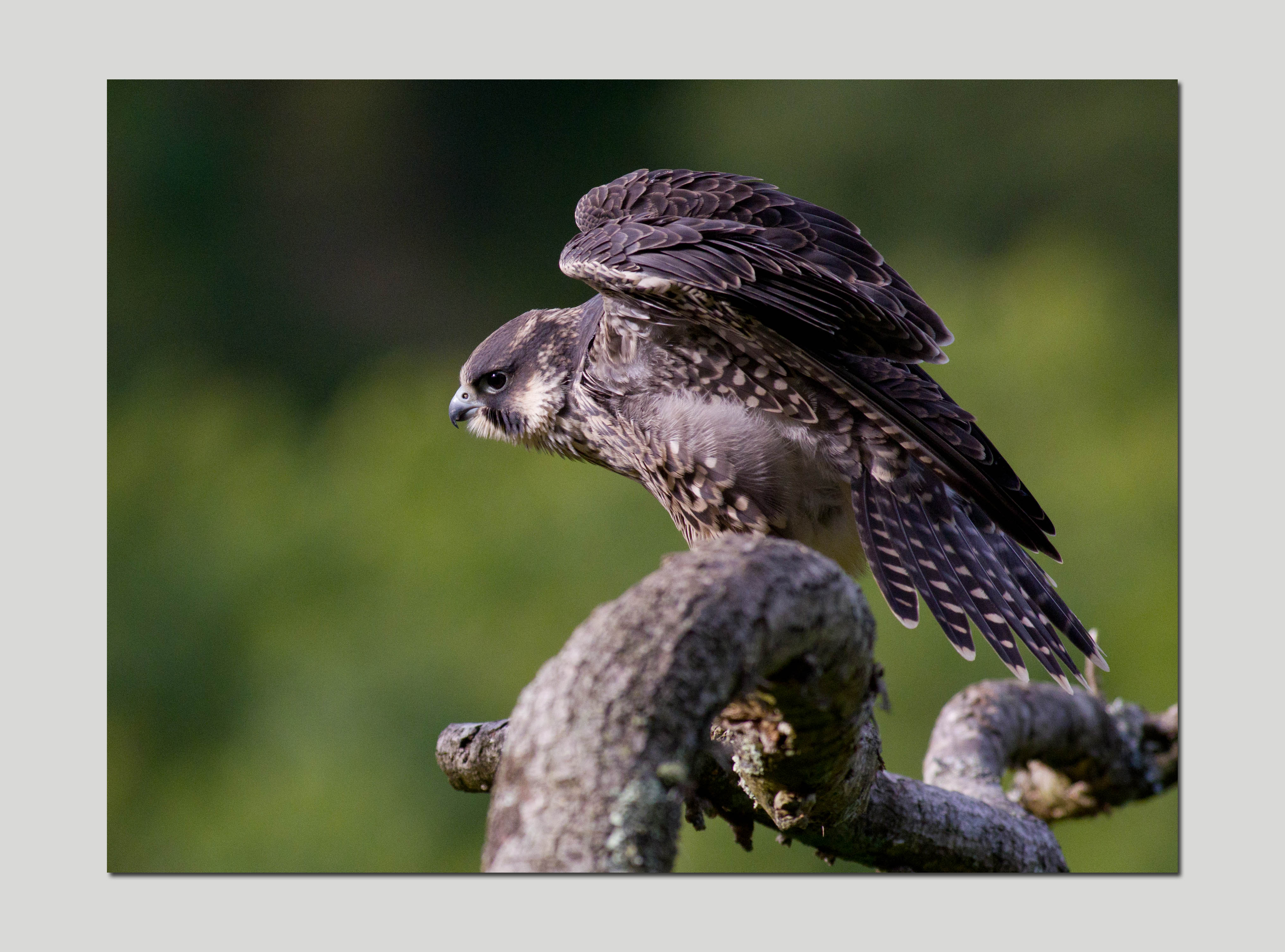
The young male.
am writing this from an uncomfortable stool in my hide overlooking the Peregrine nest territory that I have been assiduously, some would say obsessively watching on most days, since the eggs hatched, 10 weeks ago.
Prior to that, I visited a couple of times a week, going all the way back to late April when the female began to incubate her first clutch of dark reddish brown eggs. She had chosen a depression close to a rock face, not the site she used the previous years.
The first clutch of eggs disappeared just prior to hatching, what a disappointment that was but the female Peregrine was resolute and she almost immediately, well for certain within 48 hours, seemed to have decided that she would try again and began to scrape out a depression on the ledge where she had successfully reared 4 youngsters last year….. and just one the year before that. Quite why she had chosen a new less secure site this year is still a mystery that will never be resolved. What was responsible for the loss of the clutch, I will never know but suspicion would strongly point to Ravens that are very common in Devon in 2014.
In spite of being told that Peregrines rarely go on to lay a replacement clutch when they have lost the original one so late in the incubation cycle, I was confident that she wasn't just going through the motions. Eggs were duly laid and then incubation of 3 eggs began. All went well this time and 3 little white downy chicks subsequently hatched.
The adults proved to be very good parents and stuck to the script so to speak as they provided for their youngsters perfectly and they grew rapidly. They were fed on all manner of small passerines which were usually hard to identify but included even Swallows and Martins as well as a Bullfinch! The male would bring in the prey for the first 10 days or so which he would hand over nervously to the larger female who would then delicately feed the youngsters with tiny pieces of raw meat. Later on the female would go off and catch larger prey items, mainly Magpie and Jackdaw as well as Collared Dove and Great Spotted Woodpecker. Great Spotted Woodpecker turned out in fact to be quite a favourite food and I personally witnessed 16 in total being brought to the nest. When you consider that I only watched for 20% of day light hours it is safe to assume that possibly many more were brought. Both male and female caught these woodpeckers. The female however was responsible for at least 10 Magpie but I never saw the male with large prey items. His largest prey item was a Collared Dove, again quite a popular choice by both parents. The youngsters fledged the nest when they were 6 weeks old but remained local to the nest territory and sometimes even returned to perch back there. They continued to be fed by the parents who would fly in from somewhere quite a distance away. The youngsters would immediately be aware of the adults food delivery and fly from their nearby perches to grab at whatever prey had been brought in. This behaviour continued right up until the end of the 4th week of fledging which is where we are now with the young Peregrines, two falcons and one tercel successful at 10 weeks old and ready to continue their progress in to adult birds.
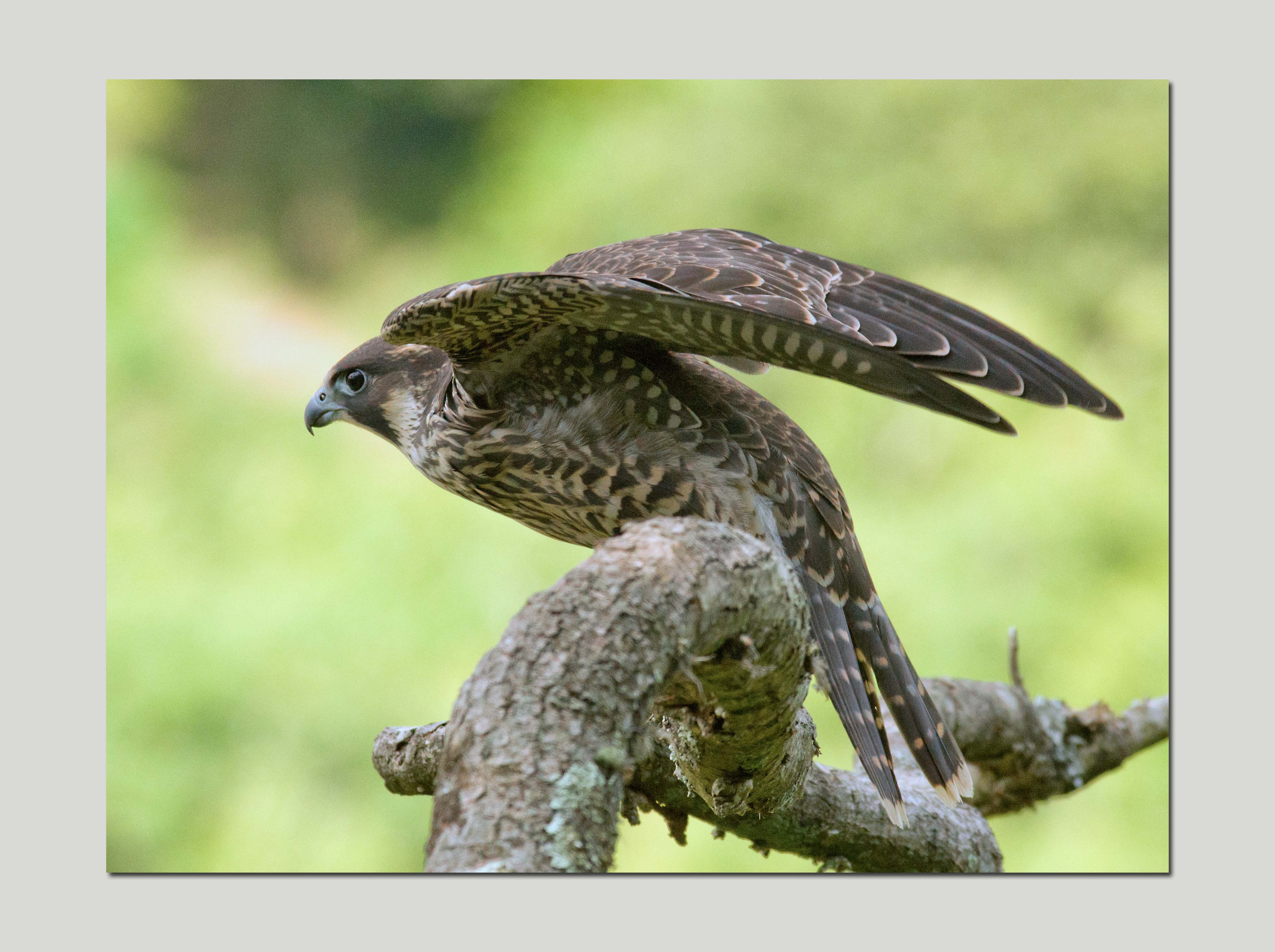
One of the young females.
 Wildlife in a Suburban Garden
Leave a comment