
Just a reminder that all photographs have been taken under the terms of a Schedule 1. Photograph License which allows me to legally photograph at this nest site. Without such a license it is illegal to photograph at a Peregrine nest site.
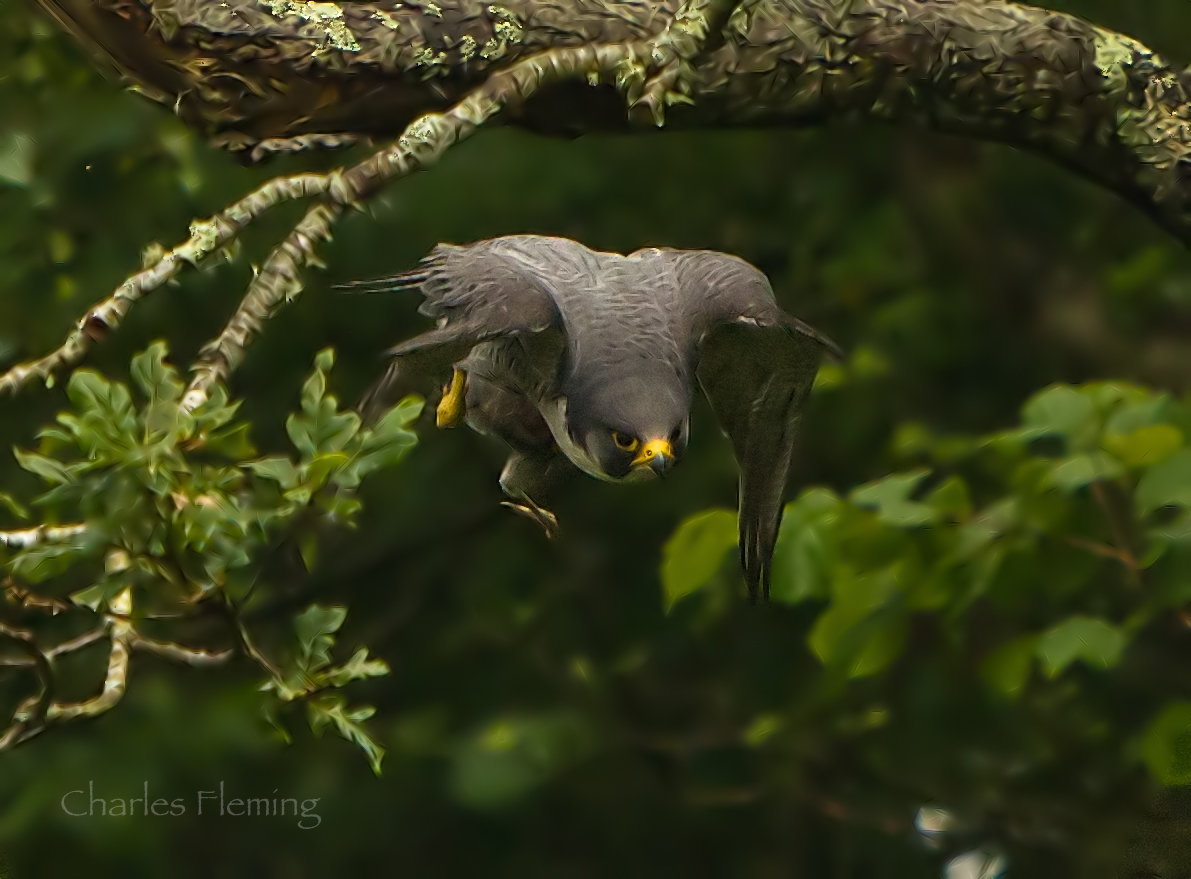
The tercel leaves the tree carrying a pigeon kill. The foot you can see on the right is in fact the pigeon's foot not the Peregrines.
The day's watching began with both birds off the nest ledge. The three chicks endured last nights heavy rain but I wasn't concerned having seen how they had shrugged off the heavy showers of the previous 24 hours. It's still very showery and in spite of rain falling, the falcon was content to be on the favourite tree with the tercel just above her. The male never seems confident enough to sit next to her, she is considerably bigger than him and in the world of Peregrine Falcons, size does matter.
My hide now has a waterproof cover which is making life for me quite comfortable. I have to confess that the birds tolerance to the rain and obvious wet is a surprise and has added to my knowledge of the species. As I worked on the hide yesterday, both parents ignored me completely yet they must have been aware of me. I discussed this with Professor Tyler the other day and we talked about the eyesight of these birds which is 10 times more effective than our own. Simply put, these birds are most certainly aware of my presence in the hide and on the walk to and from it. They are acclimatised to me and choose to ignore me. This was illustrated the other day when I left some equipment in the hide, I came back to get it and was dressed in every day clothes. This was noticed by the tercel who grumbled noisily, I left quickly.
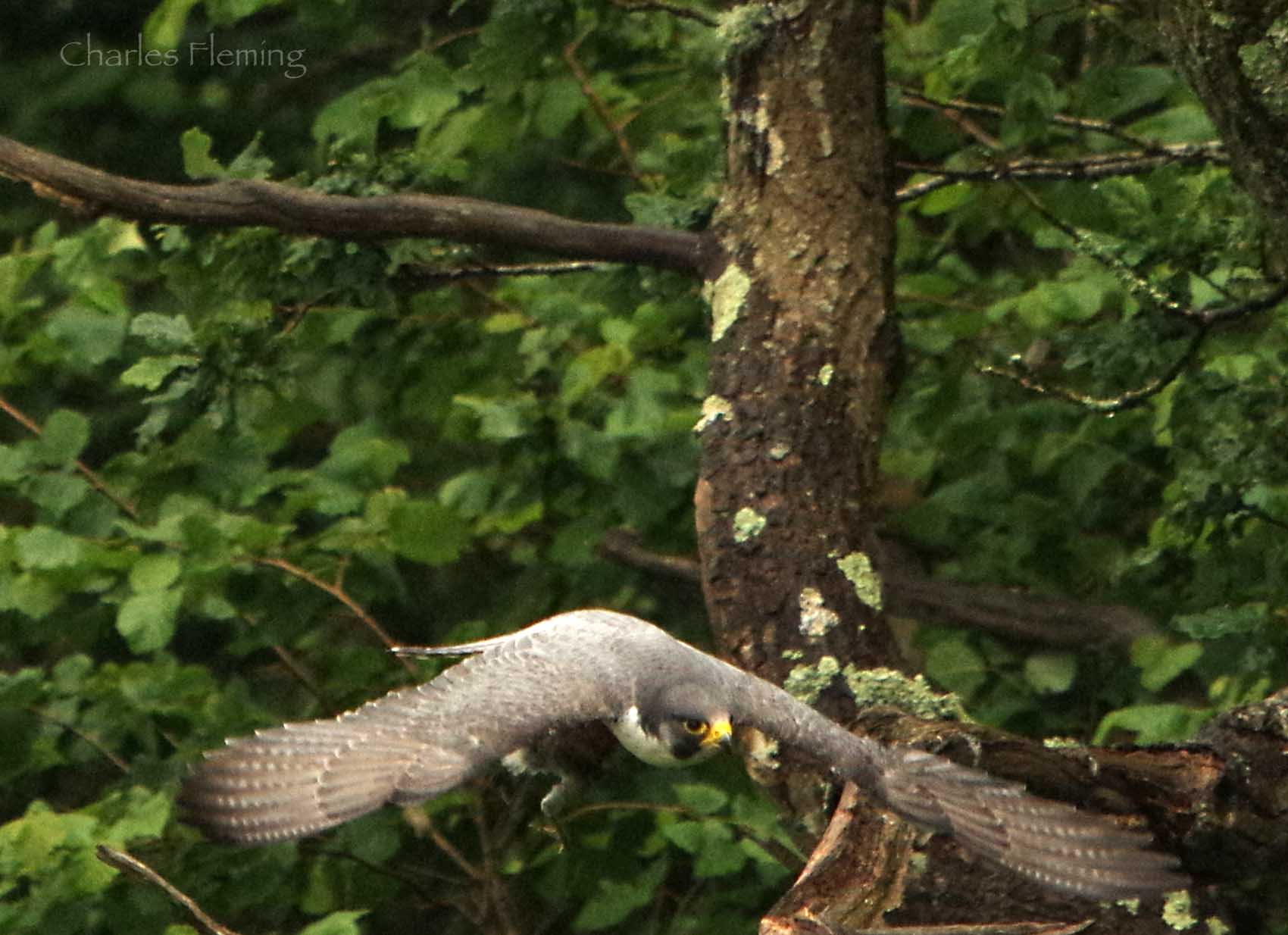
In terms of food, their prey seems to be varied and opportunistic. The other day, woodpeckers featured but I haven't seen them being brought in the last few days. Small prey items make up the majority of kills. These kills are quite hard to identify once plucked. Plucking seems to start with wing feathers. I watched the falcon plucking the swallow the other day and she vigorously removed the wing feathers before moving to the breast. She removed feathers and skin from that area before feeding small pieces of meat complete with black down to the chicks.

Even though it has rained, on and off all day and sometimes very heavily, life on the nest ledge has gone on as normal. I was there for 4 hours and in that time the chicks were fed just once. This was a small song bird which I couldn't identify. Later the tercel arrived on the old tree with a larger kill which was already half plucked but he continued to pluck and then eat it. This was a big surprise, I expected the female to take it and then feed the chicks again but she didnt, instead allowing him to consume most of it even though she was not on the nest but on a branch beneath. All the time this was happening, the chicks were on the nest in the cool rain. I am sure the falcon knows what she is doing but I did expect her to spend more time sheltering the youngsters. The youngest of the three chicks did appear to be wet. Time will only tell if the siblings continue to do well. There are still at least two weeks to go before fledging.
Related articles


 Wildlife in a Suburban Garden
Leave a comment