
I am a Schedule 1. License holder to photograph at this Peregrine nest site.
The site is top secret and the location will never be revealed.
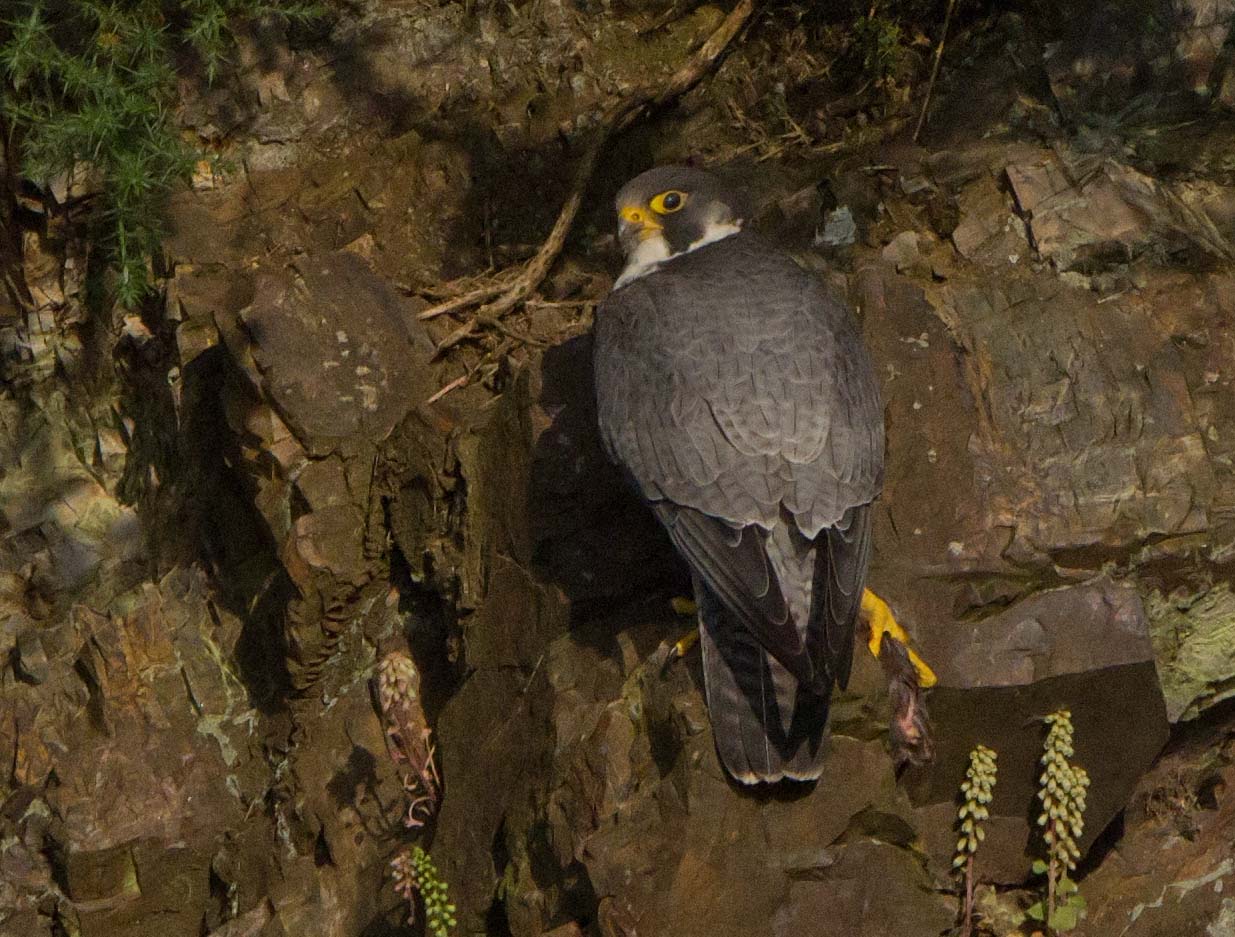
The Peregrines at my licensed site hatched their first chicks last Saturday. I returned last evening to observe and photograph. I was hoping to establish how many of the 3 eggs had hatched. I was staggered to see the progress of the two "eyases" which seemed to have noticeably grown. This wasn't immediately noticeable for me though because they were being brooded by the Falcon and hidden from view. However, I could hear the tercel (English spelling), screaming from nearby. I was expecting it to fly to the nest ledge because I could see the Falcons eyes (the female that is), following him as he circled around. Eventually I was able to train my camera on to him and I could see why the Falcon was excited…..he was carrying a kill in his right talon as he nonchalantly perched on a rock with his other foot (see above). Its quite often hard to determine the species of the kill because the head is usually removed and then it is plucked making identification almost impossible. I was primed and ready for him to fly to the eyrie which he did after another few minutes of screaming, why they do quite so much screaming I have no idea. Eventually he left his perch and swooped in to the ledge with his prey which caused even more excitement from both him and his mate. She screamed even louder as he landed.
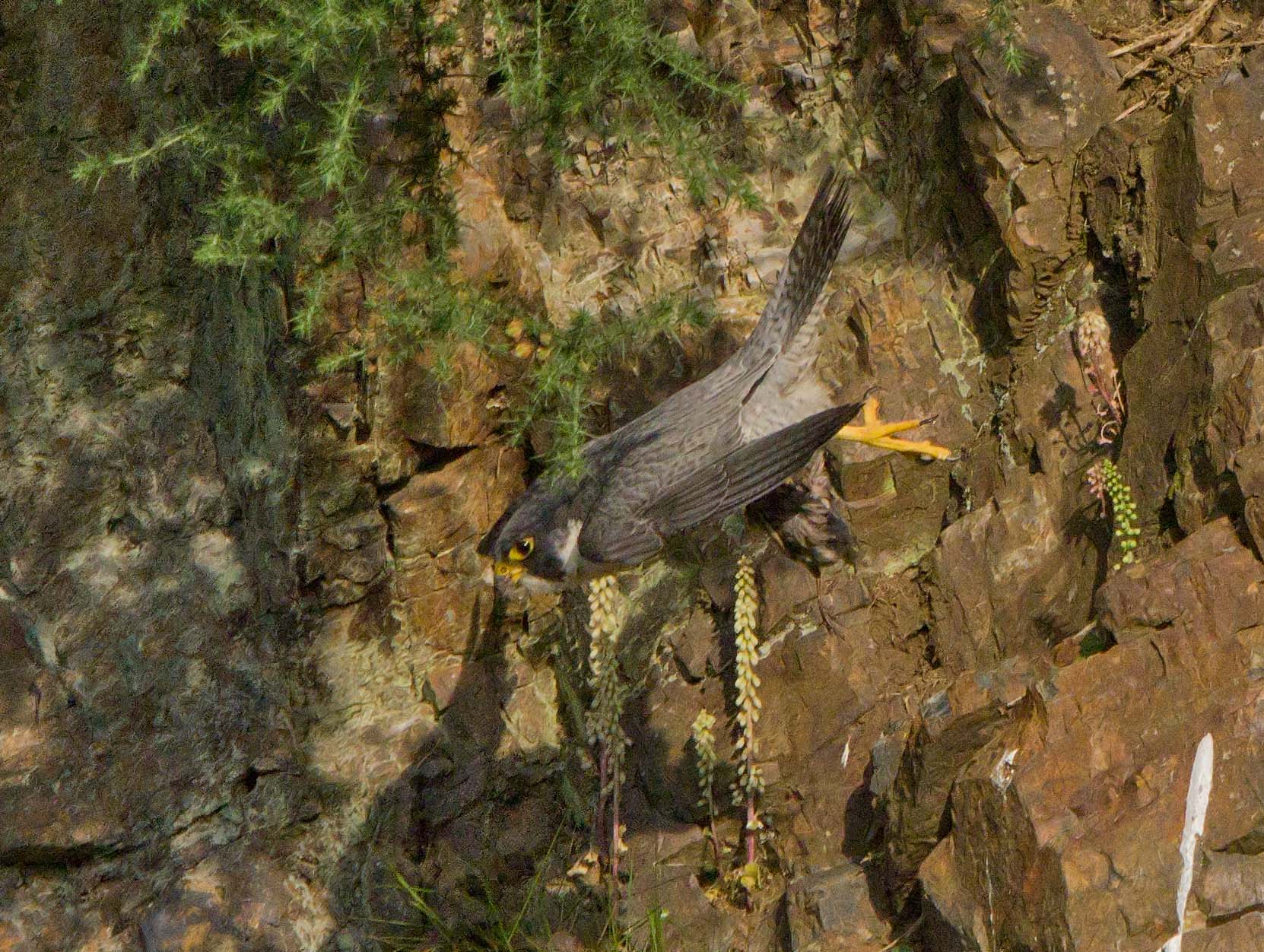
Here he is swooping in, carrying the prey still in his right talon now.
.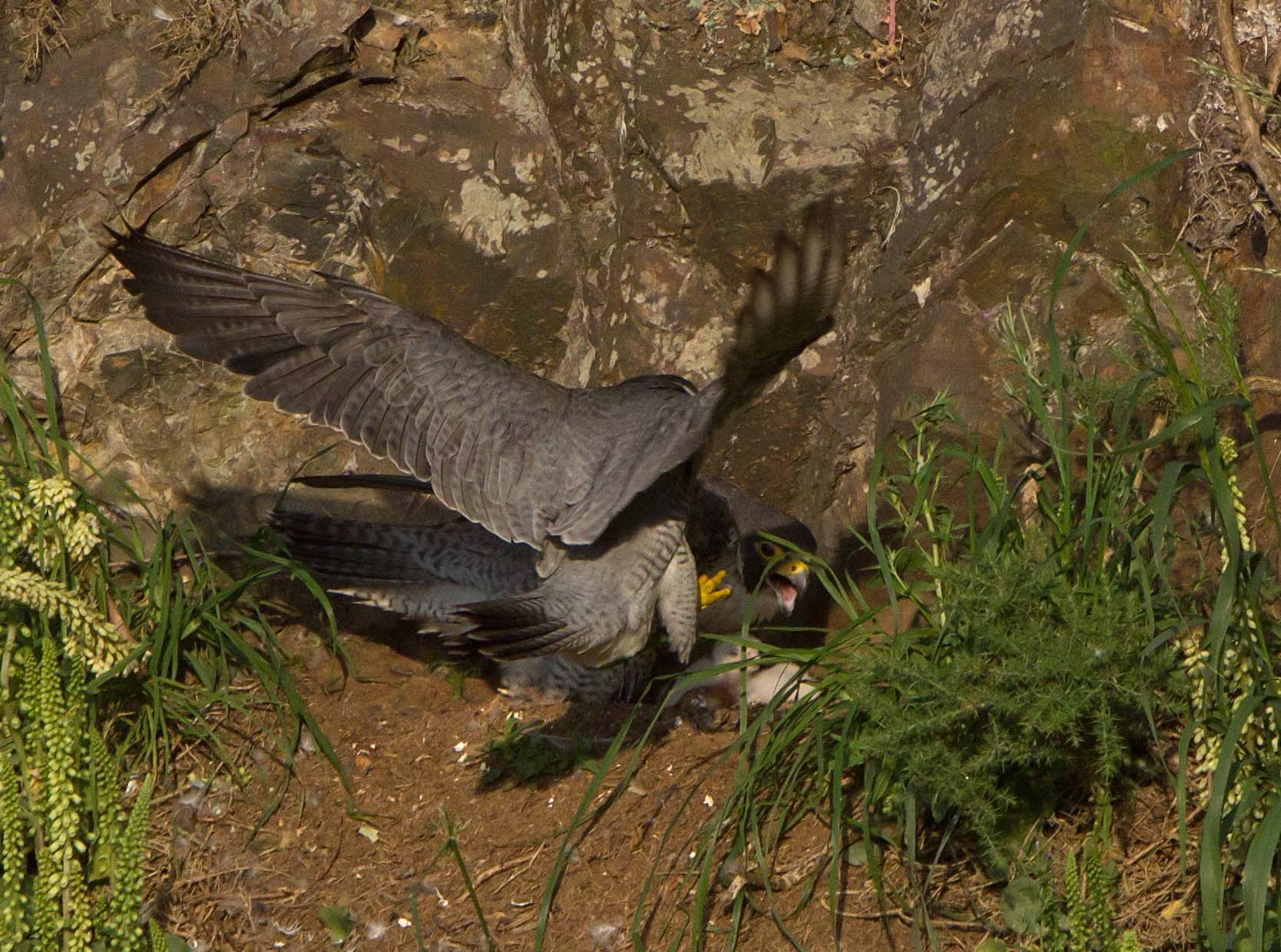
He lands with the kill and the falcon screamed at him.
.
After the prey was taken by the falcon the tercel remained for a short while and they both tore off little bits of flesh to feed the tiny chicks which as yet, I hadn't seen properly. But I had my first real look of one of the chicks. The female is on the left and the male on the right, note the difference in the plumage.
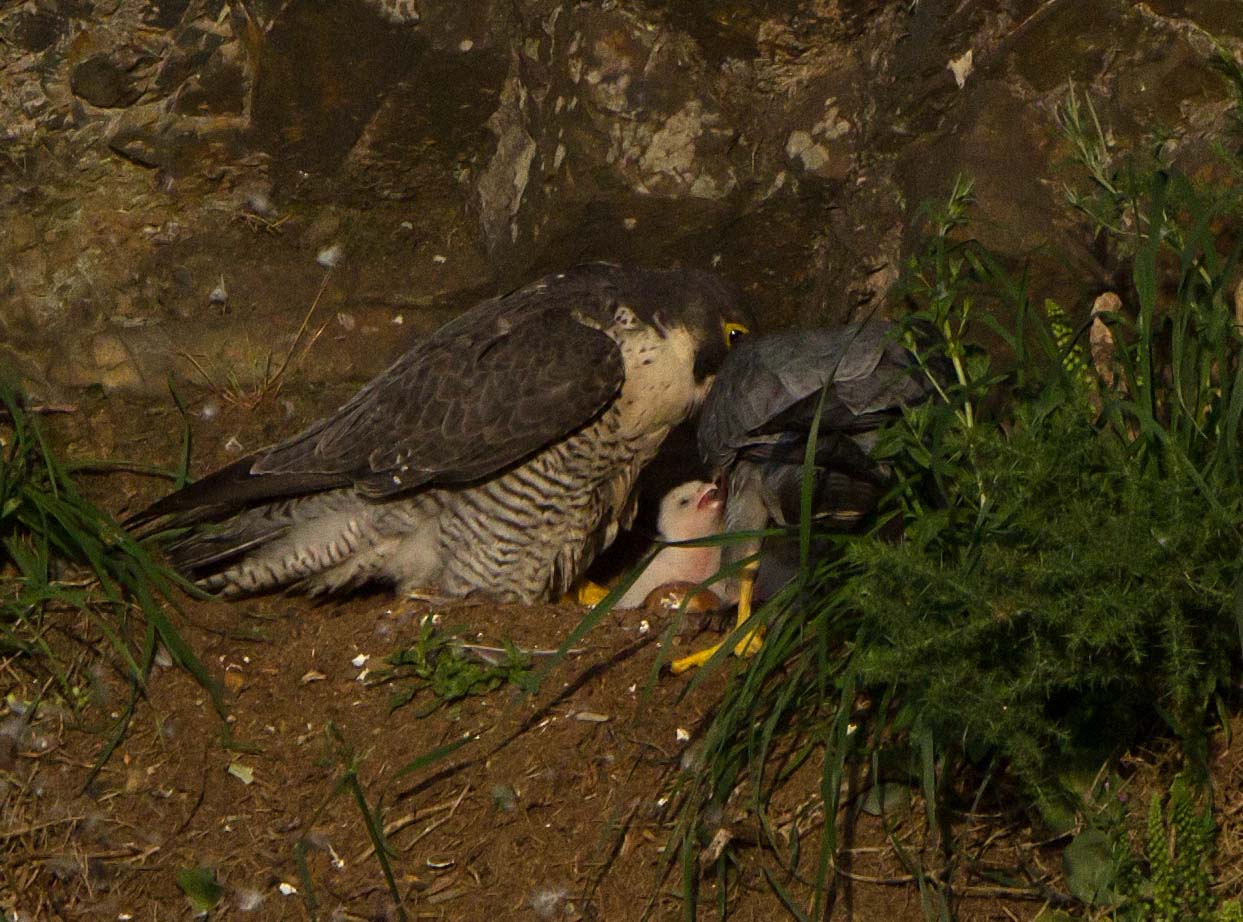
The tercel left the ledge after a a minute or so and flew to a nearby branch, still screaming as they always do, this left the female to feed the chicks. I could now clearly see that there were two and the third egg, probably now not going to hatch.
.
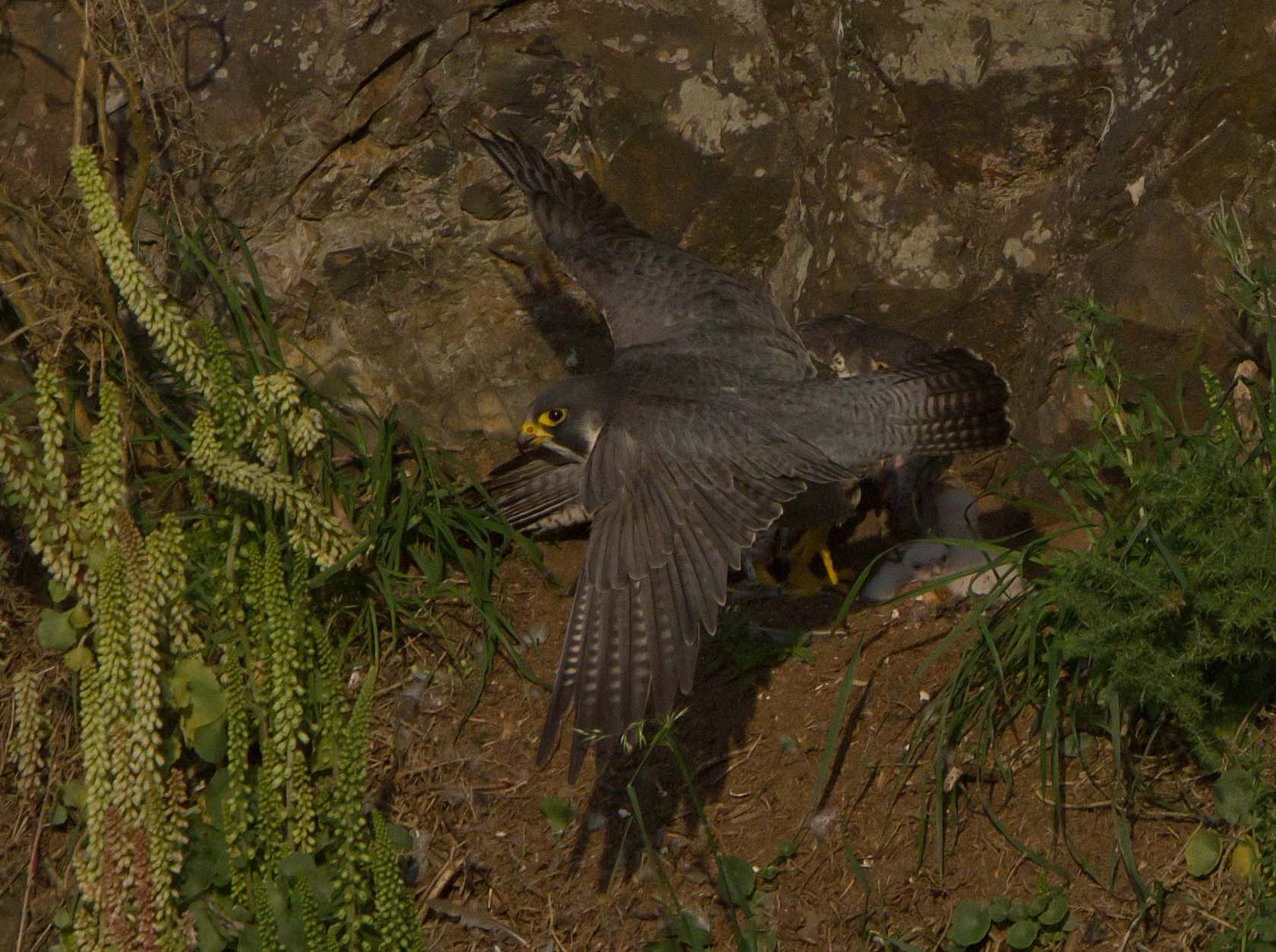
Here the tercel leaves the nest ledge.
You can see one chick and the falcon behind the flying tercel. Now the falcon is left on the ledge to delicately feed the chicks, clearly two with the unhatched egg visible.
.
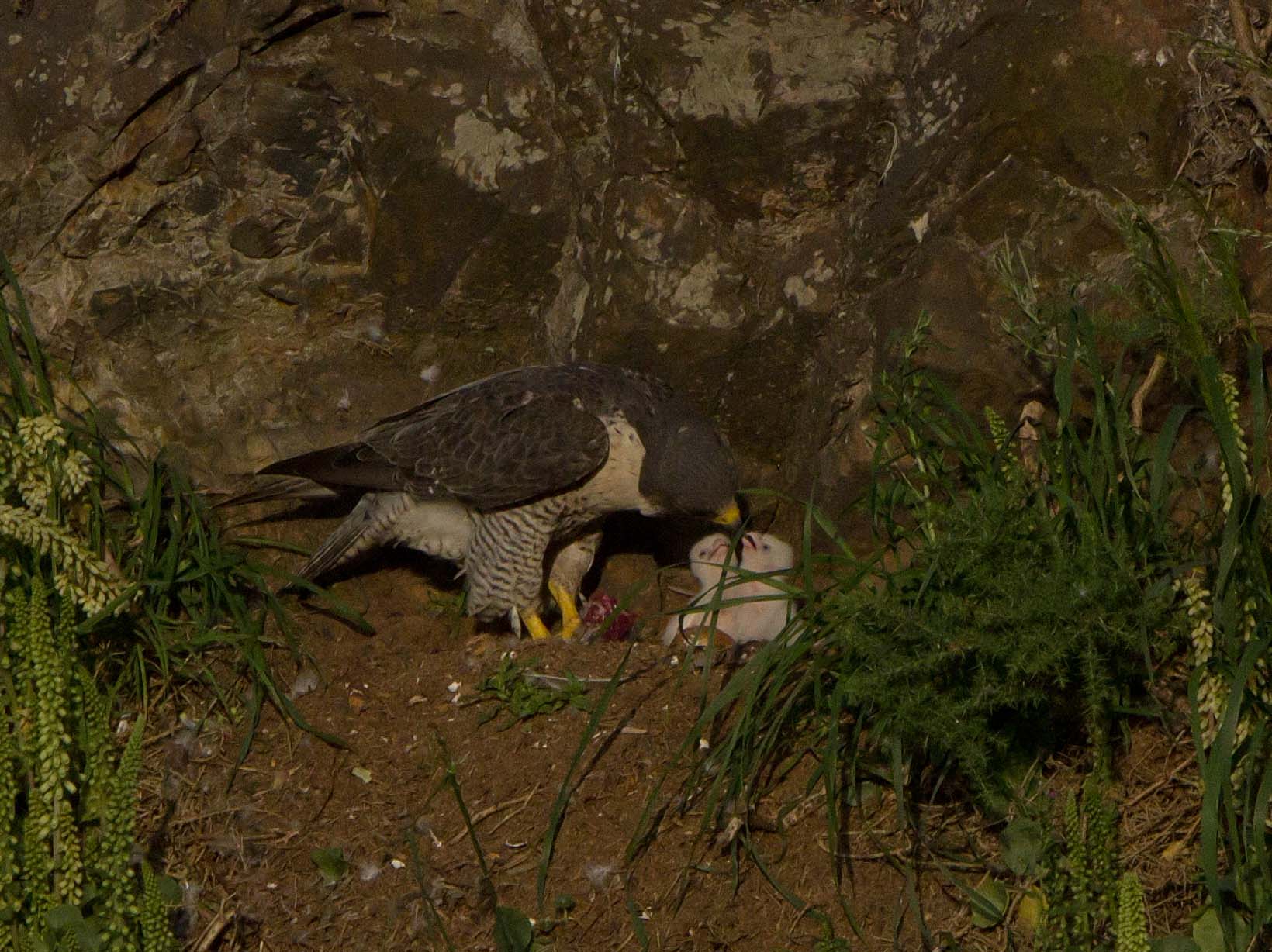
Here is a short video from the live view on the back of the camera filmed with the iPad. When you consider that the distance is around 75 yards, this is quite a good way of seeing some close up activity.
 Wildlife in a Suburban Garden
Leave a comment