
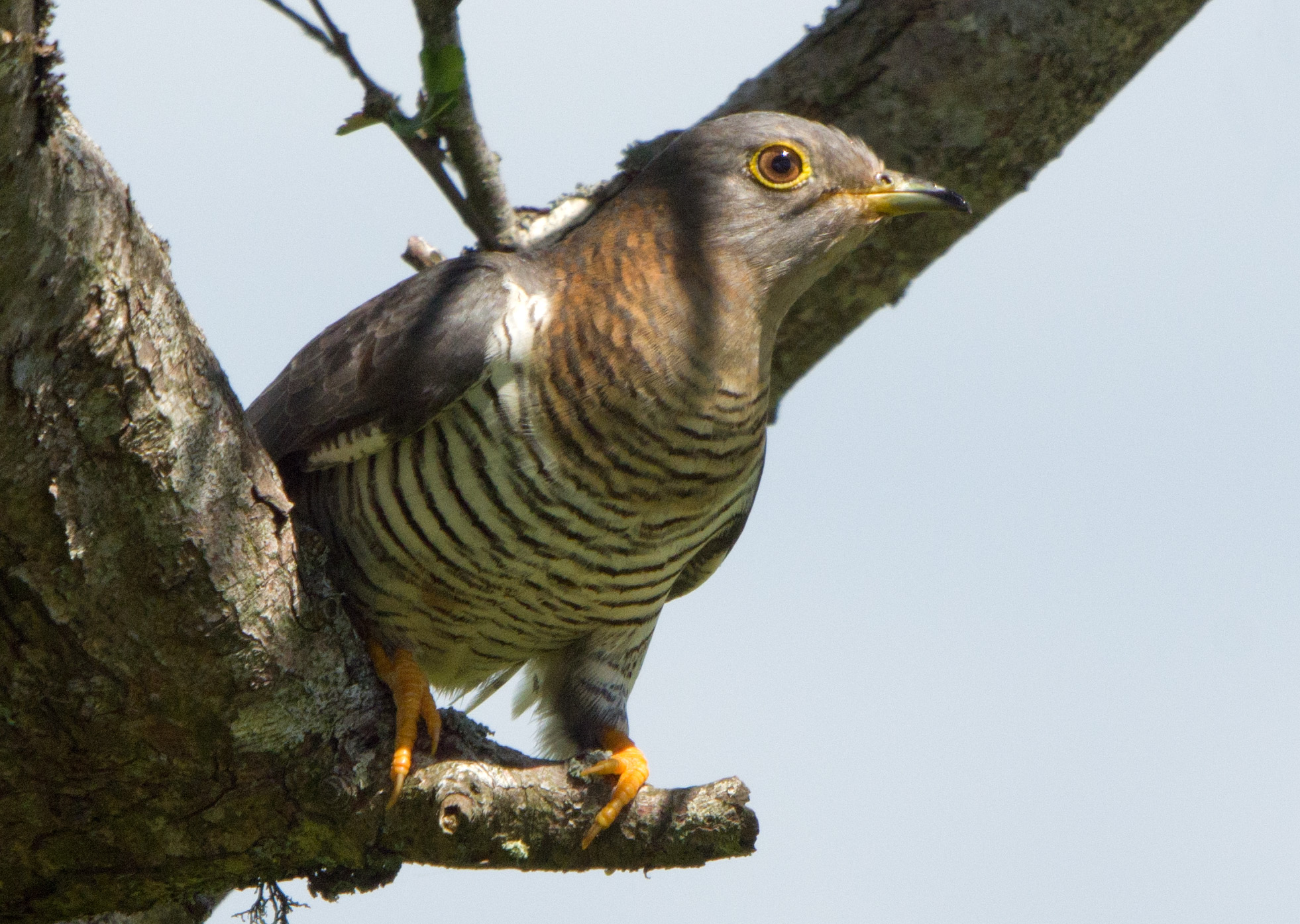
This is a female Cuckoo. Note the brown breast which goes all around the neck but the extent of brown varies in individuals. They are smaller and more delicate than the larger males. Both birds have a yellow eye ring and the inside of the mouth is red. This bird has a white patch on the back of the neck which is thought to be a mimic of the white on the neck of young Sparrowhawks, yet another amazing fact about these amazing birds. Look at the feet, 2 forward and 2 backwards like a parrot.
I went back to Dartmoor again today really excited about the prospect of seeing Cuckoos and being able to photograph them for the 3rd day in a row. I am learning more and more about this amazing species that is not nearly as well researched as you would imagine. Speaking with an Environmental Scientist who is a real expert on the species I have discovered that there is still so much to learn about the species. The on-going tagging study that started 3 years ago has been a revelation but there are still many questions to be answered. It has only recently been discovered for example that some males spend just a few weeks in their UK breeding range before moving back south again. Females remain to lay their 20 or so eggs, one at a time in a single host nest, that's obviously 20 different nests, having been copulated by her chosen male. Then the juveniles undertake perhaps the most amazing journey. They migrate south to an area south of the Sahara, totally unguided, to over-winter in the same territory as their parents! How do they do that?
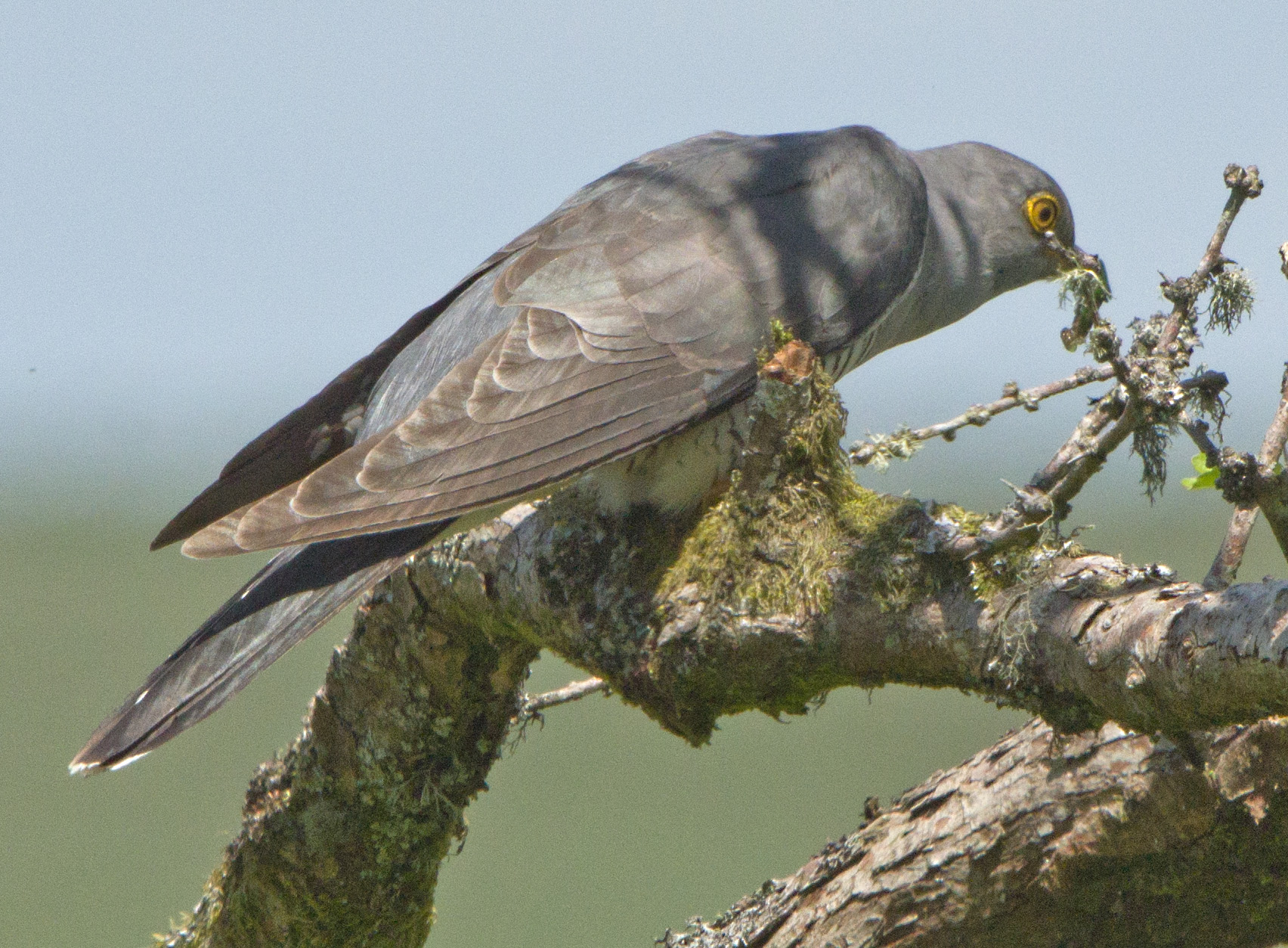
This is the male, one of two in the area. It's feeding on a caterpillar, their usual prey item.
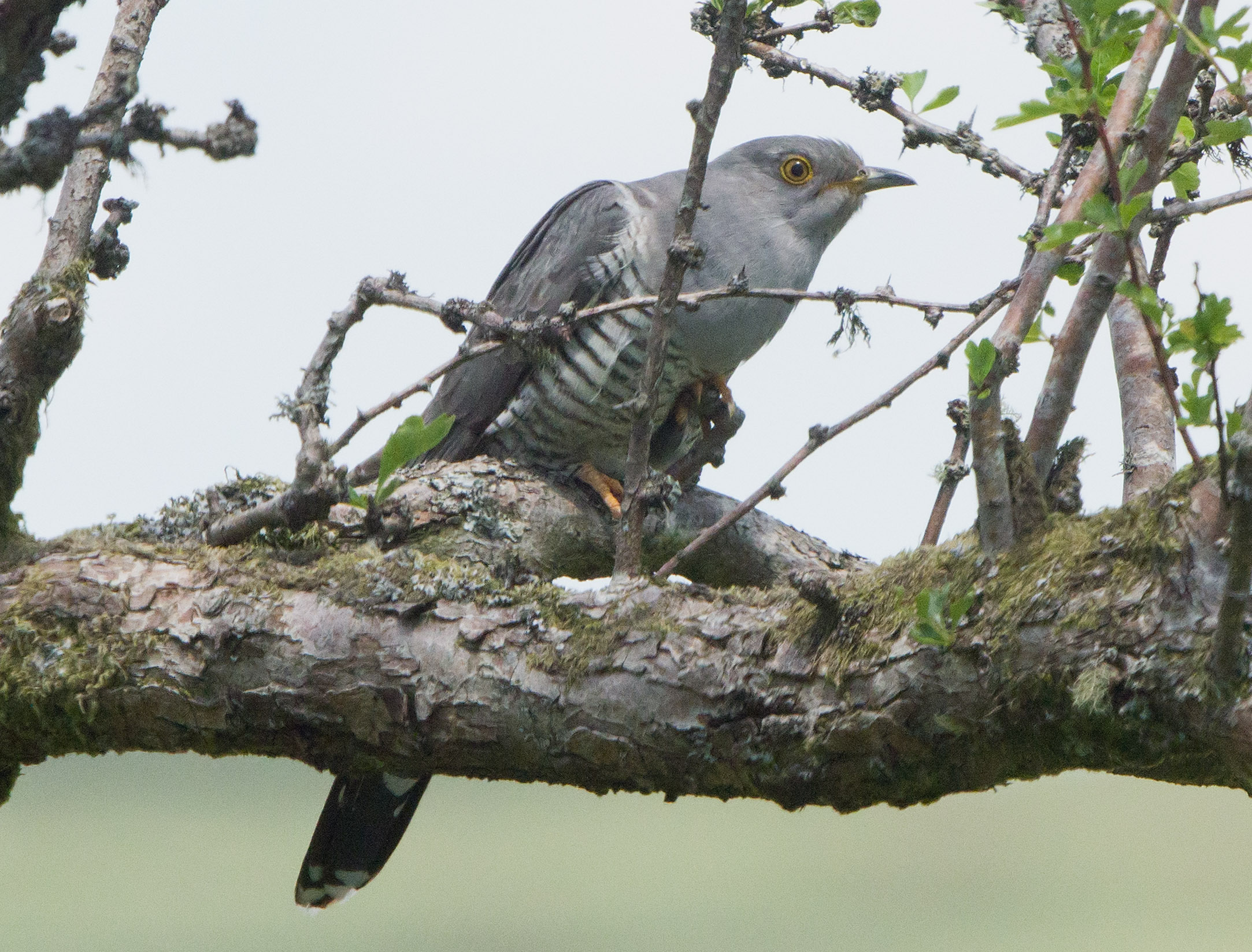
Today I watched and photographed both male and female, there is also the possibility that I photographed two different males, I can't be sure of that but I am sure that as I photographed one of the males, in a Hawthorn just in front of me, another male was singing not too far away. At one point I had the impression that all three birds were right in front of me but I couldn't be 100% sure. My session started very interestingly, even as I approached the area I could see Cuckoos in their favourite trees and one (the female I think), even remained as I quietly got inside the cam netting hide. This was a big surprise, Cuckoos are very shy birds with very efficient eyesight so I can only assume that she didn't consider me a threat and the attraction of the good feeding opportunity was more powerful than the usual flight response. I have noticed this before, I almost got the impression that I was accepted and not seen as a threat, could this be correct? Both the male and the female were feeding by sighting caterpillars in the short grazed grass. They would glide down, pick up the prey and fly up to a perch close to where they had left. Protein levels of caterpillars is probably very high which would explain why they are such a good food source. It also illustrates, and I have said this before, that the habitat to provide the right environment for large caterpillars is vital. When it comes to conservation, habitat is the key factor be it Pandas in China or Cuckoos in the UK. If the moths were not able to produce eggs and larvae, then the Cuckoos would not have enough to enable them to flourish.
 Wildlife in a Suburban Garden
Leave a comment