
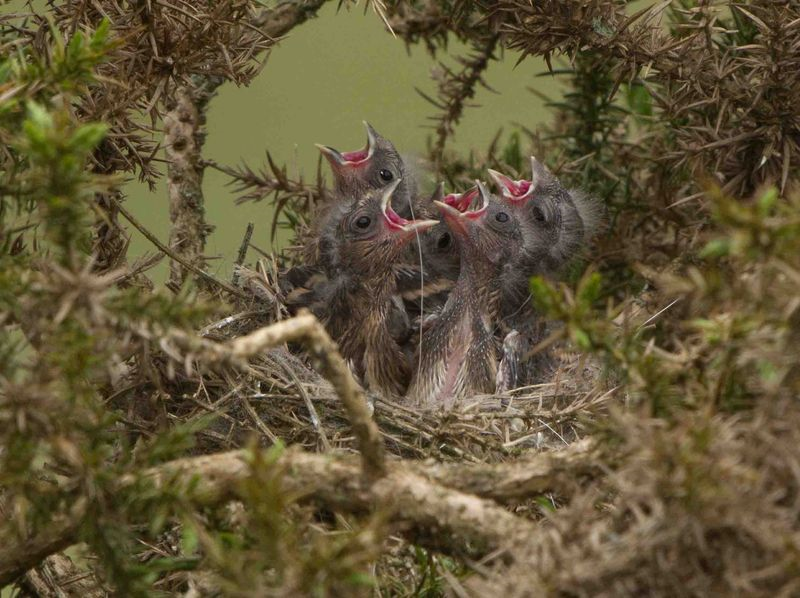
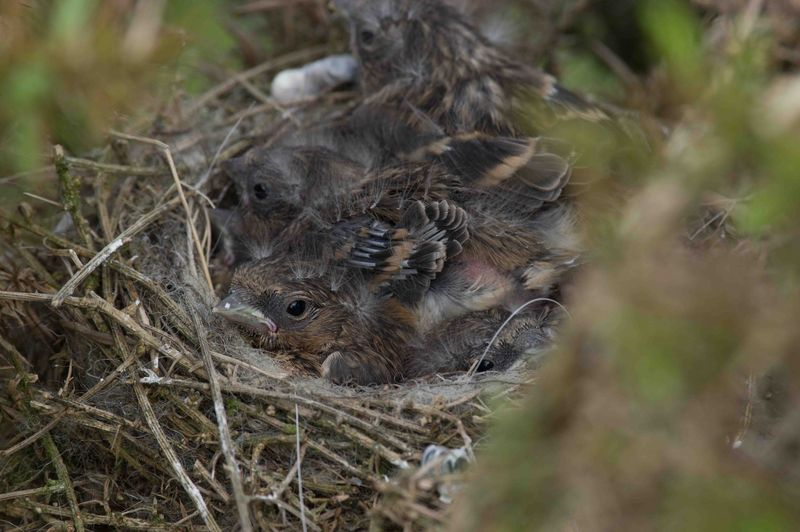
I returned to the nest site today and was pleased to see that the juveniles are doing really well. The pin feathers have now pushed through and there has been quite a noteable development in the last 24 hours. Eyes are now fully open and full of life, like black jewels! Both parents brought food to the nest and the male was seen to carry away a faecal sack although they now seem to be struggling to keep up with this duty and several dolops are drying on the edge of the nest rim. The chicks are believed to be around 9 days old and it will be interesting to see when they fledge the nest. (Fledge is the term used to describe the vacating of the nest by juvenile birds). Visually, one or two, or perhaps three of the five chicks appear to be larger and more advanced than their siblings which would point to a asynchronous incubation. That is when the incubation commences before all the eggs have been laid. This is normal for small species. The benefits of this means that the older stronger juveniles fledge before their siblings. If there is a shortage of food the older and therefore larger and stronger chicks will have an advantage over their siblings. If there is a good source of food then all the chicks will prosper and survive to fledging. As a strategy to escape predation, many small birds develop rapidly in the nest to fledge at a very young stage. These young Redpolls will leave the nest in the next day or two, probably Wednesday, at only 11 or 12 days old, its going to be interesting to see for myself. The first photograph (below), was taken yesterday and you can clearly see that in comparison with the photo taken today, the development is remarkable.
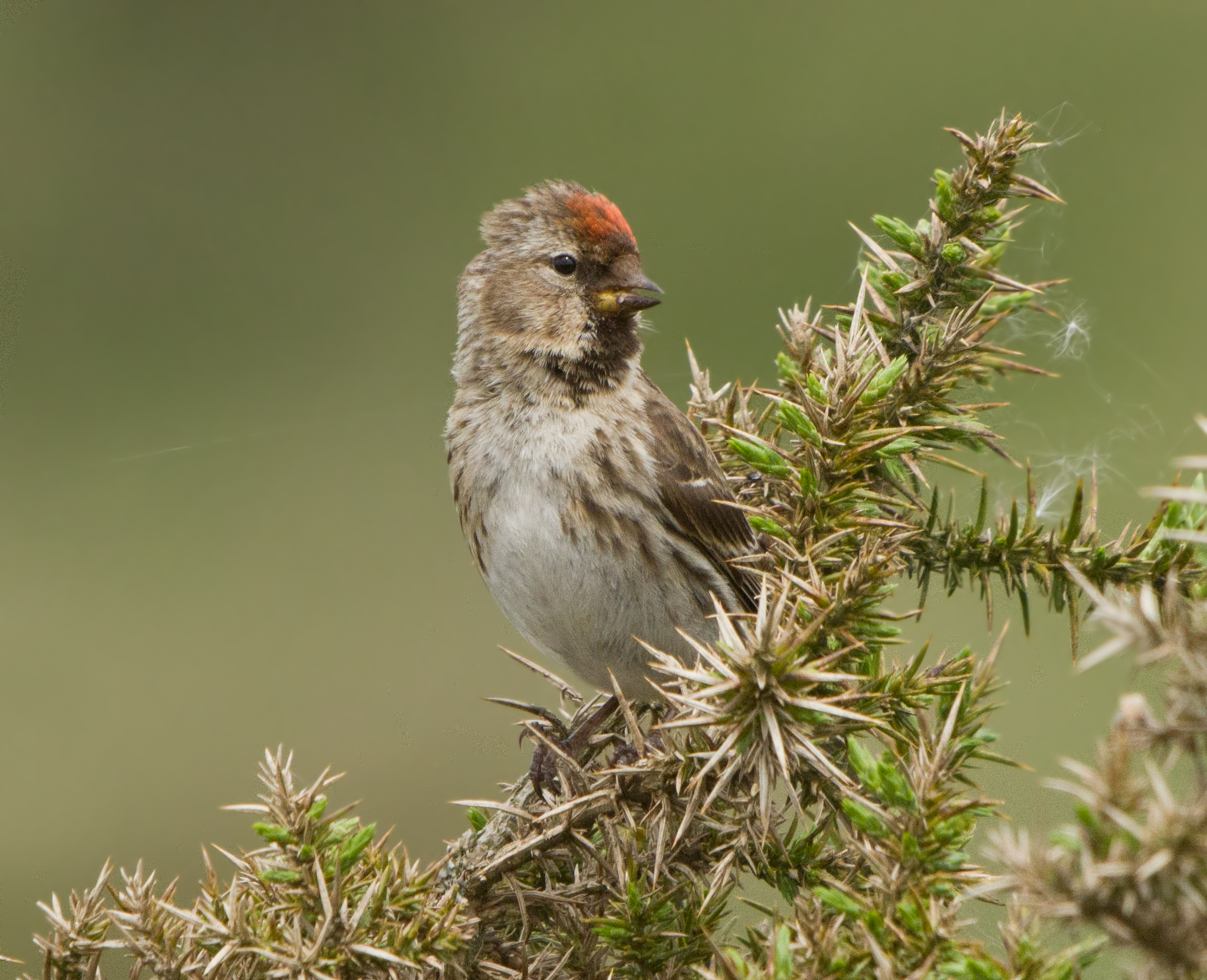
You may remember that I said previously that the female has a duller more orange crown than the red of the male. I have also seen male Redpolls with a reddish breast and I have read that older birds, perhaps birds in their 3rd year are more likely to be coloured in this way. Compare the pictures below, the female is in the first picture. Note in the photograph of the male that there is also a more pronounced black bib. 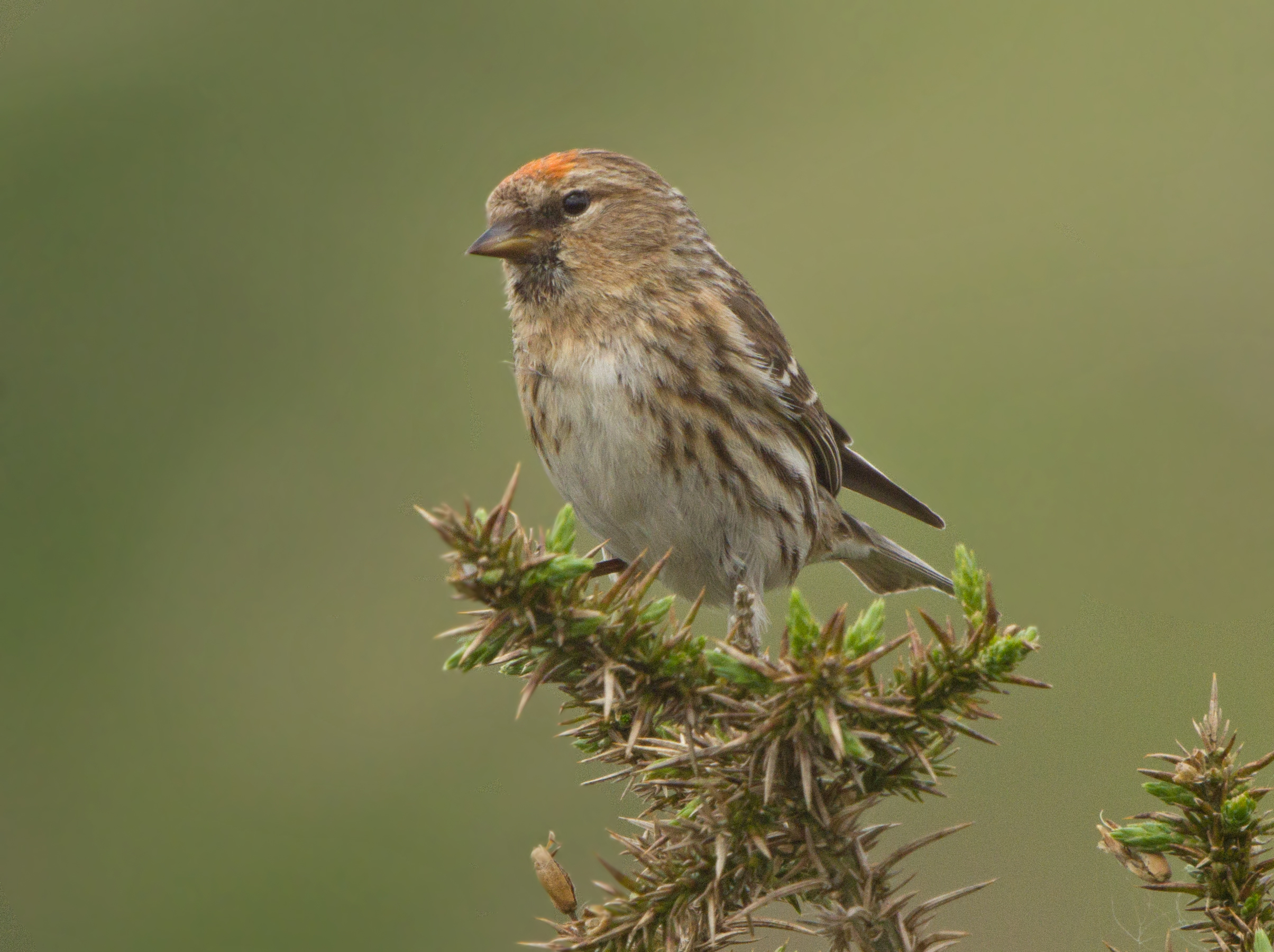
 Wildlife in a Suburban Garden
Leave a comment