
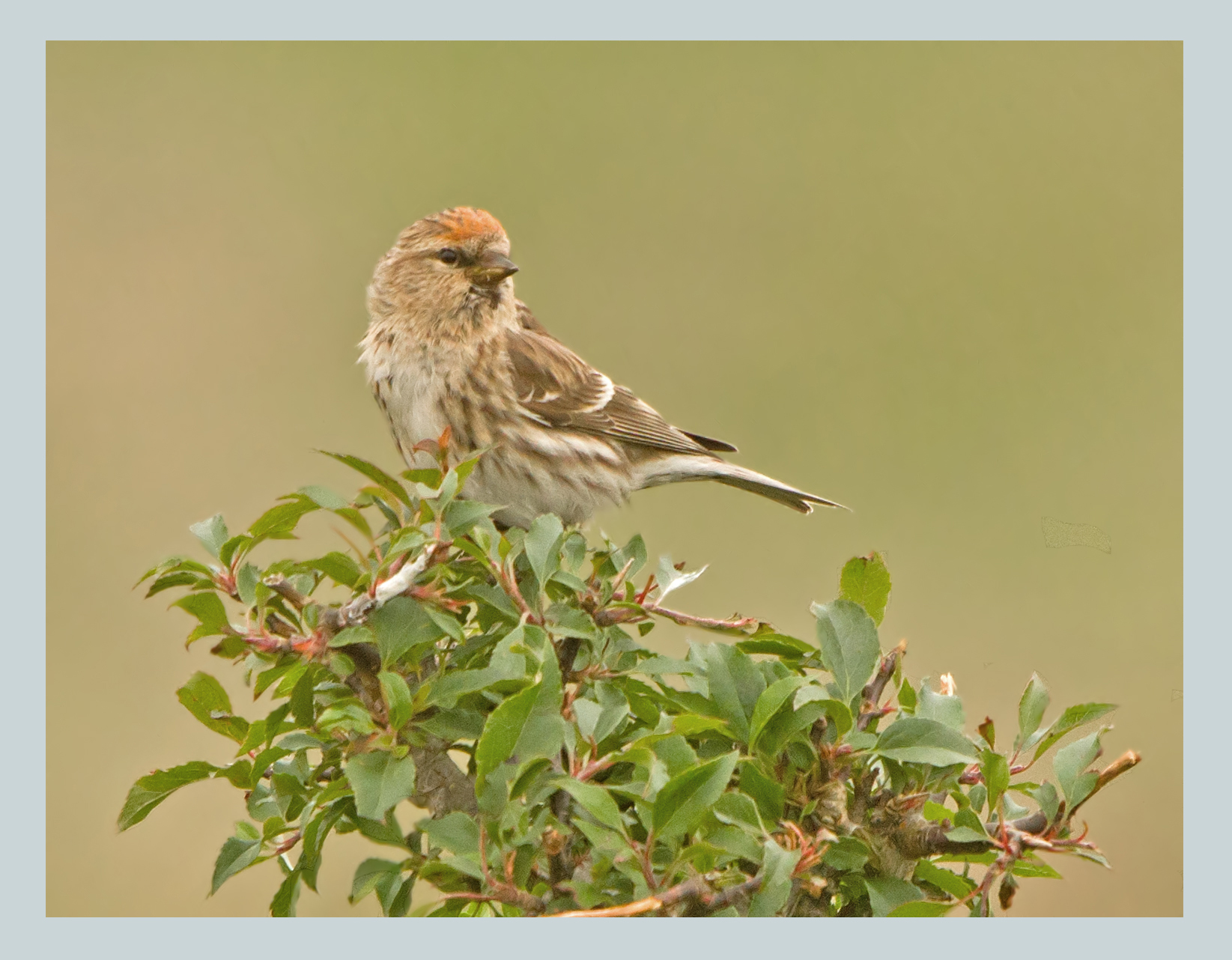
This is a female Redpoll, I would expect the male to be much more reddish, but I may be wrong. I was very fortunate this weekend when I had some contact with an ornithologist from Exeter University, Mark Lawrence, (sorry if I am incorrect about this Mark). They are doing a detailed study on the breeding of birds at an area on Dartmoor. Last year I had been asked to try and get good photographs of a particular Stonechat that was ringed and it was important to get the ring number of the bird so that the scientific picture could be understood. I was successful and able to contribute to science in my own small way. I had been told that this year, when interesting nests were found I would be able to go and photograph them. Incredibly, dozens have been found in recent weeks and amongst them was a Lesser Redpoll found by Mark Perry. I met Mark out on the moor and he expertly directed me to the nest.
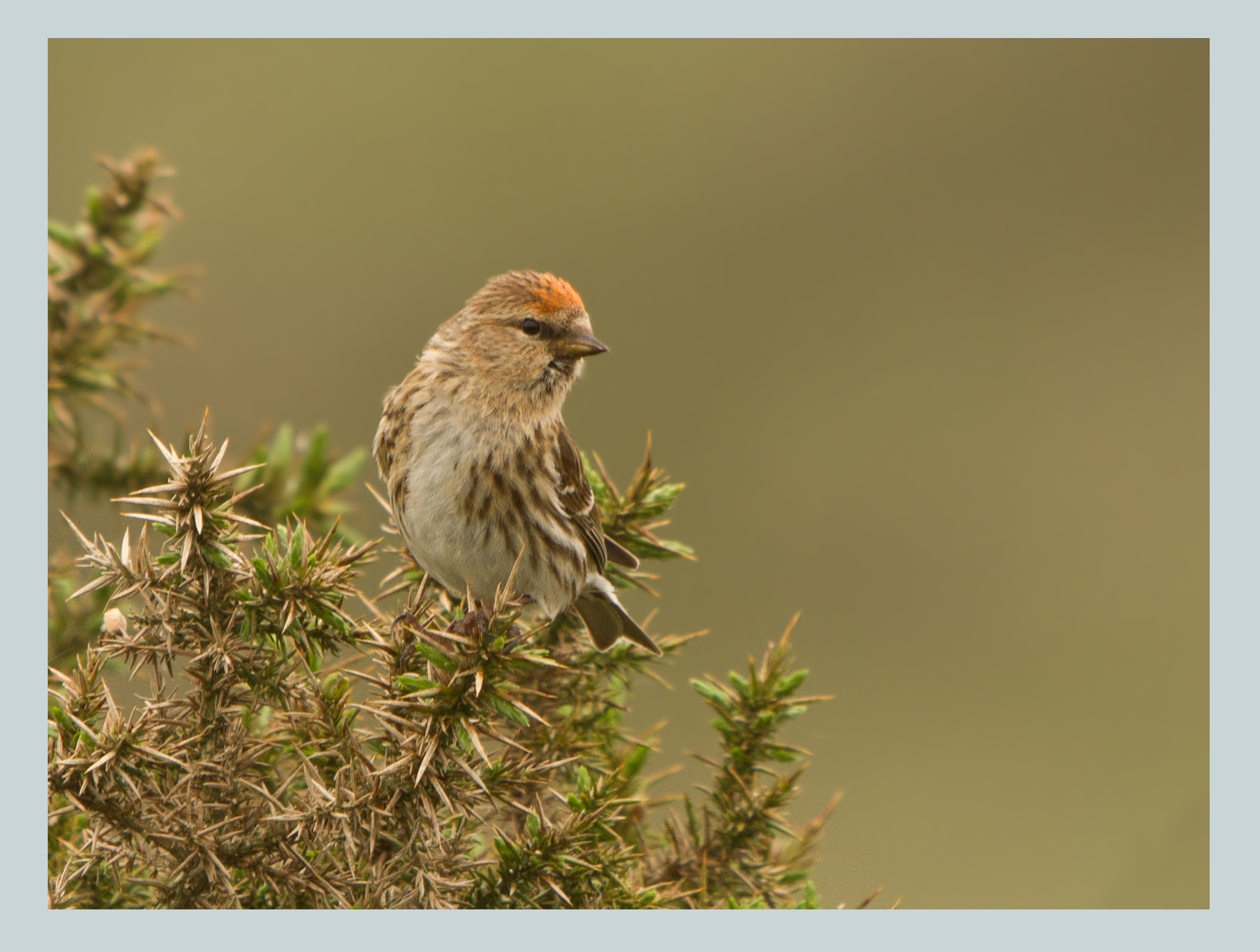
A few facts about Lesser Redpoll. This species used to be, until recently, a sub-species of the Common Redpoll but was reclassified as a species in it's own right. They are a small finch related to Goldfinch, Greenfinch and Siskin etc. in the family carduelus. They are seedeaters but feed their young on invertebrates unlike the closely related Twite and Linnit which both feed exclusively on seeds.
The nest is remarkeable in several ways, firstly much, much smaller than I imagined it could ever be, so small that it is almost incredible to imagine it could be large enough to contain the 5 chicks within. It is an open bowl with a diameter of a breakfast tea cup. These chicks are around 7 days old, their eyes are just open and feathers on the wings are just emerging. The position of the nest is such a surprise. This species is described as arboreal, that is, they favour trees but the nest is low down in a gorse bush and quite open. The bush is isolated in the usual Dartmoor terrain, that is, scattered bushes, the odd Rowan tree here and there and grass withes with gorse and bracken. It is placed near to the top of the sparse gorse in the fork of of small twiggy branches and quite open to the elements and therefore predators.
It is hard to photograph without disturbance and the ideal is to cause no disturbance whatsoever. I am licensed to Photograph Schedule 1. birds at the nest so I fully understand the need for lack of disturbance and the need for good filedcraft. I had to show proof of this to acquire the license. You can rest assured that at all times the birds interest and safetly is the main priority.
I plan to return to the nest site again today so check back latet for further photographs.
 Wildlife in a Suburban Garden
Leave a comment