
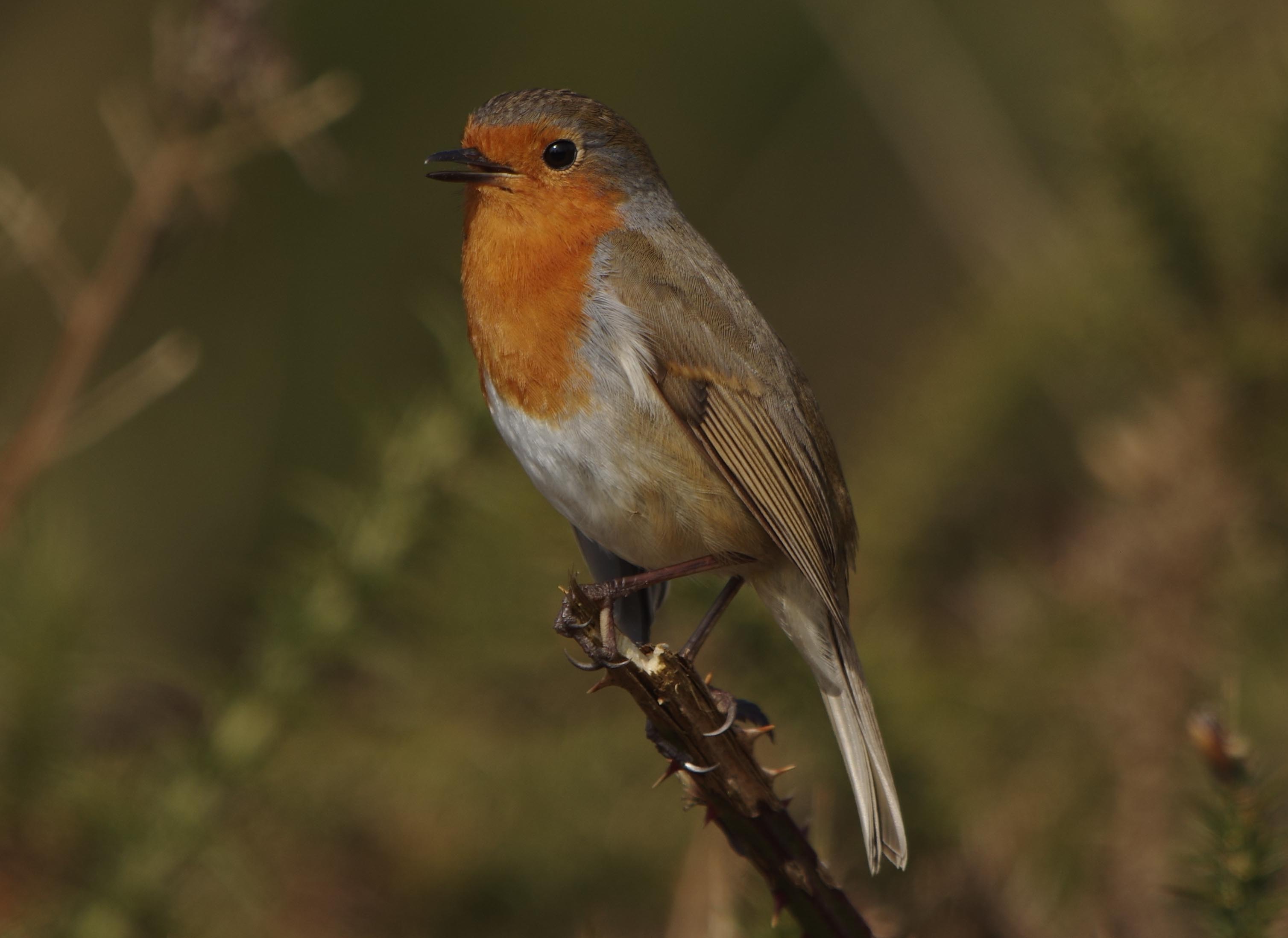
A beautiful Robin, one of the UK's favourite birds, seen in every garden, often taken for granted but loved by those that take the time to notice them. In the winter they are a friendly welcome sight but when we get in to the breeding season they are more secretive. In addition, even though both sexes are identical they are also very territorial and aggressive to each other. They have different songs in the winter and summer and their evocative song is a feature of the English winter. This bird was part of a pair that i have seen in the same place this last few days, paired up now and about to start breeding. Their nests are often in unusual places, for example, amongst plant pots in a potting shed and I have even seen photographs of a nest in the large pocket of an old discarded coat. They regularly build under the bonnet of old vehicles. Robins eggs are a beautiful bright blue colour and very attractive. I have also read of some research that indicates that male robins are more attentive to chicks from bright blue eggs. To me that would seem to be nonsensical. How is it possible for a male robin to choose a female who lays brighter eggs, He would have no way of knowing? Young Robins leave the nest with a speckled breast, not red and sometimes casual observers think that these young birds are females, not realising that both sexes are identical. These young Robins start to attain their red brests later in the summer and by autumn and early winter they will look like their parents. As youngsters they have yellow inside their mouths and when I trained a s a bird ringer I was shown that young birds can be aged as first winter birds because they retain some of this yellow around the mouth.
 Wildlife in a Suburban Garden
Leave a comment