
You may remember that the other day I posted pictures of a Chiffchaff that we queried as a Siberian Chiffchaff. Feedback from several experienced, informed and talented experts has led me to believe that I did in fact photograph a "Tristis"…… (that's the second part of the scientific name of this sub-species). I went back to the same site today to see if I could photograph it again and did photograph another bird. I was struck today by the colour of the legs and of this bird which had noticeably more colour than the bird photographed before which had solid black legs and a solid black beak. When I looked very carefully at today's photographs there was a noticeable yellowish patch which extended (albeit subtly) up the lower mandible. In addition, the legs of today's bird were brownish rather than the solid black in Saturday's bird. You can clearly see this in the picture of today's bird, pictured below.
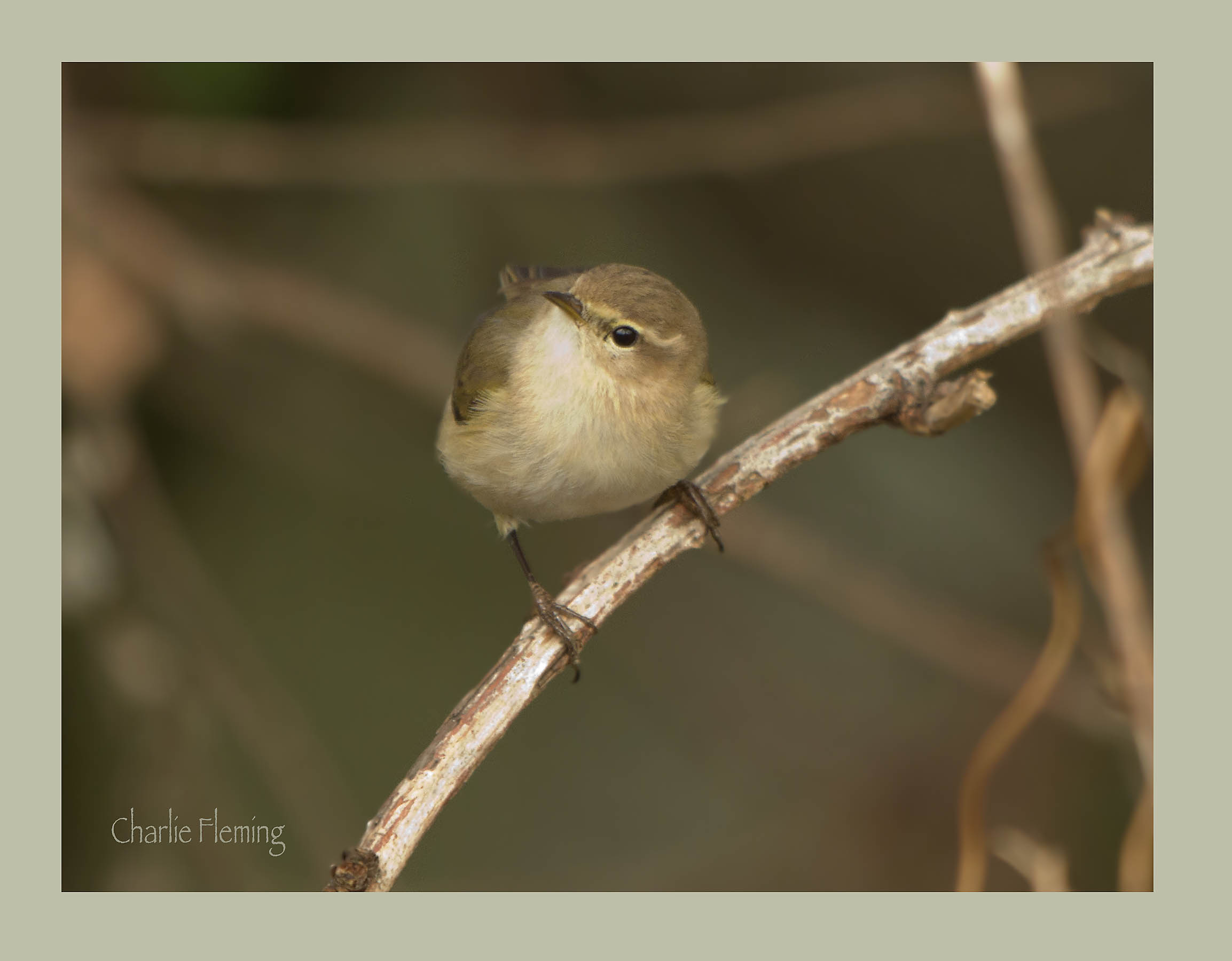
You can hardly call the legs and beak black. Another feature of the "Siberian" type bird is a very subtle and feint yellowish colour just where the wings emerge from body. Here's Saturday's bird again, thought to be the Siberian bird with black beak and legs. 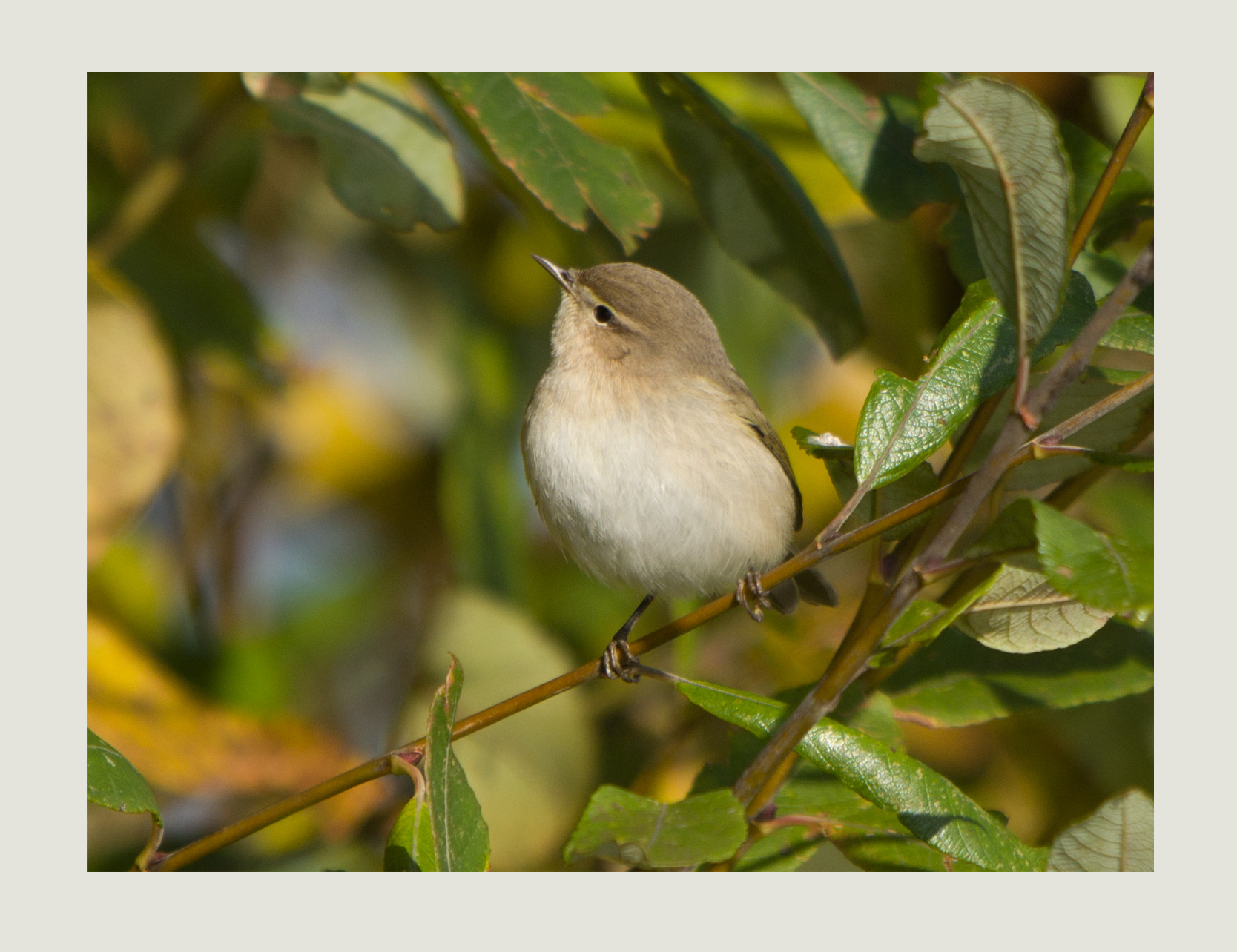
The plumage colour could be the product of several factors, that is: age, sex and probably the most important factor of all, sunlight. In addition, colour can be unintentionally altered depending on the "white-balance" setting of the camera. So, I hope you agree, this is a difficult subject. However, one factor that is always reliable is the calls of both birds. Today's bird was definitely attracted in to view by the playing of a Colybita Chiffchaff call, whereas Saturday's bird was attracted to the Tristis call. Looking at the two photos again, to my eyes they do look different. Interesting!
An interesting fact, if you Google the word Tristis you can see that the literal meaning is smelly or foul smelling….. how weird.
Related articles


 Wildlife in a Suburban Garden
Leave a comment