
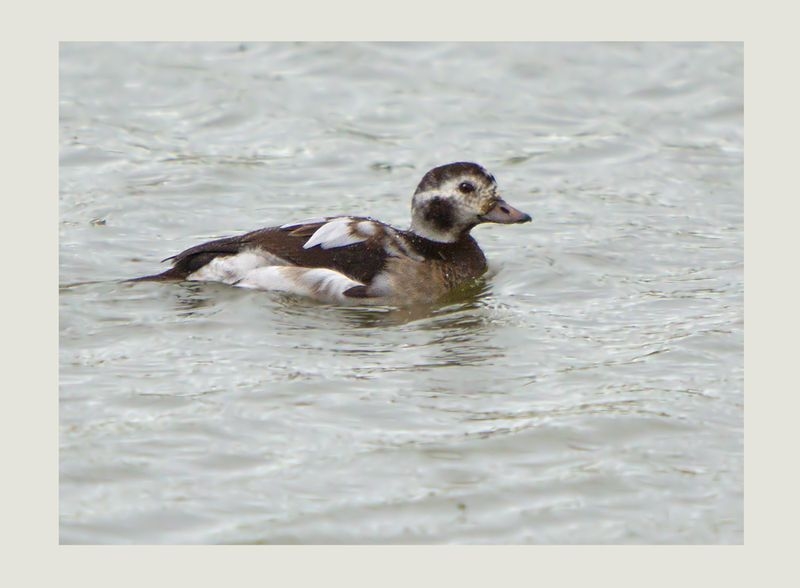
I had the pleasure of photographing a new species of bird today, a Long-tail Duck, Clangula hyemalis. Firstly a bit about the scientific name "hyemalis" which means "of the winter". Obviously a reference to their sudden appearance in the winter months which would not have been easy to explain in the days when scientific names were being decided. It seems odd though that this bird, amongst many other species that suddenly appear in the UK in winter, should be named after this phenomenon. It could be something to do with their plumage which is remeniscent of a snowy landscape. In actual fact they are whiter in the summer when they are breeding in the arctic in exotic places like Svalbard, Spitsbergen and Churchill, Mainitoba….. all of these places are home to Polar Bears. It could well be that the bird pictured above has spent part of the year in the company of one of the world's most dangerous carnivores. In fact, that is probably a certainty. They sometimes nest quite a distance from the shoreline, often in the company of Arctic Terns who protect their nests vigorously from predators such as Arctic Fox and the ducks benefit from this association. They are the deepest diving of ducks, capable of submerging for several minutes to a depth of 200 metres, thats a massive depth if you think about it. They feed on crustaceans and shellfish but obviously they are very adaptable as far as diet goes. So, just a funny looking, admittedly rare duck but so many interesting facts.
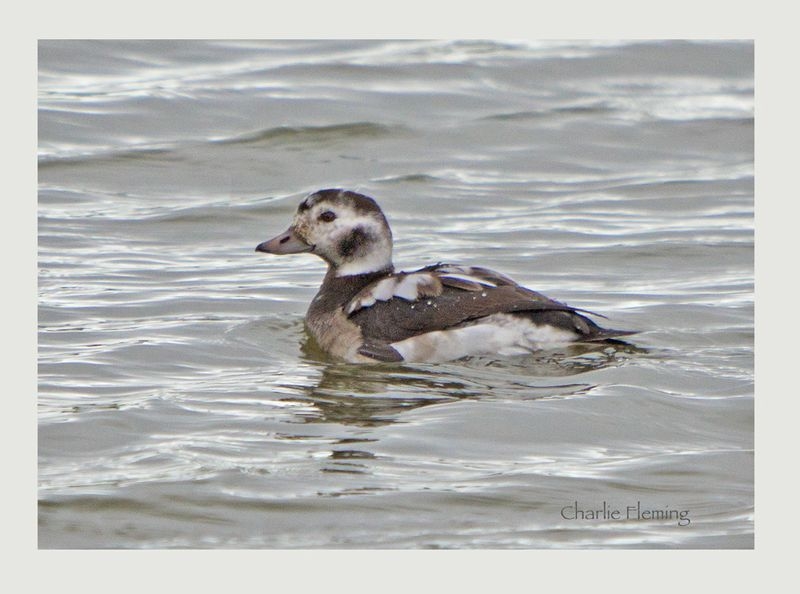
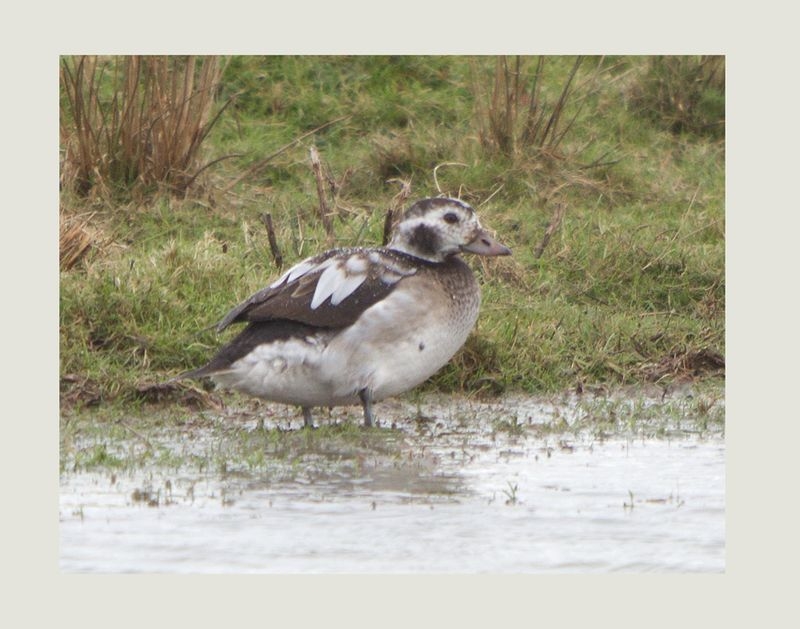
I have seen Long-tail duck before but not close enough for a photo. As I said in my post yesterday, I had been disappointed to miss the opportunity to photograph this one when it moved in to the channel that flows near to the hide. So today, even though it was wet and windy, I decided to go back to the hide to sit it out until it came in to the channel again. I thought, "well if you can travel all the way to Australia to photograph something new, why not do what it takes to et a new species in my galleries". It took a couple of hours but I was prepared to wait for the entire day if thats what it was going to take. As it happened, it moved in to the channel and gradual swam strongly towards the hide. I was worried because it was a bit noisy in the hide and I hoped that the loud voices wouldn't scare it too much. As it moved nearer and nearer, people focused and thankfully it went quiet and it wasn't too disturbed. It swam down the channel, turned when it had gone as far as it could go and then on it's return, moved to the shore opposite and climbed out, grabbing a mouthful of grass. Quite an exciting session in the end.
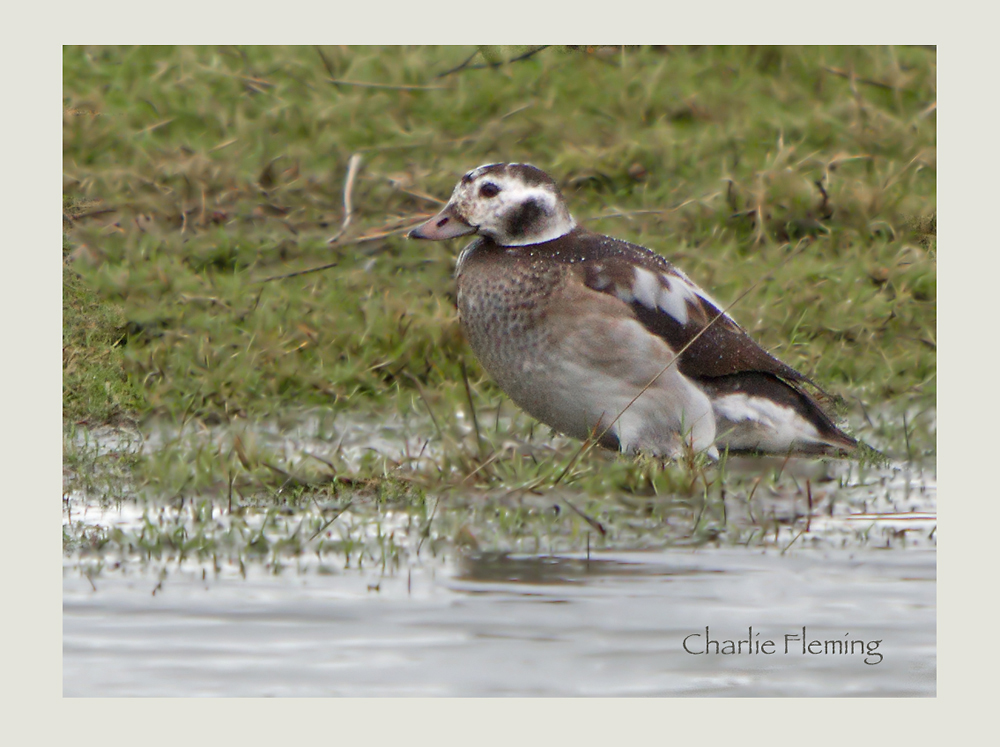
The weather wasn't too good and I could have done with a faster shutter speed but I am reasonably pleased with the end result.

 Wildlife in a Suburban Garden
Leave a comment