
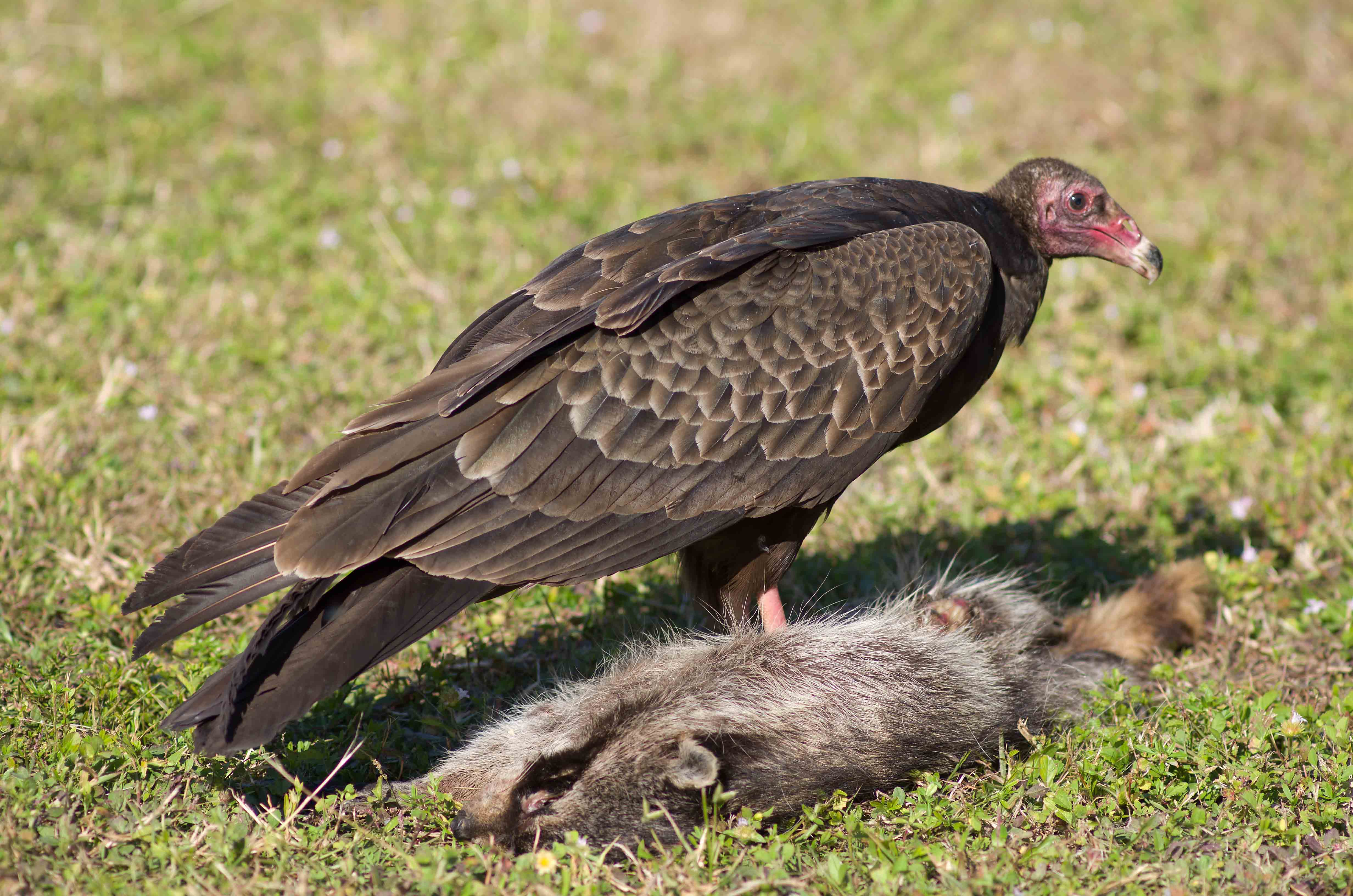
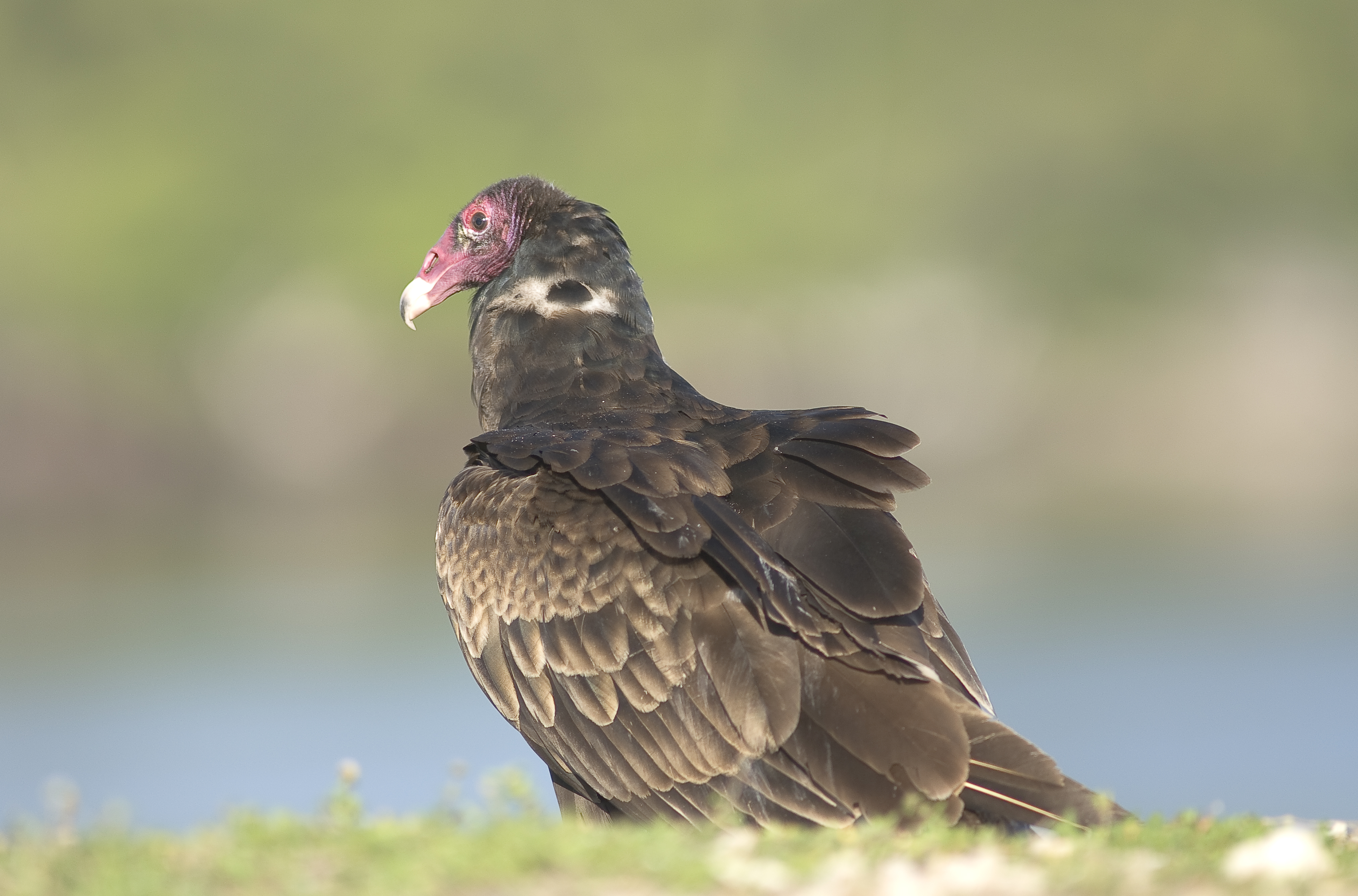
I have an extensive collection of photographs featuring around 1000 species from 5 continents. I get a lot of pleasue from looking at them and I have decided to feature them on the blog more often. Today I am featuring some vulture species. The first is the Turkey Vulture (Cathartes aura), a common bird in the USA. I see them on every visit to Florida and I have also seen them in New York State, Belize, Mexico and the Caribean. As you would guess, they are scavengers and do a useful job removing decaying bodies from the habitat. The Turkey Vulture is not related to the Vutures of the old world but convergant evolution means tha they are very similar. They are a large bird with a magnificent two metre wing span. They locate their prey by smell and can detect the chemicals given off by a freshly killed carcase which is an unusual skill. They are a protected species in Canada, USA and Mexico.
The Black Vulture (Coragyps atratus) (below) is a similar species but more compact and with shorter wings than the Turkey Vulture. Apparently it's behaviour is different, they do not have the ability to smell their prey but follow the Turkey Vulture's who do posses this skill. They are more aggressive and dominant over the larger Turkey Vulture and will also kill newly born animals such as calves. They will take out the eyes of the calf which causes shock and then the vultures will feed on the freshly killed carcase. Black Vultures have a less extensive range than the Turkey being absent from Southern Canada and the lower regions of Souhern South America.


There's quite a difference in the heads of the two species, but they both have naked skin on the head which enables them to feed without clogging the face with blood.

You can clearly so the difference in nostrils which have no nasal septum,that's the tissue seperating the two sides of the nose.
 Wildlife in a Suburban Garden
Leave a comment