
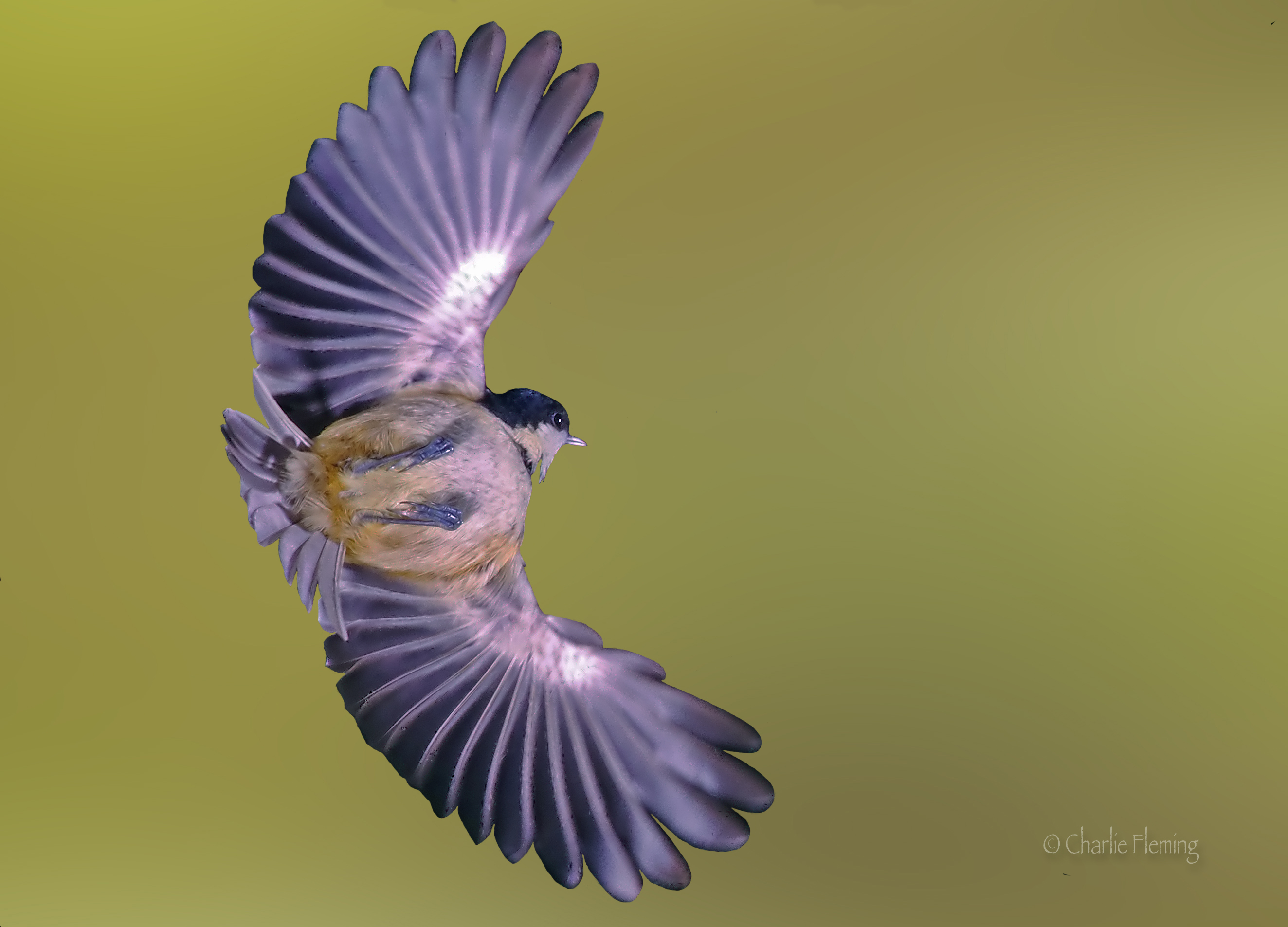
This needs bit of work but it has some potential. It was achieved by taking a photograph using multiple flash units to freeze the action. Then I adjusted the camera again to take a photo of the same scene to capture the background, very obviously, without the bird. Then back at home, I combined the two images. This next one has worked a little bit better and I am more pleased with the result as it has a more natural feel about it.
The next images are of Blue Tits without any addition backgrounds added and the first has worked out well as the bird "bombs" in to the feed. The harshness of the flah spoils the image a ittle but overall, when you imagine the speed that the bird was flying, it's worked exactly as I have planned it. The wings, which are just being folded before landing, have been frozen in time at around 10,000/1 of a second.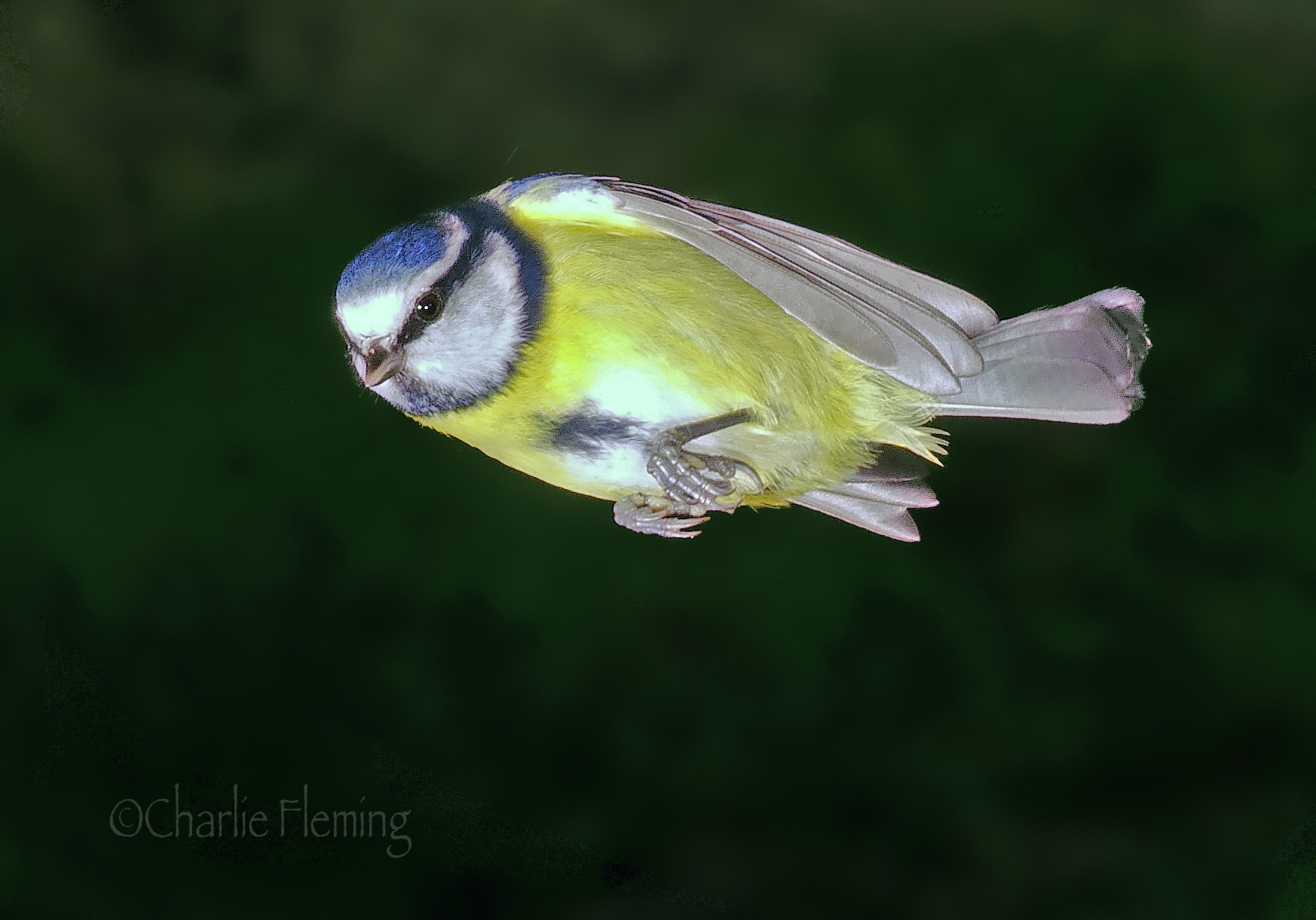
. .
Taking these in-flight shots is a very time consuming and demanding technique. Thee are numerous variables and difficulties that have to be overcome. Timing is all important, press the shutter too soon and the subject is not within range of the flash and will also be out of the "focus' range of the camera's settings. The camera needs to have the aperture set to get the maximum depth of field. If you press the shutter too late, the subject bird will have landed which obviously defeats the point of the high speed set up. The lighting is crucial and the extremely short burst of light, at 20,000 of a second is what captures and freezes the action. However it can be very hit and miss and to get the bird subject lit properly is a rel challenge. Because, without the flash, the ambient light is not sufficiently bright to register on the cameras sensor, any part of the picture that is out of range of the flash will be black , this makes the pictures apear as though they were taken at night. Obviously, not always desirable for a day flying bird. There are ways to get around this and that is my next step.


 Wildlife in a Suburban Garden
Leave a comment