
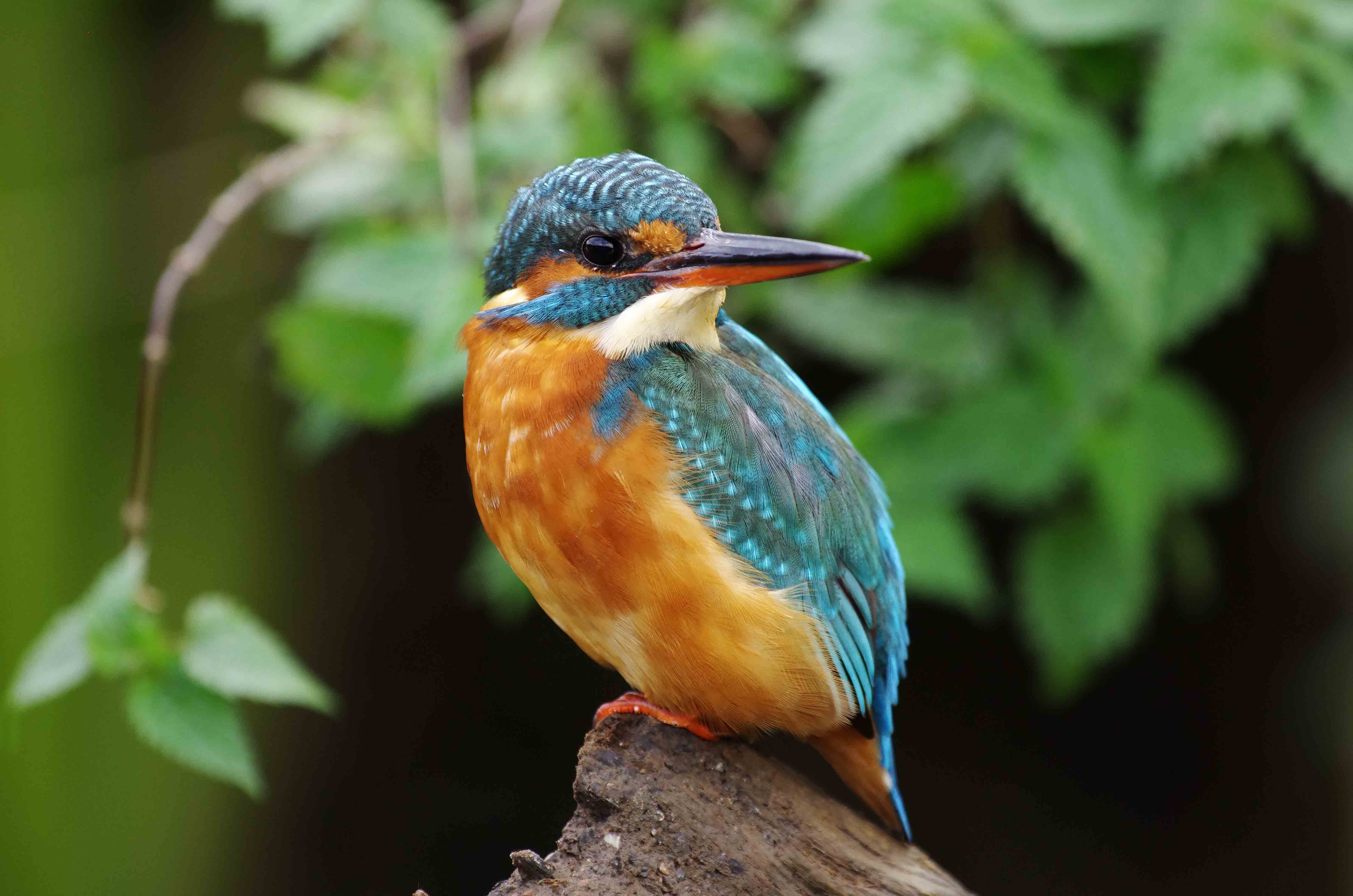
I have been watching and photographing the Kingfishers on the Alphinbrook for the last three years. Kingfishers are very territorial and because of that it is quite easy to identify individuals. You can be quite certain when you repeatedly see a bird in the same place, that it is the same individual. At the moment the bird that visits is the adult female pictured above. Last year the holder of the territory was a juvenile female and the previous year a young male. With constant visits (both by me and the current resident), I have the opportunity to get to know these individuals. A Kingfisher territory is large, longer than 1000mtrs, therefore it can be several days between visits to my part of the territory, a frustrating waiting game at times.
The attraction of Kingfishers to the Alphinbrook is all about environment and feeding opportunities. Requirements are simple, some security, places to perch and roost and the most important, availability of prey. Kingfishers catch and eat their own weight in fish daily, apparently that is upwards of 15 fish every day of their lives. It stands to reason that the presence of clean water and a good habitat for small fish is crucial. The Alphinbrook, on the face of it is just a ditch that meanders through an industrial estate. It does not appear to be capable of sustaining a large fish population but it is home to large stocks of Stickleback, River Minnow, Stoney Loach and Millers Thumb (a species of freshwater goby). In addition there are eel, dace and even a few wild Brown Trout. I have a simple hide which is tucked by the side of the brook, it blends in perfectly and is accepted as part of the landscape by all of the birds in the area. I have had some amazing moments watching Kingfishers from this hide including territorial fights, bathing, diving and the killing and eating of prey. I have watched Kingfishers deal with 4 species of fish and also a Common Newt and a Dragonfly larvae. Having described the simple requirements of a Kingfisher, a good solid perch is high on the list. The Alphinbrook is a flood relief drain and administered by the Environment Agency. From time to time it is dredged and cleared meaning that wooden perches are at a premium. I manipulate this to my advantage, placing logs and solid branches within feet of my hide. Kingfishers beat their fish prey to kill and soften before it is swallowed, always head first. Once a resident Kingfisher is aware of the presence of a solid perch, it will make a bee-line for it, usually with its prey. It couldn't be better for the photographer! Sticklebacks are usually, simply turned and swallowed, but minnows are invariably smacked against the solid perch before being turned and swallowed always head first. After a messy meal that has involved beating and softening, Kingfishers will bathe. they do this by repeatedly diving in and out of the water and back to the perch. Probably unique to this species. Most other birds stand and bathe in shallow water.
 Wildlife in a Suburban Garden
Leave a comment