
I have had the opportunity to closely observe Grey Wagtals over the last three years and I have learned a lot about their behaviour. The first remarkable thing to note is that the males are only in their breeding plumage with their black bib for a very short time, in the spring and early summer. However males are much more brightly coloured than females, even when they are in their eclipse plumage. Females are an attractive duller version of the male who has bright yellow on the breast and flanks with black wings edged with white. Tails are long and yellow with the outer tail feathers also being black and white. They constantly wag their tails. In poor light, because of this, it's hard to get a sharp photo of the tail as it is constantly flicking. Why they do this has not been explained but my theory would be that it is a sign to other Grey Wagtals that they are around,like a flag, just a theory but a possible explanation. Wagtails are insectivorous and it could also be a method of flushing insects? I have watched them feed in different ways. They often, in fact usually, walk along the edge of the water where they search for prey, sometimes even turning over leaves by picking them up in the beak and tossing them aside. They are quite happy to feed from the water, both the surface and beneath. I have seen them feeding quite comfortably on fish fry and fish as long as 6mm. just like a tiny heron or egret. In fact I have observed them actively searching the edges of the stream for fish. As well as walking the edges of the stream in an opportunistic way they also "hawk" for food by flying up from a perch and acrobatically catching gnats and small flies in flight. As far as I am aware, they are insectivorous and I have never observed them taking inanimate prey.
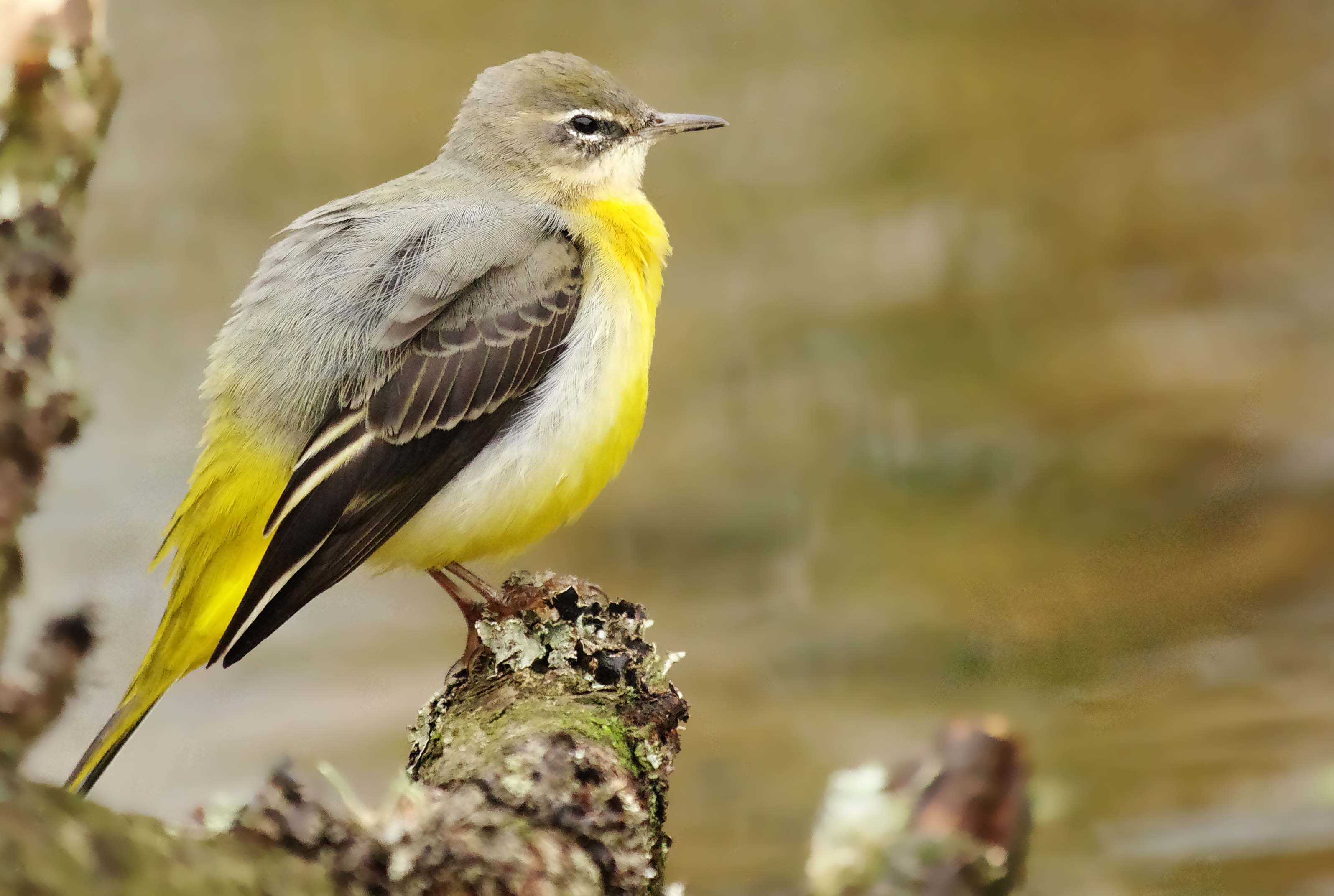
Male Grey Wagtail in eclipse plumage.
They appear to be territorial and If other Grey Wagtails move through the territory, much chasing and calling breaks out until the newcomers are ousted. As the winter hardens I noted, both last year and the year before, that the male bird remained in the territory, alone, after he ousted the female. So far this year they appear to be co-existing in the same area, seeming to be tolerant of each other rather than associating together. The male, even at this time of the year in Autumn, sings a territorial song. This territoriality is born out of a need to be possessive of good feeding opportunities which they need to protect to survive. It may well be that all the time that food is easy to come by, the male is tolerant of the female and is willing to be tollerant. Wagtails fly with a fast undulating flight and will usually call at the same time, and particularly as they perch. They always perch on a low branch or log over, or in the water, and seem to have a preference for any boulder or rock in the water. They share this habit with Dipper – (Cinclus cinclus) which are often in the same kind of habitat and environment. Interestingly the calls of both species are very similar, apparently at a frequency that can be heard above the rumblings and tumbling of moving water. The Common Kingfisher – Alcedo athis also has a similar, but much louder call, at the same frequency.
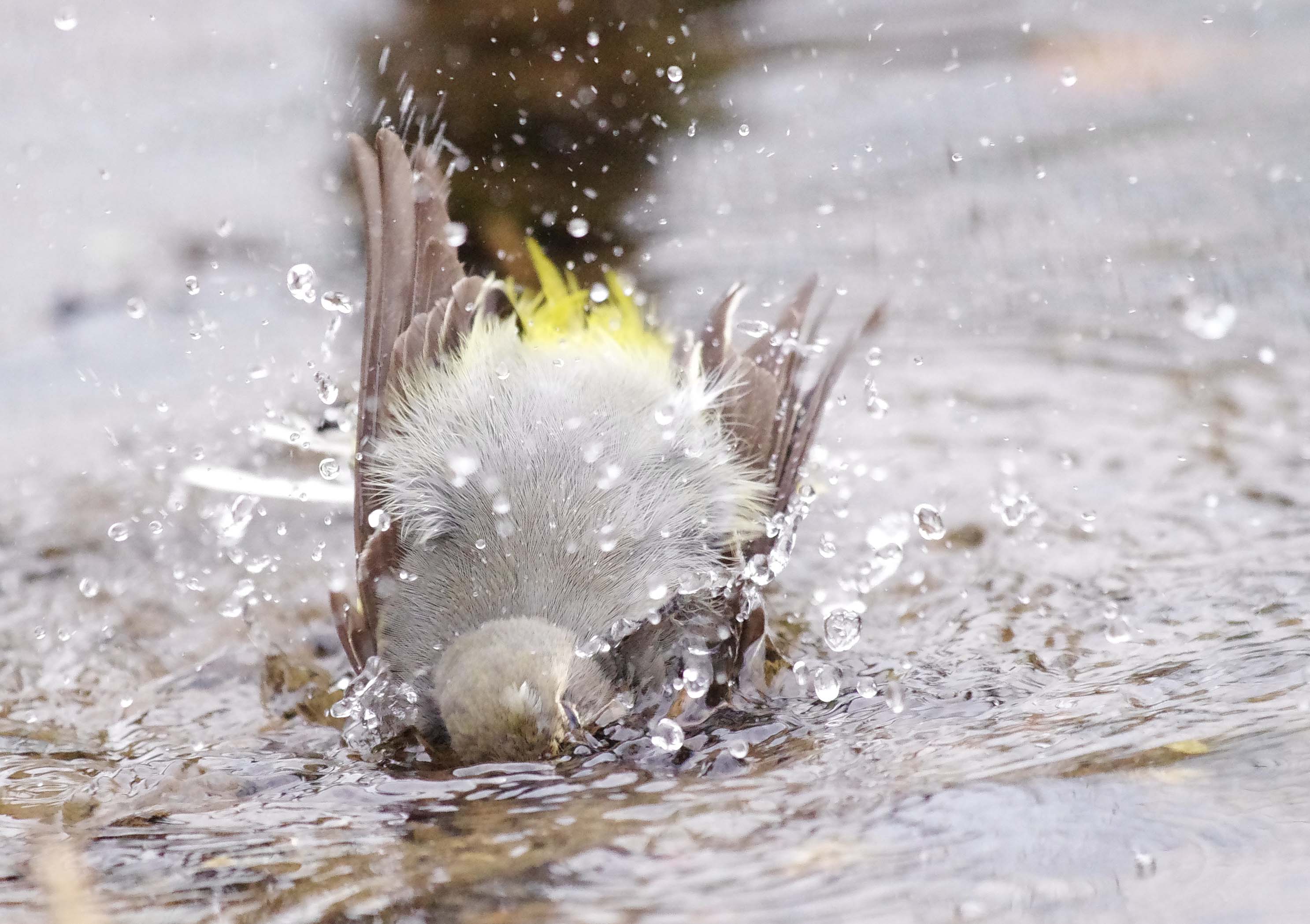
In common with most birds, Grey Wagtails bathe and preen regularly and often throughout the day. Here's a female preening yesterday.
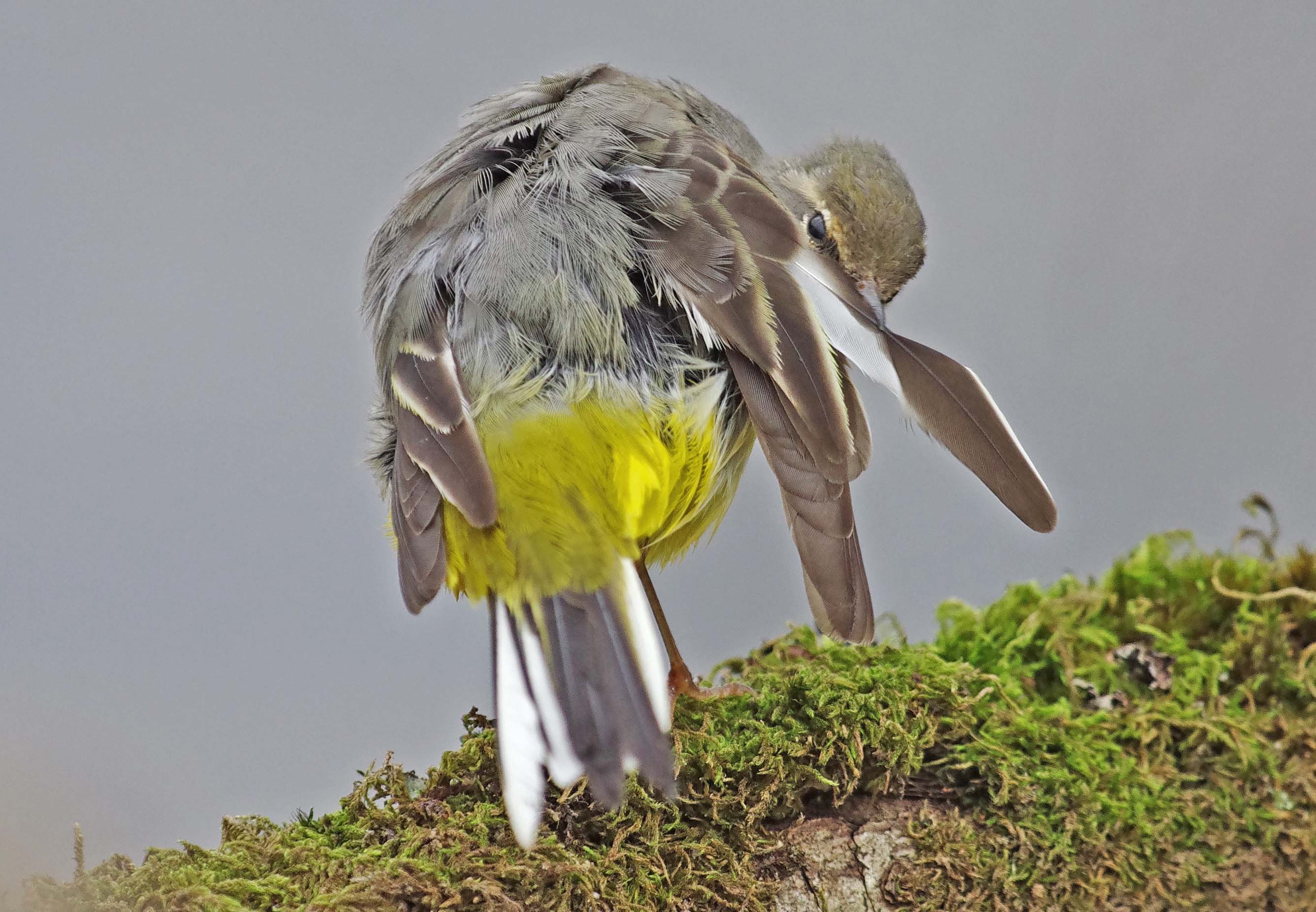
……….after bathing.
 Wildlife in a Suburban Garden
Leave a comment