
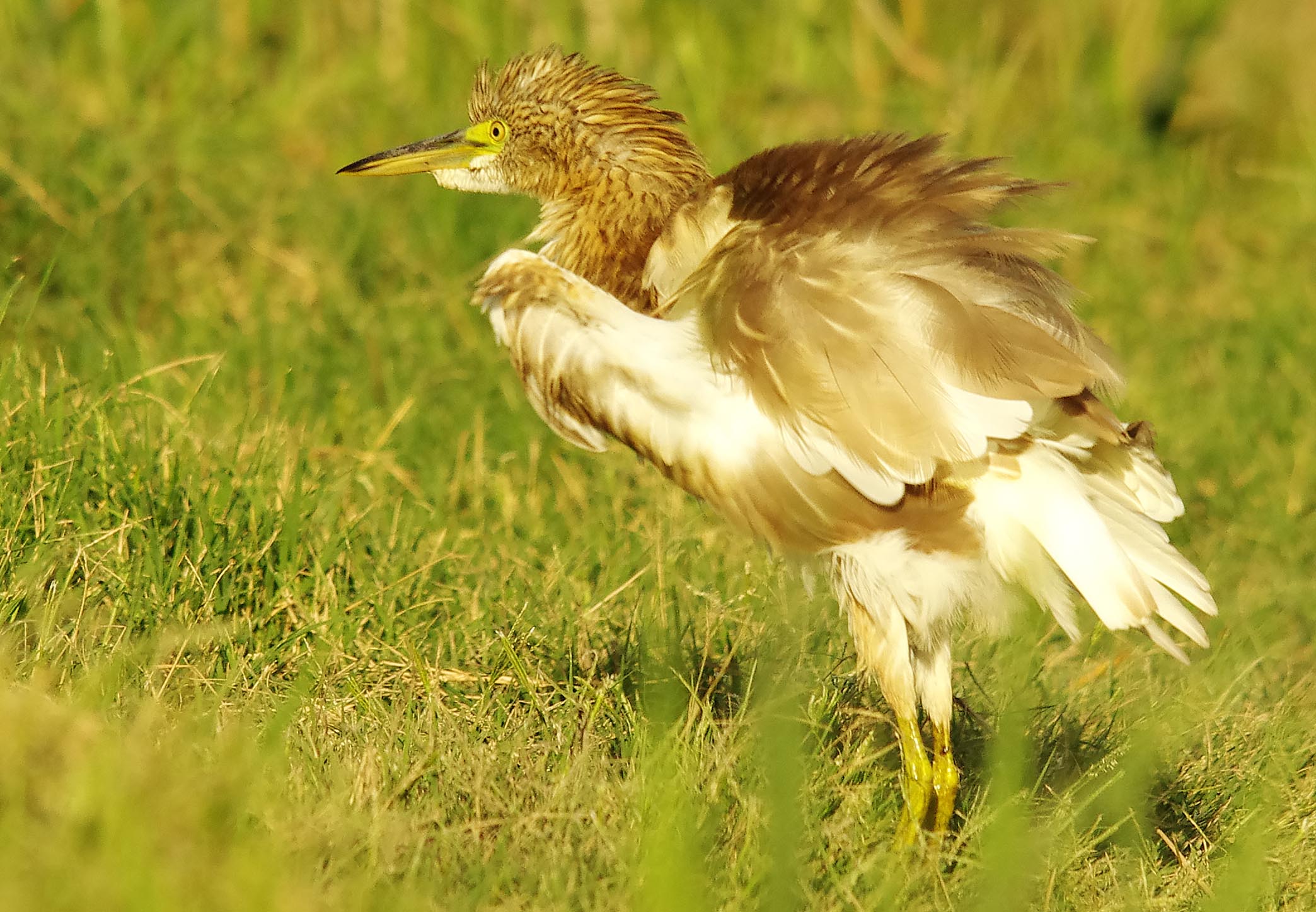
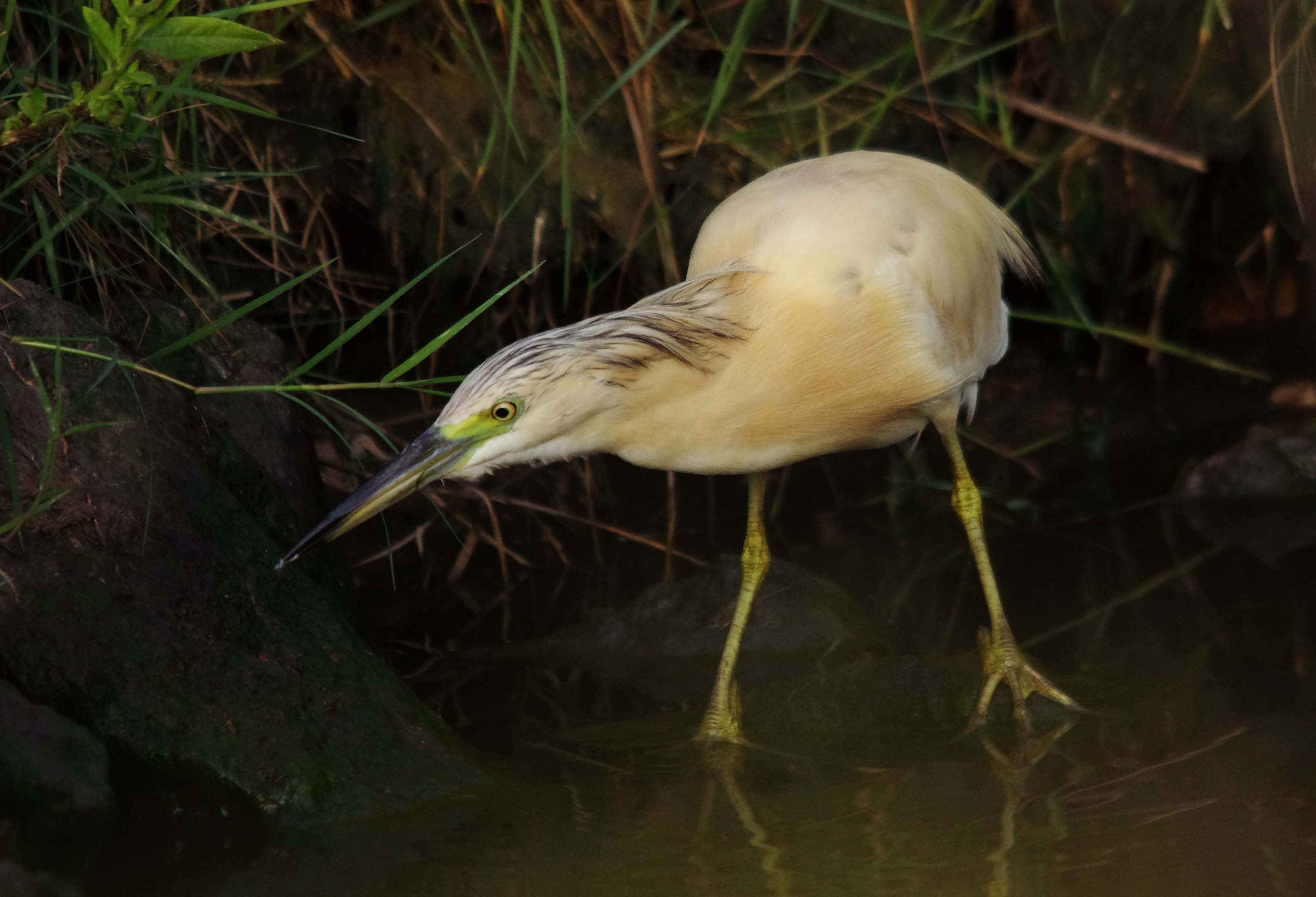
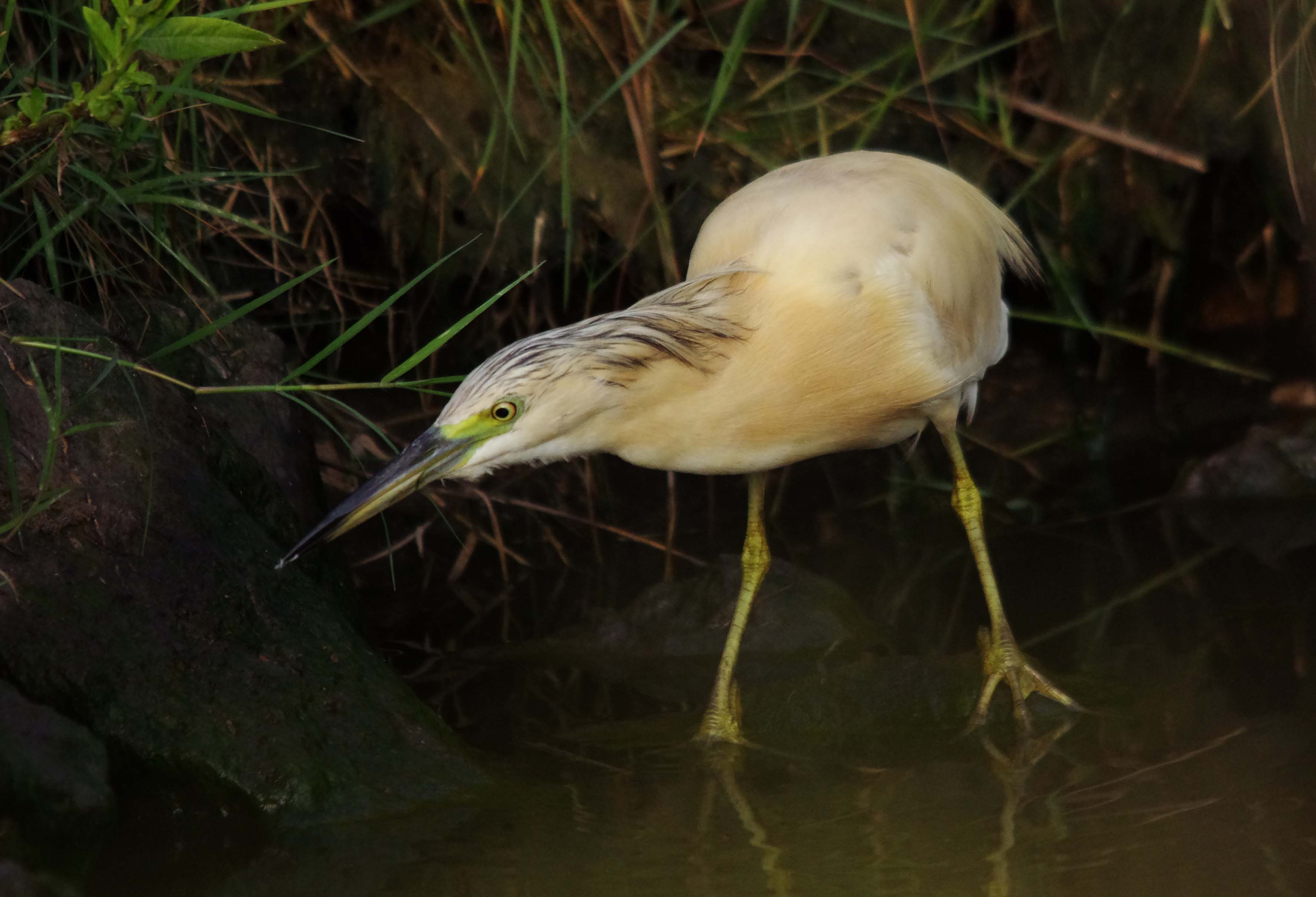
Squacco Heron – Ardeola ralloides was a species, so easy to see during my photographic trip to Spain last week. The first one that I saw, at San Pola Salinas whetted my appetite and was a taste of things to come, but was too hard to get near enough for a photograph. At Pego Marsh they were numerous and being a bird that I hadn’t seen before, it was exciting to see so many, and also to have such good photo opportunities. The Squacco Heron is a squat heron that in shape, reminded me of a Green Heron or even a Bittern, but is in fact, a pond Heron in the family Ardeola, and related to the Chinese Pond Heron. They are a pale bird with buff markings on a white background, like milky coffee. In flight, the white wings and tail contrasts nicely with the darker buff back. They have bright yellow legs and an even brighter yellow eye, and a dark blue/grey, sharp dagger-like beak. There is a strong hint of green on the lores, (the bare skin between the eyes and beak), which apparently gets even brighter and more blue when in full breeding condition. Adults, as is usual with herons and egrets, have long plumes on the head and mantle which are whitish, edged with dark chocolate brown. The ones that I saw, on reflection, seemed to be mostly juvenile birds. I am pretty sure that the birds above and below are juveniles.
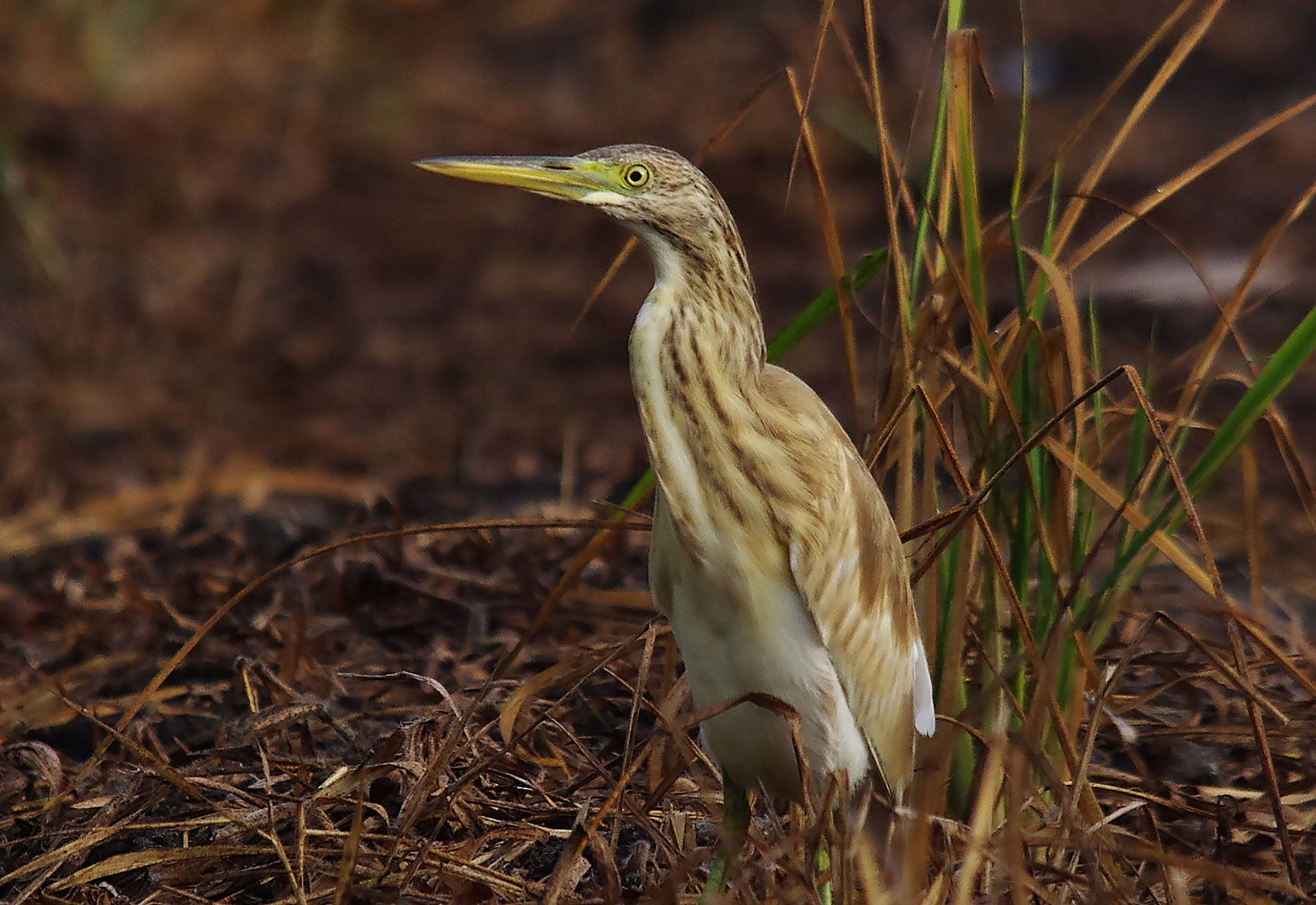
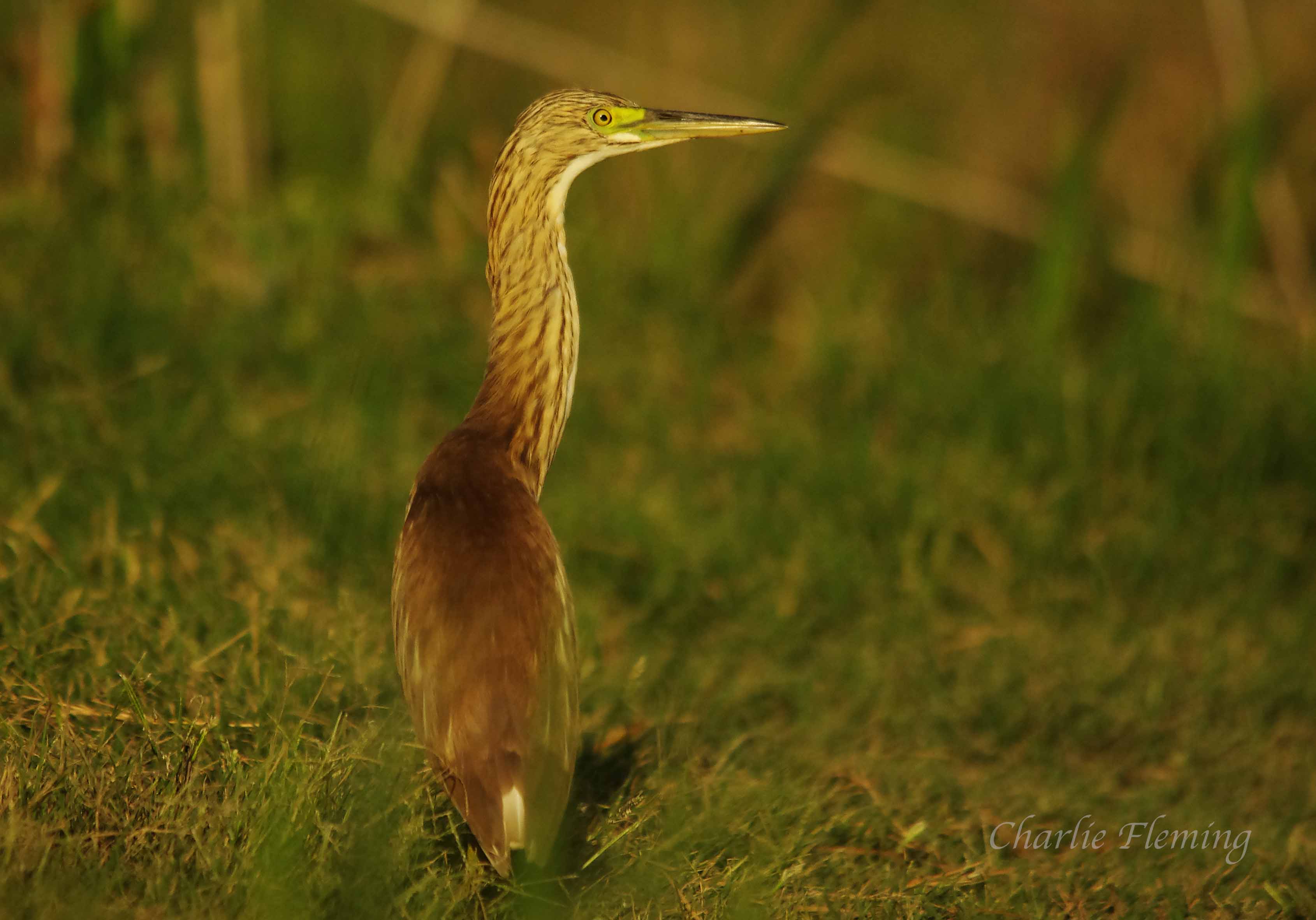
These juveniles are much more heavily marked with striations on the head and neck and a have a yellowish beak. A bit of research has shown that Squacco Heron are not particularly common in Spain. It is likely that they breed at Pego Marsh. They migrate to Africa in the Autumn but a few apparently remain in Spain. I watched one adult bird feeding in the late evening. The sun, in the photographer’s “Golden Hour”, cast a lovely light on the adult bird that was feeding in a small pond formed by the irrigation to the nearby paddy field. The reflections from this bird as it fished, created quite a picture and it was relatively easy to photograph because the bird’s method of feeding is to remain as still as possible and wait for the prey to come near. This bird fed in this way for at least an hour and well past sunset. When I returned the following morning, to take advantage of the good morning light, the bird was still in the same spot and fishing in the same pool.
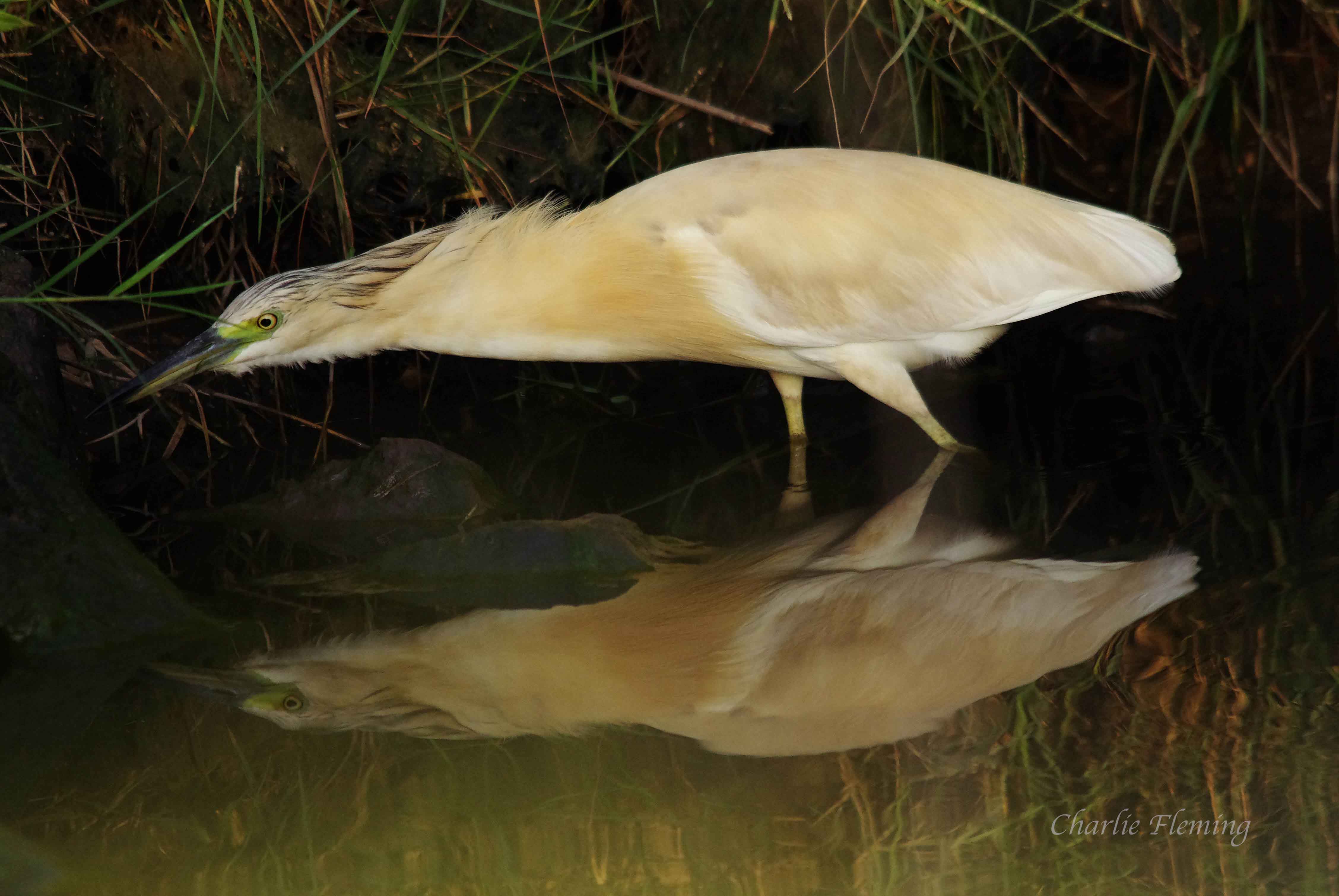
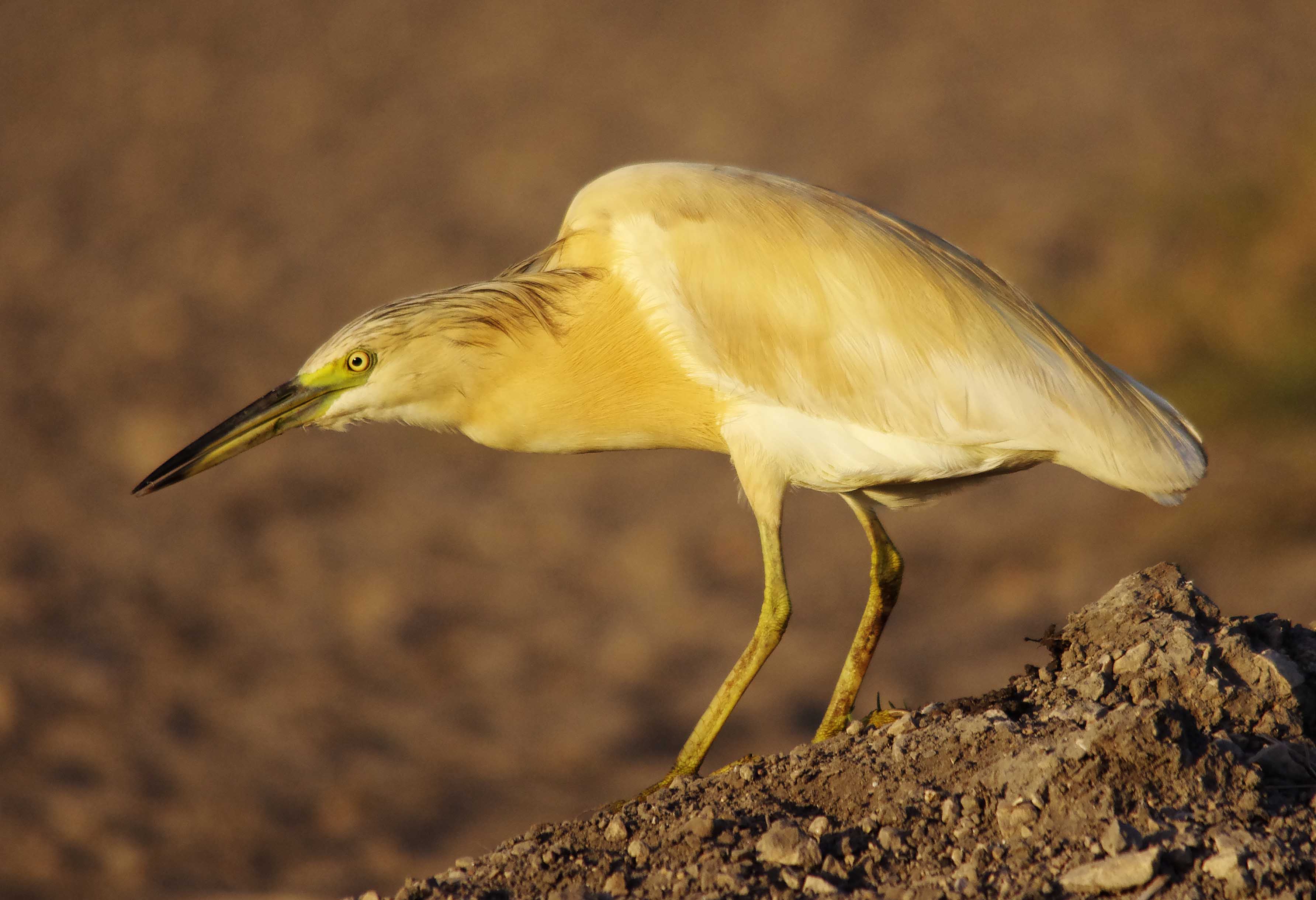
This is an interesting image, it shows the bird creeping around the pool and the plumes on the head and mantle. After a few minutes it left the pool for a few minutes and posed nicely in the last of the evening light, giving me a great opportunity. Then it returned quickly to continue hunting.
 Wildlife in a Suburban Garden
Leave a comment