
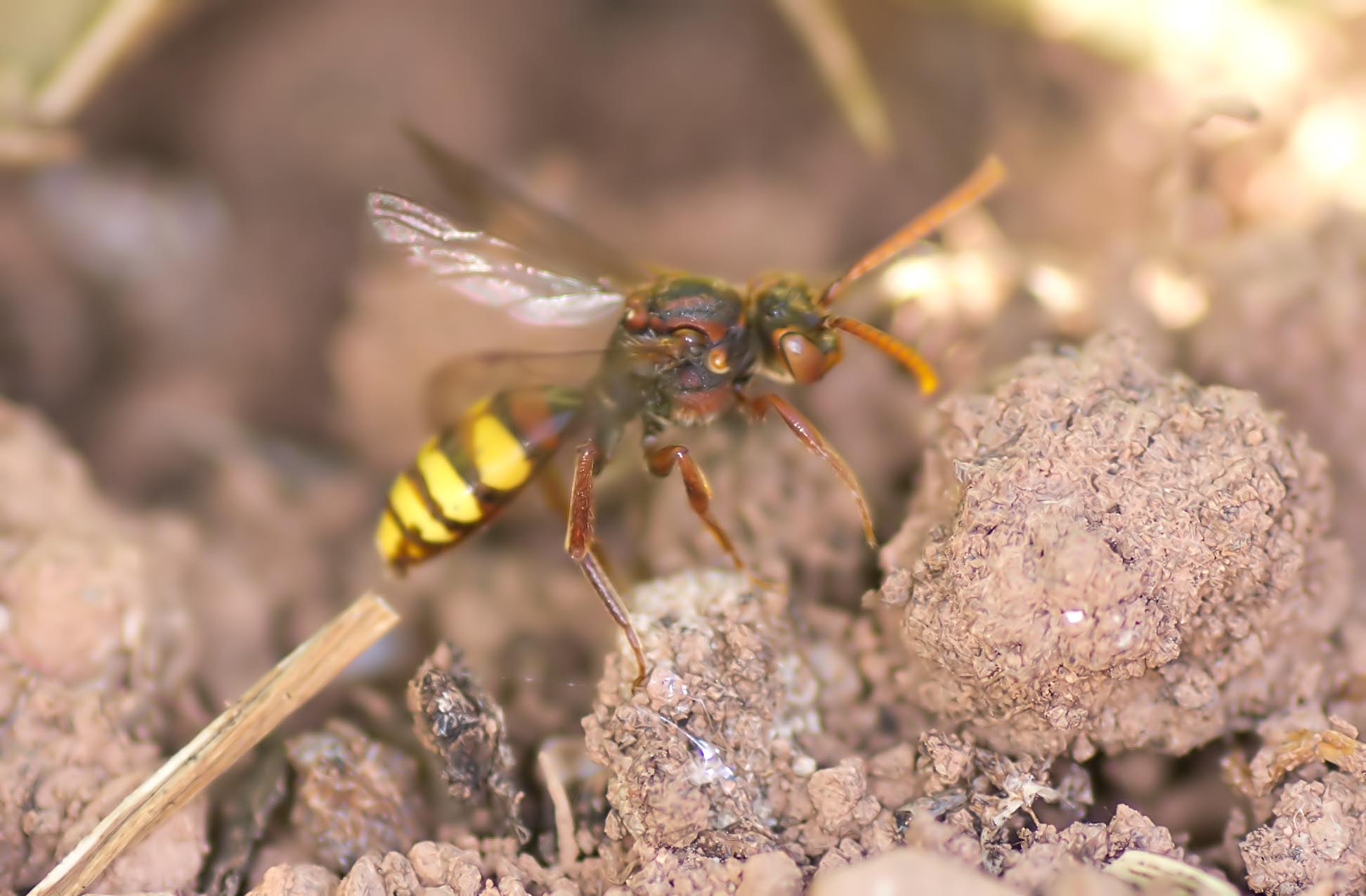
This is not a wasp, it is a Cuckoo Bee of the species Nomada. This is a really fascinating and amazing species of insect. What is so special about this insect is it's life cycle which rivals anything that might happen in the jungles of the Amazon or the grasslands of the Africa plains. Once you start to delve in to the wonders of nature all around you, and in your own garden, it's just truly amazing what is going on all around you. Please, I beg you……… don't use insecticide in your garden, resist the temptation to use weed killer and look around you!
The story goes like this. At the moment we have solitary Mining Bees in the garden, 3 species at least, but probably more. In the front of the house we have a bit of a flower border, unkempt and a little bit wild and amongst the weeds and bulbs are the burrows of Tawny Mining bees – Andrena fulva. These solitary bees dig burrows where they lay eggs and provide food for their larva. This in it's self is interesting and they are so welcome in the garden. But the story gets even more interesting because, now, on the scene, we have Cuckoo Bees of the species Nomada (pictured above). Each species of cuckoo bee is specific to a particular species of Mining Bee, therefore the species above is parasitic to just the Tawny Mining Bee. It gains entrance to the Tawny Bees nest by using chemical camouflage. Once in the nest, it lays its egg and when it hatches, the newly hatched cuckoo bee larva eats the egg/s of the host species and also the food supply left there by the host. This behaviour is called kleptoparasitic. To think, all this is going on right under our noses.p> 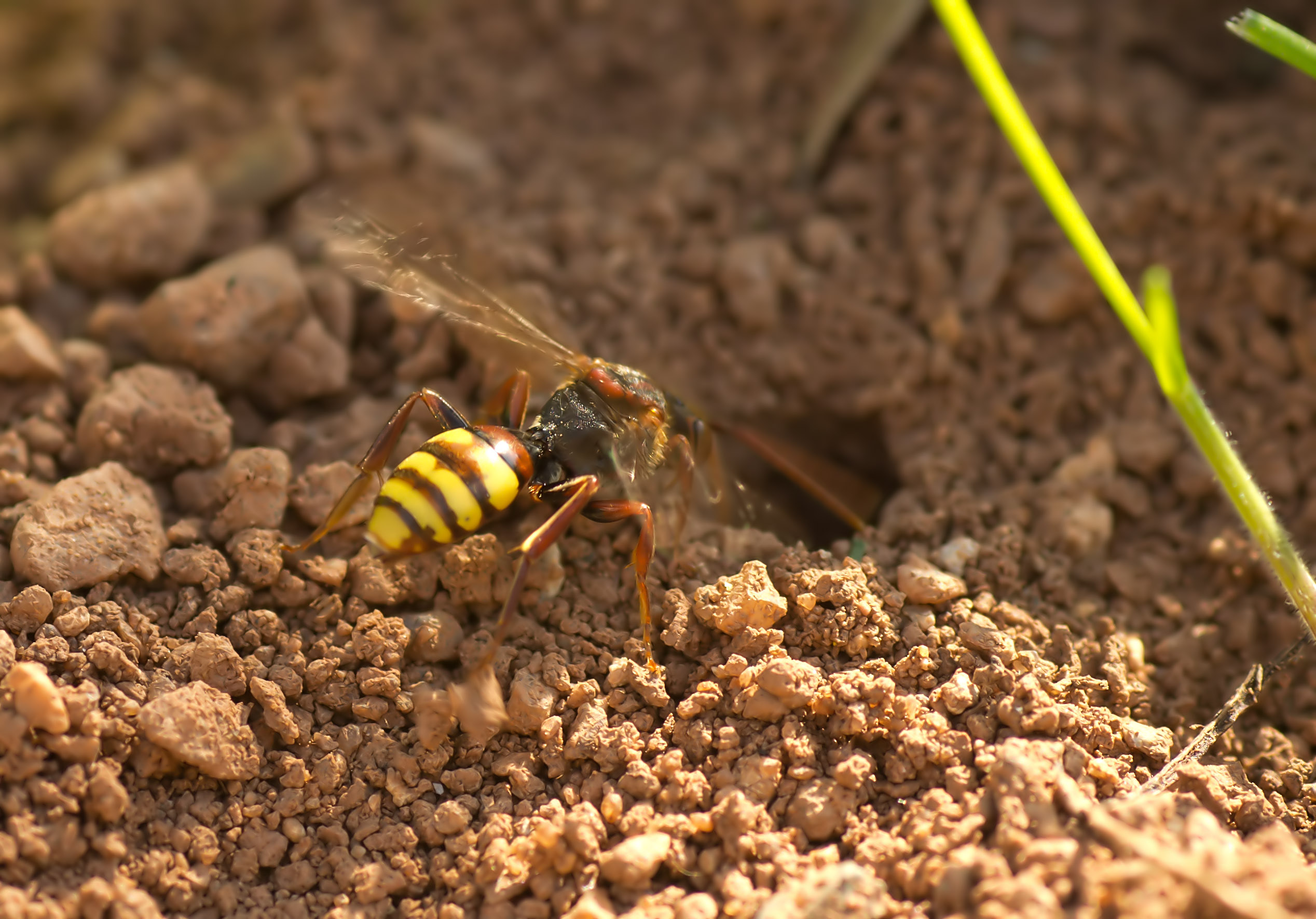

 Wildlife in a Suburban Garden
Leave a comment