
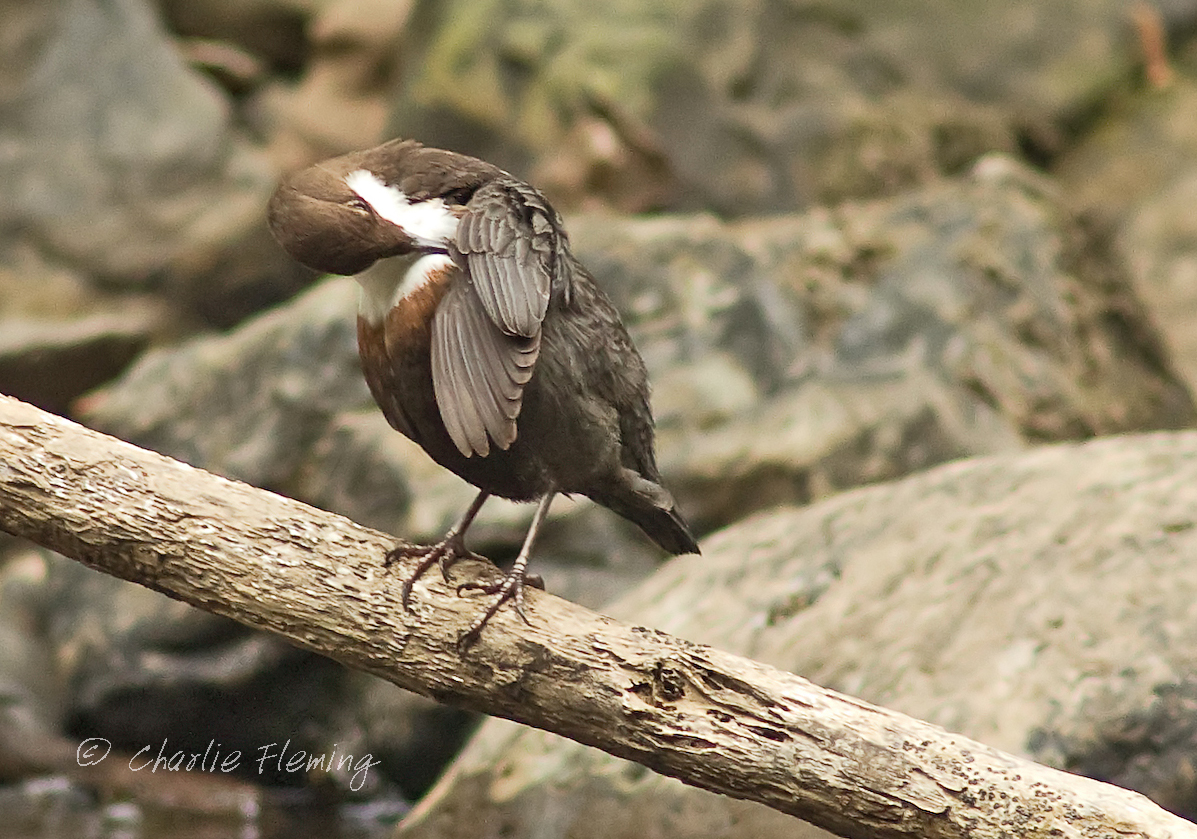

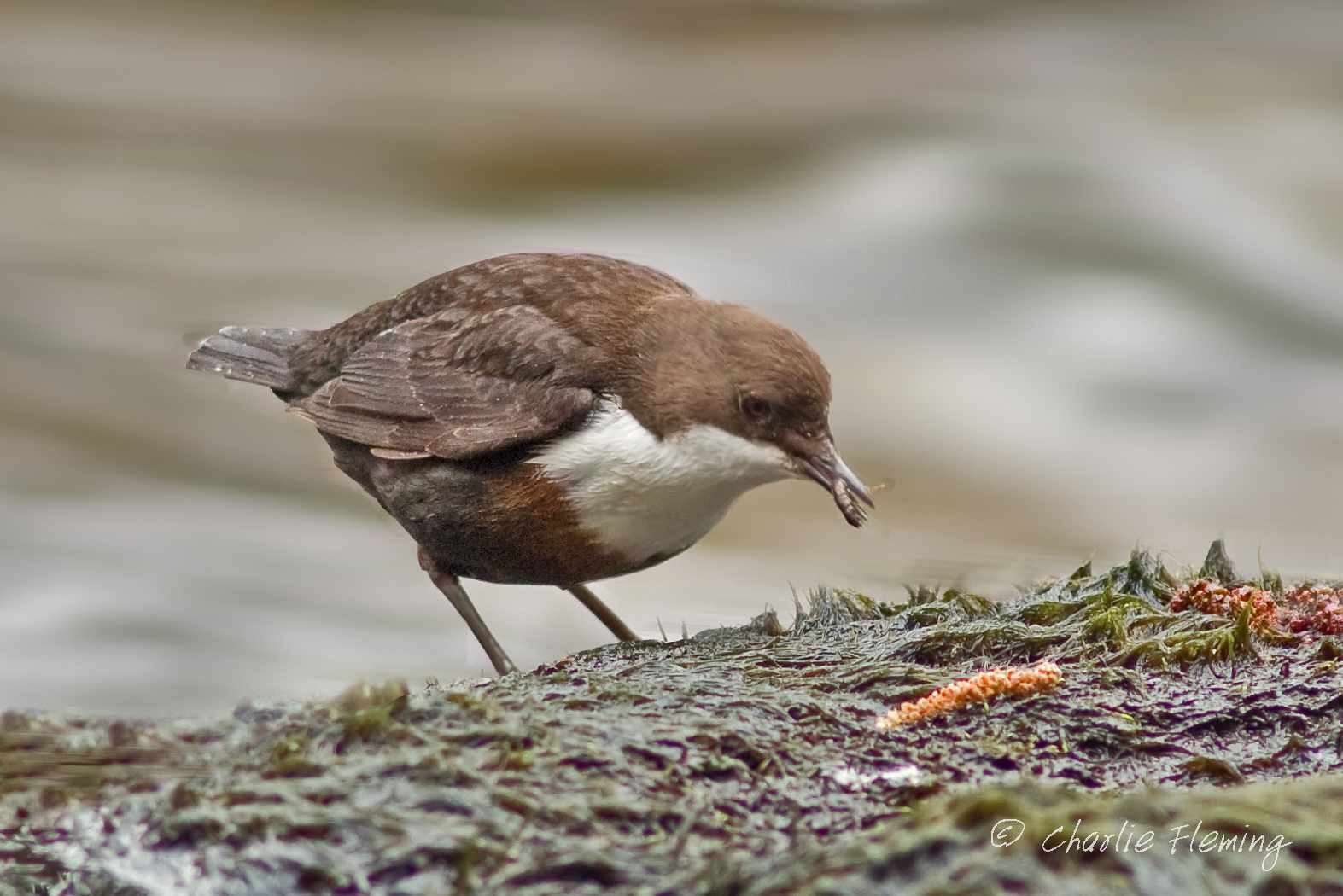
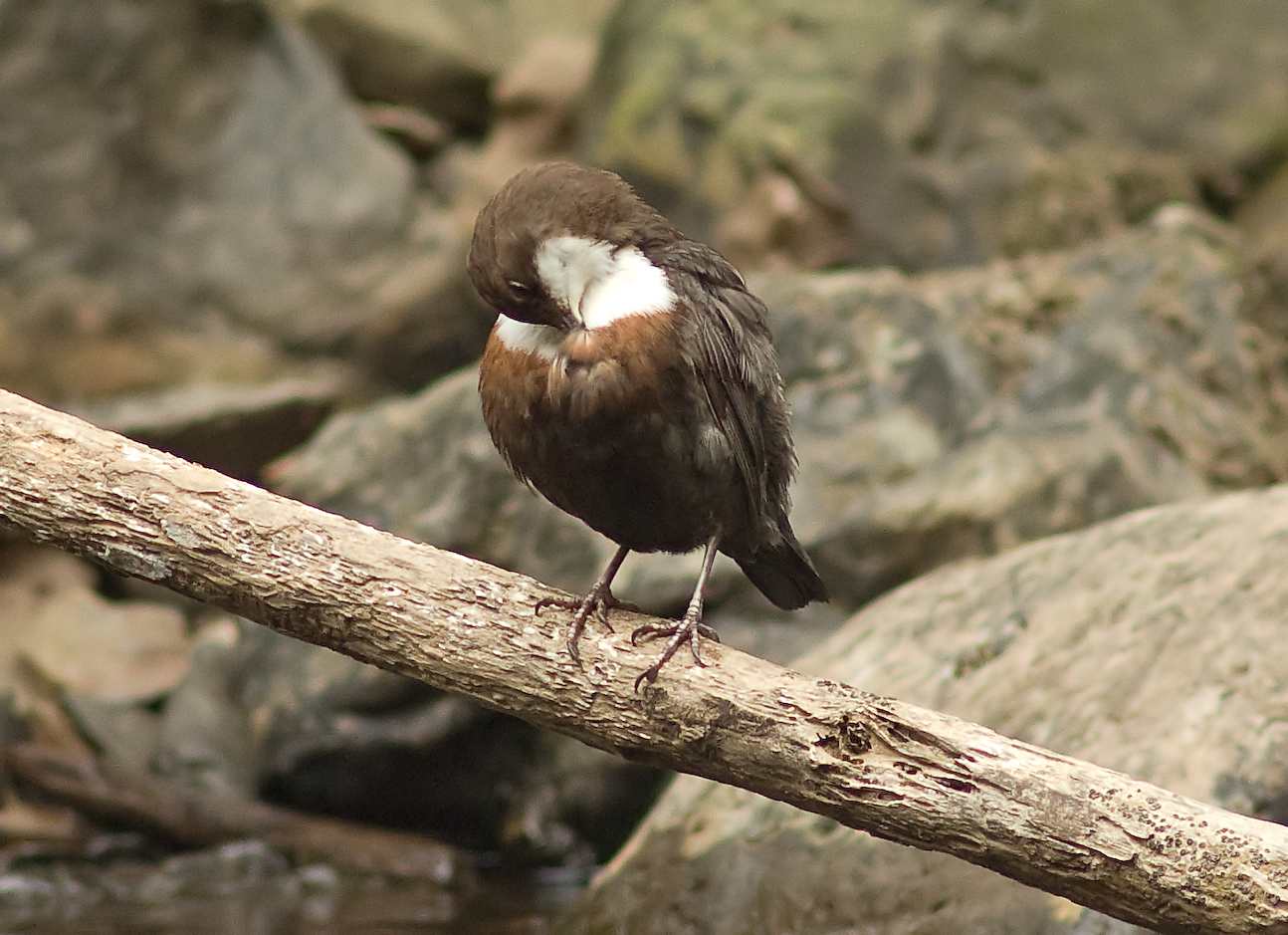


These shots are from yesterday, I can 100% confirm that this is a female Dipper because just next to it was a male, singing away. This bird was silent apart from answering the males "location" calls. It is said that male and female Dipper are identical but to my eyes when the two birds are very close you can tell the difference. The male is larger… albeit only slightly, and has a more chunky bolder appearance. The male of this pair is also a little more brightly coloured with a brighter chestnut belly. It may be my imagination, but I can also see that the male has a more robust beak. More observation will help me to confirm this. I watched the female 'fishing" yesterday. She was working in the very fast flowing waters very near to me. You can se in one of the pictures above that she has caught a small larva (under-water grub) but as well as that she also came up with a small water snail. I watched her preening for quite a while. Dipper have a much more efficient Uropygial, or preen gland than other birds. The secretion from this gland oils the feathers to ensure that they remain waterproof. Interestingly, Dipper have double the amount of feathers than other birds, enabling them to remain warm in cold climates and in cold water.


 Wildlife in a Suburban Garden
Leave a comment