
I have been wanting to perfect "High-speed flash photography" for several months now, and today I experimented, mainly to see what else I need to freeze the action of fast moving birds and their beating wings. Normal flash photography is not quick enough to capture these extremely short moments in time. However by adjusting your camera correctly and also the flash gun, you can capture action as quick as 20.000 of a second……….. yes really! But what you also need to do is use a high "f" stop number on the camera, at least f22 but preferably even higher, and the reason? To get the maximum depth of field possible. When a bird is flying it is almost impossible to fire the shutter at the correct moment but with a large depth of field, you have some leeway, because more of the image is going to be in focus and it is not necessary to be so precise. These two pictures, although not without their merits, show me what else I need to do to improve everything.
Firstly, both pictures look as though they were taken at night. This is because the camera can only record the part of the frame that is illuminated by the flash,(in this picture, everything in the foreground). Also, the flash has only illuminated the bird on the right hand side and strong shadows are cast where the light didn't reach. For example on the first picture, the start of the beak. In the second picture it's the birds right wing which is in shadow from the Blue Tits body. Also in the first picture there is an effect called "ghosting". This, I believe, is caused by the camera capturing parts of the image that it would have been able to detect without the flash.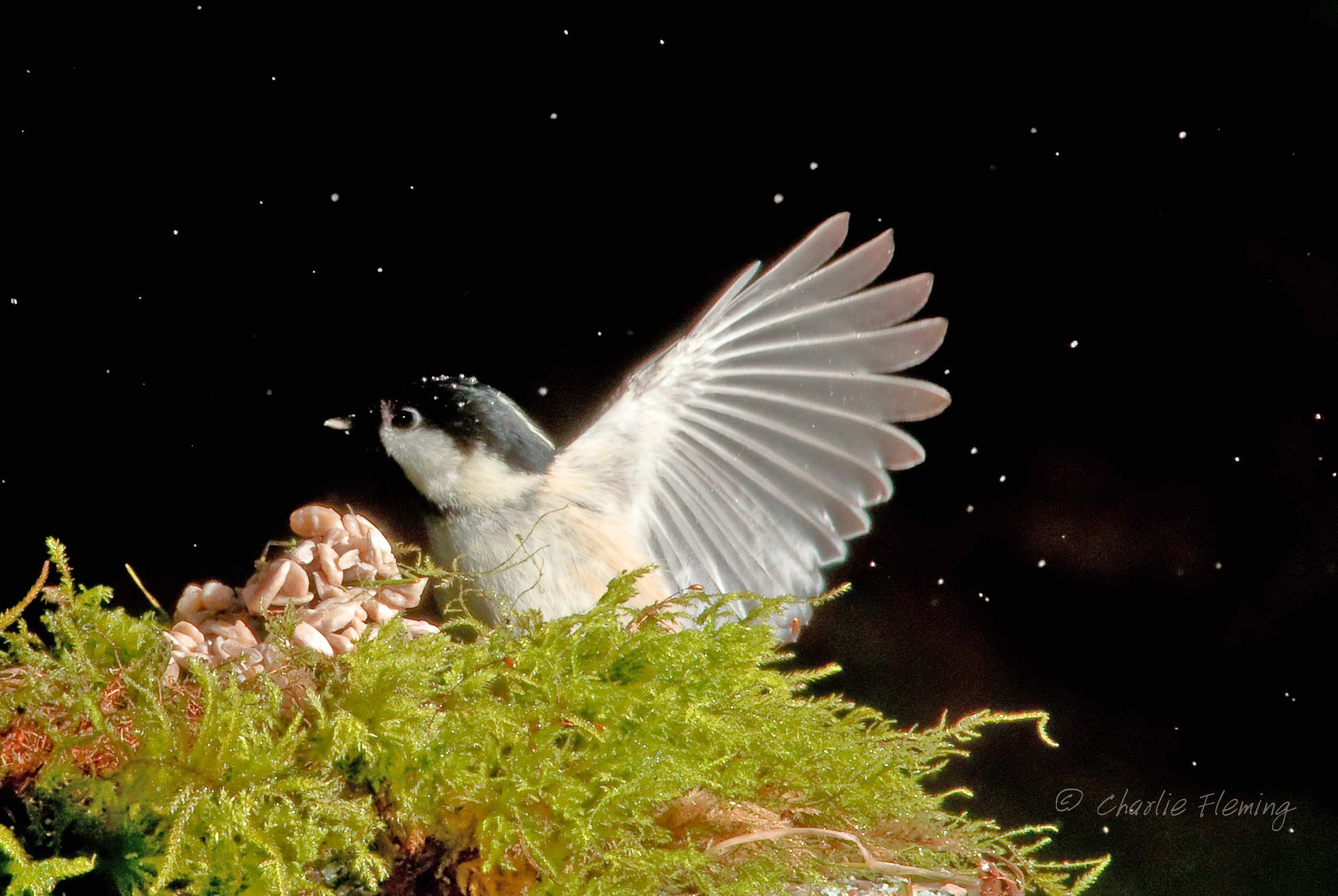
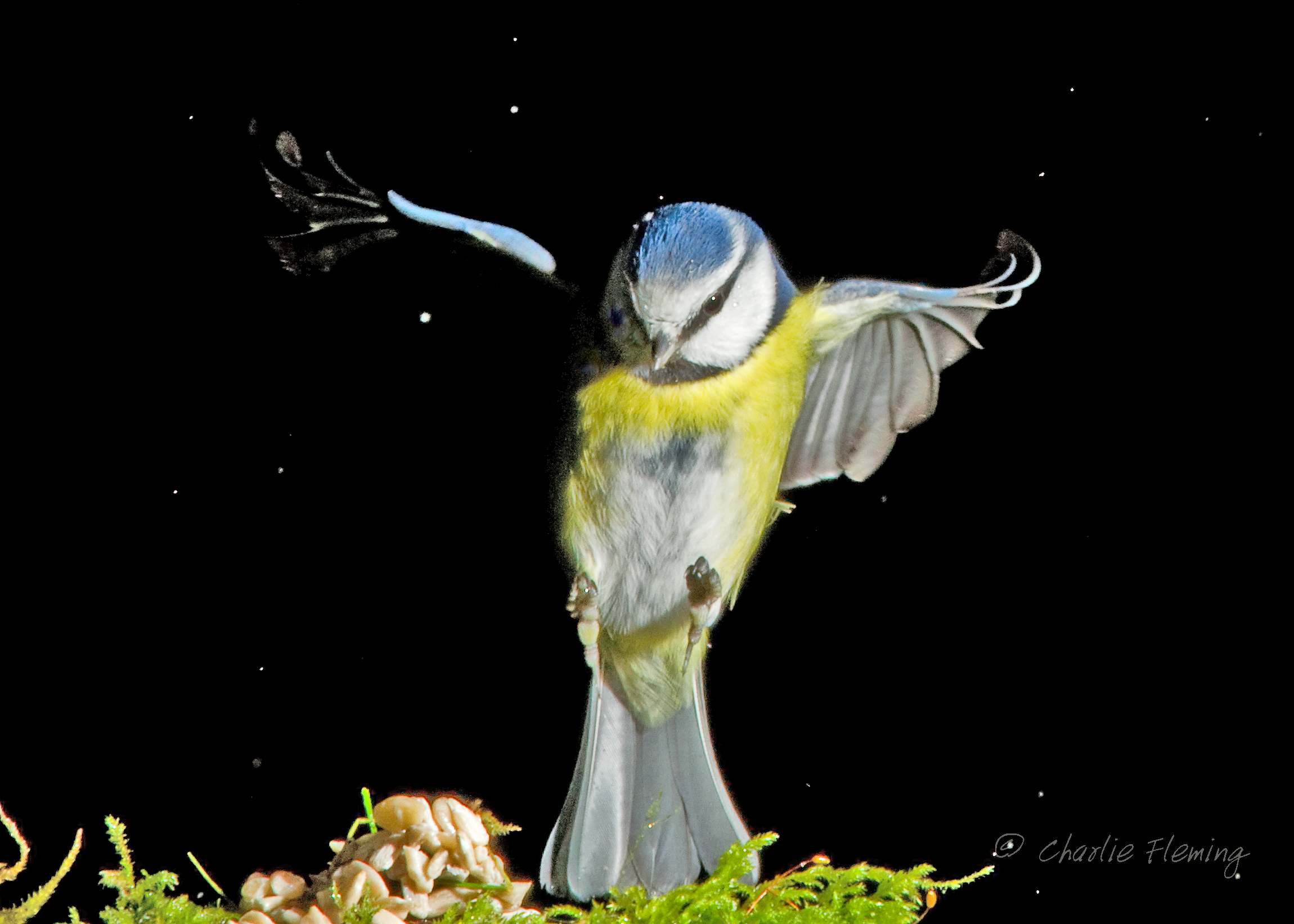
So here are the answers to these problems. The first thing to do would be to use two or more flash guns. In the above pictures I used just one. This was remotely situated about a foot from the subject and I was sat around 15 feet away. The flash was fired with a wireless remote. If I had used another flash gun positioned to the left of the picture, this would have eradicated the shadows on the left and then both sides of the bird would be evenly illuminated. Further flash units placed to illuminate from above and below would totally eradicate all the shadows. But what about the background? If you don't want all your pictures to look like they were taken in the dead of night you need to use yet another flash unit to light up the background. Quite an expensive solution and a whole new "ball-game", but because it is a relatively under used technique in the UK particularly, I plan to do much much more of it. Incidentally, the white spots in both images are rain spots, and you can se that they have been captured as "spots" and frozen in time as they fell.

 Wildlife in a Suburban Garden
Leave a comment