
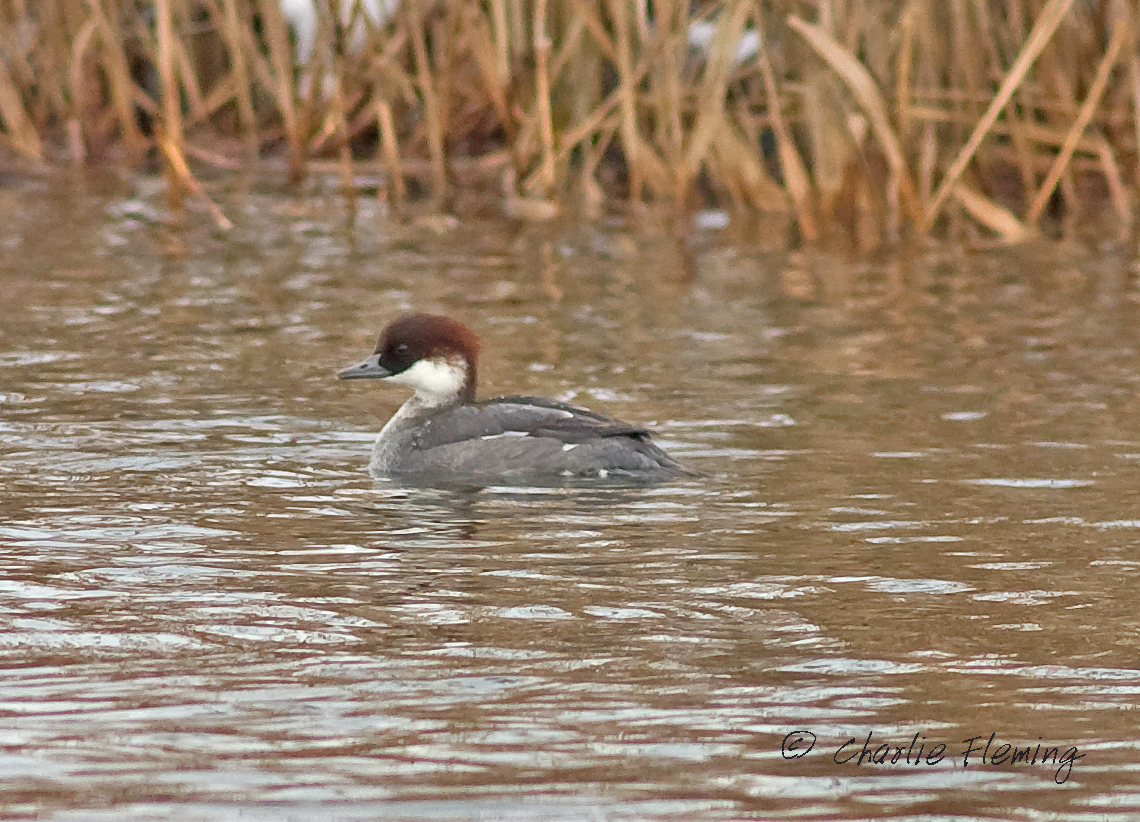
Today we have something completely different for the Blog.It never ceases to amaze me that I can be constantly entertained and thrilled by the bird visitors that I am able to see around my home city of Exeter. Today was a great one because I was able to photograph two new species for my galleries. Gadwall are supposed to be drab……… yes they are not particularly brightly coloured but when you see them reasonably close up their seemingly grey plumage is made up of gorgeous little striped markings……. but enough of Gadwall for a minute or two, lets talk Smew!
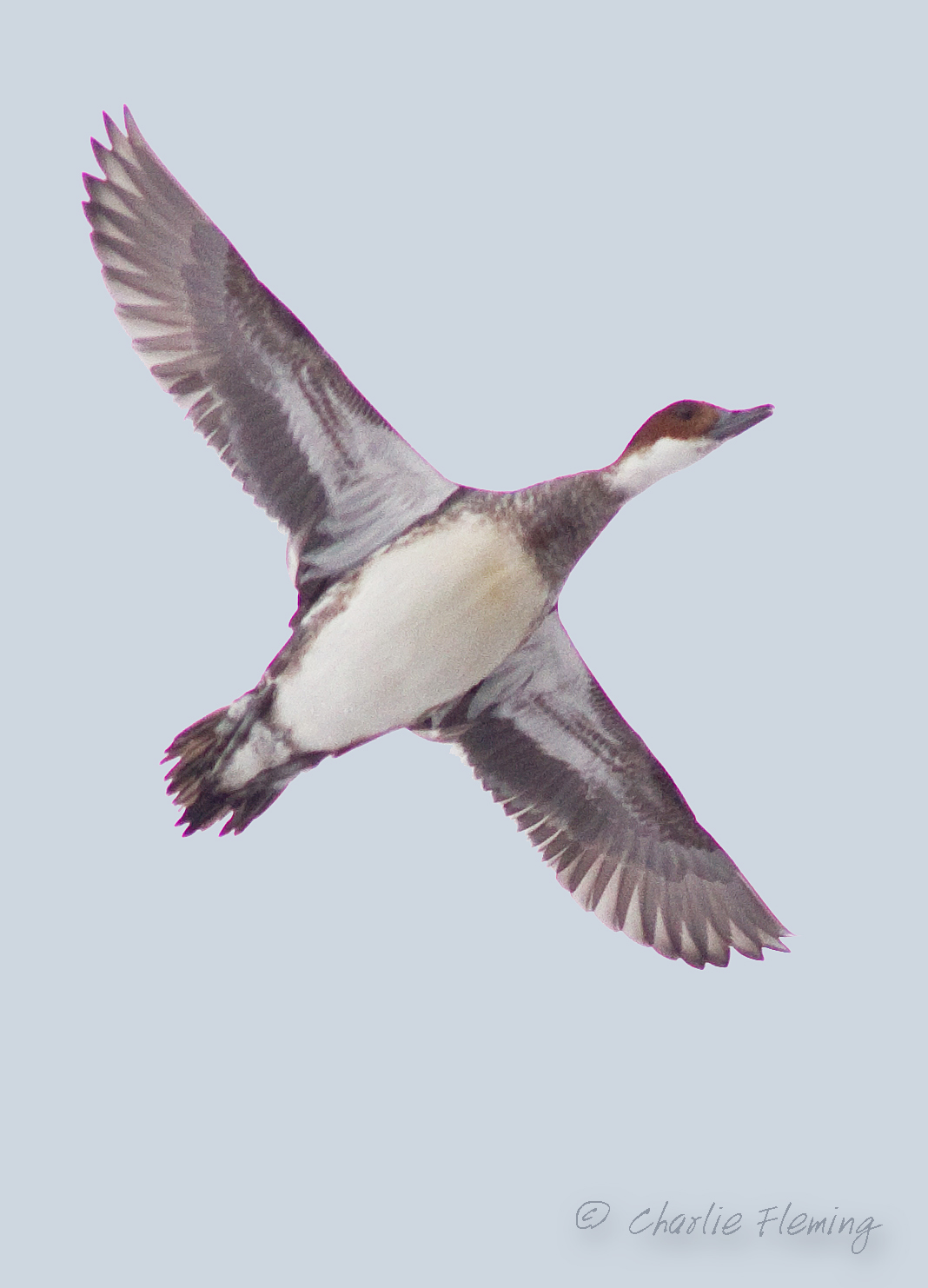
I went for a walk along the canal to look for otter signs in the snow and ice and there was several clear paths crossing the canal that had been made be these fascinating mammals that are getting increasingly common here around the city and just beyond. It’s bitterly cold here and the Exeter Ship Canal is mainly frozen but there are a couple of places where the ice is yet to completely cover, these “pools” are full of waterfowl. Mainly Coot but a few Tufted Duck, Northern Shoveler and the odd Mallard. I could not believe my eyes when I noticed a couple of small very pretty brown headed ducks amongst a large flock of Coot, Gadwall, Tufted Duck and the odd Swan. These were two Smew. Quite a rare bird for Devon. I took a few photos and watched them for a while and they eventually left the flock when a walker with a dog came down the Tow Path, how typical is that. As they flew off I managed a few flight shots and here is the best one.
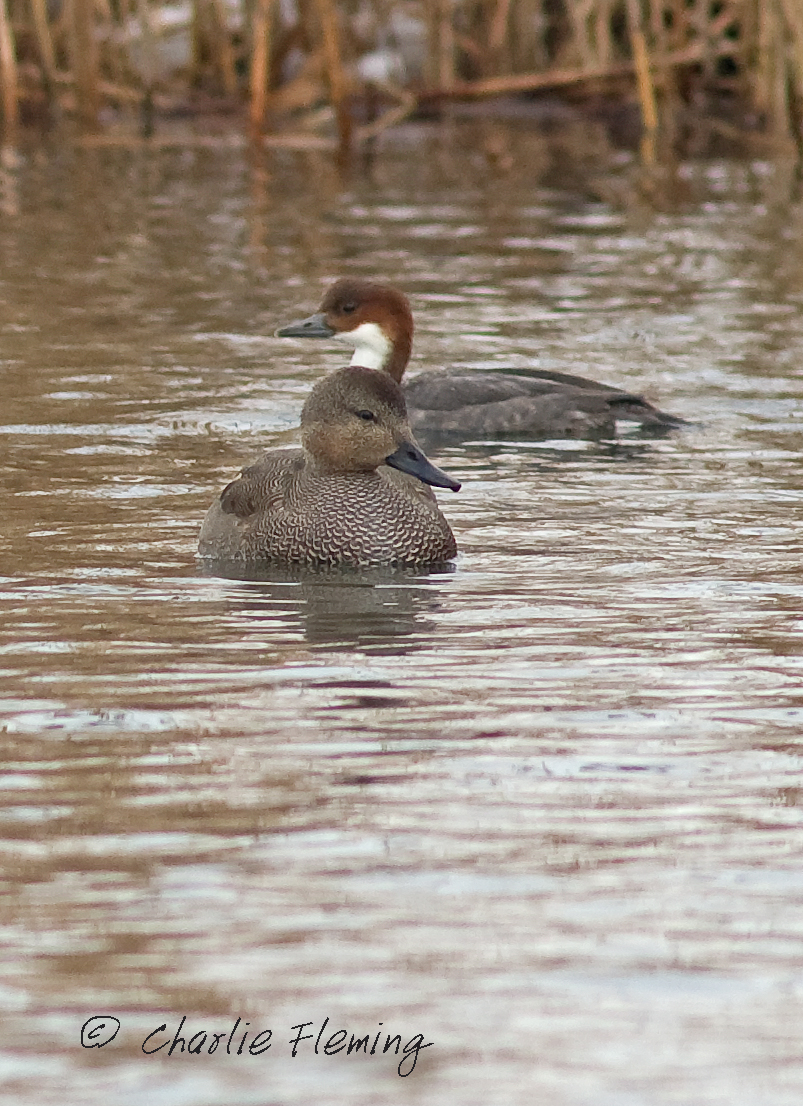
This picture below shows the second Smew of the two with a Gadwall. This one has a totally different shape to the head….. perhaps a female? After a bit more research I read that they are easily disturbed and take flight quickly which will explain why they took off when disturbed by the walker, but the Gadwall remained. I also read that they nest in woodpecker holes and less than 400 over-winter here in the UK so a nice bird to see.
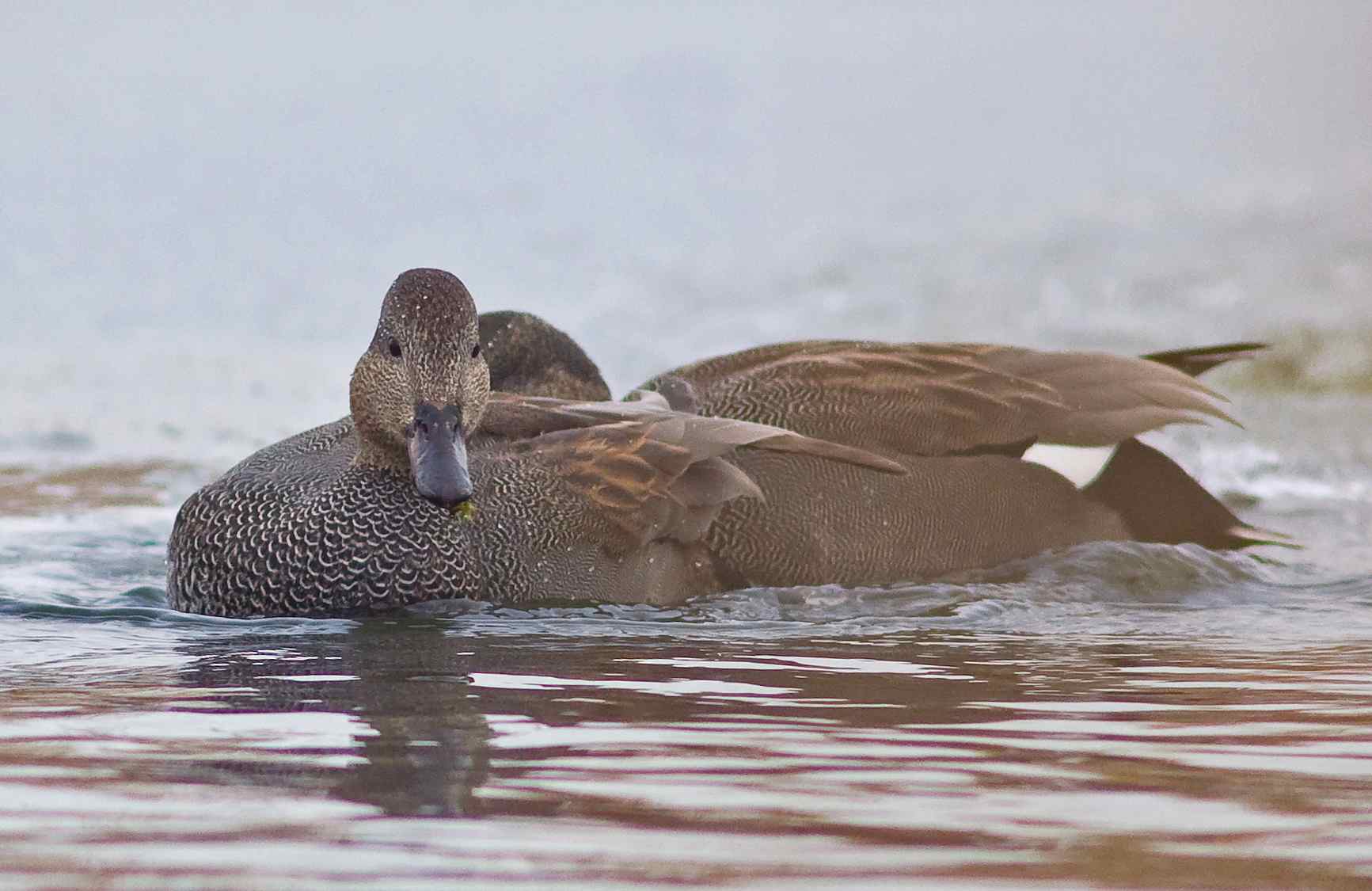
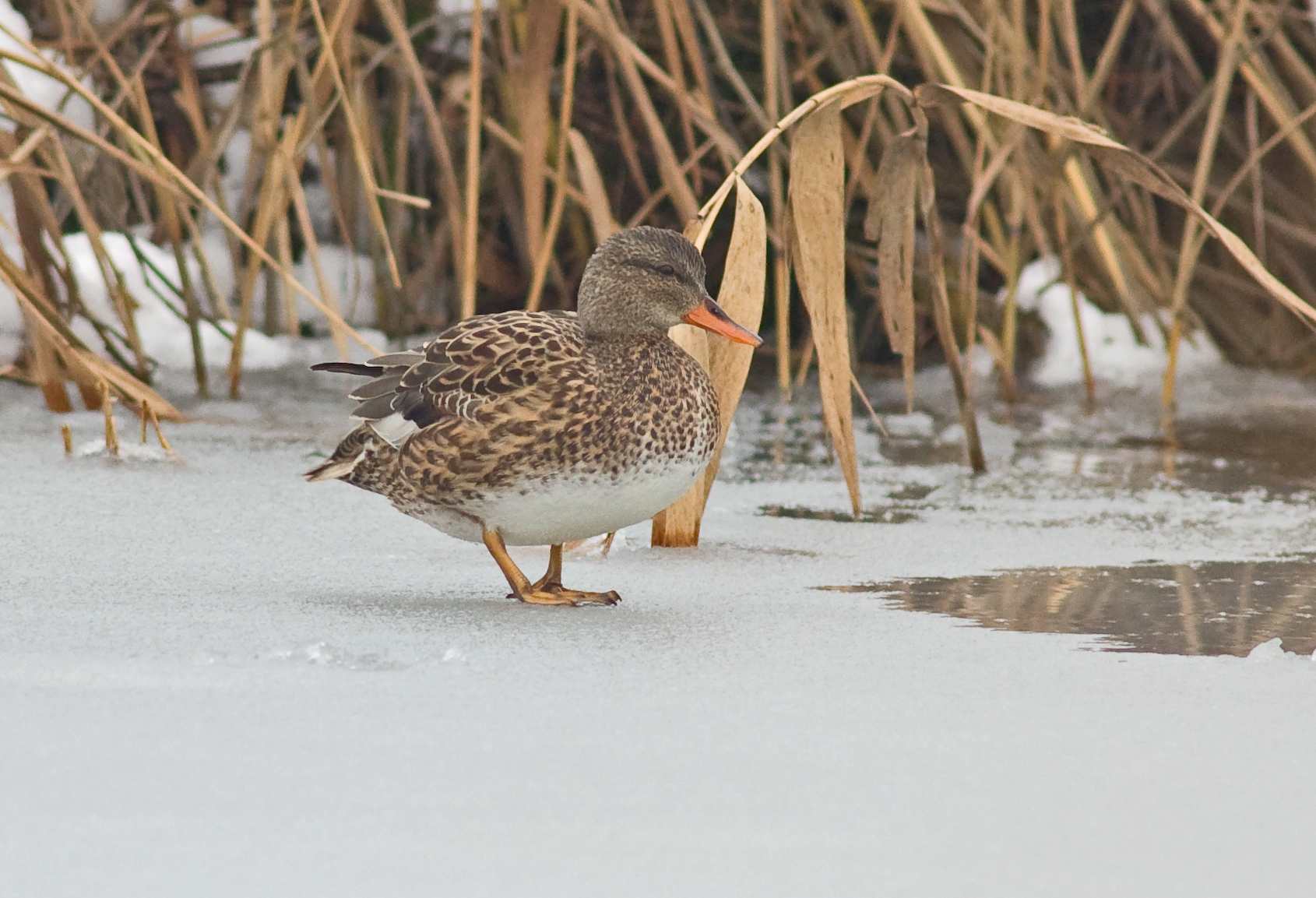
Back to Gadwall, the first picture is a is a Drake and the one standing, prettily on the ice, a female. The white patch on the wing is a good diagnostic feature as well as the white belly.

This obviously not a duck! It’s a Common Buzzard (Buteo buteo). I love these birds and they can be so hard to get up to. In fact… I rarely try. Unfortunately they are struggling in the weather we have at the moment. Apart from the odd bit of carrion, their main prey in the winter is worms and of course when the weather is cold and frosty, they are hard to come by.

 Wildlife in a Suburban Garden
Leave a comment