
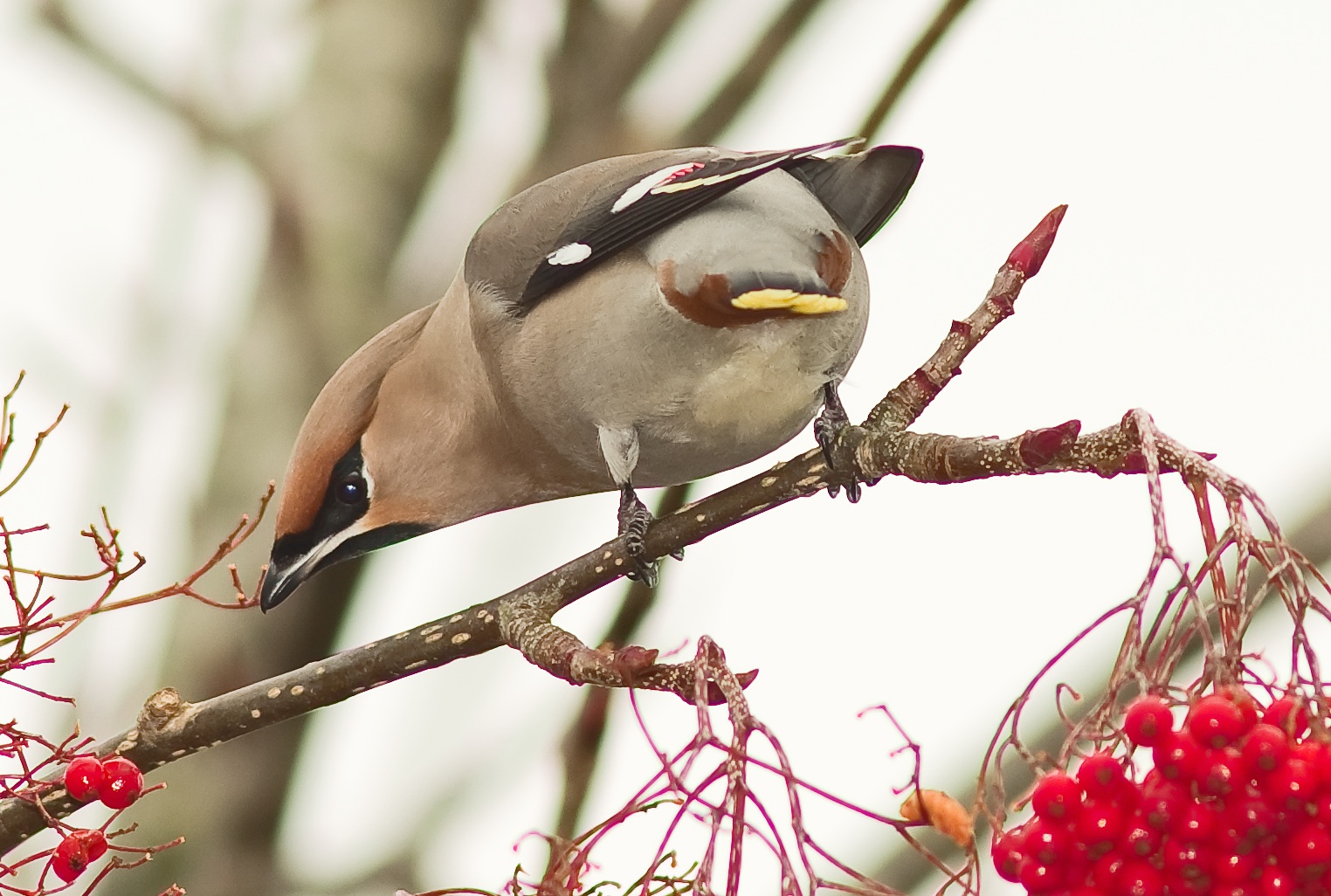
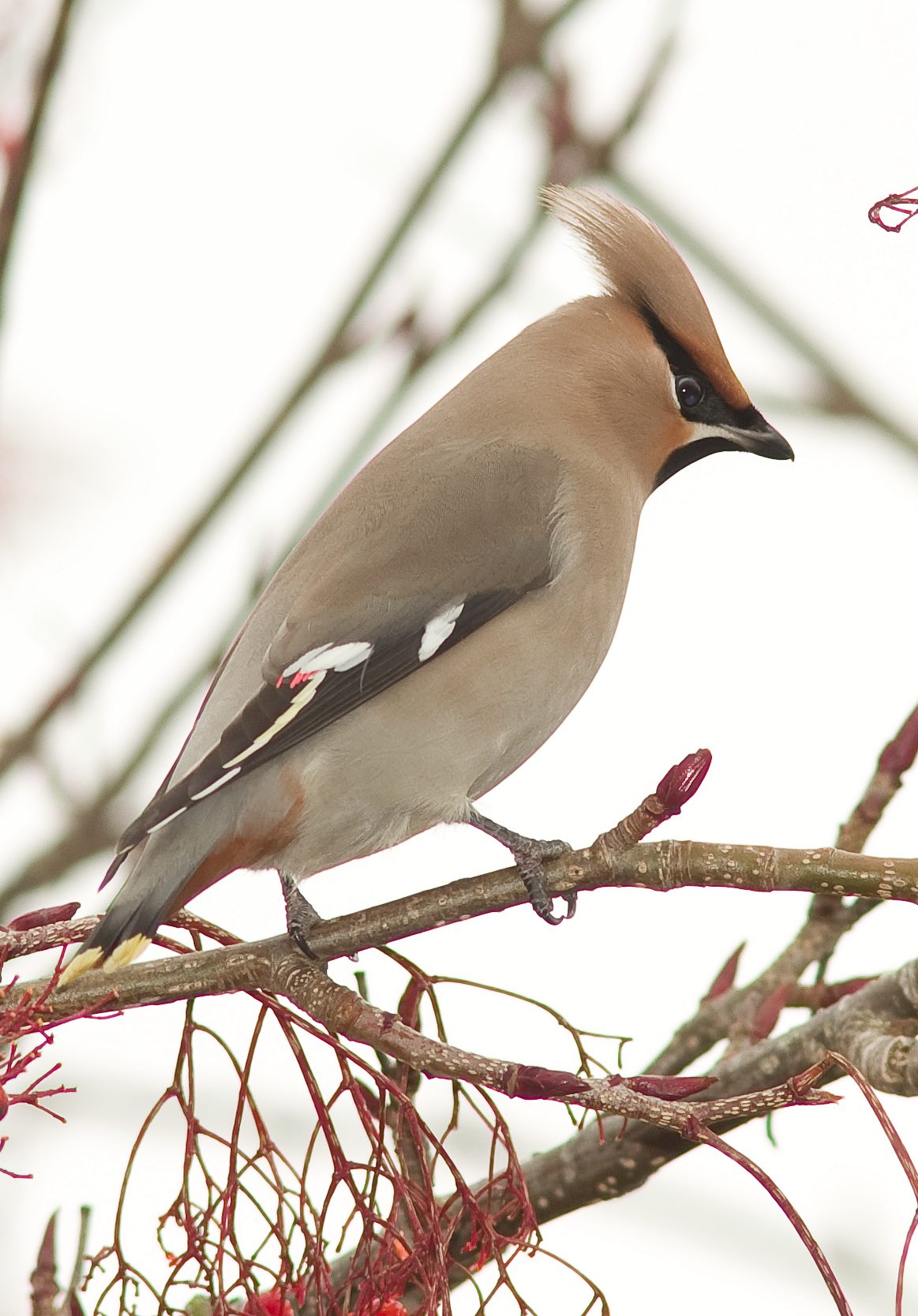
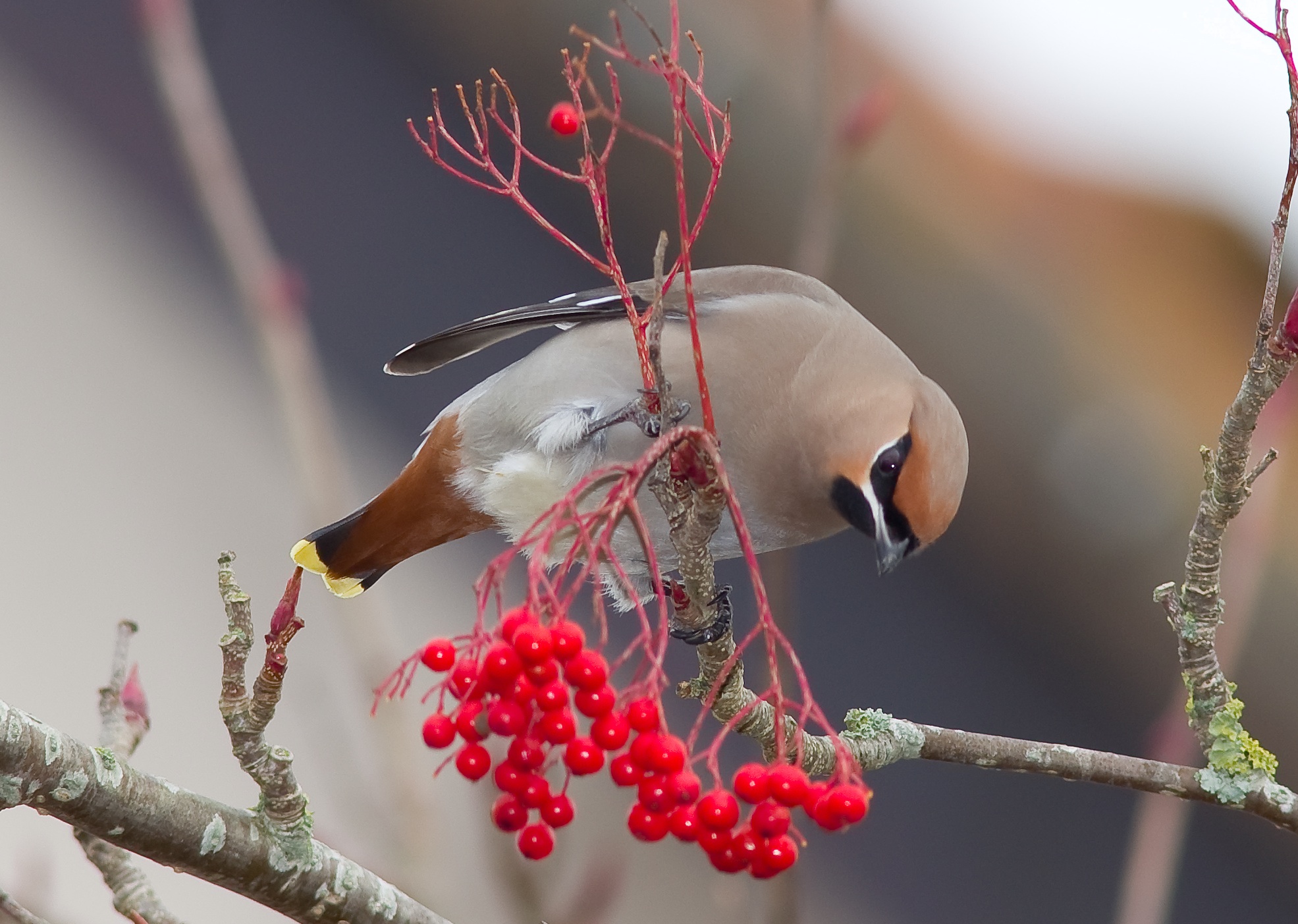
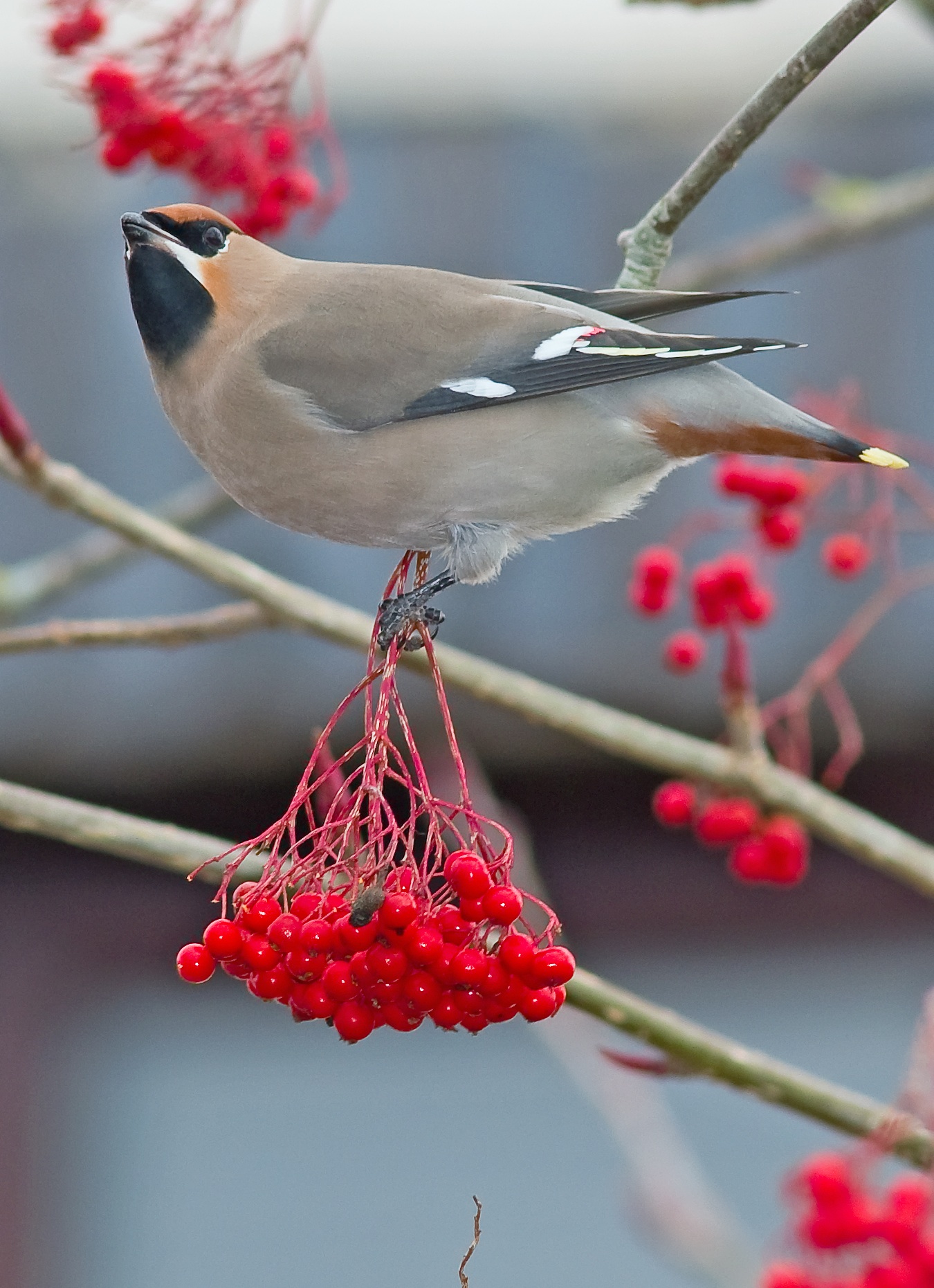
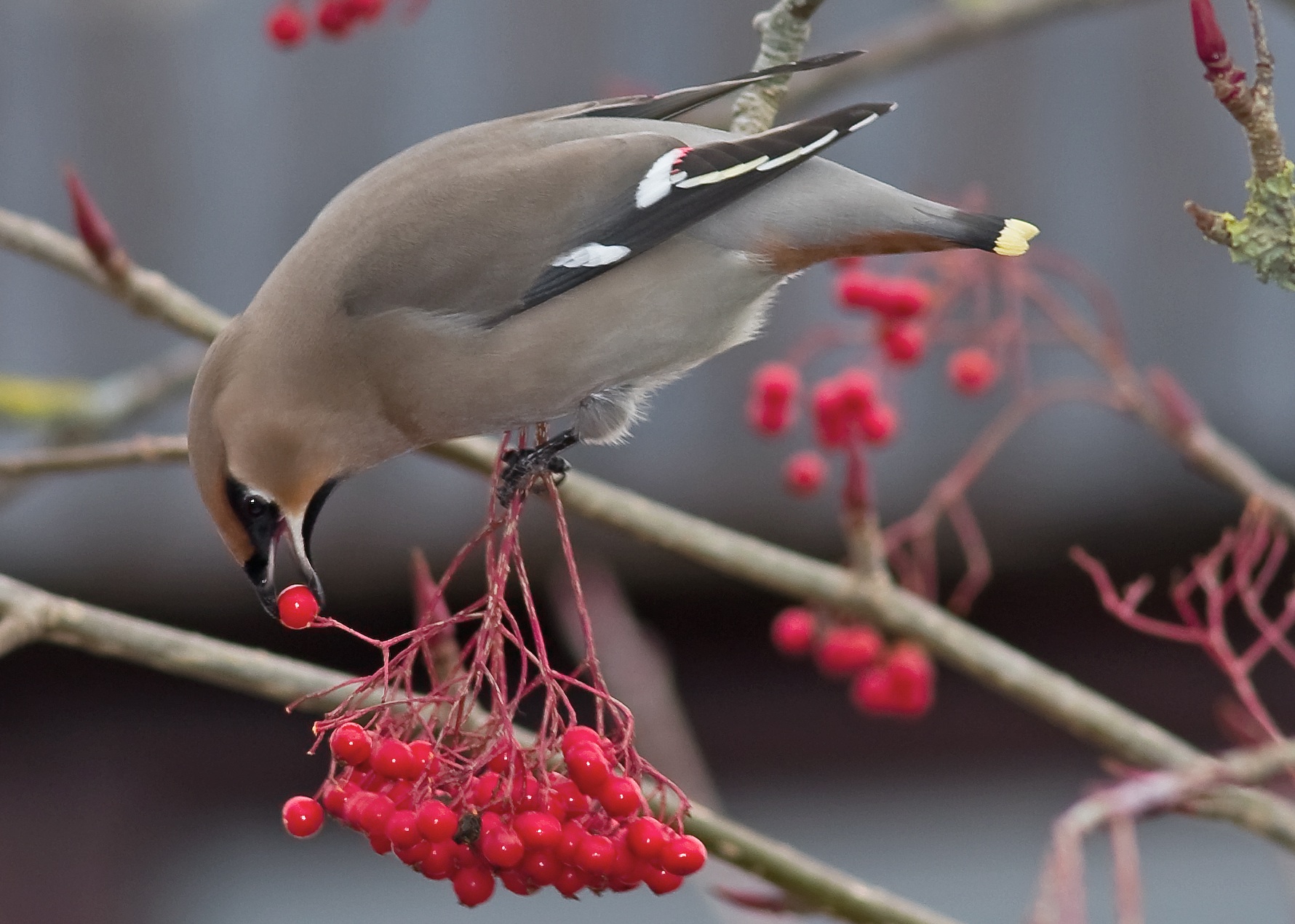
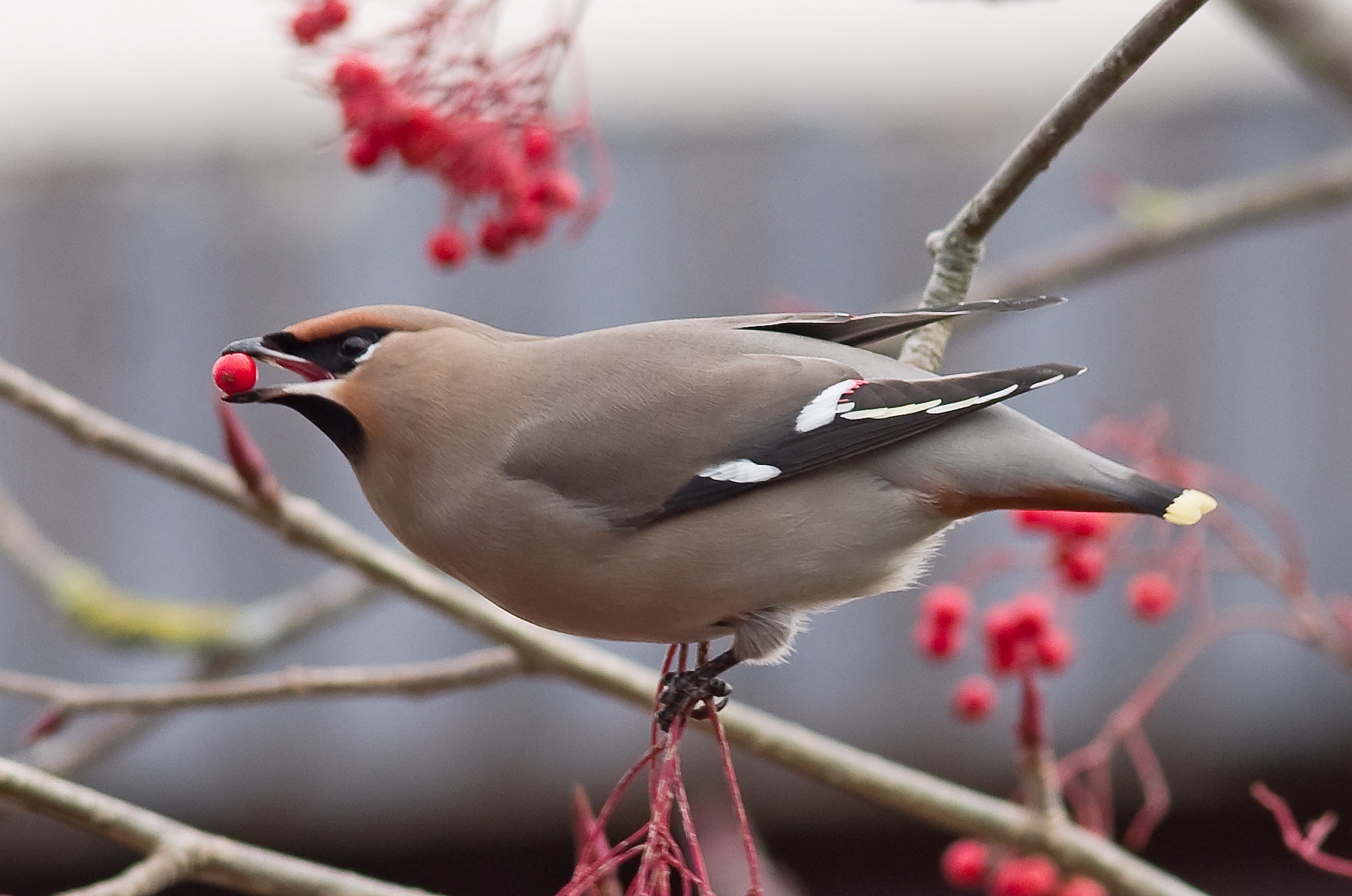
The last three days have been a glorious festival of Bohemian Waxwings here, almost in my own back yard. I hope to record and photograph the wildlife here in my village of Alphington and to have Waxwings with us to photograph has been a splendid opportunity. This species is a fascinating and beautiful bird with an almost mystical quality amongst the birdwatching fraternity. To start with, they are very smartly attired with silky smooth plumage and a crest that is unique amongst European birds. They are a subtle fawny grey in colour with a black bib and a mask through the eyes like a "highway robber". They have yellow markings on the wings and a waxy red protrusion on the primaries which gives them their name. Worldwide, there are 3 species that all look very similar. They have a preference for berries and particularly Mountain Ash or Rowan. The name Bohemian refers to their wandering habit and they are said to be irruptive. It is often thought that their occurrence in the UK is due to cold weather and, in truth, their appearance often coincides with unusually cold winter weather. But in actual fact, their wandering habit is a result of a poor berry harvest in their breeding territories which has nothing to do with cold weather . This wandering habit adds to their mystical qualities and the fact that they rarely arrive here in the UK in large numbers in consecquitive years means that they are always eagerly anticipated. In addition, they feed in a single minded way and pay little attention to the usual hordes of birdwatchers, photographers and other onlookers. What is fascinating about our visitors here is their choice of Rowan tree which is exactly the same one that they fed upon when they were last here in Alphington five years ago. This morning I watched one of the birds catching insects on the wing in a similar fashion to a flycatcher. This was a surprise but a bit of research shows me that they feed their young with all manner of insects and obviously suppliment their diet out of the breeding season with flying insects.


 Wildlife in a Suburban Garden
Leave a comment