

I am trying to move on and upwards with my photography and high speed flash is something that is going to help me I think. The concepts are quite hard to grapple with but once you get your head around it,it's not too complicated. Basically being able to freeze the action of fast wing movements is the aim of the exercise. The problem I hope to overcome is the need for a small aperture and consequent greater depth of field coupled with the fastest shutter speed possible which is a necessity to freeze the action. I took delivery of a wireless remote flash trigger this morning, an expensive bit of kit that will allow me to position the flash unit closer to the subject and off the camera. To know why it is necessary to do this, you need to understand the workings of a flash gun. At full power my Sigma Flash unit delivers a beam of light at 1/700th of a second when set to full power. If you simply set the flash to fire a beam of light at 1/16th of its power you can get a duration of "flash" that lasts for just 1/11200 of a second. To arrive at at this figure you need to do some simple arithmetic. At half power, the beams duration would be 1/1400 of a second ( that's double 1/700), at quarter power it would be 1/2800 and so on until you get to 1/16th power when the beams duration would be 1/11200. As I have explained, by limiting the duration of the beam of light from the flash unit you can capture an extremely short moment in time at incredibly fast speeds. It is important to understand that the capture, by the camera, of very fast action is not by the shutter of the camera, but with a very brief flash of light coming from your flash unit when set at it's lower power. (In my case that's 1/16 of it's full power). This setting on your flash unit will “capture” the motion of the wings as well as any other movement of the bird. The camera only records this brief moment in time and consequently, all moving action is frozen. Your camera should be at it's "Sync" speed. This is the speed that your camera works at when connected to a flash unit. The Sync speed of my Pentax K7 is 1/180 of a second. As I explained at the start you need to have a small aperture to ensure a a good "depth of field" is captured. This is essential to ensure that more of the image is in focus. To achieve this, choose F22 or F16. A degree of experimentation is required. It is now possible to get that action shot, except now that your flash is only giving out 1/16th of it's power, the projection and extent of the beam is limited to just a few feet, hence the need to remotely position the flash unit very close to your subject and the need for a wireless remote to fire your flash.
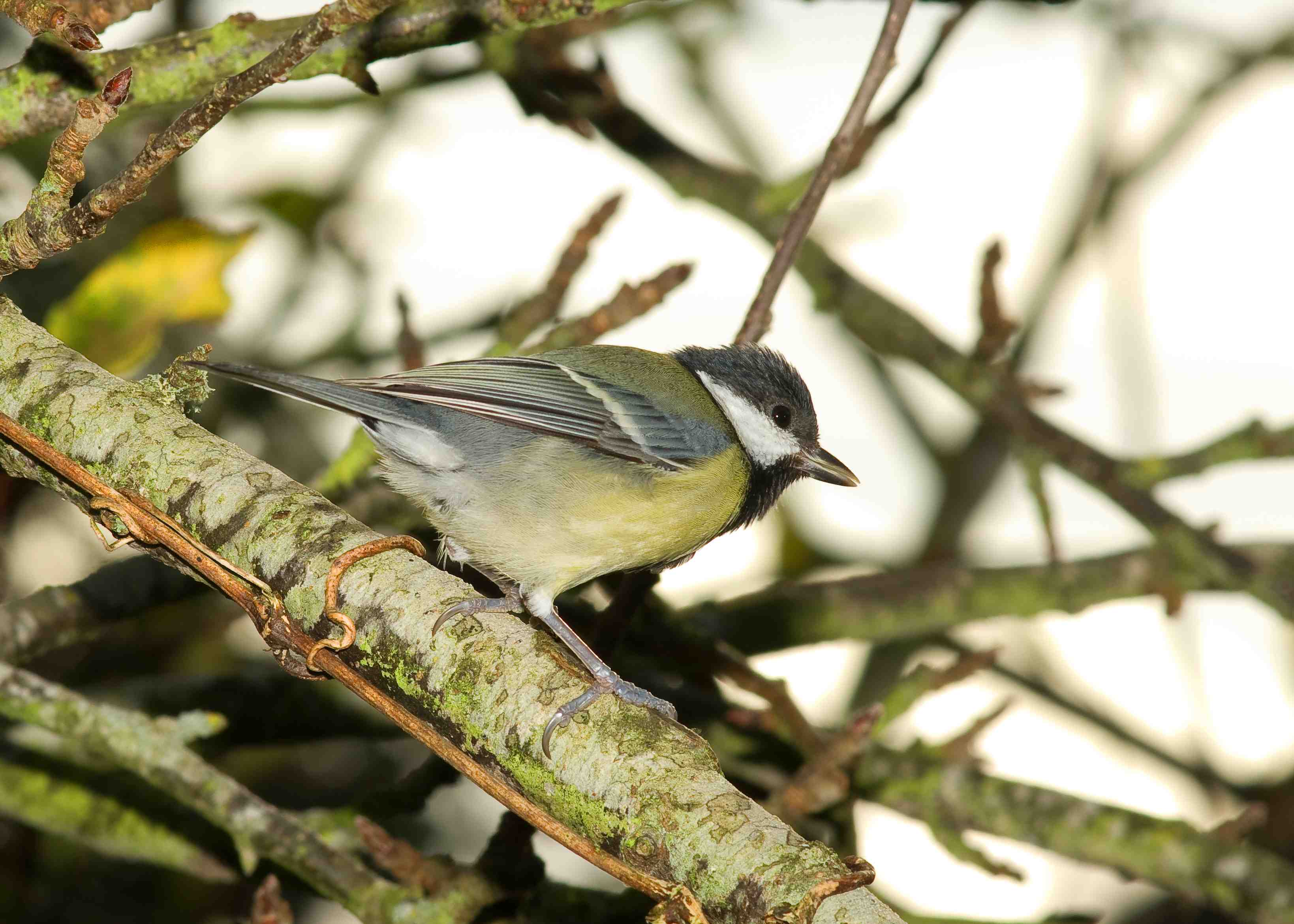
The picture above was captured by placing my camera 6 feet high on my chicken run and then on a tripod. I pre-focused on the apple, knowing that Blackcaps and at times, Blue Tits potentially feed on the fruit. Then I moved back in to the house and waited, some 30 feet away to for the arrival of my subject. The camera (and flash) were activated remotely and here is the result……… quite interesting and I like it! Below is another of a Great Tit, I had positioned the camera and pre-focused on a branch in the tree and then watched and waited and fired the shutter remotely when I knew the bird was "on the spot". Also a good-n!
 Wildlife in a Suburban Garden
Leave a comment