
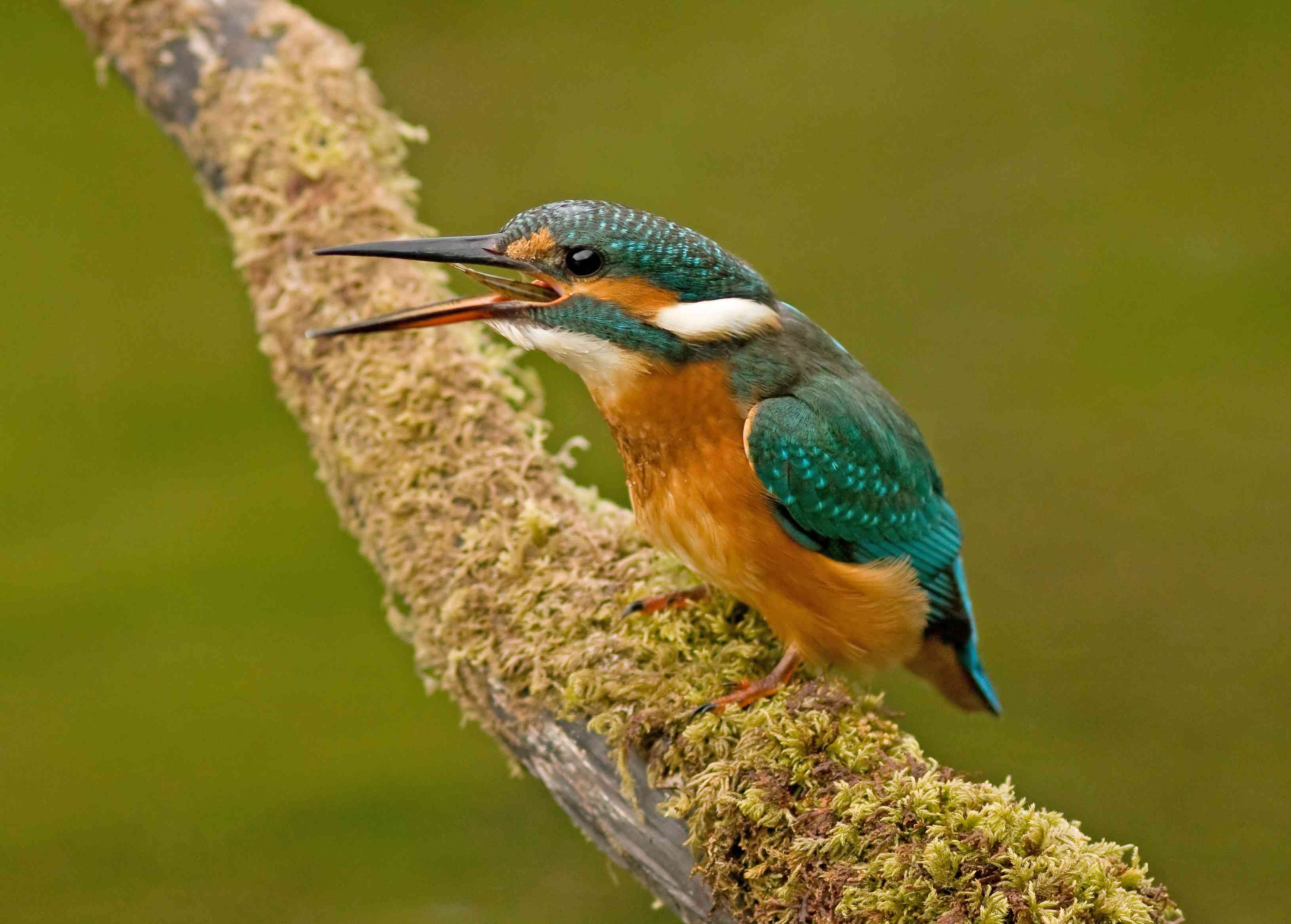
I went to the hide at around 7 and it wasn't long before one of the TWO female Kingfishers using the territory arrived. Yes 2 KF's. Obviously we know about the fight but I have now learnt to identify them by the extent of the orange on the lower bill and also the colour and shape of the feet. This is black feet, she has small feet which are much darker than the other bird that I se who has chubbier feet with less black and a totally different shape to the colouring on the lower bill. She just momentarily paused on the perch and then flew away up stream, probably to find a better fishing spot, she was in fishing mode! Just 7 minutes later she returned with a minnow and consumed it quite easily. The light was dismal which made for hard photography so, when she did the almost inevitable dive for a bath, I couldn't freeze the action successfully, the images that I caught in flight were just too blurred. Never the less I am quite pleased with a couple of these shots.
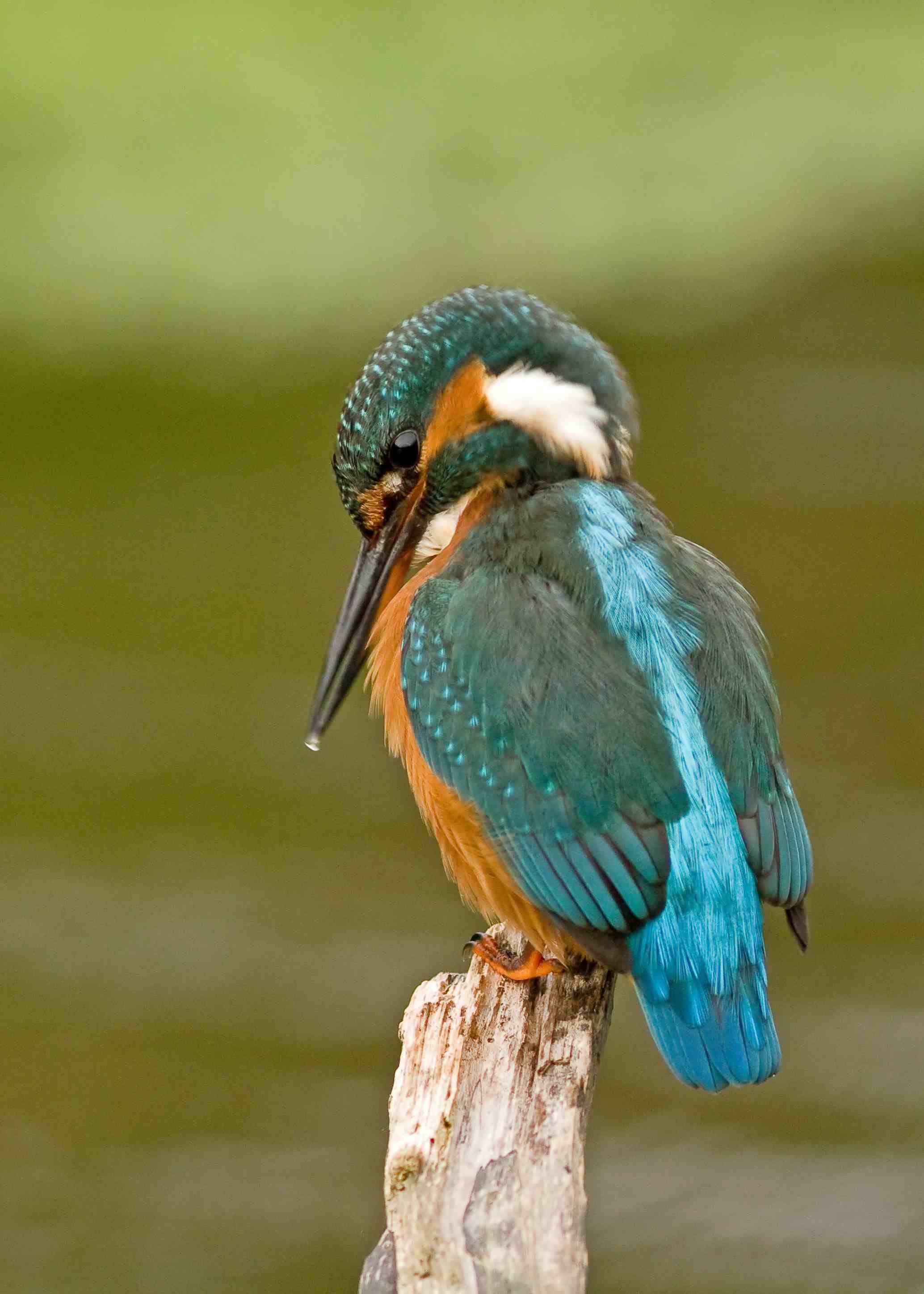
After she had eaten she continued to look for fish. The spot in front of the hide is not the best place for fish, they always have a good look around but rarely do they catch right in front of the hide. This is a typical pose as she scans the water for prey.
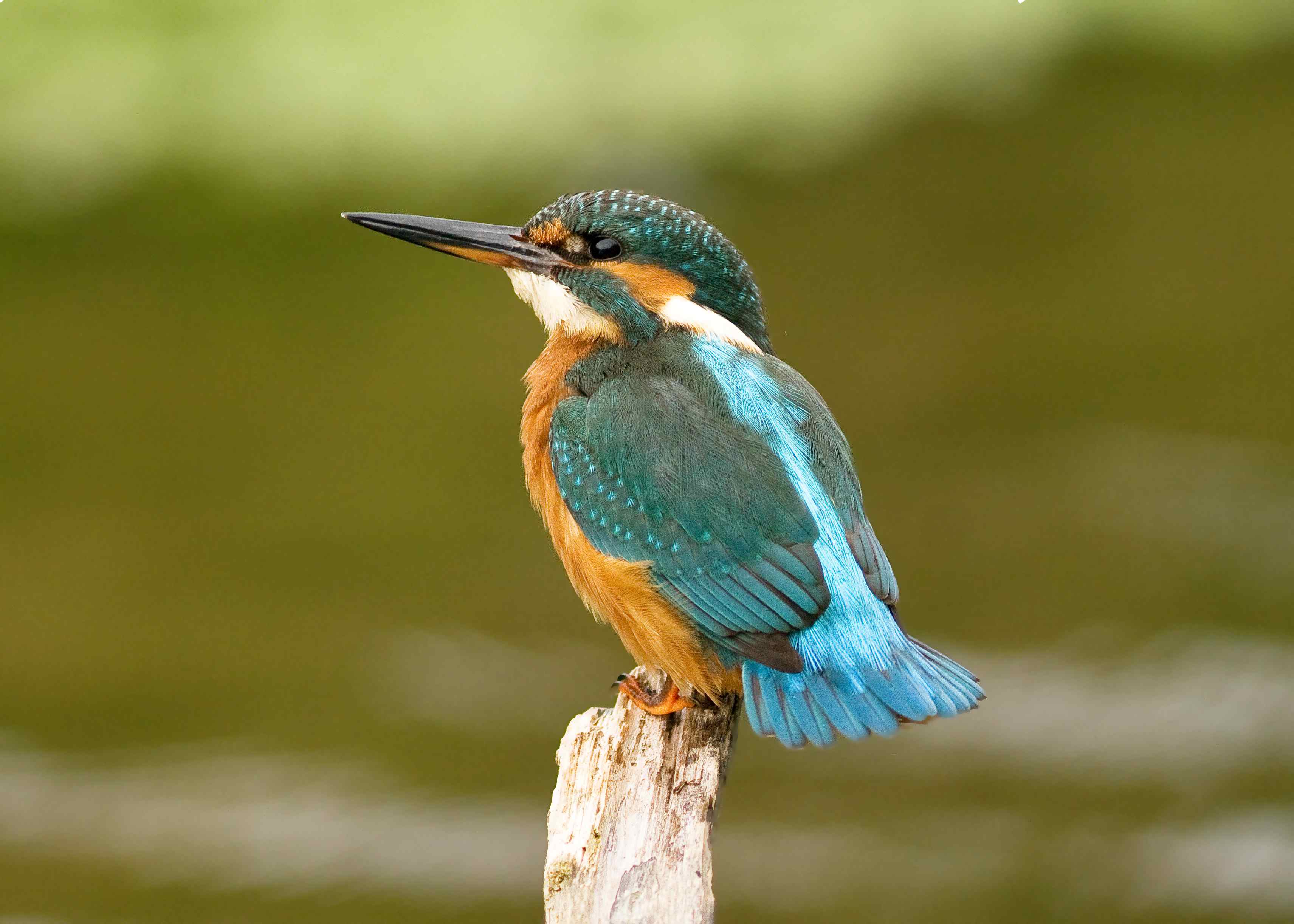
I have endless photos of Kingfishers posing like this but it doesn't stop me wanting to post more and more of them…….. you could say I am in love with these birds. I am having a Kingfisher Affair which just happens to be the name for my new book!
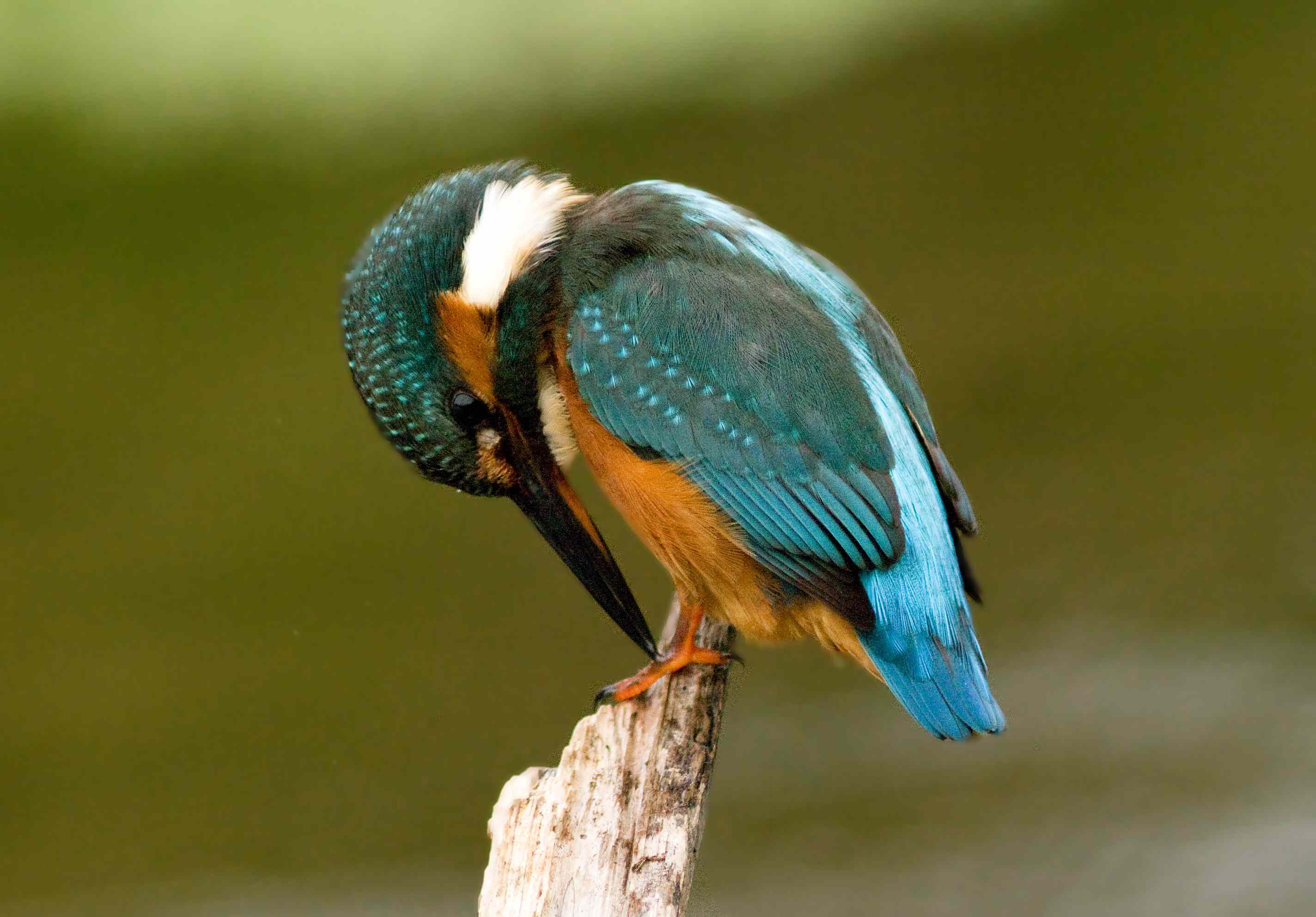
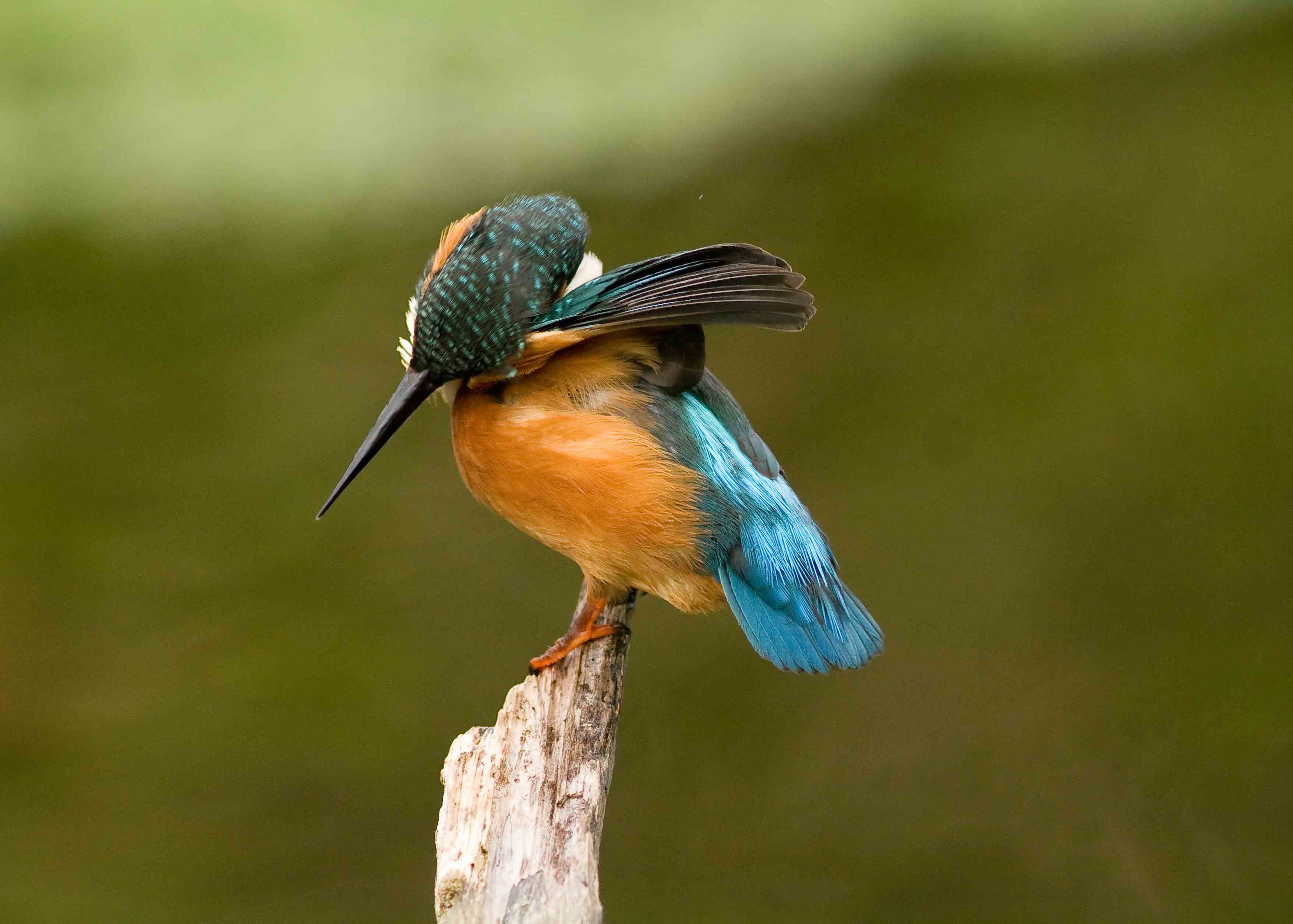
Kingfishers take a great deal of care with their plumage and also clean their feet routinely Remembering that this is just a very young bird, it is amazing that they have inherited all this behaviour.
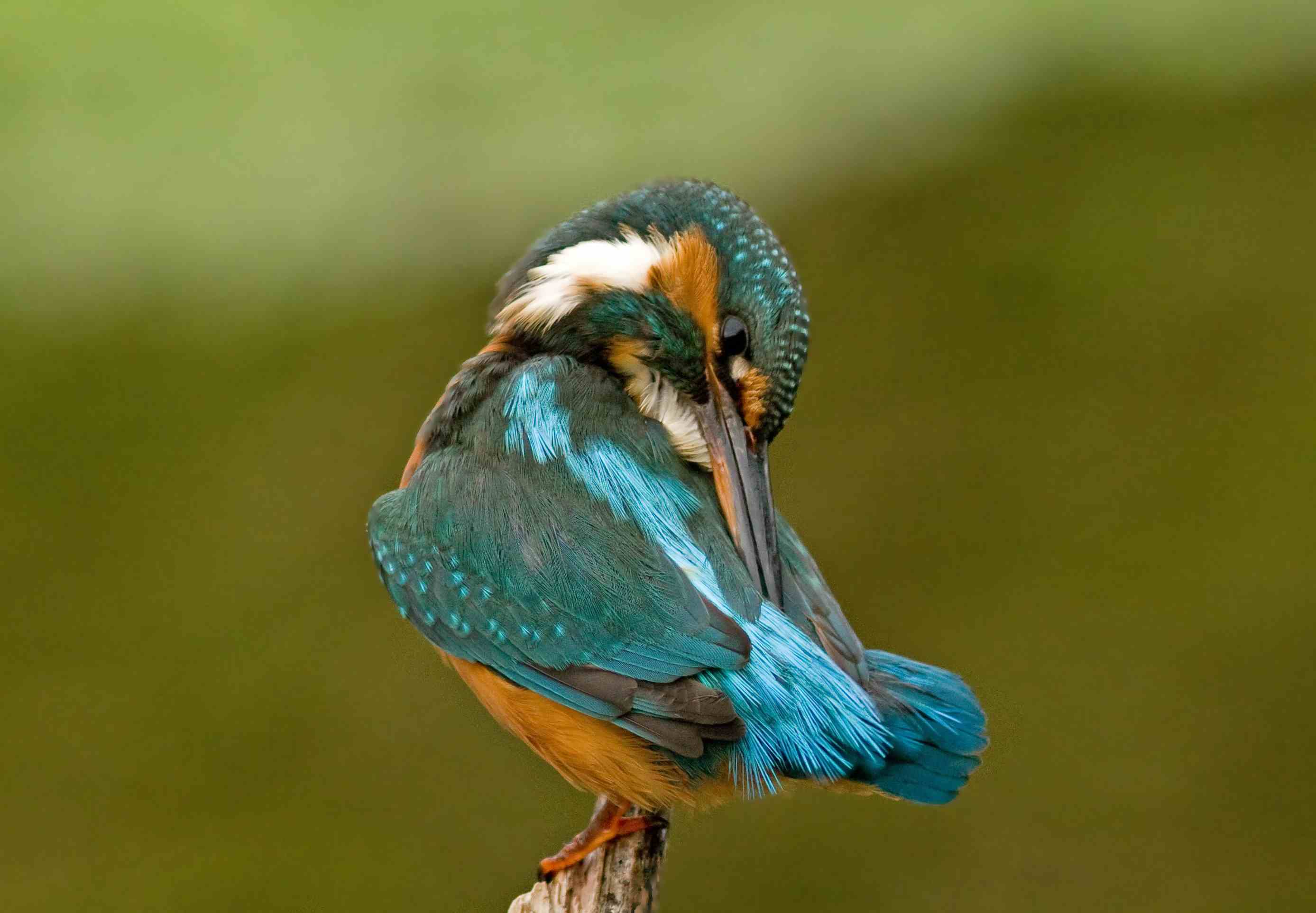
Kingfishers, in common with most birds, have a preen gland right in that spot that the bird in the photo is poking at. The bird here is literally collecting a secretion of oil from this gland which it will then transfer to its feathers. This will help to waterproof the feathers and make them easier to keep dry. We are all familiar with the expression "Water off a ducks back", in actual fact ducks have a very well developed preen gland and that is why they are able to live, as they do, in an aquatic environment. Interestingly, Cormorants do not have a well developed preen gland and that is why, from time to time, you see them drying their wings, holding them outstretched.
 Wildlife in a Suburban Garden
Leave a comment