
Meadow Pipits are interesting birds at this time of the year. Over the last week I have seen quite a few pairs in different parts of the country. As usual, I have used my encounters to learn more about them. They are easy to discover particularly when you approach their breeding territories which are usually on the high mores such as Dartmoor here in Devon or, in Yorkshire the Penine moors.
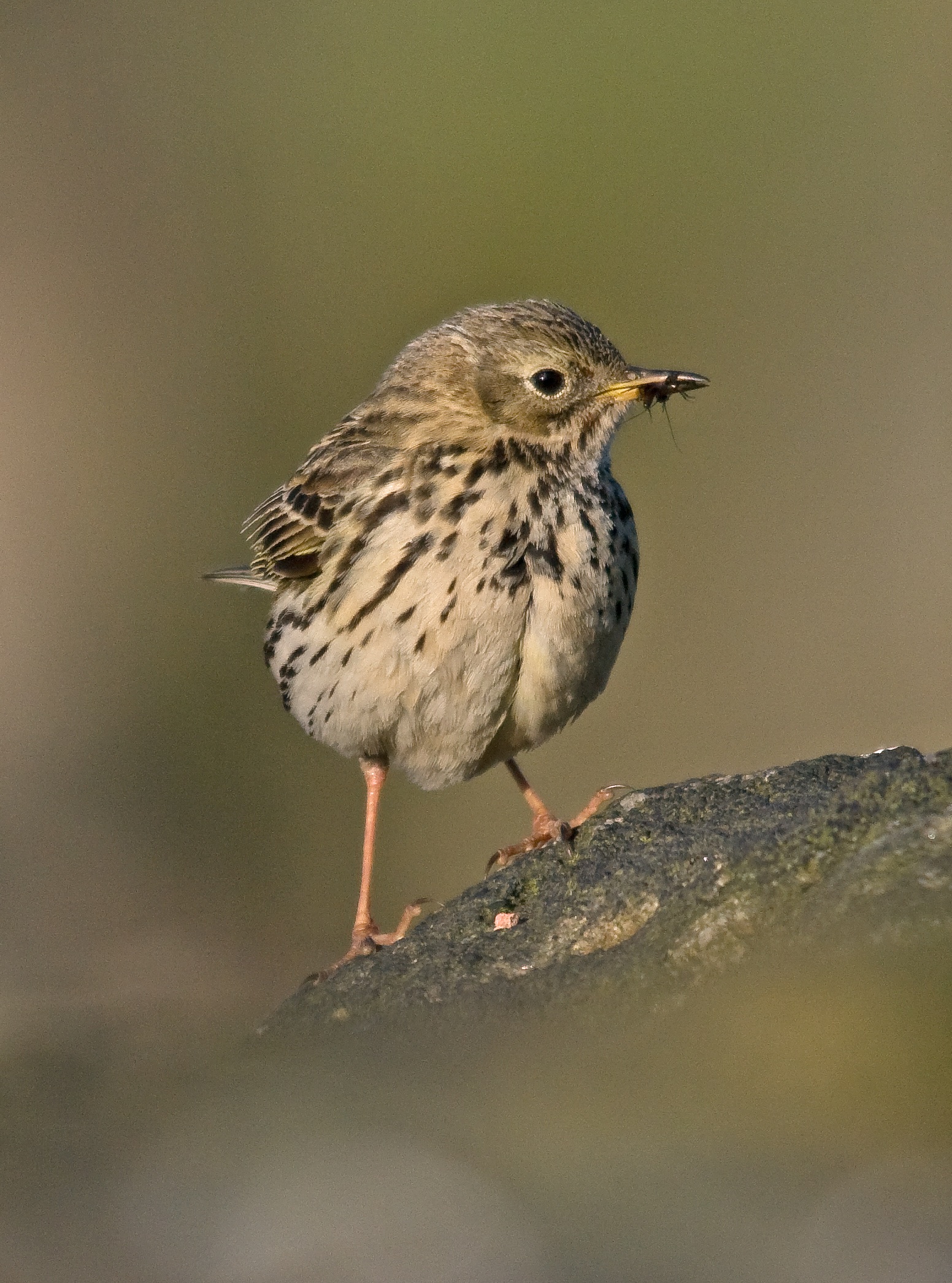
As soon as you enter their territory, the reaction is always the same, they will fly to a nearby perchand show themselves very prominently. This is very frustrating, particularly if you are trying to locate the nest which is obviously nearby. They will perch with a beak stuffed full of green caterpillars or spiders and this confirms that they have a clutch of youngsters nearby . The birds will never ever return to the nest all the time they are aware of you. The nest is placed on the ground, concealed amongst the grasses and tussocks. The birds will make dummy visits to other areas nearby to try and confuse you, you can tell that this is not the true nest site because they will return to the perch still carrying food. The trick is to move as far away from them as possible and observe their, now natural behaviour, through binoculars. On Dartmoor we have quite a good population of Cuckoo and they use the Meadow Pipits as a host for their single egg. I very much want to find a Meadow Pipit nest with a young cuckoo but, as yet I have failed on my quest.
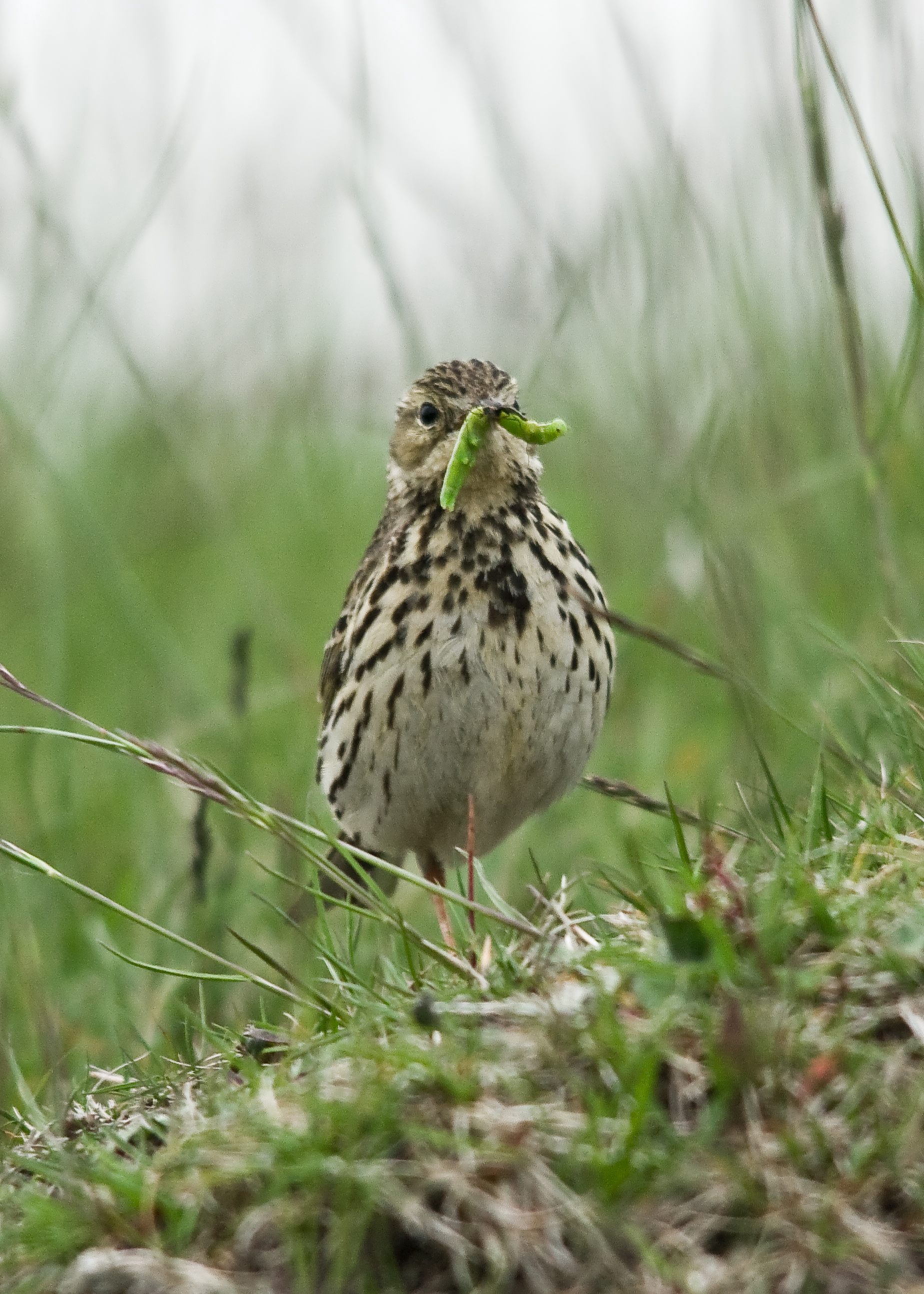
To me, they are doubly interesting because in the winter time they move down to lower altitudes and here in Devon on the marshes and meadows nearer to the sea. They are a bird that can be seen on every trip, foraging amongst the mussy grass and puddles. During the coldest days of last January and February they were commonly seen on the AlphinBrook, looking for small insects at the streams edge and also in the nearby grasses. I often wonder if these birds are the ones that spent the summer breeding on Dartmoor and suspect that this is the case.
 Wildlife in a Suburban Garden
Leave a comment