
If we are to believe the RSPB then we should be as concerned about the Lapwing as they are. They are a bird that is in decline mainly due to farming practises, a too familiar situation! They nest on the ground, preferring uncultivated pastures. Exminster Marshes here in Devon is a place where the RSPB has created the kind of environment to encourage them and I am led to believe this is achieving some good results. I remember this bird as being very common in Derbyshire where I grew up and can recall vast flocks of them in the low, flat farmland close to the River Trent. Now, you can see them from the M5 on the drained fields on the Somerset Levels particularly near to Sedgemoor Services. In Yorkshire last week, I was very pleased, almost thrilled to find a beautiful nest containing four lovely eggs laid on the ground in a what could hardly be described as a nest being just a a slight depression in the grass, lined with grass.
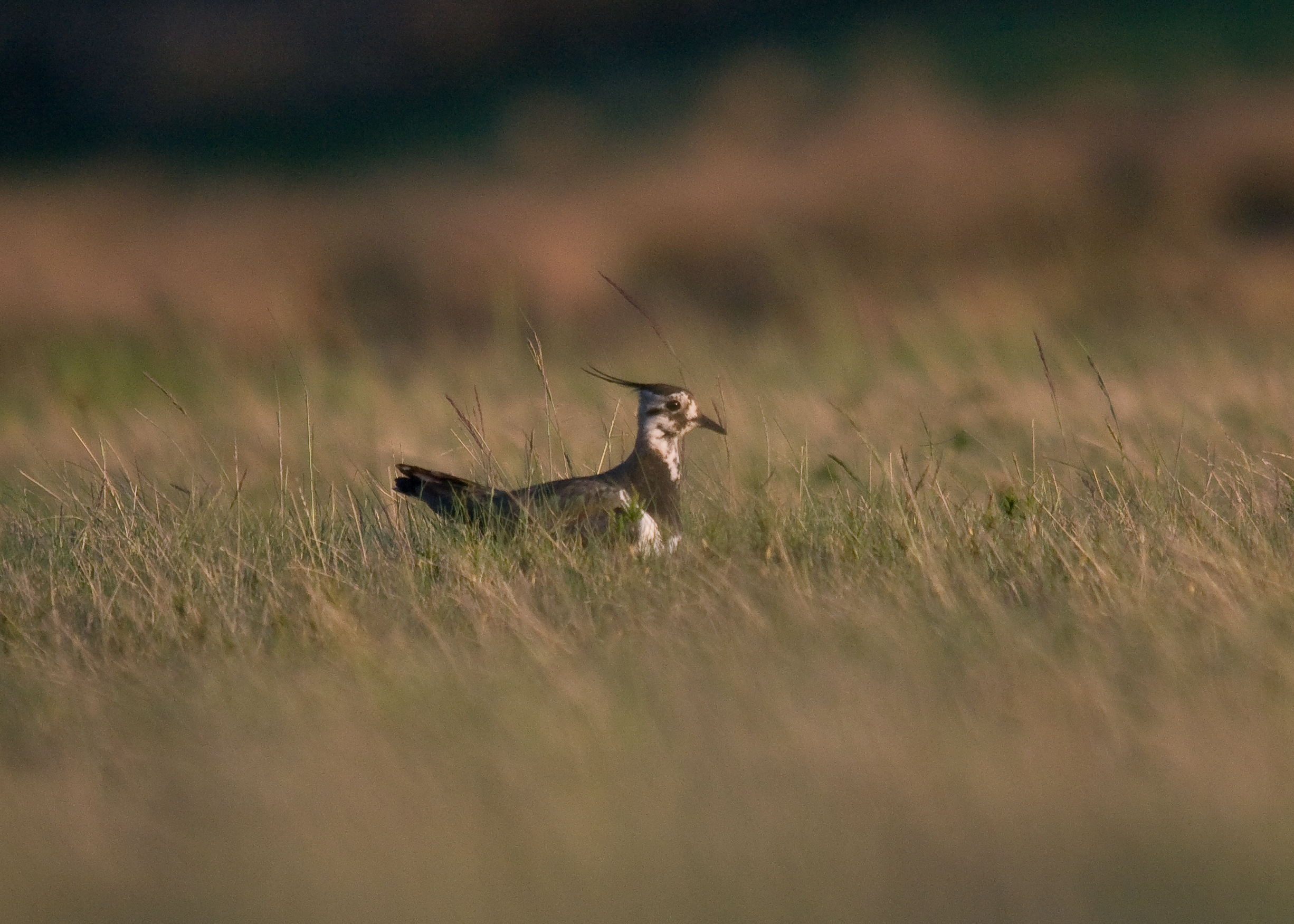
I had discovered the "nest" by watching a bird, also known as a Green Plover or Peewit, land in a field and then settle and sit. There was something about the behaviour of the bird that made me certain that she was sitting on eggs. Her strategy was to place the nest smack in the middle of the field where she could see clearly in all directions. Here she is, settling down on to her eggs.
After watching for half an hour, a bit too much movement from me disturbed her and she took to the air calling loudly and I took the opportunity to find the nest and get a couple of photos before quickly retreating to a distance where she felt safe to return.
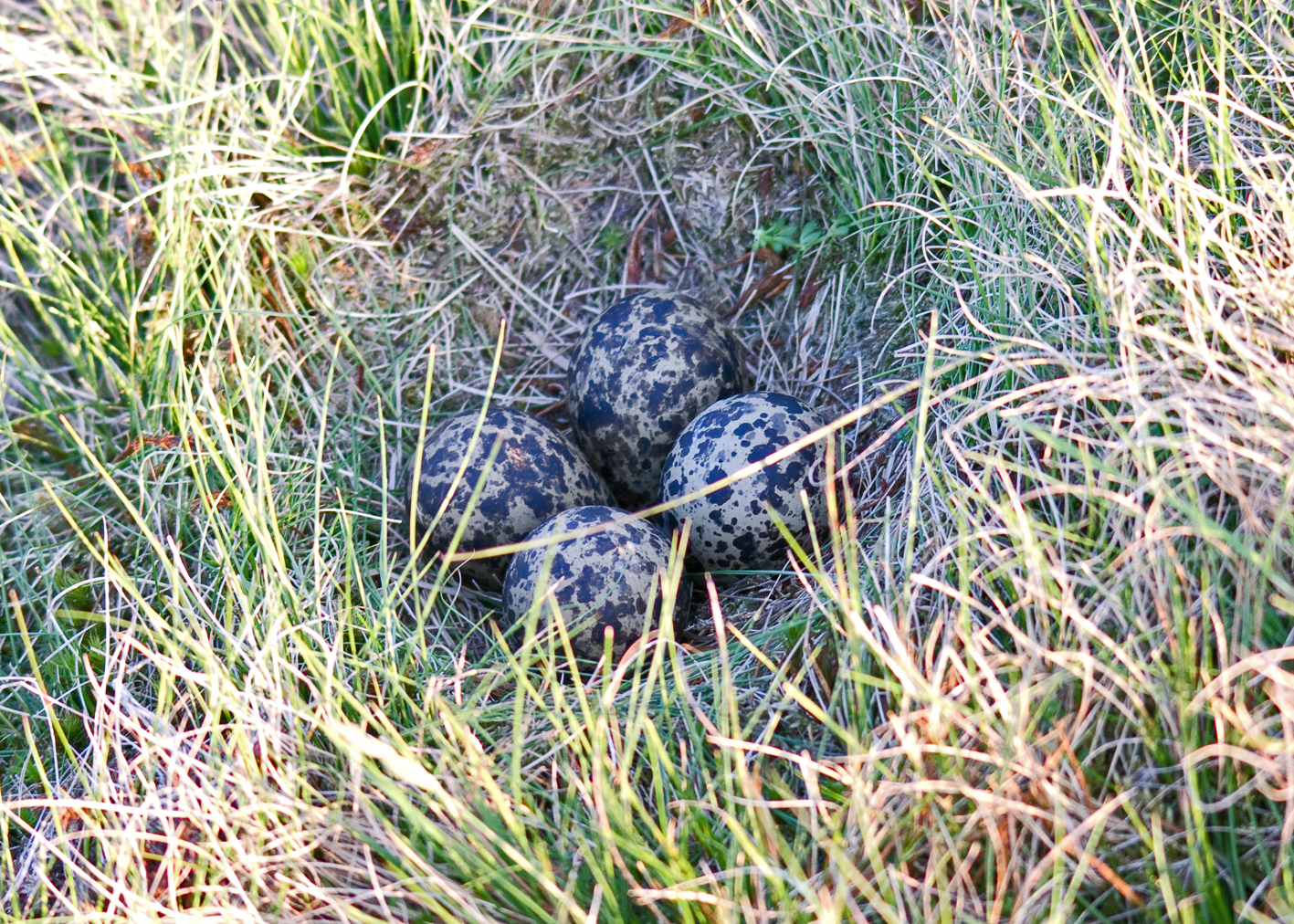
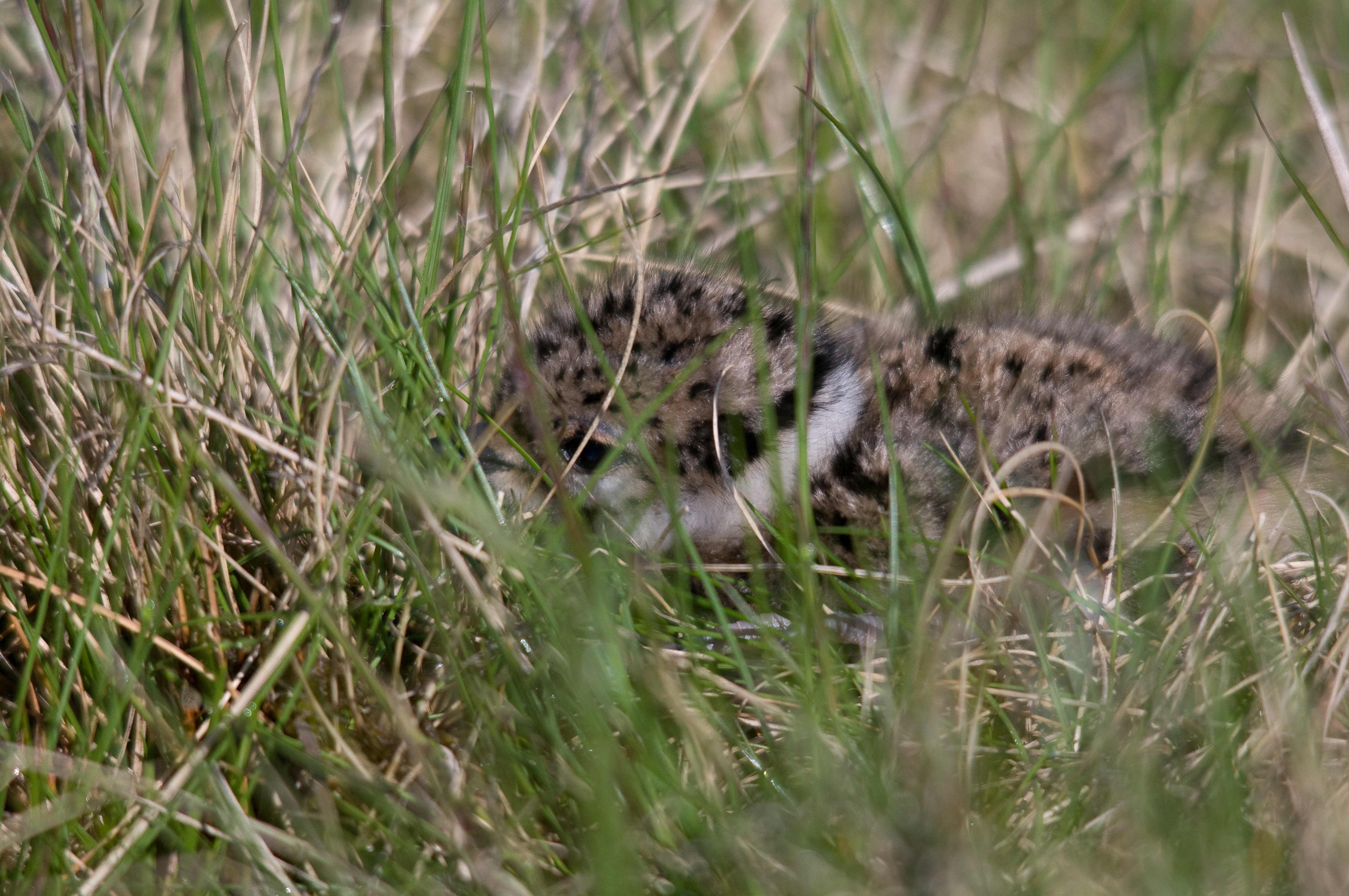
Having a little bit of experience with chickens, pheasants and domestic quail I knew it would be safe to "feel" the eggs with the back of the hand and I was heartened to note that they were warm to the touch, obviously being incubated. This all occurred on Thursday evening and on Sunday I went back to see how things were getting on. Immediately it was obvious to me, that the eggs had successfully hatched because the behaviour of both parent birds was a dead give-away. Their strategy now was to be as noisy and noticeable as they could be in an effort to draw my attention to them and away from the, as yet unseen young birds. I was not fooled and made my way, again quickly and with no fuss, to the nest area where my guess was confirmed. There in the nest were three gorgeous, and really well camouflaged little birds.
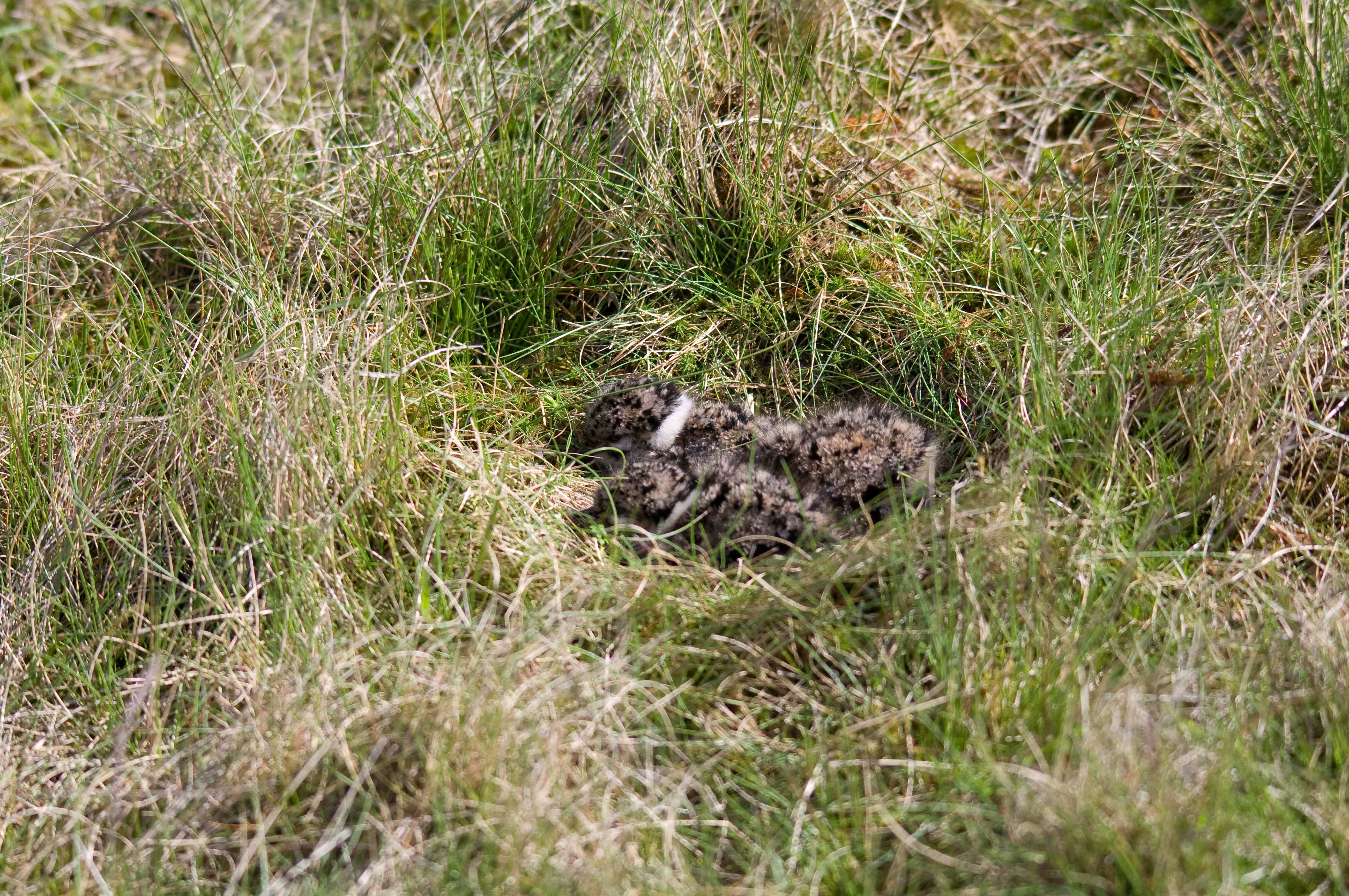
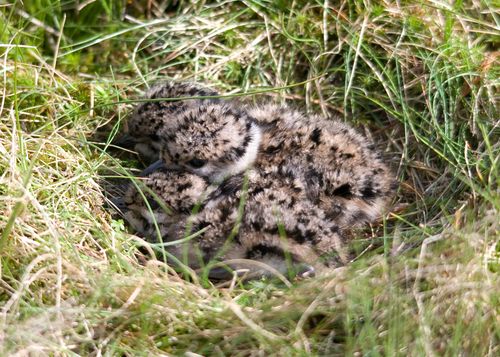
I was slightly concerned that there was now only 3 but near to the nest I discovered the fourth. I took it's picture and left the scene, quickly as before. This was a very interesting and rewarding encounter and one that I will be happy to remember, especially in the middle of winter when we have left the breeding season and summer well behind us. It was particularly rewarding to find the nest not only because it was nice to know that, in spite of the birds best efforts I was able to read the signs, but also great to know that there are places where Lapwings can, and still do breed successfully. Finally, who could not be entranced by the sight of these beautiful little chicks? Incidentally, chicks such as these, able to walk and feed soon after hatching, are known as precocial as opposed to nidiculous when birds are born helpless and blind.
 Wildlife in a Suburban Garden
Leave a comment