
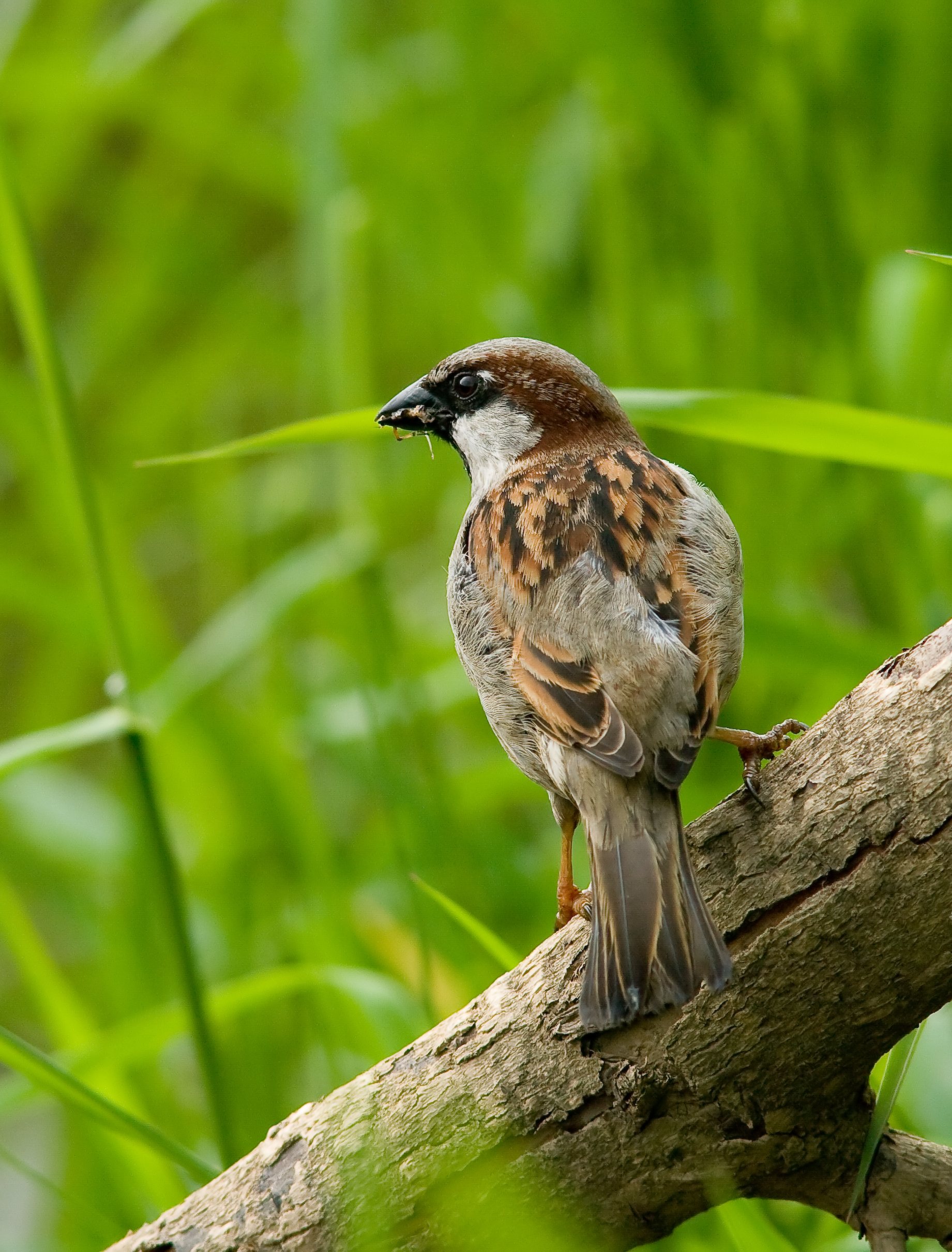
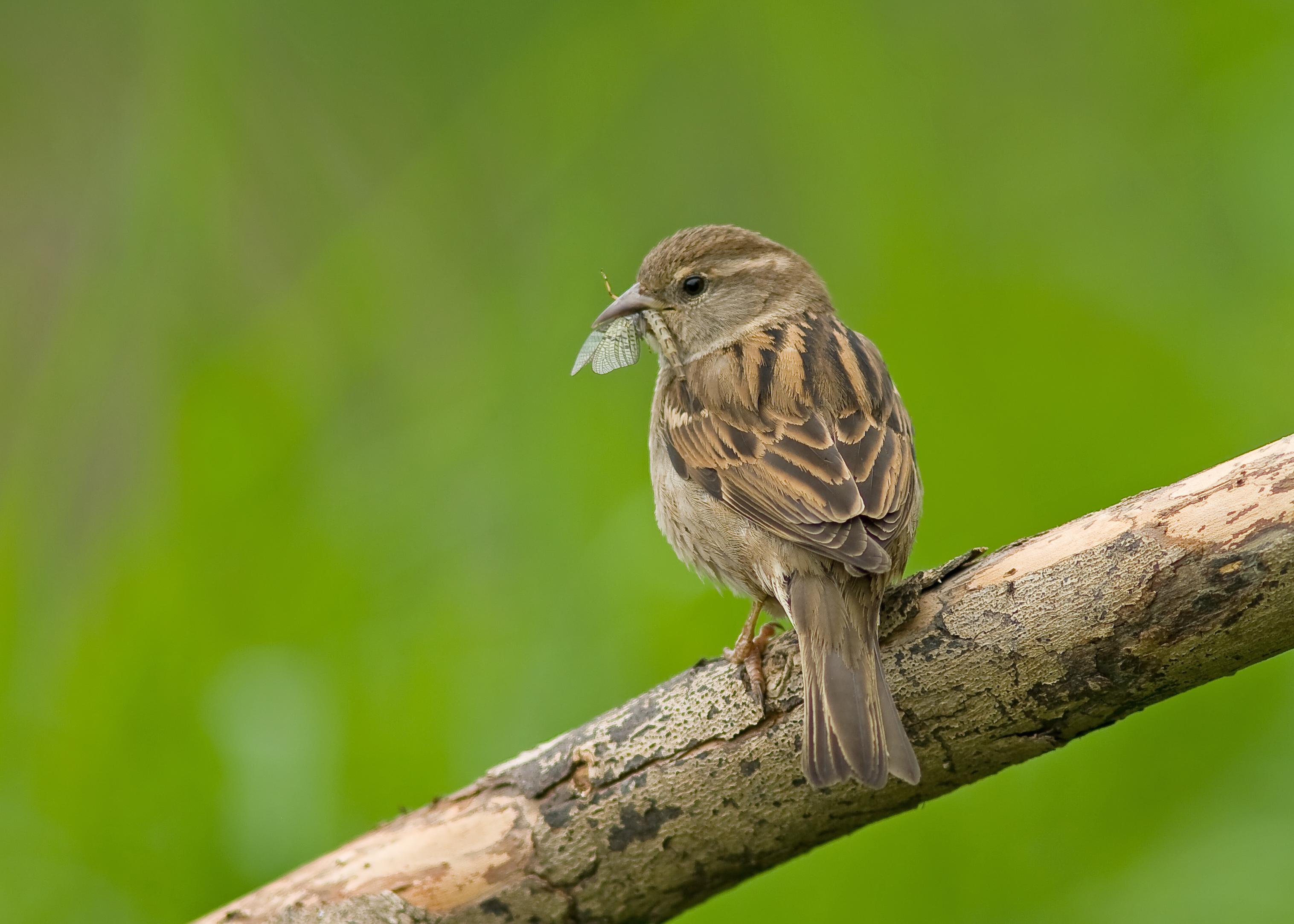
This is no Kingfisher as you can see, but this House Sparrow, along with several others, all belonging to the same colony, perched on the branch repeatedly. They were feeding on the May Fly that were emerging from the brook. Sparrows are known to revert to an insect diet when feeding young and it was pretty obvious, and very interesting to see. There is a large colony nearby and knowing the problems that House Sparrows are having, and the threat to their very existence as a common breeding bird, it was really good to see them. I photographed several individuals, both male and female. As I sorted through them back at home, it was exciting to think that with a bit of luck, species such as reed Bunting and Wren could present some really great opportunities.
Also feeding on these May fly were the resident breeding pair of Grey Wagtails and one of their recently fledged youngsters. It was a really good session to watch because the young bird was perched opposite the hide as he waited for the male to come in and feed him.
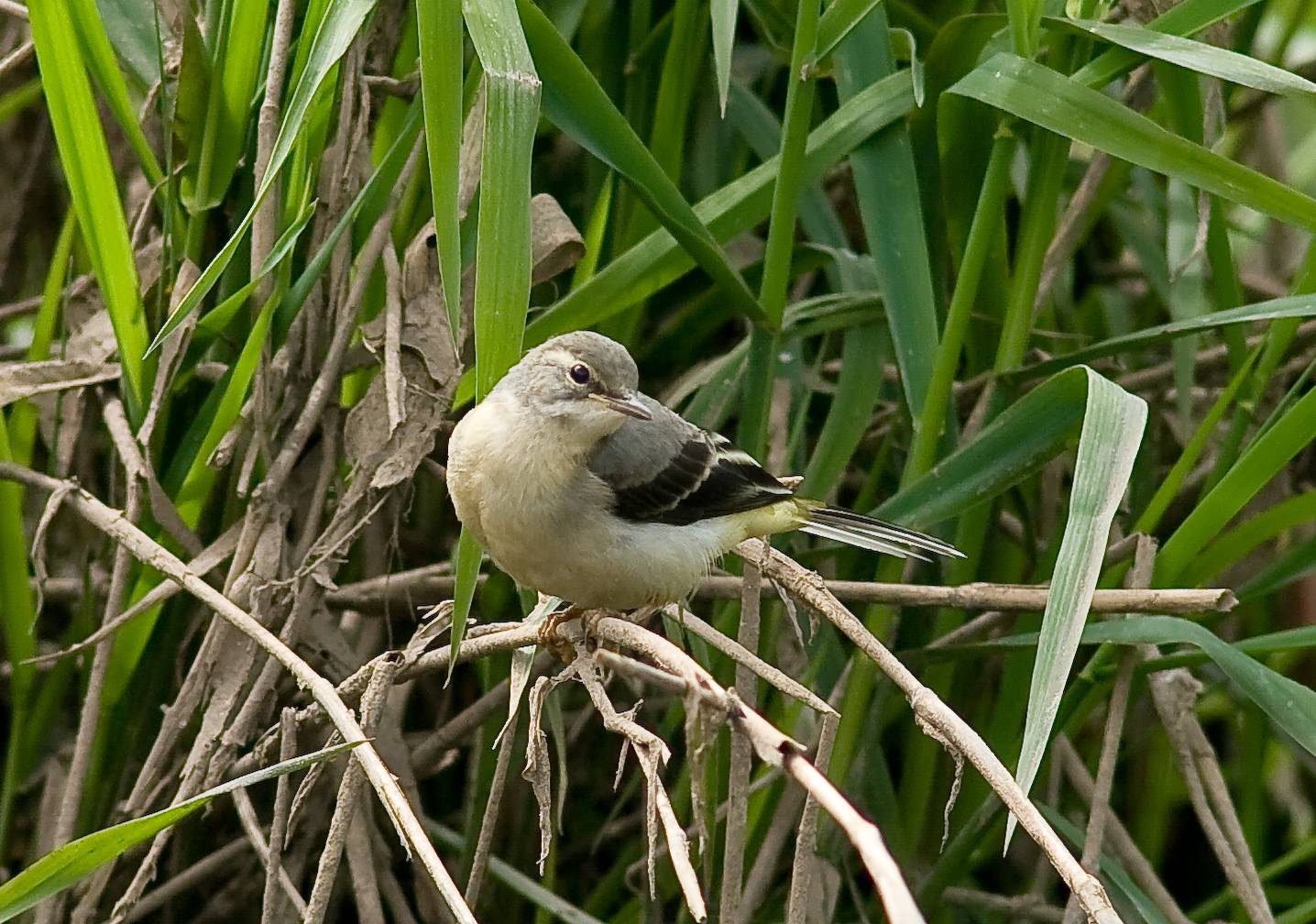
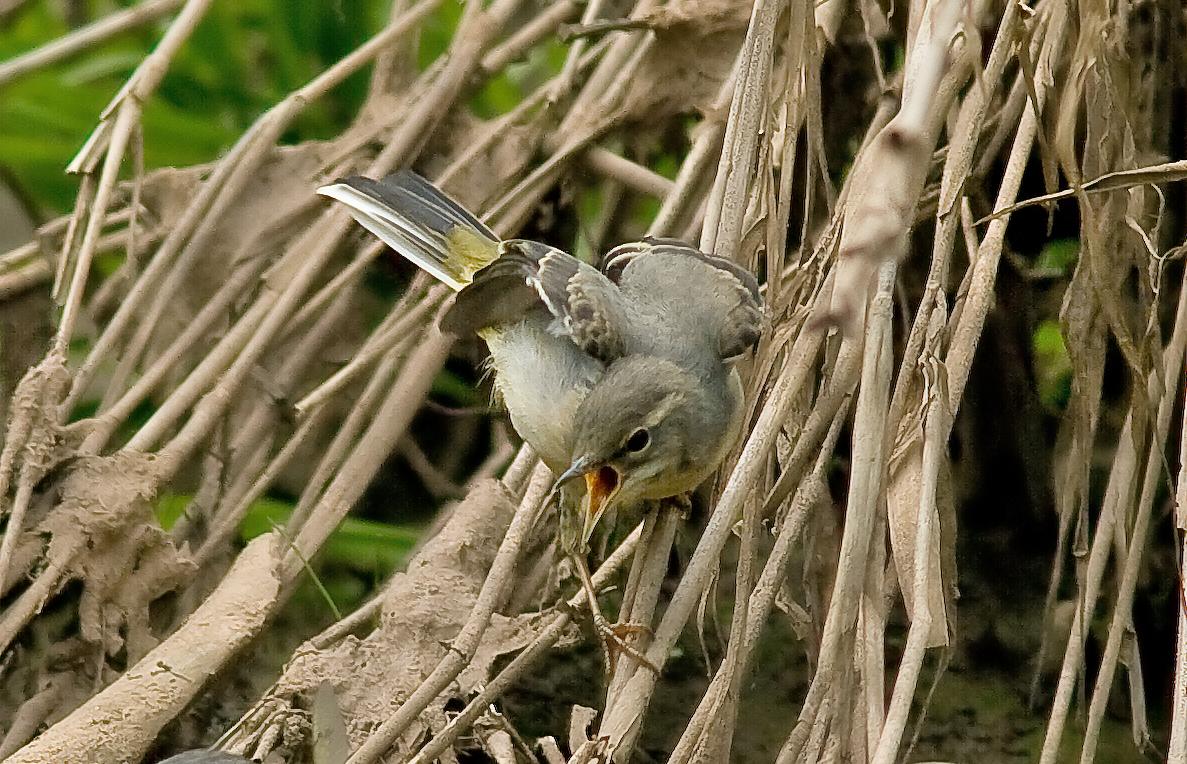
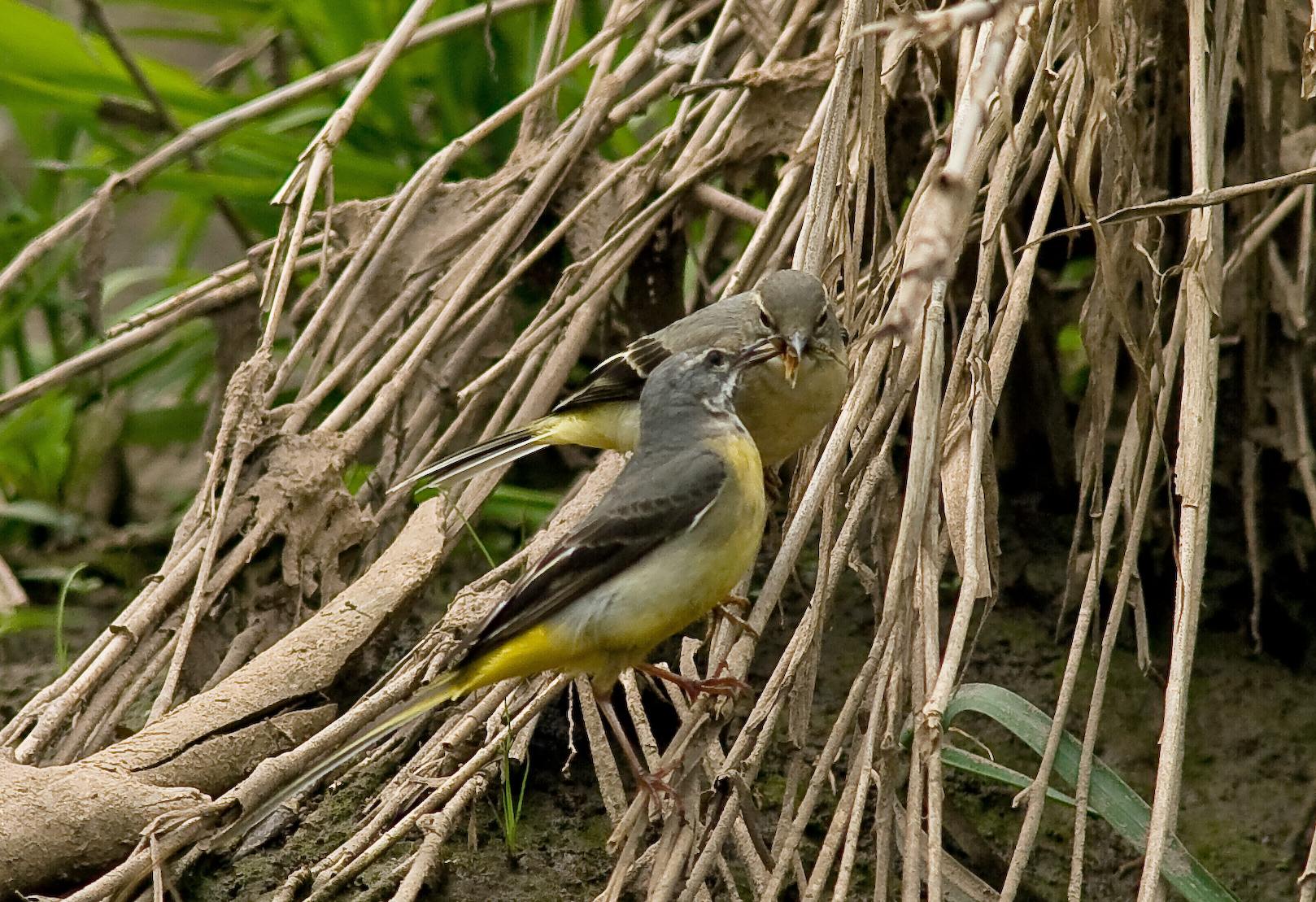
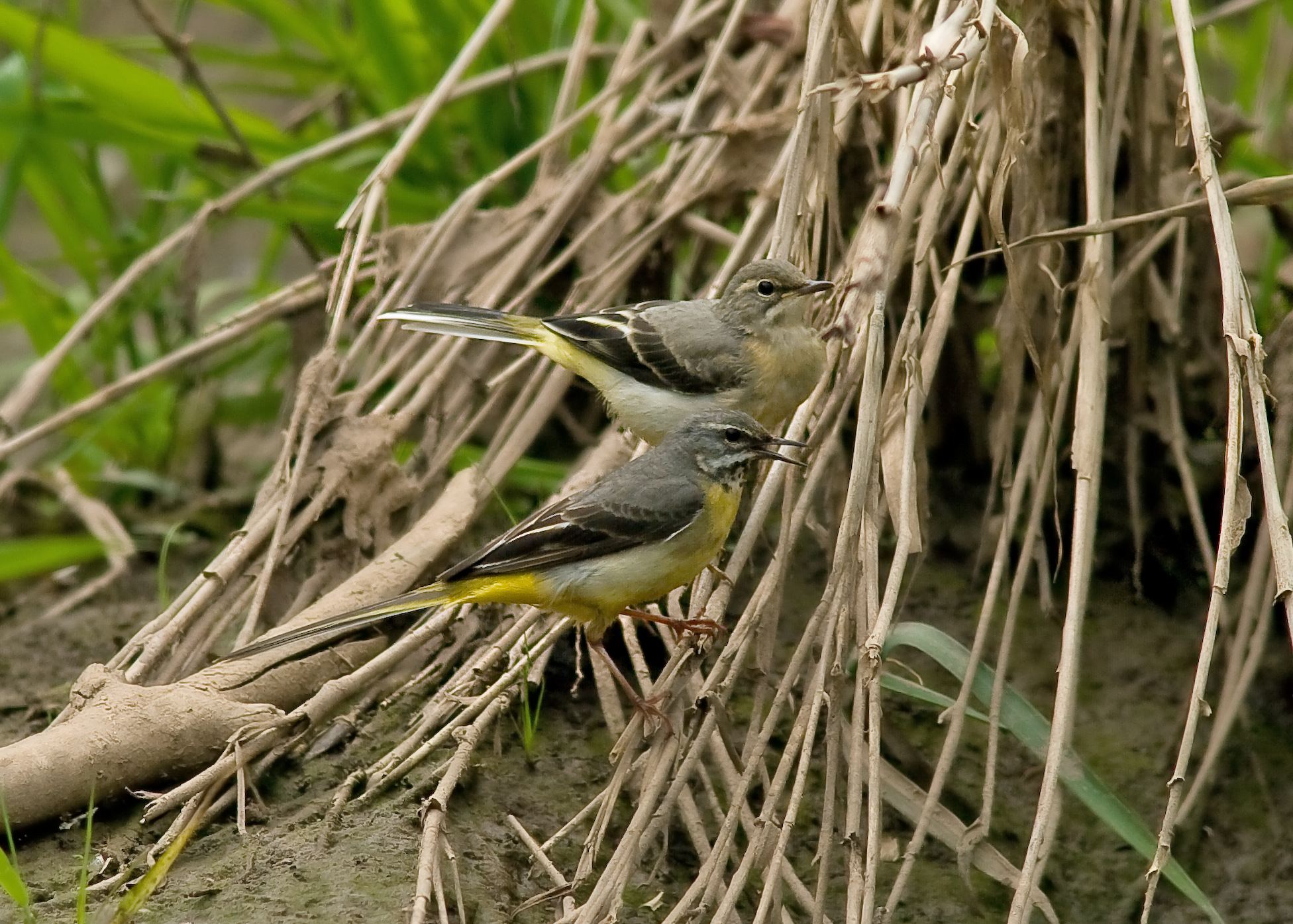
This is quite an interesting series as it shows the parent attending to it's youngster. I think it is also interesting to note that there is not a great deal of colour difference between the adult and the young bird and also of note that the male has already started to lose some of the black bib marking.
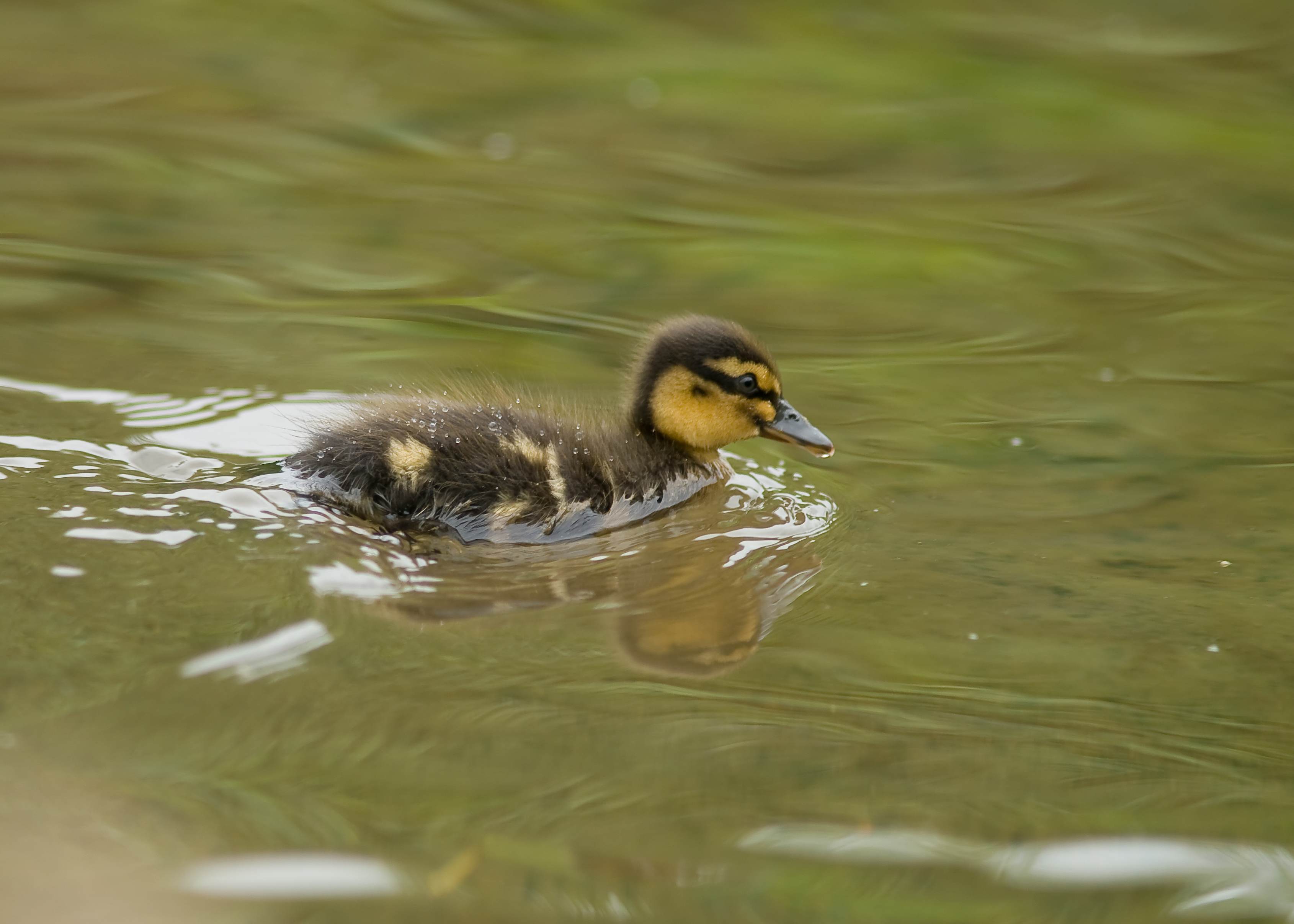
I had a very exciting few moments when a Grey Heron came in to fish but didn't get in a position where I could get anything like a good shot. He was hunting for frogs in the grass alongside the brook rather than in the water which I found interesting. All in all, in spite the no show of the Kingfisher, it was a good session. The mother Duck and her youngsters paddled by and even though I couldn't count them all there are several ducklings still surviving.
 Wildlife in a Suburban Garden
Leave a comment