
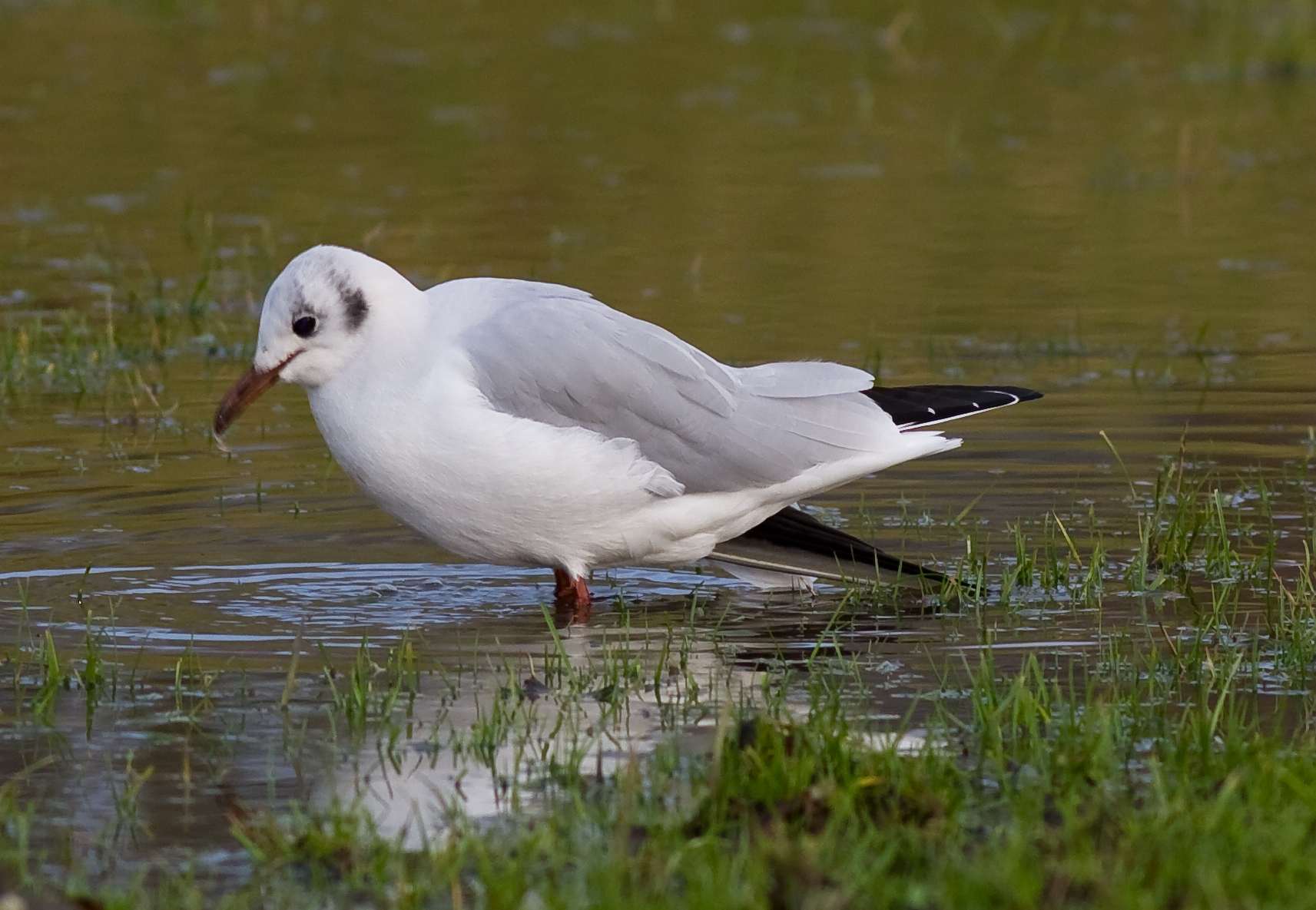
Black Headed Gulls are not particularly noteworthy but if you were visiting from the other side of the Atlantic I am sure you would give them a second glance. In fact, they are quite attractive. They have an eclipse plumage and in the winter time look completely different than when in summer breeding plumage when they have an attractive chocolate coloured head.. For most of the time they do not show the dark head but instead have a hint of a smudge of dark behind the eyes. Other gulls in the UK with black heads could be Little Gull or Mediterranean but 99.9% of the time it will be a Black Headed. They are an "inland" gull and though found also at the coast, they are the UK's most numerous inland gull. This one was by my hide on the Alphin Brook today, one of a small group of a dozen or so that have been here for the majority of the winter. They feed on anything they can find, I have no idea what they are finding to eat here but they forage in the large puddles and through the muddy grass left by flood water. They also take small particles of food from the surface of the brook and anything else that has been left around as rubbish. Gulls are often derided for rifling through rubbish but you could suggest that they do a good job of getting rid of edible rubbish which could attract more undesirables such as Ratus ratus, the Brown Rat…… nobodies favourite. I notice one article that I read describes them as kleptoparasitic. a posh Pseudo scinetific word for, "it steals food from other birds"! It quite often breeds in colonies made up of both Terns and Gulls and not only eats the young newly hatched Terns and eggs but also the food that the Terns have caught for their chicks…… that's the kleptoparasitic bit. In return the Terns benefit from the protection from predators, both in terms of mobbing behaviour and alarms from the Gulls.
 Wildlife in a Suburban Garden
Leave a comment