

I am in the middle of a very satisfying and happy period of my life. The snowy weather may not suite many but it certainly does me! The bird life is pretty much constantly on the hunt for food and inevitably very obvious and noticeable. I rose just before dawn yet again and went to see the Kingfisher which was very obliging as usual and in front of me with a massive minnow almost immediately. He was almost too obliging because this all happened before it was really light enough to get anything like a decent photo, but I tried never the less.
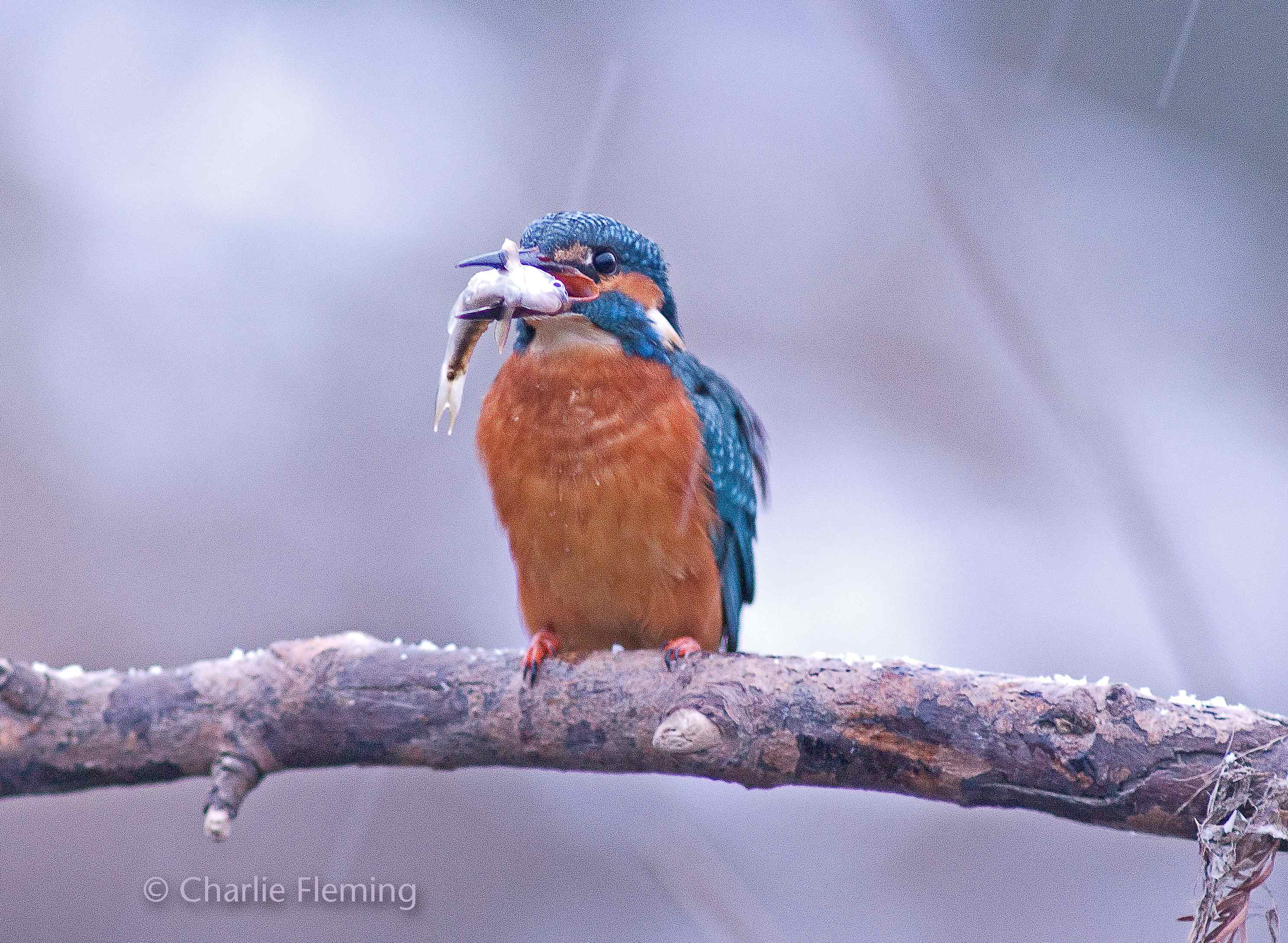
You can even see in the photo that there is snow in the air. I returned home after just 40 minutes because I had a day of ringing training planned.
There are a few ethical concerns about disturbance to birds in these abject conditions but I am assured by those that know better than me, that it is still important to collect data from the bird population, particularly migratory species such as Fieldfare and Redwing. It was a good days work with 80 birds processed from 12 species. Amongst them were 3 long- tailed Tits. With most species, once in the hand, they can be sexed and aged from subtle differences in plumage but it is impossible to collect data such as age and sex from Long – tails as they are not in anyway sexually dimorphic and first winter birds are identical to adults. I am told that even the presence, or not, of a bright coloured orbital ring has no significance to age or sex. In short some have one and others don't. The bird above doesn't!
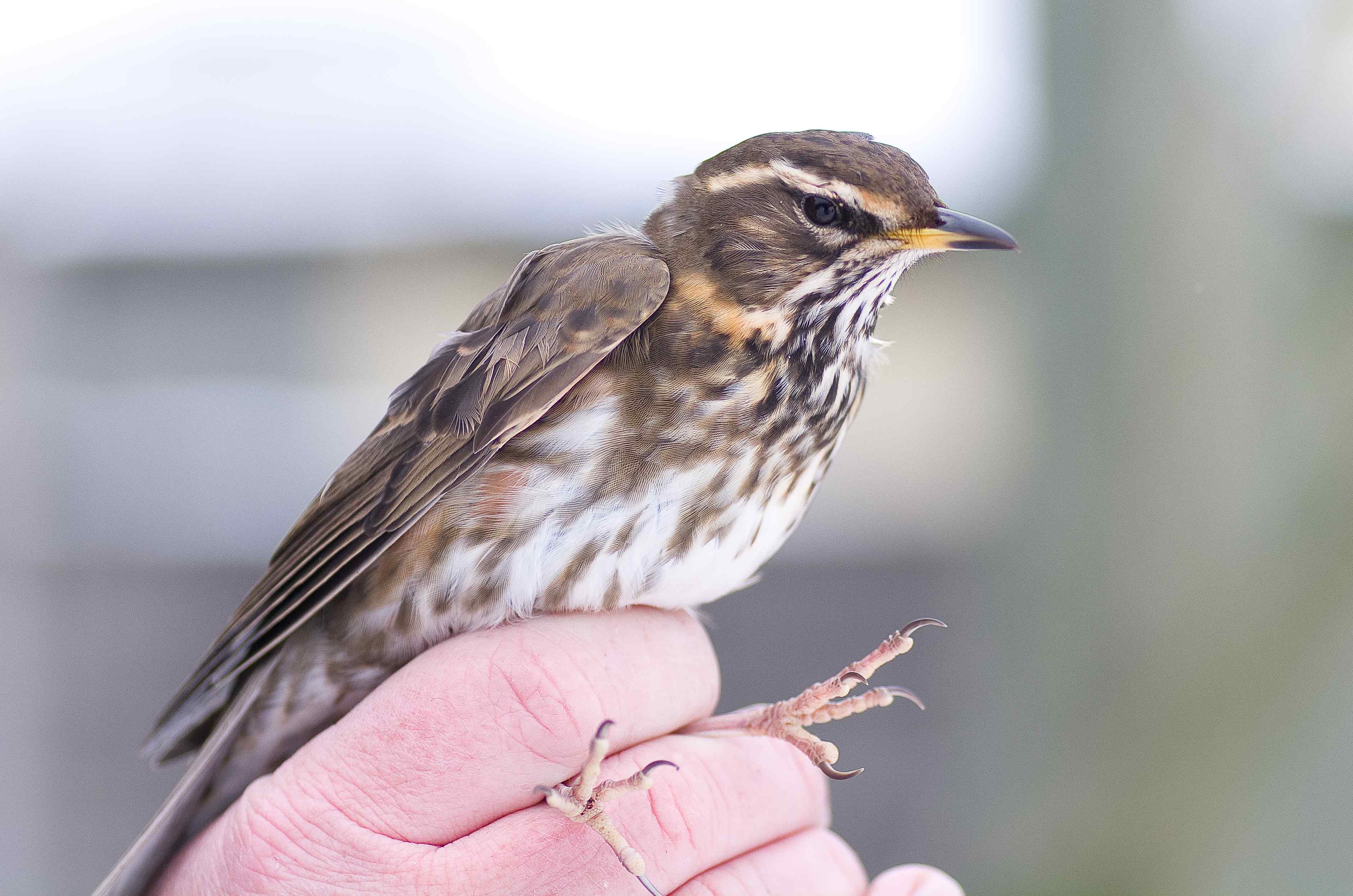
Having had such an intimate association with Redwings this winter it was really special to actually hold one, put a ring on it and take measurements. This was all undertaken as quickly as possible to limit the amount of time that it was prevented from feeding. It was dealt with in a space of 5 minutes from capture to release. After weighing it was discovered that it was lighter than was expected so it was a good indicator of the difficulty these birds are having in obtaining enough food. However the more commonly encountered species were very fat and in some cases "chunkier" than normal, as in this Greenfinch for example.

All in all another good day. I note, that back in the garden, now that most of the berries have been stripped from the cotoneaster tree, it was very quiet.I have put out fruit for the Thrush species because I am sure that once there are no berries left to eat in the district, they will have to turn their attentions to something else.

 Wildlife in a Suburban Garden
Leave a comment