
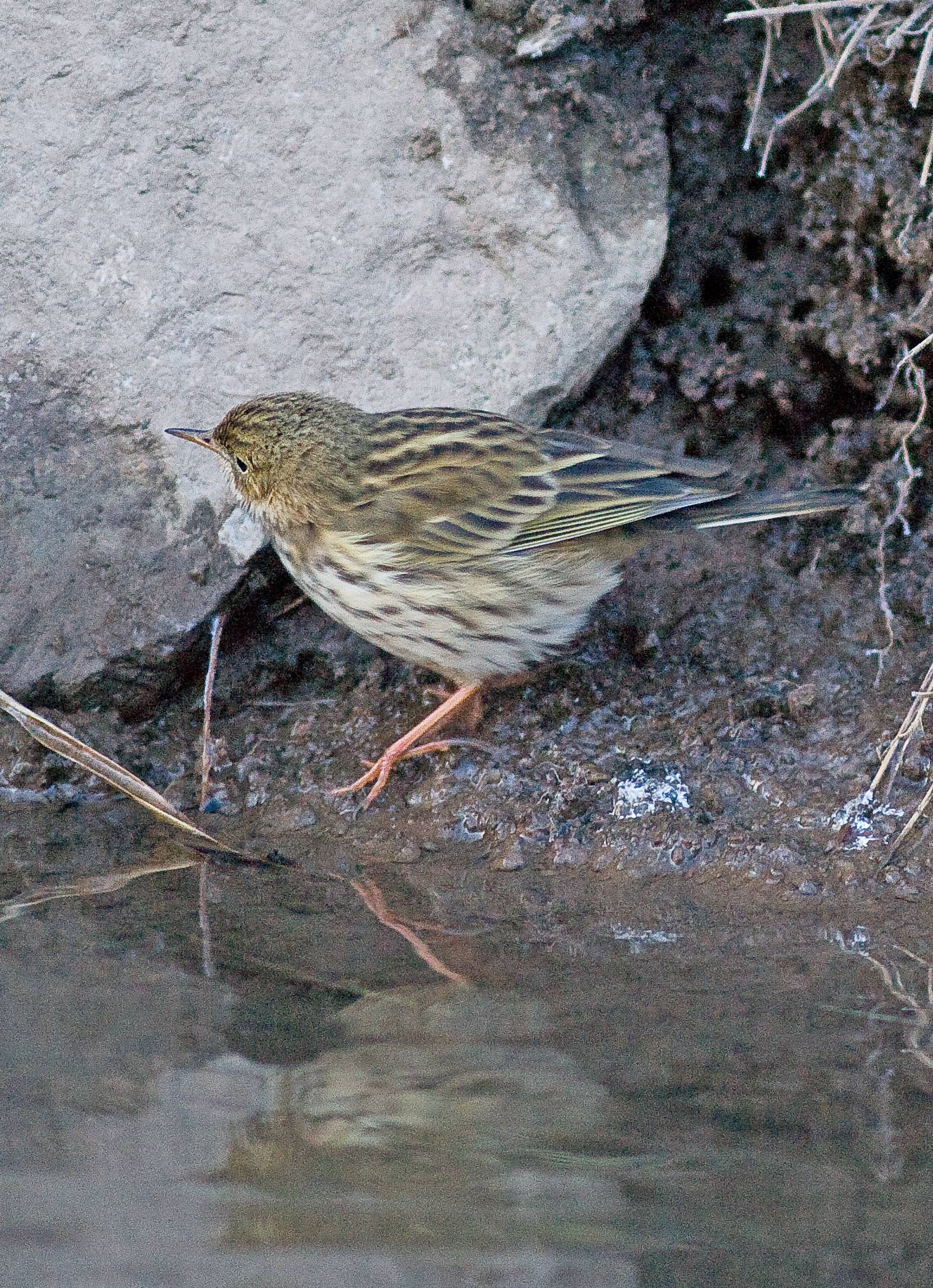
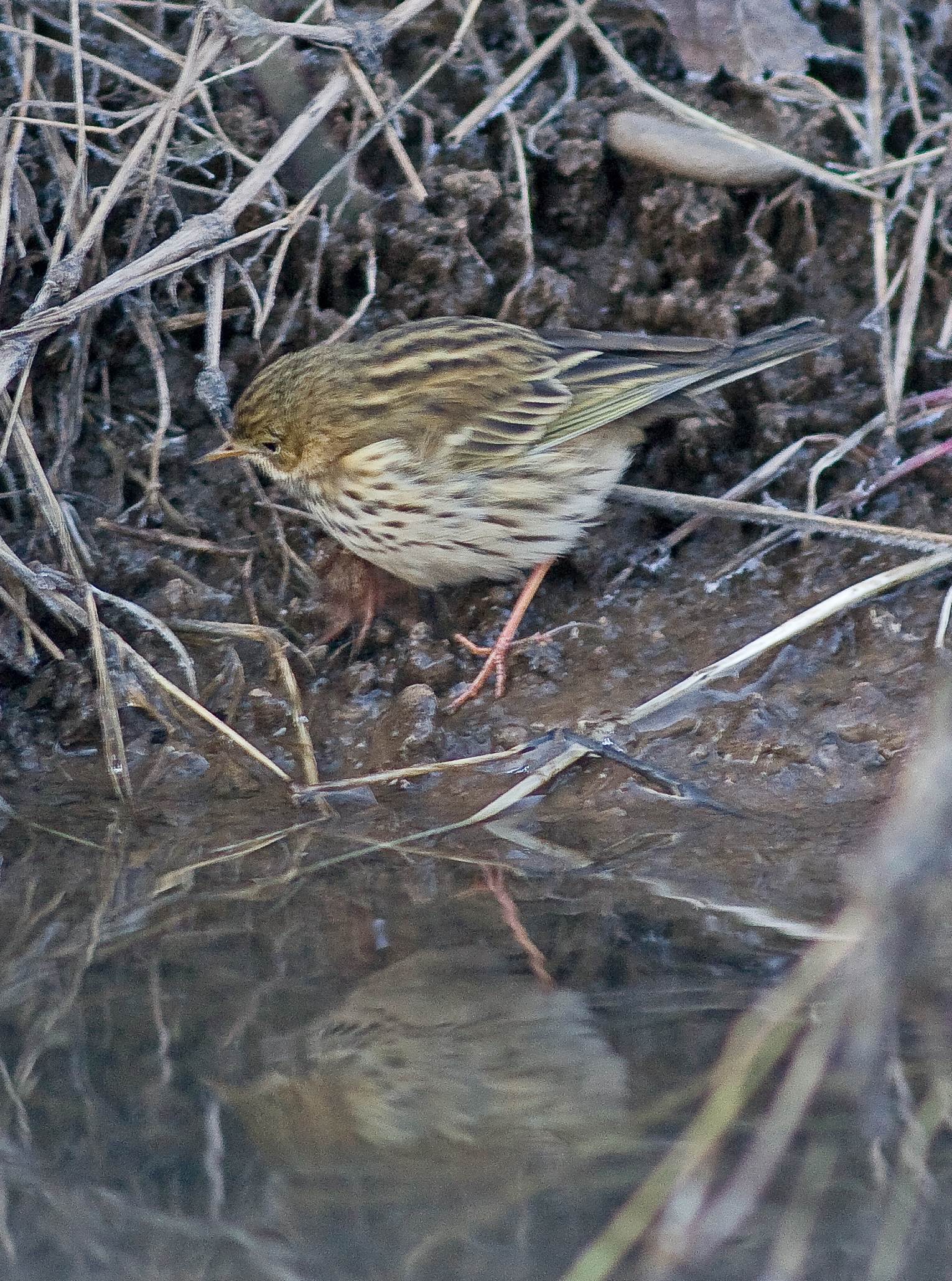
This morning at first light, with the thermometer touching minus 5 Celsius, I walked down to the nearby Alphin Brook in the hope of seeing and photographing the Kingfisher again. The water level has now gone down a few more inches and as I approached the hide I immediately disturbed a Snipe – Gallinago gallinago. Now that water has receded it has left mud and sludgy edges for birds like the Snipe to feed in. I took my place in the hide, poured my coffee, got comfortable and started the wait with the church clock chiming 7.30. As the light got better and better my feet got correspondingly colder and colder but apart from that, I was warm enough to remove my gloves and still feel comfortable. After just a short while the little bird pictured above, a Meadow Pipit, flew in to view. I was hoping that it was going to be a water Pipit, my bogey bird I am afraid, but no, just the more common Meadow Pipit. I had to feel sorry for it as it searched frantically for something to start the day. He didn't seem to be very successful to be honest. It's feet, flesh pink as you can see, looked as though they were cold but I doubt it has feeling in them. However it is just another of those diagnostic features that made this bird a Meadow Pipit and not a Water. Who'd be a pipit in this weather?
During my time in the Royal Marines I was lucky/unlucky enough to undertake arctic survival training in Arctic Norway. This has turned out to be useful as a few of the tips picked up there have been helpful to me. Always wear lots of different layers for example. Wear a good hat, 20+% of your body heat is lost through your head. As far as feet are concerned, make sure you have a good thick pair of woollen socks that are clean and if recently washed, well rinsed. The clean fibres trap air which is warmed by your body heat and remains close to your skin. That's pretty much it really!
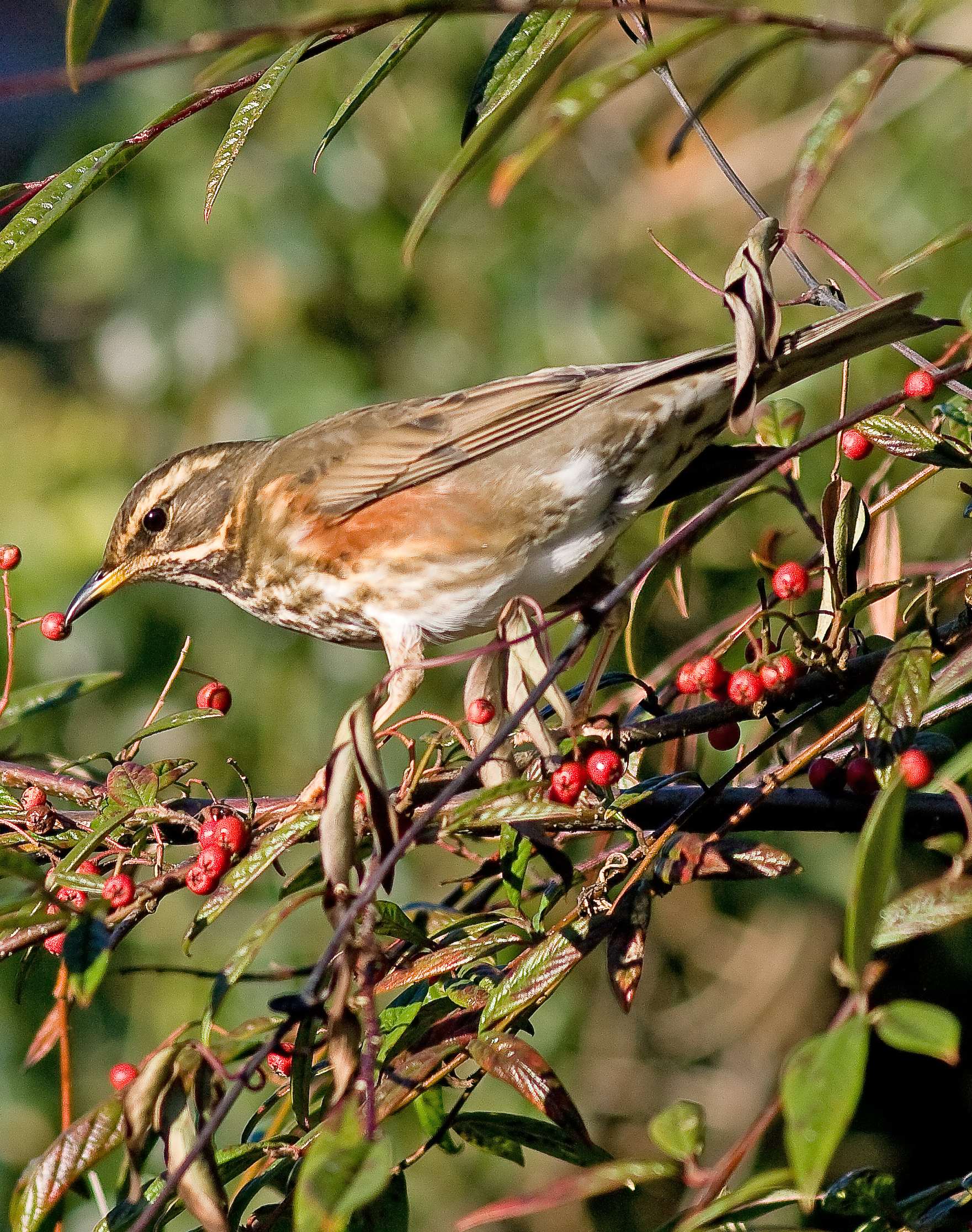
Anyway, to get back to the point, no Kingfisher this morning unfortunately. Back in the garden and I took yet more Redwings, this time up very close to try for more detail. I hope you agree that this is my best Redwing photo yet. I have been posting my pictures on the web site Birdguides,it is pretty much the place for all the best bird photographs taken in the UK and updated constantly. The standard of the best pictures is extremely high. I post my best photos when I think I have a good one but as yet, I have only once been nominated for photo of the week. Here is a link that picture of a Sand Martin pair taken last May. It doesn't seem to matter how hard I try or how optimistic I am, my photos almost always get lost in the crowd! There are some absolutely fantastic photographers out there and I want to be amongst them. One day!!!!!!
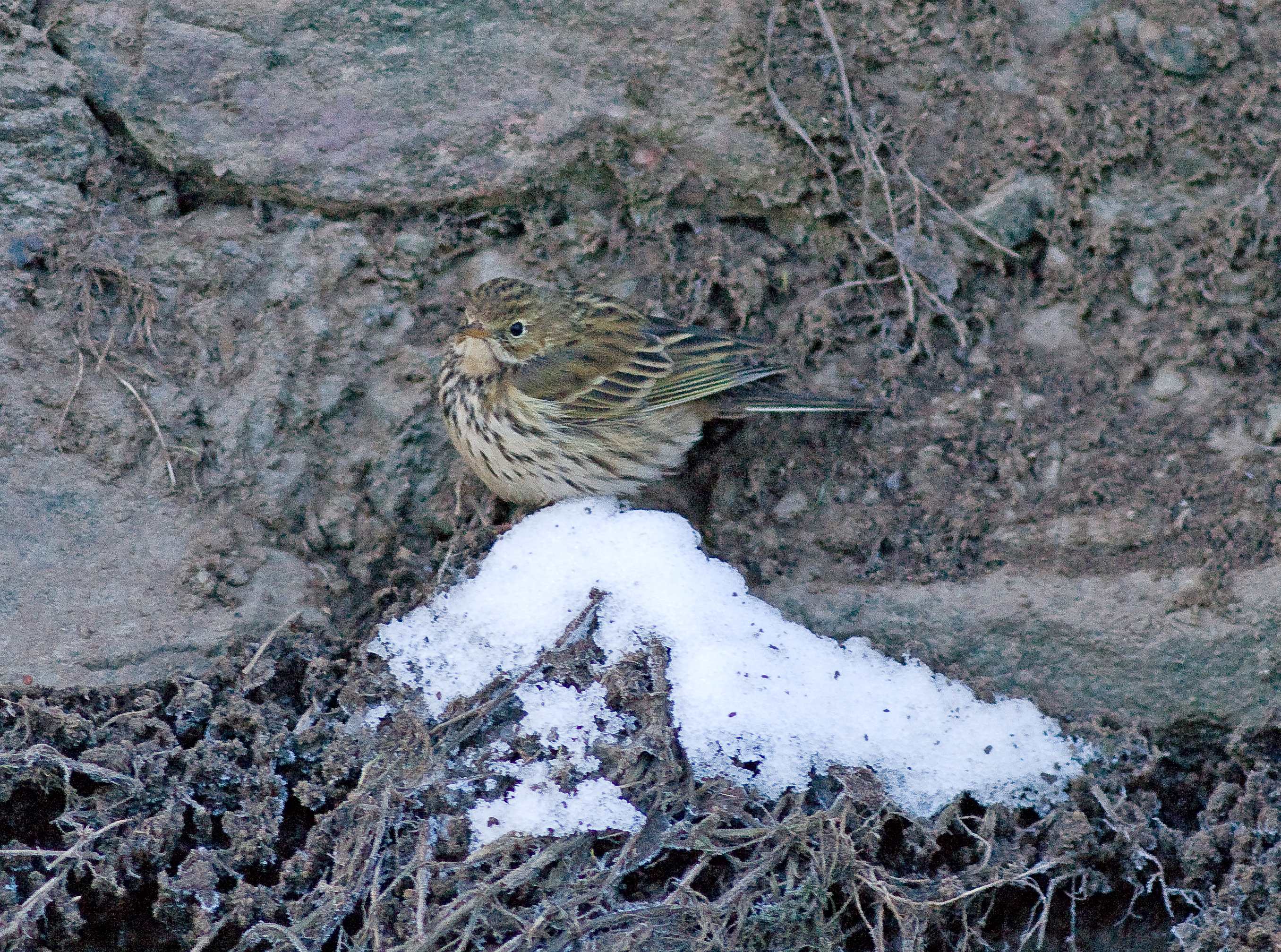
In the late afternoon at around sunset, I walked back down to the brook for another look. It had warmed just a bit but it was still hovering around freezing. At the hide, the Kingfisher was sitting on one of my perches smack in front, just 6 feet from the front opening. There was a Little Egret only 10 feet or so down stream but really interestingly I disturbed yet another Snipe. I have been trying to get good photos, in fact any photos of this species for quite a while, so given a bit of good fortune I think I might be lucky if I am persistent. There was a Grey Wagtail and the Meadow Pipit, so he did get enough breakfast after all.
My hide is simply 4 hardwood poles with a camouflage tarpaulin draped over them. There is a side entrance and a rough hole cut in the front. The tarp is fastened to the posts with cable ties. Inside there is a simple camping chair. The poles are hammered in to the soft muddy bank. It sounds pretty rough which it is, but it has survived for the last 10 weeks , for several of them completely submerged. At first I had it concealed by foliage and reeds but these have long since been washed away but nobody has taken any notice of it or tampered with it in any way which is a surprise.
Birds seen from this hide have included:
Kingfisher – male and female (Athis alcedo)
Grey Wagtail – male and female (Motacilla cinerea)
Green Sandpiper – Tringa ochropus
Snipe – Gallinago gallinago
Pied Wagtail – Motacilla alba yarelii
Grey Heron – Ardea cinerea
Mallard - Anas platyrhynchos
Meadow pipit – Anthus pratensis
Wren – Troglodytes troglodytes
I am intrigued as to what I will see next. I have in the past seen Redshank in the brook and I am told that little Grebe have also been seen but I think that the list above is quite impressive for a small drainage ditch which runs through a busy trading estate.
 Wildlife in a Suburban Garden
Leave a comment